
Senegal Parrot: Care, Personality & Complete Guide
Discover what makes Senegal parrots ideal companion birds with this comprehensive care and personality guide.
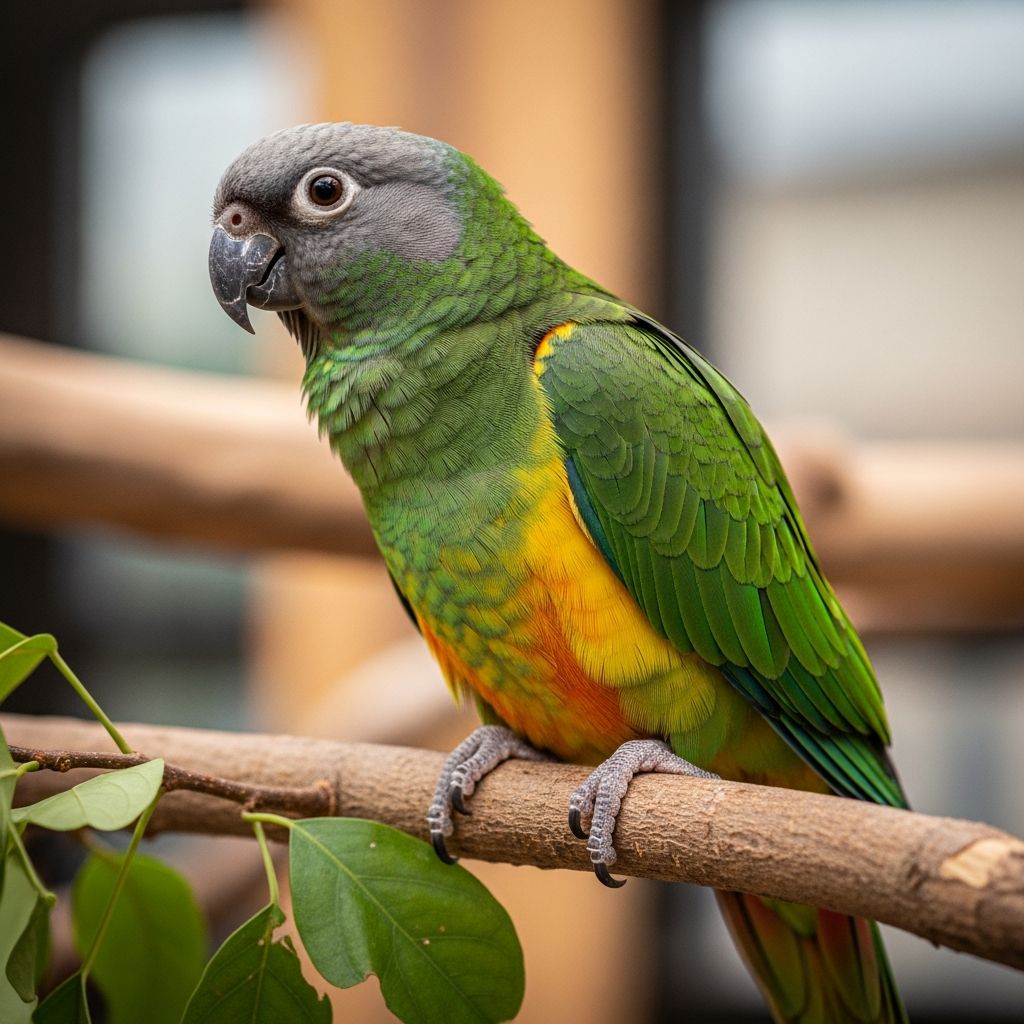
What Is a Senegal Parrot?
The Senegal parrot stands out as the most popular species within the Poicephalus family, renowned for exceptional pet qualities, remarkable quietness, and an impressively calm temperament. Originating from Africa and named after the Senegal region, these birds represent an excellent choice for individuals seeking a larger companion bird without the premium price tag associated with other Poicephalus species. Their combination of good nature, affordability, and availability in pet shops makes them particularly attractive to both novice and intermediate bird owners.
Measuring approximately 9 inches in length, Senegal parrots are not flashy birds compared to other companion parrots of similar size. However, their understated beauty belies a captivating appearance and wonderful personality. These birds display predominantly dark green and brownish-gray plumage with an iridescent green throat, distinctive orange thighs, and a bright yellow chest. Their black beak and feet, combined with light yellow-orange eyes set against darker gray facial features, create a striking and memorable appearance that grows on their owners over time.
Physical Characteristics and Appearance
Understanding the physical attributes of Senegal parrots helps potential owners recognize and appreciate these birds. Despite their modest size compared to larger parrot species, Senegals possess distinctive features that set them apart:
- Size: Approximately 9 inches in length, making them manageable yet substantial companions
- Coloration: Predominantly dark green and brownish-gray with iridescent green throat patches
- Distinctive Markings: Orange thighs and yellow chest create striking color contrasts
- Facial Features: Light yellow-orange eyes surrounded by darker gray facial plumage
- Extremities: Black beak and feet provide elegant definition
Native Region and Natural Habitat
Senegal parrots inhabit a substantial range throughout West Africa, demonstrating remarkable adaptability to their native environment. These birds migrate seasonally within their range based on the availability of native fruits, seeds, and blossoms. This natural migratory behavior influences their nutritional needs and activity levels, characteristics that persist in captive birds and inform proper care guidelines for pet owners.
Personality and Behavioral Traits
Senegal parrots possess distinctive personality characteristics that make them exceptional companions. These birds can be extraordinarily sweet and affectionate, often desiring nothing more than to perch on their owner’s shoulder throughout the day. They develop strong attachments to their human caregivers and typically do not require another Senegal for entertainment or companionship.
A critical aspect of Senegal parrot behavior involves their responsiveness to human attention and affection. These birds genuinely appreciate as much interaction as their owners can provide. The reciprocal nature of this relationship means that owners who consistently return their bird’s affection daily will foster a thriving, contented companion. Conversely, inconsistent attention can result in a dejected or behavioral challenges in these emotionally sensitive birds.
One notable behavioral characteristic is their tendency to become somewhat nippy when they don’t get their way. This trait, while generally manageable through proper training and socialization, suggests that Senegal parrots may not be ideal for households with young children who cannot handle occasional nipping behaviors. However, with mature, experienced handlers and appropriate boundaries, these birds form remarkably loving bonds.
Vocally, Senegal parrots demonstrate a significant advantage over many larger parrot species. They tend to whistle or cluck rather than screech, making them relatively quiet and appropriate for apartment living or noise-sensitive environments. This vocal restraint combined with their calm demeanor contributes substantially to their popularity among urban pet owners.
Care and Feeding Requirements
Nutritional Guidelines
Proper nutrition forms the foundation of Senegal parrot health and longevity. These birds are generally not picky eaters and readily consume various nutritious foods when exposed to them early in their lives. Introducing new foods during the bird’s initial adjustment period encourages dietary acceptance and variety.
A balanced diet for Senegal parrots should follow this structure:
- Primary Component (80%): Nutritionally balanced commercial diet, preferably high-quality pellets
- Supplementary Foods (20%): Fresh fruits, vegetables, and appropriate table foods
Quality pelleted diets like Lafeber’s Daily Diet Premium Pellets or Nutri-Berries provide nutritional consistency and prevent selective feeding behaviors that can lead to dietary imbalances. While Senegal parrots tend toward becoming slightly overweight, their naturally active nature helps prevent obesity when combined with adequate exercise and proper dietary management.
Environmental Enrichment and Toys
Toys represent an absolute necessity for captive Senegal parrots, serving crucial roles in mental stimulation, physical exercise, and behavioral health. These intelligent birds possess strong chewing drives and thoroughly enjoy destructible toys. Owners should not hesitate to provide macaw-sized toys, as Senegal parrots quickly demolish softer wood blocks and similar materials.
Recommended toy types include:
- Destructible Toys: Soft wood blocks and chewable materials satisfying natural foraging instincts
- Rope Toys: Engaging and interactive, but requiring regular monitoring and trimming to prevent long strands from catching on feet or around necks
- Acrylic Toys with Bells: Durable, long-lasting, and providing auditory stimulation
- Foraging Toys: Encouraging natural searching and problem-solving behaviors
Regular toy rotation maintains novelty and prevents boredom. Owners should frequently inspect rope toys and trim any excessively long strands to prevent accidental injuries during enthusiastic play.
Health Considerations and Common Conditions
Aspergillosis
A primary health concern affecting Poicephalus parrots, including Senegals, is Aspergillosis, a fungal disease commonly observed in birds. This condition develops when birds are exposed to poor environmental conditions or inadequate care. Prevention requires maintaining rigorous hygiene standards, providing balanced nutrition, and minimizing stressors in the bird’s environment. Clean housing, regular cage maintenance, and attention to air quality significantly reduce Aspergillosis risk.
Bornavirus (PDD)
Proventricular Dilatation Disease (PDD), caused by Bornavirus, represents another significant health concern for Senegal parrots. Warning signs of Bornavirus infection include weight loss despite adequate food consumption, poorly digested food in droppings, and regurgitation. Any bird displaying these symptoms requires immediate veterinary evaluation. Early detection and professional intervention can improve outcomes for affected birds.
Age-Related Changes
As Senegal parrots age beyond 15-20 years, owners may observe various physical changes. Some birds experience slight beak discoloration or behavioral modifications. Occasional trembling or shaking, particularly when startled or excited, can represent normal aging in both avian and human species. However, any significant changes in behavior, appearance, or health warrant veterinary consultation to rule out underlying medical conditions.
Lifespan and Long-Term Commitment
Senegal parrots typically live 30 or more years in captivity when provided with proper care, nutrition, and environmental enrichment. This substantial lifespan requires potential owners to commit to decades of daily interaction, consistent feeding, cage maintenance, and veterinary care. The birds’ attachment to their human caregivers reinforces the importance of ensuring stable, long-term living situations and responsible pet ownership before acquiring a Senegal parrot.
Suitability as Pets
With a lifespan exceeding 30 years, Senegal parrots represent appropriate companions for intermediate bird owners ready to dedicate themselves to decades of active partnership. These birds are not difficult to breed, and potential owners should consider sourcing birds from local breeders who can provide information about the bird’s background and temperament. Selecting birds from reputable breeders allows owners to choose individuals with desirable behavioral traits and genetic health backgrounds.
The combination of their calm demeanor, relative quietness, manageable size, and affectionate nature makes Senegal parrots excellent choices for dedicated bird enthusiasts. Their suitability decreases for households unable to provide daily interaction, consistent positive attention, or the space and resources these intelligent creatures require for physical and psychological well-being.
Training and Behavioral Management
Senegal parrots respond well to positive reinforcement training techniques. Early socialization and consistent handling during their initial months in captivity establish trust and facilitate bonding. Understanding their clicking vocalizations and other behavioral signals helps owners recognize when birds need space versus when they seek interaction.
The development of behavioral problems often correlates with inadequate attention, insufficient environmental enrichment, or changes in routine or social structure. Owners who recognize signs of stress or behavioral changes early can implement appropriate interventions before problems become entrenched.
Frequently Asked Questions
Q: Why are Senegal parrots considered good pets?
A: Senegal parrots are highly regarded as pets due to their calm temperament, relative quietness (they whistle or cluck rather than screech), affectionate nature, manageable size, and lower cost compared to other Poicephalus species. They thrive with consistent human interaction and form strong bonds with dedicated owners.
Q: How long do Senegal parrots live?
A: Senegal parrots typically live 30 or more years in captivity with proper care, making them lifelong companions requiring decades of commitment to diet, enrichment, and social interaction.
Q: What should comprise a Senegal parrot’s diet?
A: A healthy Senegal diet consists of 80 percent nutritionally balanced commercial pellets (such as Lafeber’s Daily Diet Premium Pellets or Nutri-Berries) supplemented with 20 percent fresh fruits, vegetables, and appropriate table foods. These birds are generally not picky eaters but require consistent nutrition to maintain health and prevent obesity.
Q: Are Senegal parrots good for children?
A: While Senegal parrots can be affectionate, they may not be ideal for young children because they can become nippy when they don’t get their way. Mature, experienced handlers and households with older children may find them suitable companions.
Q: What health problems do Senegal parrots commonly experience?
A: The primary health concerns include Aspergillosis (a fungal disease prevented through clean housing and proper care) and Bornavirus (PDD), which shows symptoms like weight loss and regurgitation. Regular veterinary checkups and proper care minimize health risks.
Q: How much space and enrichment do Senegal parrots require?
A: Senegal parrots require spacious cages with multiple perches and regular access to toys, including destructible materials like wood blocks, rope toys (with careful monitoring), and acrylic toys. Daily interaction, exercise, and environmental enrichment are essential for psychological health.
References
- Senegal Parrot: Personality, Food & Care — Lafeber Company. Accessed 2025. https://lafeber.com/pet-birds/species/senegal-parrot/
- Aspergillosis in Birds — Association of Avian Veterinarians. https://www.aav.org
- Nutritional Requirements for Captive Parrots — International Association of Avian Veterinarians and Animal Behavior Institute. https://www.iaav.org
- Parrot Behavior and Training Fundamentals — World Parrot Trust. https://www.worldparrottrust.org
- Housing and Environmental Enrichment for Companion Parrots — Veterinary Information Network. https://www.vin.com
Similar Articles








Read full bio of medha deb


