
Senecavirus A: Guide To Vesicular Disease Management
Understanding the emerging threat of Senecavirus A: vesicular disease, transmission risks, and management strategies for swine health.
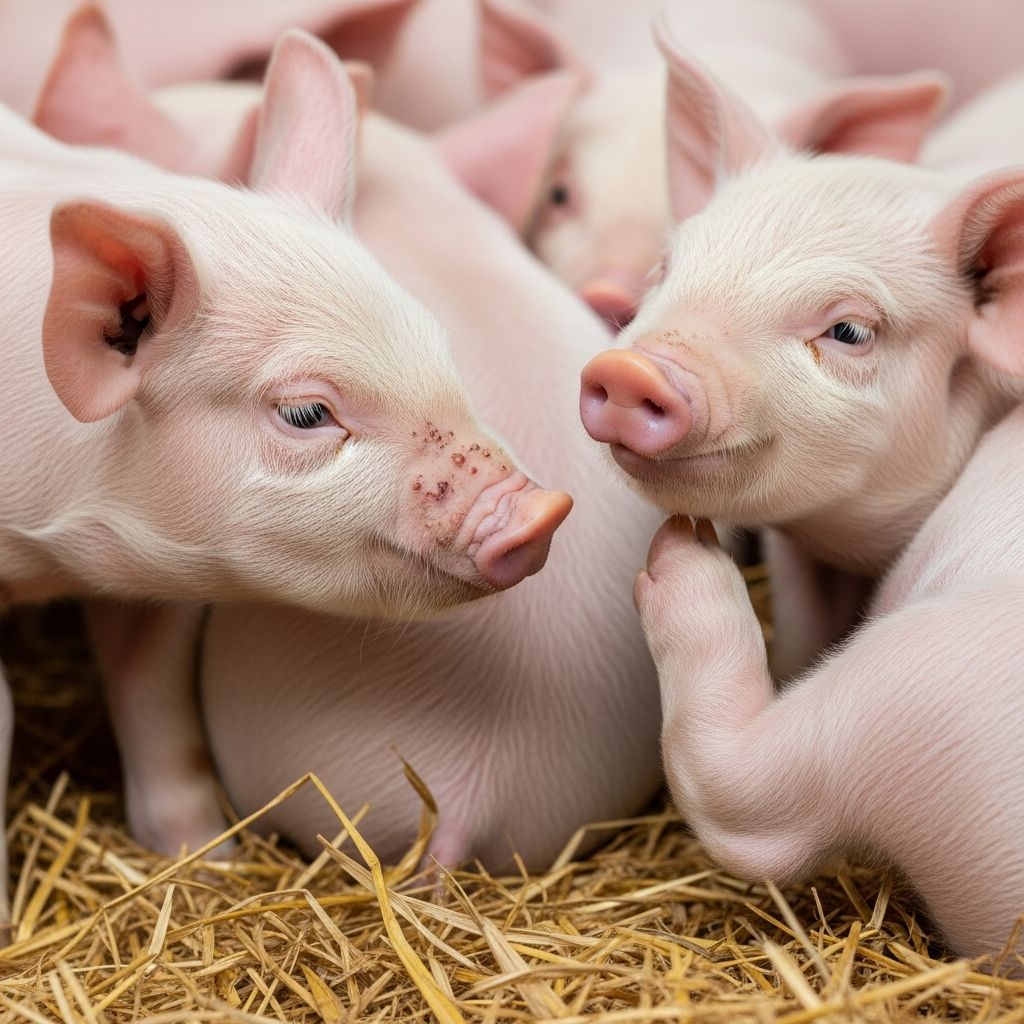
Senecavirus A (SVA), also known as Seneca Valley Virus, is a picornavirus that primarily affects swine, leading to vesicular lesions indistinguishable from those of devastating foreign animal diseases like foot-and-mouth disease (FMD). First identified in the U.S. in the late 1980s but gaining prominence after major outbreaks in 2014-2015, SVA poses diagnostic challenges and economic burdens to the swine industry worldwide.
The Nature and Classification of Senecavirus A
SVA belongs to the genus Senecavirus within the Picornaviridae family, characterized as a small, non-enveloped RNA virus resilient in the environment. Its genetic structure allows persistence in host tissues, complicating eradication efforts. Unlike enveloped viruses, SVA’s stability enables prolonged shedding via feces and vesicular fluids, heightening transmission risks in dense pig populations.
Global emergence traces back to Brazil in 2014, rapidly spreading to the U.S., China, Colombia, and Thailand. In the U.S., seroprevalence averages 72% from 2014-2020 meta-analyses, with breeding farms showing higher rates (17.3%) than growing sites (7.4%). Recent studies confirm ongoing circulation, particularly in high-density Midwest regions accounting for most national production.
Clinical Manifestations Across Pig Age Groups
SVA infection manifests differently by age and production stage, often mimicking other vesicular pathogens. Common signs include vesicles or erosions on snouts, coronary bands (where hoof meets skin), and oral cavities, progressing to ulcers within days.
- Adult sows and finishers: Lethargy, lameness, off-feed events, with vesicles rupturing in 14-16 days; incubation 3-5 days.
- Nursery and growing pigs: Blisters on feet and snouts, occasional diarrhea; lesions heal without scarring but disrupt growth.
- Neonatal piglets: Vesicular disease, severe diarrhea, dehydration, lethargy; mortality spikes 5-60%, with diarrhea persisting 1-5 days.
Increased pre-weaning mortality links directly to neonatal cases, straining breeding operations. Subclinical infections occur in healthy herds, detected via serology rather than overt signs.
Epidemiology and Outbreak Patterns
U.S. data reveal SVA’s persistence post-2015 outbreaks, with low but recurrent incidence in breeding herds. A study across 193 farms in 17 states found breeding sites 2.64 times more likely seropositive. Midwest dominance reflects pig density, mirroring 2015 patterns where 96% of high-mortality cases originated there.
Internationally, slaughterhouses show elevated incidence and herd positivity rates compared to farms, suggesting meat inspection as a surveillance tool. Trends shifted in 2020, with non-healthy farms overtaking slaughter data, indicating evolving dynamics.
| Region/Year | Key Findings | Source |
|---|---|---|
| U.S. 2015 | 1.1% positivity; 109 cases in high-mortality farms | |
| U.S. 2019 | 17.3% seroprevalence in breeding farms | |
| China 2019-2021 | Higher rates in slaughterhouses vs. farms | |
| Global Meta 2014-2020 | 72% average seroprevalence |
These patterns underscore SVA’s endemic status, with subclinical spread amplifying undetected circulation.
Transmission Dynamics and Risk Factors
SVA spreads via direct contact with infected fluids, feces, or aerosols, with viremia lasting 3-10 days and shedding up to 28 days. Persistence in tonsils for months enables reactivation under stress like transport or farrowing.
- Sow-to-piglet: Horizontal via milk/colostrum; possible vertical transmission in viremic litters.
- Within-herd: Personnel movement, animal transport, dead pig handling; rodents as vectors from feces.
- Between-herd: Shared equipment, fomites; market pigs with lesions risk plant shutdowns.
Experimental infections yield variable results, sometimes asymptomatic, highlighting unclear pathogenicity. Antibodies in cattle, mice, and humans suggest zoonotic potential, though no disease confirmed.
Diagnostic Approaches and Differential Challenges
Vesicular lesions trigger mandatory foreign animal disease (FAD) investigations to rule out FMD, vesicular stomatitis, or swine vesicular disease. U.S. protocols demand immediate veterinarian/state official notification.
Laboratory confirmation uses RT-PCR on vesicles, feces, or tissues; histopathology reveals microvesicles with viral mRNA. Serology detects exposure but not active infection. Since 2016, most U.S. FAD probes involve swine vesicular cases, burdening agencies.
Differentiate via:
- Speed: FMD results in 24 hours.
- Samples: Snout/foot swabs, serum, feces.
- Exclusion: Negative for other picornaviruses.
Prevention and Control Strategies
No vaccines or treatments exist; management focuses on biosecurity. Key measures include:
- Quarantine suspect herds; delay marketing lesioned pigs until resolution.
- Enhanced hygiene: footbaths, rodent control, dead pig disposal.
- Surveillance: Monitor neonatal mortality, lesions; routine PCR.
- Limit movements: Segregate ages, disinfect fomites.
Industry guidelines stress vigilance to avoid complacency mistaking SVA for FADs. Breeding farms, higher risk, benefit from sow monitoring pre-farrowing.
Economic and Industry Impacts
SVA disrupts production via mortality, growth lags, and investigations halting trade/transport. Packing plants face shutdown risks from lesioned pigs, amplifying costs. Recurrent U.S. cases, though rare (small herd proportion annually), demand ongoing resources.
Global trade implications arise from FMD-like signs, necessitating rapid diagnostics to maintain export status.
Future Research Directions
Gaps persist in SVA’s full pathogenesis, especially subclinical roles and non-porcine reservoirs. Needed: Vaccine development, persistence mechanisms, precise risk factor quantification. Enhanced surveillance in high-density areas could predict outbreaks.
Frequently Asked Questions (FAQs)
What does Senecavirus A look like in pigs?
Blisters and erosions on snouts, feet, and mouths, plus lameness or diarrhea in young pigs.
Is SVA reportable?
Yes, vesicular signs require immediate FAD investigation.
Can SVA infect humans?
Antibodies detected in one human sample, but no known disease.
How long does shedding last?
Up to 28 days; tonsil persistence months.
Prevention tips for farms?
Biosecurity, lesion monitoring, no marketing of affected pigs.
References
- Senecavirus A Incidence in U.S. Breeding Herds — PMC – NIH. 2024. https://pmc.ncbi.nlm.nih.gov/articles/PMC12153828/
- Seneca Valley Virus — Michigan State University. 2023-09-15. https://www.canr.msu.edu/seneca_valley_virus
- Senecavirus A – SVA (Seneca Valley Virus) — University of Minnesota VDL. 2024. https://vdl.umn.edu/resources/disease-resources/senecavirus-sva-seneca-valley-virus
- Epidemiological investigation of Senecavirus A infection in pig herds — Frontiers in Veterinary Science. 2024-05-20. https://www.frontiersin.org/journals/veterinary-science/articles/10.3389/fvets.2024.1391513/full
- Senecavirus A or Seneca Valley Virus (SVV) — Colorado Department of Agriculture. 2023. https://ag.colorado.gov/animals/livestock-health/senecavirus-a-or-seneca-valley-virus-svv
- Senecavirus A Summary — Swine Health Information Center. 2024-02-01. https://www.swinehealth.org/seneca-valley-virus-summary-2/
Similar Articles








Read full bio of Sneha Tete


