

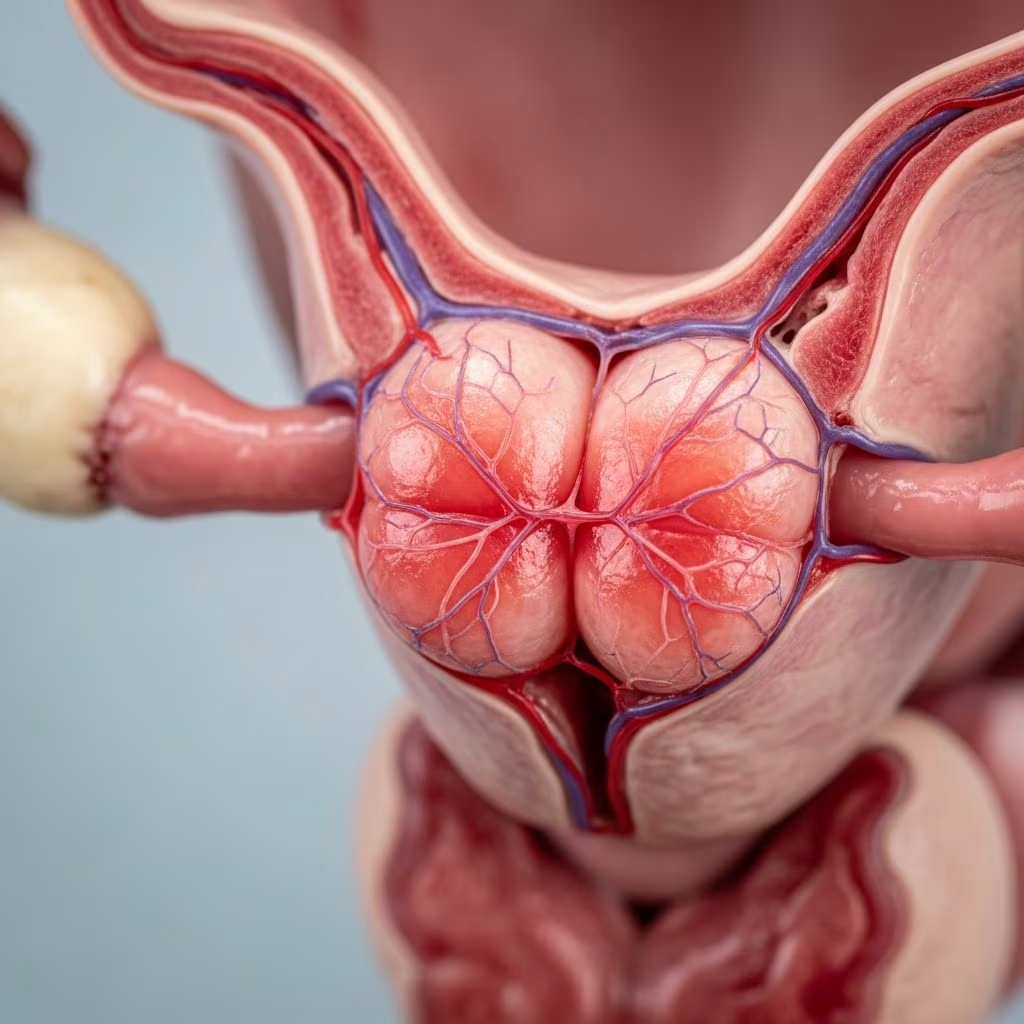
Seminal vesiculitis represents a significant reproductive concern in bull populations, particularly affecting young breeding animals during their initial evaluations. This condition involves inflammation and infection of the vesicular glands, structures essential for semen production and quality. While the disease often progresses silently without observable external symptoms, its presence can render bulls unsuitable for breeding purposes and create substantial economic losses for livestock operations. Understanding the pathophysiology, detection strategies, and available treatment modalities is essential for veterinary professionals and cattle producers managing breeding soundness in their herds.
Understanding the Reproductive Anatomy and Disease Process
The vesicular glands function as accessory reproductive organs that contribute significantly to seminal fluid composition. These paired structures produce secretions critical for sperm viability, motility, and overall semen quality. When infection infiltrates these glands, the resulting inflammatory response compromises their function and introduces pathogenic organisms into the ejaculate. The condition develops through various mechanisms, including bacterial colonization from systemic sources or ascending infections from the lower reproductive tract. Environmental factors, management practices, and nutritional status all influence the likelihood of infection establishment and progression.
Clinical Manifestations and Detection Strategies
A defining characteristic of seminal vesiculitis is the absence of obvious clinical indicators in affected bulls. Most infected animals display no external signs of illness or discomfort. However, in severe acute cases or instances where abscessation has developed, older bulls may demonstrate postural changes, including back arching and reluctance during mounting activities. Pain during rectal examination or defecation may also occur, though such presentations remain uncommon.
The primary diagnostic window occurs during breeding soundness examinations, where two complementary assessment methods reveal the disease’s presence:
- Rectal palpation: Manual examination through the rectal wall allows direct assessment of vesicular gland size and consistency. Normal glands possess a characteristic lobulated texture resembling grape clusters. Infected glands typically feel smooth, enlarged, or abnormally firm.
- Semen microscopy: Microscopic evaluation identifies the presence of white blood cells in semen samples, with 3–5 cells per high-powered field indicating active infection even without concurrent glandular enlargement.
Advanced diagnostic imaging using transrectal ultrasonography provides valuable confirmation by visualizing glandular enlargement and identifying abscessation within affected tissues. This imaging modality proves particularly useful for assessing structural integrity and determining appropriate treatment strategies.
Causative Organisms and Antimicrobial Considerations
While multiple bacterial species can initiate vesicular gland infections, the responsible pathogens typically respond to broad-spectrum antimicrobial agents in laboratory susceptibility testing. However, a critical discrepancy exists between in vitro antimicrobial sensitivity and clinical efficacy. Most broad-spectrum antibiotics fail to achieve therapeutic concentrations within vesicular gland tissue, even when administered at twice the standard label dosages.
Two macrolide antimicrobials—tulathromycin and tilmicosin—have demonstrated superior tissue penetration and clinical effectiveness in treating vesicular gland infections. These agents achieve necessary drug concentrations within glandular tissue, making them the preferred systemic treatment options. Research has established the effectiveness of tulathromycin administered as a single subcutaneous injection at 2.5 mg/kg, or tilmicosin delivered as a single injection at 10 mg/kg.
Age-Related Prognosis and Natural Recovery Patterns
Age represents a critical variable in determining disease outcome and treatment response. Young bulls, particularly those younger than 18 months, frequently experience spontaneous remission of vesiculitis independent of intervention. A significant proportion of infected yearling bulls demonstrate natural recovery rates exceeding 75% during the 4–8 week intervals between initial detection and subsequent breeding soundness evaluations.
Conversely, mature bulls with chronic vesiculitis exhibit markedly different recovery patterns. The likelihood of spontaneous resolution decreases substantially with advancing age, and chronic infections in older bulls rarely resolve without aggressive intervention. The distinction between young and mature bull responses relates partly to immune system development and partly to the chronicity of infection. Management factors also influence outcomes, with research indicating that young bulls housed in confinement systems and fed high-energy rations demonstrate increased susceptibility compared to those maintained on pasture systems.
Comprehensive Treatment Approaches
Systemic Antimicrobial Administration
Initial treatment typically employs systemic injectable antimicrobials using the macrolide compounds previously identified. A single subcutaneous injection of either tulathromycin or tilmicosin initiates therapy. Alternating treatments using both macrolides at appropriate intervals provide options for bulls demonstrating incomplete response to initial therapy.
Intraglandular Injection Methodology
Bulls failing to respond to repeated systemic antimicrobial rounds may require direct intraglandular injection if owners elect to pursue additional treatment rather than culling. This procedure involves a specialized technique executed under veterinary supervision:
- Surgical preparation and disinfection of the perineal area
- Rectal introduction of the clinician’s hand to palpate and stabilize the affected gland
- Introduction of a 14-gauge needle through skin lateral to the rectum to create a pathway
- Advancement of an 18-gauge needle, 20 centimeters in length, directed into the glandular tissue with manual guidance
- Injection of broad-spectrum antimicrobial, such as ampicillin trihydrate, in volumes sufficient to create noticeable glandular swelling
Critically, tilmicosin should never be used for intraglandular injection due to its irritating properties and the severe risk of human injury from inadvertent needle puncture during administration. Additionally, intraglandular injection proves ineffective once abscessation has developed, limiting its application to appropriate cases.
Surgical Intervention
Surgical excision of the affected gland represents an available but challenging treatment option. The procedure is technically demanding and may compromise subsequent semen quality due to reduced seminal fluid production postoperatively. Surgical outcomes remain fair in yearling bulls but have not proven successful in chronically affected adult bulls, limiting this approach to select cases with favorable prognosis.
Factors Influencing Treatment Outcomes
| Variable | Young Bulls (Under 18 months) | Mature/Chronic Bulls |
|---|---|---|
| Spontaneous Recovery Rate | High (frequently 75%+) | Low (rarely spontaneous) |
| Response to Antimicrobials | Generally favorable | Often incomplete |
| Management Impact | High—pasture superior to confinement | Chronic disease less reversible |
| Surgical Prognosis | Fair to good | Poor to fair |
| Breeding Suitability Post-Treatment | Often recovered satisfactory | Usually requires culling |
Breeding Implications and Semen Quality
Contaminated semen from bulls with vesiculitis proves unsuitable for artificial insemination purposes. The presence of pathogenic organisms and inflammatory cells compromises both the safety of reproductive material and its fertilization potential. Bulls demonstrating vesiculitis are classified as unsatisfactory breeders until definitive resolution can be confirmed through repeat examinations and semen evaluation. This designation has substantial economic implications for commercial breeding programs, particularly when valuable genetics must be temporarily removed from breeding rotations during recovery periods.
Management Strategies and Prevention
Prophylactic approaches focus on optimizing management conditions that reduce vesiculitis risk. Housing young bulls in pasture-based systems rather than confinement facilities, combined with appropriate energy-balanced rations, reduces disease incidence. High-energy feed regimens contributing to rumen acidosis appear linked to bacterial proliferation within vesicular tissue, suggesting nutritional management plays a preventive role.
Timely breeding soundness examinations at appropriate intervals—particularly in yearling bulls—enable early disease detection when treatment prospects are most favorable. Early intervention in young bulls, though not universally advantageous given high spontaneous recovery rates, allows documentation of status and management of affected animals during the critical evaluation period.
Prognosis and Decision-Making Framework
The decision whether to treat or cull affected bulls depends on multiple factors including age, disease severity, bull value, and treatment responsiveness. Young bulls with vesiculitis warrant conservative management with monitoring and potential treatment, given high spontaneous recovery rates. Mature bulls with chronic disease and demonstrated treatment failures represent appropriate candidates for culling, as recovery prospects remain poor and prolonged treatment proves economically inefficient.
The presence of abscessation significantly worsens prognosis across all treatment modalities, including intraglandular injection and systemic antimicrobials. Such cases often necessitate culling decisions unless the animal possesses exceptional genetic value justifying surgical intervention and its associated risks.
Frequently Asked Questions
Can vesiculitis be detected without specialized equipment?
Basic detection occurs through rectal palpation and routine semen microscopy during breeding soundness examinations, which most veterinary clinics routinely perform. Transrectal ultrasound provides superior imaging but may not be immediately available at all facilities.
Will all infected young bulls recover spontaneously?
Approximately 77% of infected yearling bulls demonstrate spontaneous recovery, but individual prediction of which animals will recover remains impossible. Close monitoring and repeat examinations document recovery progress.
Is treatment worthwhile for mature bulls with vesiculitis?
Treatment success in mature bulls is substantially lower than in young animals. Most chronic cases in older bulls prove refractory to antimicrobial therapy, making culling the most economically rational decision.
What semen abnormalities indicate vesiculitis?
The classic finding is elevated white blood cells in semen samples. Semen may also appear thickened, brownish, or blood-tinged, though such changes can originate from other reproductive tract locations.
References
- Vesicular Adenitis (Vesiculitis) in Bulls – Reproductive System — Merck Veterinary Manual. 2024. https://www.merckvetmanual.com/reproductive-system/vesicular-adenitis-vesiculitis-in-bulls/vesicular-adenitis-vesiculitis-in-bulls
- Early Detection and Treatment of Vesicular Adenitis in Bulls — National Center for Biotechnology Information (PubMed). Published study. https://pubmed.ncbi.nlm.nih.gov/17027202/
- Seminal Vesiculitis in Bulls — American Angus Association, Angus Journal. 2025. https://www.angus.org/angus-media/angus-journal/2025/11/vet-call



