

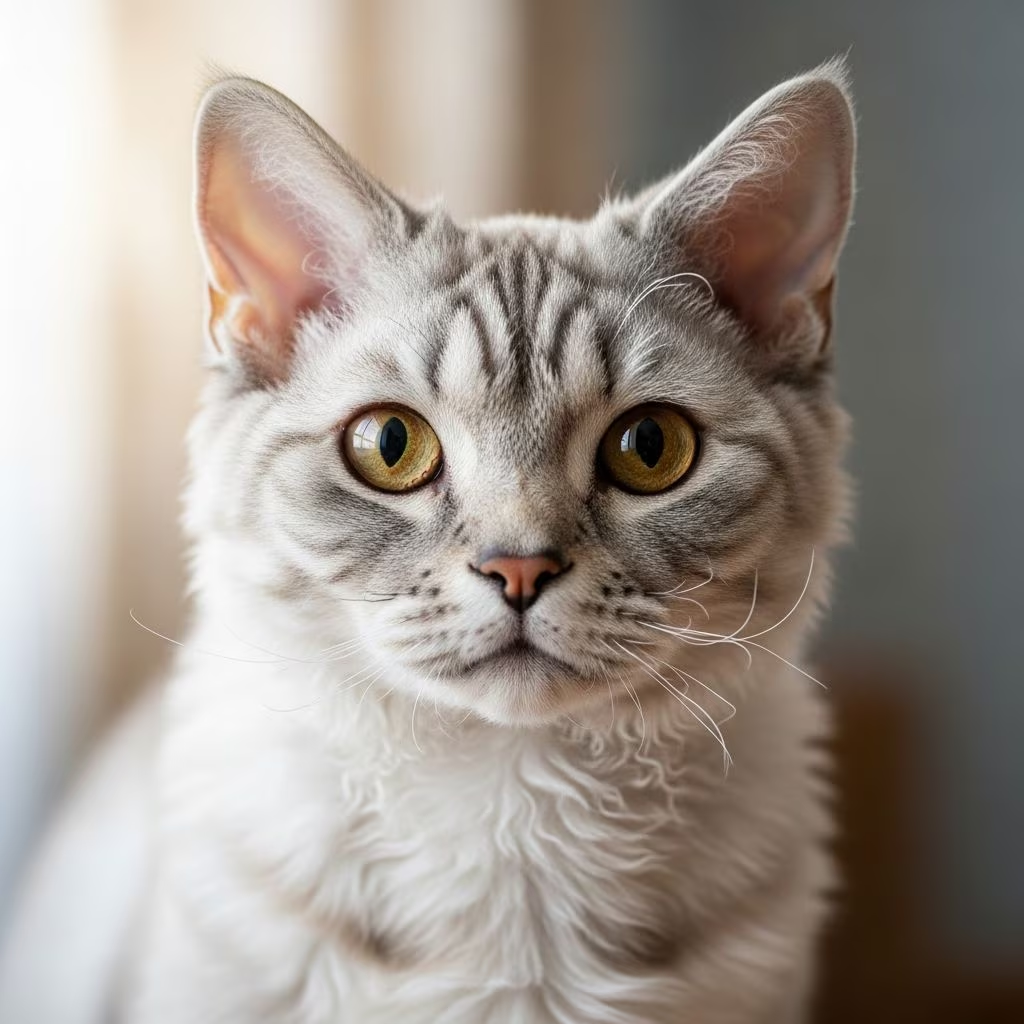
The Selkirk Rex stands out among cat breeds with its lush, curly coat that gives it a teddy bear-like appearance, combined with a warm and engaging personality that wins over families and individuals alike. Originating in the United States, this breed offers a unique blend of playfulness, gentleness, and adaptability, making it a delightful choice for various households.
Origins and Development of the Breed
The story of the Selkirk Rex begins in the late 1980s in Montana, where a stray cat with unusual curly fur gave birth to a litter that included kittens with the same distinctive trait. This discovery led to selective breeding efforts to establish the breed, distinguishing it from other Rex varieties like the Devon or Cornish Rex due to its thicker, denser curls stemming from a dominant genetic mutation rather than a recessive one.
Breeders crossed the original curly kitten with American Shorthairs and Persians to refine the traits, aiming for a balanced, robust cat. By the 1990s, the Cat Fanciers’ Association (CFA) recognized the breed, noting its solid, muscular body and harmonious proportions. Today, the Selkirk Rex is celebrated for its genetic stability and low inbreeding rates, comparable to mixed domestic cats.
Distinctive Physical Features
Selkirk Rex cats are medium to large in size, with males typically weighing 12-16 pounds and females slightly lighter at 7-12 pounds. Their bodies are stocky and muscular, featuring a rectangular shape with substantial boning that conveys strength without bulkiness.
The head is round with full cheeks, a short nose, and large, rounded eyes that convey an expressive, sweet gaze, often in colors matching the coat. Ears are small and set wide apart, adding to the plush facial structure. The paws are large and round, supporting a powerful frame ideal for playful pursuits.
The Signature Curly Coat
What truly sets the Selkirk Rex apart is its woolly, curly fur, present from birth on whiskers, eyebrows, and body. Unlike the sparse waves of other Rex breeds, this coat is thick and plush, with loose ringlets in longhaired varieties and tighter curls in shorthaired ones. The dominant curl gene (autosomal incomplete dominant woolly rexoid hair) means about half of kittens from a curly parent will inherit the trait.
Coat colors and patterns vary widely, including solids, tabbies, torties, and points, allowing for diverse aesthetics. Longhaired versions have flowing curls, while shorthaired ones offer a more tousled look. Shedding is low to medium, but the curls trap debris, necessitating regular care.
Temperament and Daily Behavior
Selkirk Rex cats are renowned for their docile, affectionate nature, often described as “gentle giants” due to their calm demeanor and love for companionship. They form deep bonds with owners, following them around the home and seeking laps for cuddles without being overly demanding.
Playful yet not hyperactive, they enjoy interactive toys, puzzle feeders, and scratching posts to channel their intelligence and curiosity. Quiet-voiced and responsive, they engage in soft conversations with family members. Their sociability extends to children, dogs, and other cats, provided introductions are gentle.
- Affectionate: Thrives on physical closeness and petting sessions.
- Playful: Exhibits clownish antics when engaged with toys.
- Adaptable: Adjusts well to multi-pet homes or apartments.
- Social: Greets guests warmly and dislikes prolonged solitude.
Care Essentials for Optimal Health
Maintaining the Selkirk Rex’s curly coat requires weekly brushing with a wide-tooth comb or slicker brush to prevent mats, especially in longhaired individuals. Bathing every 4-6 weeks keeps curls defined, using cat-specific shampoos. Nail trims biweekly and ear cleaning monthly round out grooming routines.
Diet should emphasize high-quality protein for muscle maintenance, with portion control to prevent obesity as they age. Fresh water and dental care via brushing or treats support longevity. Provide vertical spaces, perches, and enrichment to match their medium energy levels.
| Grooming Task | Frequency | Tips |
|---|---|---|
| Brushing | Weekly | Use soft tools to preserve curls; focus on underbelly. |
| Bathing | Every 4-6 weeks | Conditioner enhances plushness; dry thoroughly. |
| Nail Trimming | Bi-weekly | Introduce early to avoid stress. |
| Dental Care | Daily brushing | Enzymatic toothpaste for plaque control. |
Health Profile and Common Concerns
Selkirk Rex cats enjoy a life expectancy of 10-15 years with proper care, benefiting from hybrid vigor in their pedigree. However, as a breed with Persian influences, they may be prone to hypertrophic cardiomyopathy (HCM), polycystic kidney disease (PKD), and hip dysplasia. Routine veterinary screenings, including ultrasounds and bloodwork, are recommended.
Homozygous curly cats (two curl genes) can have tighter curls, slimmer bodies, and larger ears, but no major health detriments are widely reported. Obesity risk increases with age due to their laid-back lifestyle, so monitor weight. Spaying/neutering reduces certain cancers.
- Screen for HCM annually after age 1.
- Test for PKD via genetic or ultrasound.
- Maintain ideal body condition score.
Ideal Living Environments
These cats flourish in homes with attentive owners who provide interaction. Apartments suit them if enriched with toys and windows for bird-watching. They tolerate travel and adapt to routines but prefer not to be left alone for extended periods—consider a feline companion if needed.
Families with respectful children find them patient playmates. Their low vocalization makes them neighbor-friendly, and moderate shedding minimizes allergens compared to straight-coated breeds.
Bringing Home a Selkirk Rex
Acquire from reputable CFA-registered breeders who health-test parents and offer guarantees. Kittens show curls at birth, but straight-coated littermates can carry the gene. Adoption from rescues is possible, though purebreds are rarer. Prepare with kitten-proofing, quality food, litter box, and carrier.
Early socialization fosters their confident, outgoing traits. Budget for initial costs ($800-$2000) plus ongoing vet/grooming expenses.
Frequently Asked Questions (FAQs)
Are Selkirk Rex cats hypoallergenic?
No, but low shedding and minimal dander make them suitable for some allergy sufferers. Regular grooming helps.
How much do Selkirk Rex cats shed?
Low to medium; curls catch loose fur, so brushing captures it effectively.
Do Selkirk Rex cats get along with dogs?
Yes, their gentle nature promotes harmony with patient introductions.
What’s the difference between Selkirk Rex and Devon Rex?
Selkirk has thicker curls from a dominant gene; Devon has sparse waves from recessive genetics.
Can Selkirk Rex cats have straight hair?
Yes, straight-coated cats from curly parents carry the gene and can produce curly offspring.
Why Choose a Selkirk Rex?
With their plush curls, loving hearts, and easygoing vibes, Selkirk Rex cats offer endless joy and minimal fuss. Their unique look and loyal companionship make them standout pets for cuddle enthusiasts seeking a forever friend.
References
- Selkirk Rex Cat Breed – Hill’s Pet Nutrition — Hill’s Pet Nutrition. 2023. https://www.hillspet.com/cat-care/cat-breeds/selkirk-rex
- What is a Selkirk Rex Cat? — Cat Box Classics. 2024. https://catboxclassics.com/blogs/cat-news/what-is-a-selkirk-rex-cat
- Breed Of The Month – Selkirk Rex — Feline Forums. 2022. https://felineforums.com/threads/selkirk-rex.224/
- Selkirk Rex Cat Breed Profile — Litter-Robot. 2024. https://www.litter-robot.com/blog/selkirk-rex-cat/
- Selkirk Rex — The Cat Fanciers’ Association. 2025. https://cfa.org/breed/selkirk-rex/
- Selkirk Rex — Wikipedia. 2025-01-15. https://en.wikipedia.org/wiki/Selkirk_Rex
- Selkirk Rex Cat Breed Health and Care — PetMD. 2024. https://www.petmd.com/cat/breeds/selkirk-rex



