

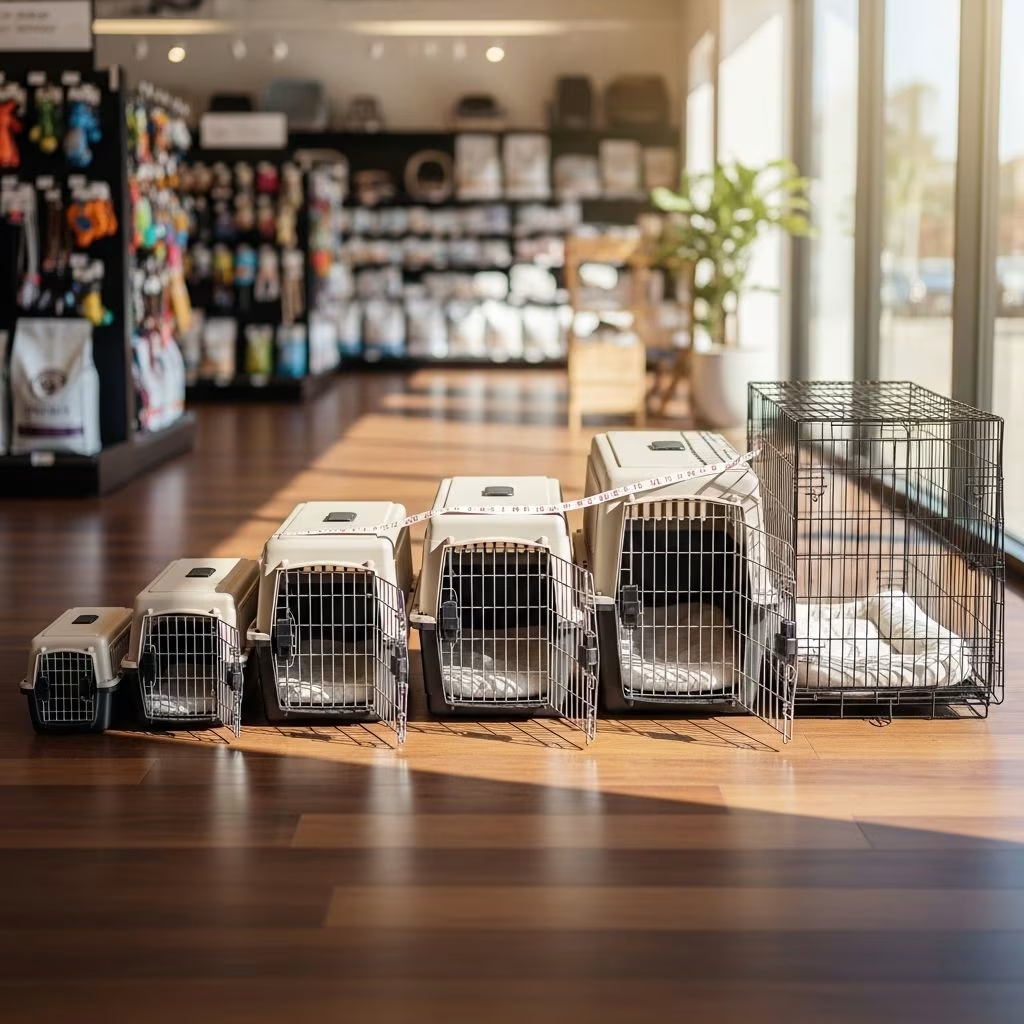
Choosing an appropriately sized dog crate is one of the most important decisions a pet owner can make. A crate serves multiple purposes in your dog’s life—from providing a safe haven and training tool to facilitating travel and veterinary visits. However, selecting a crate that’s too small can cause discomfort and stress, while one that’s excessively large may undermine housebreaking efforts and fail to provide the secure feeling dogs naturally seek. Understanding how to properly measure your dog and match those measurements to crate dimensions is essential for creating a positive experience.
Understanding Why Crate Size Matters
The right-sized crate balances comfort with functionality. Dogs are den animals by nature and feel secure in appropriately confined spaces. A crate that allows your dog to stand, turn around, and lie down comfortably—but not so large that it becomes a sprawling bedroom—encourages natural behaviors and supports training objectives. This balance is particularly critical during housebreaking, as dogs naturally avoid soiling their sleeping areas, and an oversized crate may give them enough room to relieve themselves in one corner while sleeping in another.
Taking Accurate Measurements: The Foundation of Proper Sizing
Before shopping for a crate, you must measure your dog with precision. Accurate measurements prevent costly mistakes and ensure your dog’s comfort and safety.
Measuring Length: From Nose to Tail
Begin by measuring your dog’s length. Have your dog stand naturally, and measure from the tip of their nose to the base of their tail. This measurement provides the foundation for determining appropriate crate length. Once you have this baseline measurement, add 2 to 4 inches to ensure your dog has adequate space to move comfortably without the crate feeling cramped. This extra space allows your dog to shift positions naturally and prevents a sense of confinement that could create anxiety.
Measuring Height: From Paw to Crown
Height measurement requires your dog to stand upright against a wall or fixed surface. Measure from the floor to the top of your dog’s head. Some measurement standards reference the dog’s shoulders (called the withers) rather than the full head height, so clarify which standard applies when comparing crate specifications. Once you have the height measurement, add 2 to 4 inches for clearance, allowing your dog to stand without their head touching the top of the crate.
Additional Considerations: Accounting for Bedding
If you plan to place a pad or bed inside the crate, account for the additional height these items will consume. A typical crate pad or bed can add 1 to 2 inches to the interior height, which means you should factor this into your final size selection to ensure your dog still has adequate clearance.
Standard Crate Size Categories and Their Applications
The pet industry has established standardized crate sizes to simplify selection. Understanding these categories helps you navigate available options efficiently.
Extra-Extra Small Crates
These compact crates measure approximately 16 inches in length and 9 inches in height, with a weight capacity of around 10 pounds. They accommodate toy breeds including Chihuahuas, Pomeranians, and Yorkshire Terriers. These crates are ideal for owners with very small dogs or those requiring maximum portability for travel.
Extra Small and Small Categories
Extra small crates typically measure 18 inches in length and 11 inches in height, accommodating breeds up to 15 pounds such as miniature Dachshunds and Maltese dogs. Small crates span approximately 22 inches in length and 16 inches in height, supporting dogs weighing up to 25 pounds including French Bulldogs and Cavalier King Charles Spaniels.
Medium and Intermediate Sizes
Medium crates range from 24 inches in length and 20 inches in height, suitable for dogs weighing 30 pounds such as Beagles and Welsh Corgis. Intermediate sizes expand to approximately 30 inches in length and 23 inches in height, accommodating dogs up to 50 pounds including Cocker Spaniels and Border Collies.
Large and Extra Large Options
Large crates typically measure 32 inches in length and 25 inches in height, supporting dogs weighing up to 70 pounds such as Chow Chows and Samoyeds. Extra large crates extend to 36 inches in length and 28 inches in height, designed for dogs exceeding 70 pounds including German Shepherds, Golden Retrievers, and Labrador Retrievers.
Special Considerations for Puppies: Growing Into the Right Size
Selecting a crate for a growing puppy presents unique challenges. Your puppy will grow significantly during its first two to three months, and choosing an adult-sized crate immediately can compromise housebreaking success.
Researching Expected Adult Size
If you’re acquiring a puppy, ask your breeder about the puppy’s expected adult weight, height, and the parents’ dimensions if known. For mixed-breed puppies without breeder information, research your dog’s breed online through the American Kennel Club (AKC) or similar authoritative resources to determine expected adult size, accounting for sex differences within the breed.
Utilizing Divider Panels
A practical solution involves purchasing a full-sized adult crate equipped with adjustable divider panels. These panels create a smaller interior space appropriate for your puppy’s current size. As your puppy grows, you gradually remove the dividers, allowing the crate to expand with your dog. This approach proves more economical than purchasing multiple crates and ensures consistent training throughout the growth period.
Measuring Techniques for Accurate Results
Obtaining precise measurements can be challenging with wiggly or impatient dogs. Several techniques facilitate accurate measurement.
Positioning Your Dog Properly
Stand your dog against a wall or fixed door to establish a reference point for height measurement. This stationary position eliminates measurement variation caused by posture shifts. For length measurement, ensure your dog stands naturally without stretching or crouching, as this provides the most representative baseline for typical crating scenarios.
Managing an Energetic Dog
Dogs that won’t remain still during measurement present challenges. Keep high-value treats readily available to keep your dog focused and stationary for the duration of the measurement process. Brief, positive measurement sessions are more effective than prolonged attempts that create frustration.
Professional Assistance Options
If home measurement proves difficult, visit your veterinarian or a professional dog trainer who can accurately measure your dog while providing breed-specific guidance. Many veterinary clinics offer this service as part of preventive care, and trainers often provide measurements during initial consultations.
Weighing Your Dog: The Secondary Measurement
While length and height form the primary sizing criteria, weight provides additional confirmation and helps identify appropriate crate categories.
Weighing at Home
You can weigh your dog using a standard bathroom scale. Weigh yourself alone, then weigh yourself while holding your dog, and subtract your weight from the combined total. This method works well for most dogs, though very active dogs may not remain on the scale long enough for an accurate reading.
Professional Weighing
Veterinary clinics offer accurate weight measurements as part of routine visits. Many pet supply retailers also have scales available for customer use at no charge, providing convenient weighing opportunities during shopping trips.
Comparing Interior and Exterior Measurements
When reviewing crate specifications, understand the distinction between interior and exterior dimensions. Published dimensions typically include exterior measurements, but your dog’s comfort depends on interior space. Interior dimensions exclude doorways and side rims, which can reduce usable space by several inches. Always request or calculate interior dimensions when possible, as these accurately reflect the space available for your dog.
Breed-Specific Sizing Guidance
While individual dog measurements remain paramount, breed categories provide helpful reference points:
- Toy and small breeds: Heights typically range from 6 to 18 inches and weights from 1 to 30 pounds, requiring crates in the extra-small to small categories.
- Medium breeds: Heights span 18 to 22 inches with weights from 30 to 50 pounds, fitting standard medium crate sizes.
- Intermediate-sized dogs: Heights reach 23 to 25 inches with weights between 50 and 70 pounds, requiring intermediate to large crates.
- Large breeds: Heights exceed 25 inches with weights frequently surpassing 70 pounds, necessitating large or extra-large crates.
Ensuring Long-Term Comfort and Functionality
Selecting an appropriately sized crate contributes to successful crate training, emergency preparedness, and veterinary care cooperation. A dog that views their crate as a comfortable refuge rather than a confining punishment develops positive associations with the space. This positive relationship becomes invaluable during stressful situations such as veterinary visits, travel, or temporary boarding.
Taking time to accurately measure your dog and match those measurements to suitable crate dimensions represents an investment in your dog’s psychological wellbeing and your success as a trainer and pet owner. The effort invested in proper sizing pays dividends throughout your dog’s life.
References
- How to Choose the Type & Size of Dog Crate — Carlson Pet Products. https://carlsonpetproducts.com/blogs/news/how-to-choose-the-type-and-size-of-dog-crate
- Measurement Guide Pet Carrier-Crate-Kennels — DryFur. https://www.dryfur.tv/pets-on-airplanes-blog/measurement-guide-pet-carriercratekennels/
- Dog Crate Sizing Guide: Find the Right Size Crate — Diggs Pet. https://www.diggs.pet/blogs/posts/dog-crate-sizing-guide
- TNC Custom Dog Crates Sizing Guide — TNC Custom Dog Crates. https://tnccrates.com/pages/sizing-information
- Crate & Carrier Sizing Chart — PetSmart. https://www.petsmart.com/help/sizing-charts-H0012a.html
- What Size Crate Should I Get? — MidWest Homes for Pets. https://www.midwesthomes4pets.com/resources/cratesizing/



