

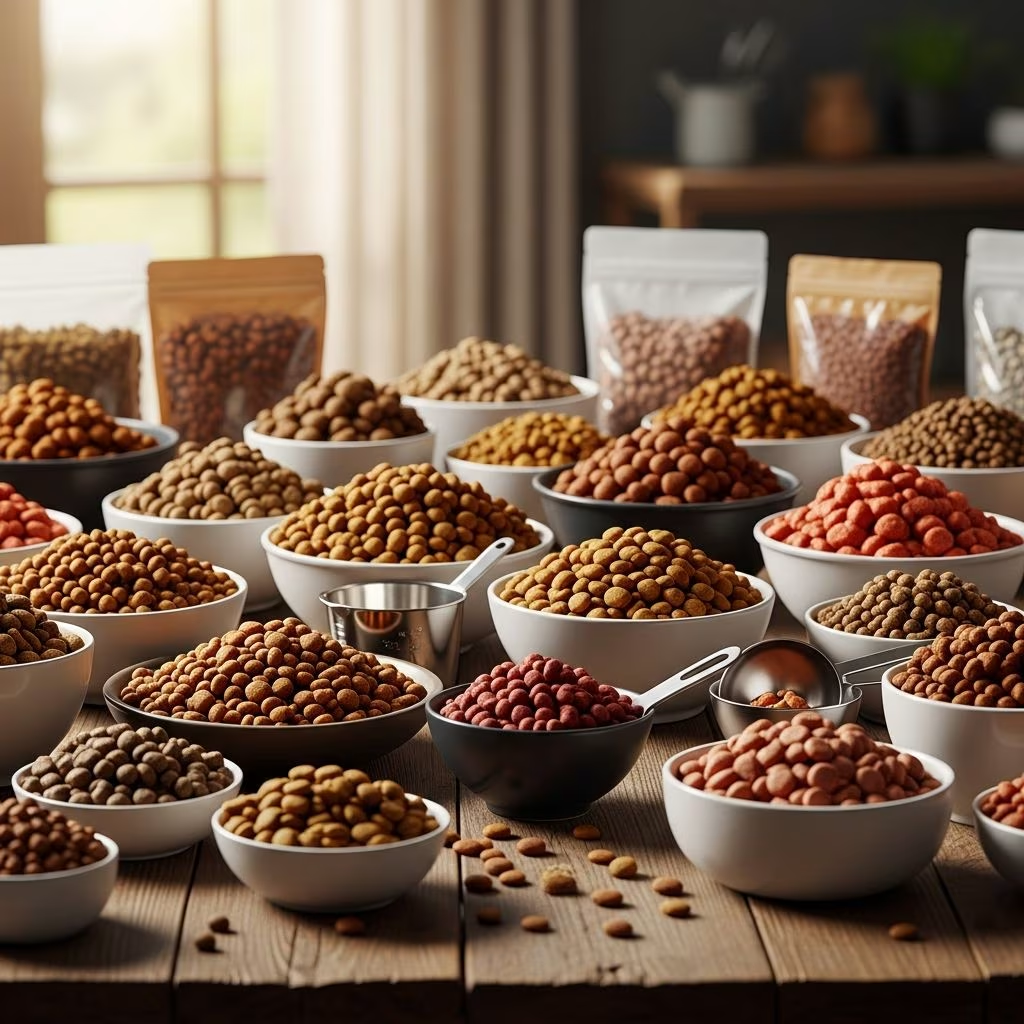
Choosing the appropriate dog food involves evaluating nutritional content, life-stage suitability, and individual pet factors to promote long-term health and vitality. A well-selected diet meets essential nutrient requirements as defined by organizations like the Association of American Feed Control Officials (AAFCO), ensuring complete and balanced nutrition.
Core Nutrients for Canine Wellness
Dogs require a precise blend of macronutrients and micronutrients to thrive. These include proteins for tissue repair, fats for energy, carbohydrates for sustained fuel, and vital vitamins and minerals for metabolic functions.
Proteins: Building Blocks of Health
Proteins form the foundation for muscle development, skin integrity, and immune response in dogs. They break down into amino acids, with ten essential ones that dogs cannot synthesize independently and must obtain from food. Animal-based proteins typically offer superior digestibility and complete amino acid profiles compared to plant sources, though balanced vegetarian options exist under veterinary supervision.
AAFCO sets minimum protein levels at 22.5% dry matter (DM) for growing puppies and 18% DM for adults, with optimal ranges not exceeding 30% DM to avoid excess that could strain kidneys in certain conditions.
Fats: Energy Powerhouses
Fats deliver the highest caloric density, providing 2.25 times more energy than proteins or carbohydrates, while supporting cell membranes and hormone production. Essential fatty acids like linoleic acid (omega-6) and EPA/DHA (omega-3) come from sources such as vegetable oils, chicken fat, and fish oils. AAFCO minimums are 8.5% DM for growth/reproduction and 5.5% DM for adult maintenance.
Carbohydrates and Fiber: Digestive Support
While not strictly essential, carbohydrates supply energy, generate heat, and form the basis for other nutrients. They typically comprise 30-60% of dry foods, sourced from grains like rice and oats or vegetables. Fiber, a carbohydrate subset, promotes gut health through soluble and insoluble types, aiding digestion and microbial balance.
| Carb Type | Sources | Key Benefits | Digestibility |
|---|---|---|---|
| Simple Sugars | Fruits, honey | Quick energy boost | High |
| Oligosaccharides | Legumes, vegetables | Prebiotic effects | Moderate |
| Polysaccharides | Grains, potatoes | Sustained energy, fiber | Variable |
| Fibrous | Bran, apples | Gut health support | Fermentable |
Vitamins, Minerals, and Water
Vitamins and minerals facilitate enzyme functions, bone health, and antioxidant protection. Calcium and phosphorus ratios are critical, with FEDIAF recommending 0.50-1.00g calcium and 0.40-0.90g phosphorus per 1000 kcal ME for adults. Water remains indispensable, comprising up to 70-80% of a dog’s body and essential for all physiological processes.
Deciphering Dog Food Labels
Labels provide crucial data via the guaranteed analysis, ingredient list, and nutritional adequacy statement. Convert percentages to dry matter basis for fair comparisons, as moisture varies: DM % = 100 – moisture %. For instance, a canned food with 12% protein and 78% moisture yields 54.5% DM protein, outpacing some dry foods.
Look for AAFCO statements confirming “complete and balanced” for all life stages or specific phases, backed by feeding trials or formulation to AAFCO profiles. Ingredient lists prioritize by weight pre-cooking; named meat sources indicate quality proteins.
Tailoring Food to Life Stages
Nutritional demands shift across puppyhood, adulthood, gestation, and senior years. Puppies need higher protein (22.5%+ DM) and fats for rapid growth, while adults maintain with 18%+ protein. Lactating females require elevated calories, often 2-3 times maintenance.
- Puppies: Focus on growth formulas with DHA for brain development.
- Adults: Balanced maintenance diets suited to activity levels.
- Seniors: Joint-supporting glucosamine, lower calories to prevent obesity.
- Working Dogs: High-energy formulas for endurance.
Portion Control and Feeding Practices
Overfeeding leads to obesity; use feeding charts adjusted for weight, age, and activity. Purina guidelines suggest 1/3-1 cup dry food for 3-12 lb adults, scaling to 4-1/4+ cups for 100+ lb dogs, but always check product-specific calories.
| Adult Weight (lbs) | Dry Food (cups/day) |
|---|---|
| 3-12 | 1/3 – 1 |
| 13-20 | 1 – 1 1/3 |
| 21-35 | 1 1/3 – 2 |
| 36-50 | 2 – 2 2/3 |
| 51-75 | 2 2/3 – 3 1/3 |
| 76-100 | 3 1/3 – 4 1/4 |
| 100+ | 4 1/4 + 1/4 per 10 lbs |
Divide into 2-3 meals daily; limit treats to <15% calories to preserve balance. Monitor body condition score (BCS) via ribs palpation and waist visibility.
Special Diets and Health Considerations
Conditions like allergies, obesity, or renal issues demand therapeutic diets. Consult veterinarians for homemade meals, as they risk imbalances without expert formulation. Vegetarian diets are viable if AAFCO-compliant and vet-approved. Breed-specific needs, e.g., large breeds’ controlled calcium for joint health, further customize choices.
Storage, Safety, and Transitions
Store in cool, dry places; use within stated dates. Transition foods gradually over 7-10 days to prevent digestive upset: 25% new food day 1-2, increasing incrementally. Wash bowls daily and avoid raw diets without risk assessment due to pathogens.
Frequently Asked Questions
What does ‘complete and balanced’ mean on dog food?
It indicates the food fulfills AAFCO nutrient profiles or passes feeding trials for specified life stages.
How do I calculate dry matter for comparison?
Subtract moisture % from 100, then divide nutrient % by DM % and multiply by 100.
Can dogs eat grain-free diets?
Yes, if balanced, but grains provide digestible carbs; consult vets for necessity.
How often should I switch foods?
Only for needs like age changes; abrupt switches risk GI issues.
What’s the role of wet vs. dry food?
Wet offers hydration (high moisture), dry aids dental health; mix for variety if balanced.
This comprehensive approach ensures your dog receives tailored nutrition for peak performance and happiness. Regular vet check-ups refine choices based on health evolutions.
References
- Dog Nutrition: Guide to Dog Food Nutrients — PetMD. 2023. https://www.petmd.com/dog/nutrition/evr_dg_whats_in_a_balanced_dog_food
- Nutrition – General Feeding Guidelines for Dogs — VCA Animal Hospitals. 2024. https://vcahospitals.com/know-your-pet/nutrition-general-feeding-guidelines-for-dogs
- Dog Feeding Chart: How Much Should I Feed My Dog? — Purina. 2025. https://www.purina.com/articles/dog/feeding/guides/how-much-should-i-feed-my-dog
- FEDIAF Nutritional Guidelines — European Pet Food Industry Federation. 2025-09. https://www.europeanpetfood.org/wp-content/uploads/2025/09/FEDIAF-Nutritional-Guidelines_2025-ONLINE.pdf
- “Complete and Balanced” Pet Food — U.S. Food and Drug Administration. 2024. https://www.fda.gov/animal-veterinary/animal-health-literacy/complete-and-balanced-pet-food
- Re-evaluating your dog’s diet — Cornell University College of Veterinary Medicine. 2023. https://www.vet.cornell.edu/departments-centers-and-institutes/riney-canine-health-center/canine-health-topics/re-evaluating-your-dogs-diet
- Dog Nutrition: What & How Much To Feed My Dog — American Kennel Club. 2025. https://www.akc.org/expert-advice/nutrition/
- Understanding Pet Food — AAFCO. 2025. https://www.aafco.org/consumers/understanding-pet-food/



