

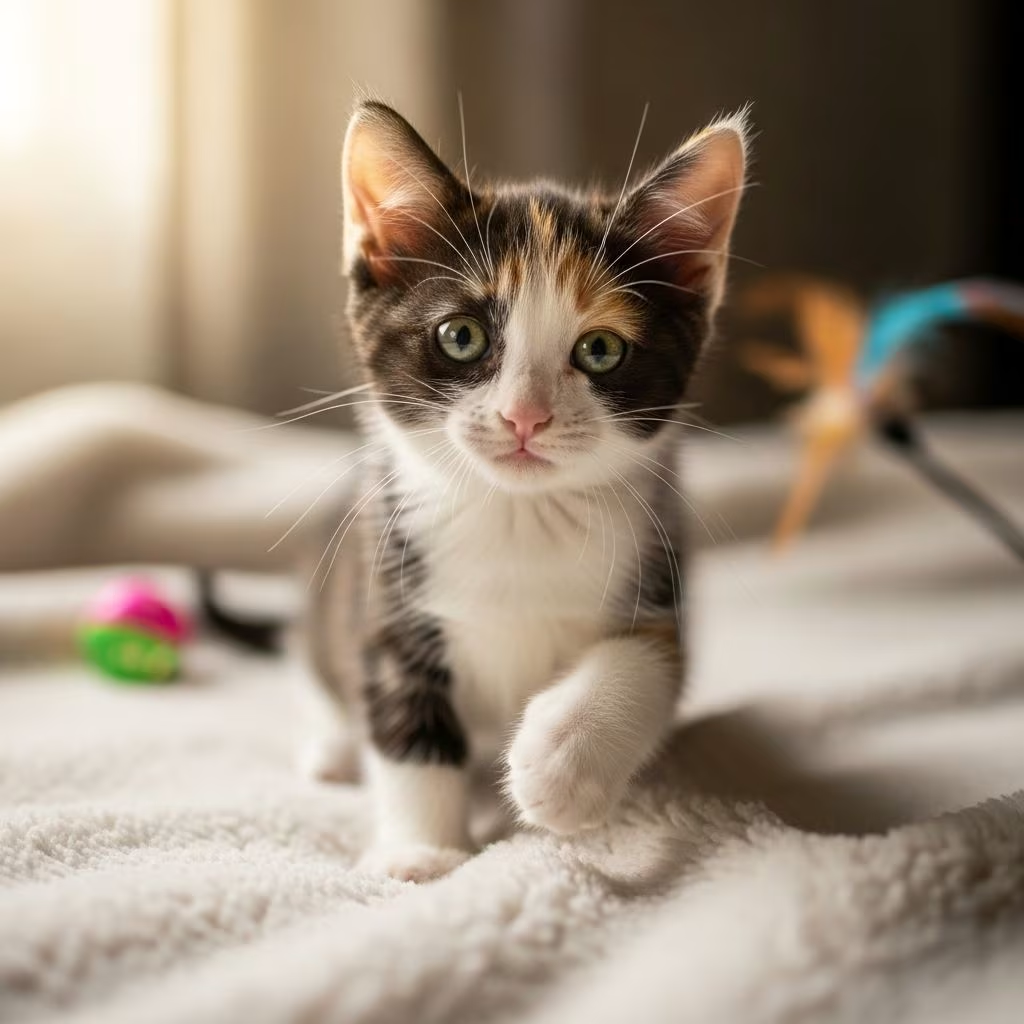
Bringing a kitten into your home is an exciting decision that shapes years of companionship. To make the right choice, evaluate both their budding personality and physical condition. This ensures the kitten thrives in your environment while bringing joy without overwhelming your daily routine.
Understanding Kitten Temperaments: Key Traits to Observe
Kittens display distinct behavioral patterns early on, influenced by genetics, early socialization, and litter interactions. Recognizing these helps predict their adult behavior. Research identifies core traits like neuroticism, extraversion, dominance, impulsiveness, and agreeableness, often called the Feline Five.
- Neuroticism (Skittishness): These kittens appear anxious, avoiding contact and hiding from stimuli. They shiver when handled or retreat from littermates, signaling a need for patient, low-stress homes.
- Extraversion (Outgoingness): Bold explorers who investigate everything, these energetic kittens chase siblings and approach strangers eagerly. They demand stimulation to prevent boredom-induced mischief.
- Dominance: Assertive leaders who control play and resources, often bullying littermates. They suit experienced owners ready for boundary-setting.
- Impulsiveness: Unpredictable reactors to stress, darting away or lashing out inconsistently. Early training curbs this as they mature.
- Agreeableness (Tolerance): Sociable peacekeepers who purr during handling and coexist harmoniously with others. Ideal for multi-pet or family settings.
Observe during visits: alert eyes, smooth fur, and interactive play indicate vitality. Well-socialized litters from calm mothers produce confident kittens.
Matching Kitten Energy Levels to Your Lifestyle
Your household dynamics dictate the best fit. Consider work hours, other pets, children, and tolerance for activity.
| Kitten Type | Characteristics | Best For | Challenges |
|---|---|---|---|
| High-Energy Explorer | Non-stop racing, fearless pouncing, wiggly when held | Active homes with playtime commitment; pairs prevent boredom | Potential for breakage; needs toys, trees |
| Balanced Companion | Plays moderately, settles quickly, purrs on laps | Families, multi-pet homes, variable schedules | Minimal; adaptable to alone time |
| Shy Observer | Sits apart, trembles when picked up, slow to engage | Quiet, adult-only homes; gradual socialization | Requires patience; not for chaotic environments |
High-energy types bond deeply with frequent interaction but thrive in pairs. Balanced kittens handle kids and pets effortlessly. Shy ones need gentle encouragement, like hiding spots and pheromone diffusers.
Essential Health Evaluations Before Adoption
Physical wellness underpins a kitten’s personality expression. Seek clear eyes, cool nose, glossy coat without bald spots, and lively demeanor. Check for:
- Clean ears, no discharge
- Pink gums, no foul breath
- Firm belly, no bloating or parasites
- Straight limbs, steady gait
- Vaccination records, deworming proof
Veterinarian checks confirm FIV/FeLV negativity and proper development. Kittens aged 8-12 weeks are ideal, post-weaning but pre-major socialization windows.
Practical Tips for Assessing Kitten Fit During Visits
Spend time observing the litter. Note instigators versus loungers. Handle each: compliant ones relax; resistors signal independence.
- Enter quietly; watch natural behaviors.
- Sit on floor; let kittens approach.
- Gently lift; assess comfort.
- Introduce mild noises; gauge reactions.
- Ask breeder/shelter about parent temperaments.
Trust your instincts—if a kitten captivates you, it’s a sign.
Post-Adoption: Nurturing Your Kitten’s Personality
Early environment refines traits. Provide vertical spaces for climbers, puzzles for thinkers, and soft beds for snugglers. Daily play (15-30 minutes) builds bonds and hones skills learned from siblings.
For shy kittens, use treats and slow exposures. Dominant ones benefit from consistent rules. Track changes; consult vets if aggression or withdrawal emerges, ruling out health issues.
Common Myths About Kitten Personalities Debunked
- Myth: All kittens outgrow hyperactivity. High-energy persists; channel it appropriately.
- Myth: Shy kittens stay antisocial. With socialization, many blossom.
- Myth: Breed dictates personality solely. Individual variation trumps breed stereotypes.
Frequently Asked Questions (FAQs)
What age is best for adopting a kitten?
8-12 weeks allows weaning and initial socialization while bonding window remains open.
How do I handle a fearful kitten?
Offer safe spaces, avoid forcing interaction, use positive reinforcement gradually.
Can I change a kitten’s temperament?
Environment shapes expression, but core traits endure. Enrichment enhances adaptability.
Should I adopt littermates?
Yes for high-energy types; reduces stress and boredom.
What if health signs concern me?
Postpone adoption; seek vet evaluation first.
Selecting a kitten blends science and heart. By aligning temperament and health with your life, you foster a resilient, affectionate companion. Invest time upfront for rewarding years ahead.
References
- Understanding A Kitten’s Temperament — Chewy. 2021 (approx., based on content). https://www.chewy.com/education/cat/training-and-behavior/understanding-a-kittens-temperament
- A Cat’s Personality — FOUR PAWS International. 2023 (approx.). https://www.fourpawsusa.org/our-stories/publications-guides/a-cats-personality
- There Are 5 Feline Personality Types – Which Is Your Cat? — Meowingtons. 2022 (approx.). https://www.meowingtons.com/blogs/lolcats/study-identifies-5-feline-personality-types-which
- Understanding Cat Personalities: What Makes Your Cat Tick? — OVRS. 2024 (approx., recent update inferred). https://www.ovrs.com/blog/understanding-cat-personalities-what-makes-your-cat-tick/
- Developmental Stages of Kitten Behavior — PAWS. 2023 (approx.). https://www.paws.org/resources/developmental-stages-of-kitten-behavior/
- Choosing kittens for their cat qualities — Way of Cats. 2020 (approx., enduring relevance). https://www.wayofcats.com/blog/choosing-kittens-for-their-cat-qualities/30197



