

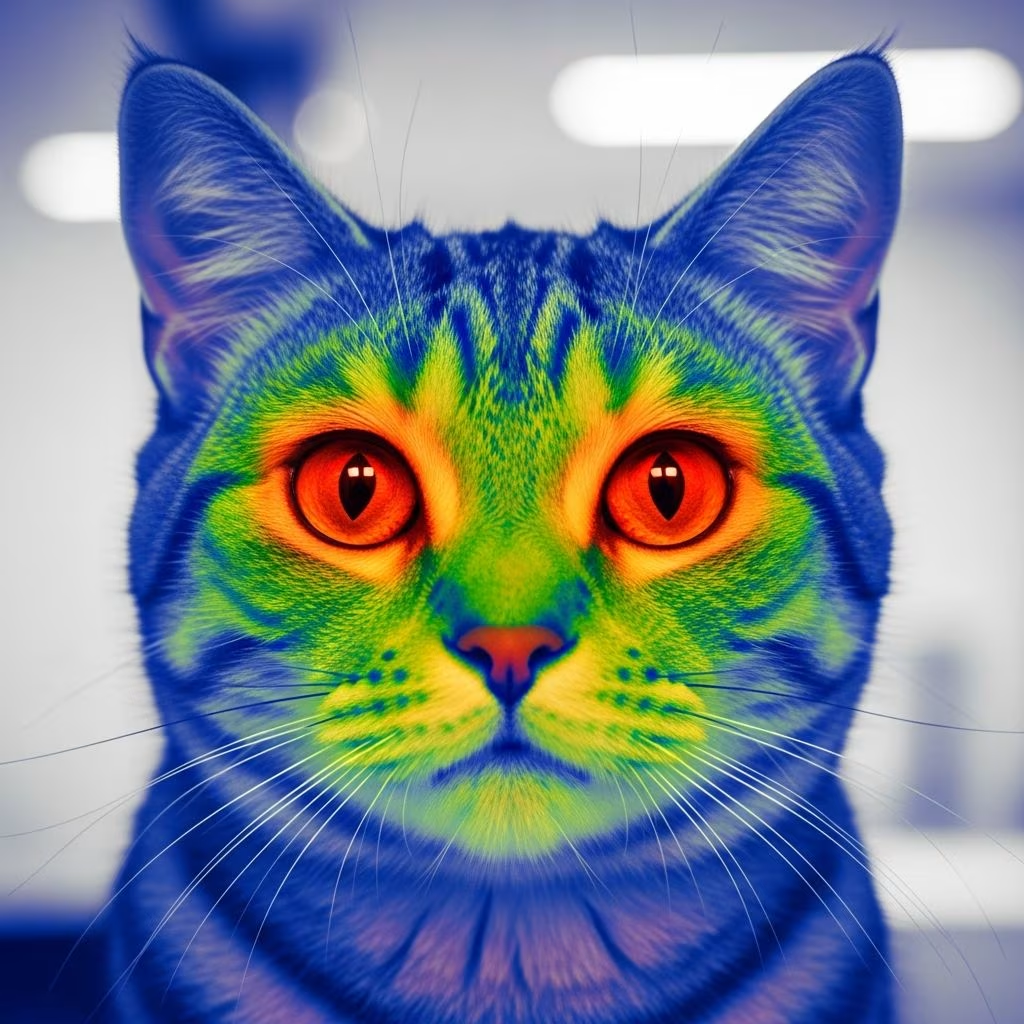
Thermal imaging offers a window into the emotional lives of cats by capturing heat patterns on their faces and bodies that signal joy, fear, or anger. This technology detects subtle temperature variations tied to blood flow changes during emotional arousal, helping owners interpret feline moods more accurately.
The Science Behind Heat and Feline Emotions
Cats experience emotions that trigger physiological responses, including shifts in facial blood flow measurable via infrared thermography. When a cat feels stressed, areas like the ears or nose cool due to vasoconstriction, while positive states warm them through vasodilation. Researchers have found cats integrate visual and auditory cues from humans and other cats to recognize emotions, modulating their behavior accordingly.
Studies using cross-modal tests show cats match emotional faces with corresponding sounds, such as pairing a hiss with an aggressive expression or a purr with contentment. This ability extends to human signals, where cats distinguish happiness from anger, responding with higher stress to negative cues. Unlike dogs, cats show subtler reactions but still form mental representations of social partners’ feelings.
How Thermal Cameras Capture Emotional Heat Maps
Infrared cameras visualize surface temperatures in real-time, creating color-coded maps where red indicates warmth and blue shows coolness. For cats, key zones include the nasal planum, ears, and orbital region, which fluctuate with arousal levels. During play or affection, these areas heat up; in fear, they cool rapidly.
- Nasal area: Cools under stress as blood diverts from the face.
- Ears: Warm during relaxation, cold when anxious.
- Eye region: Heats with excitement or aggression.
Practical applications involve pet owners using affordable thermal devices to monitor cats during vet visits or new environments, spotting distress early for interventions like calming pheromones.
Comparing Emotional Cues: Thermal vs. Traditional Signs
| Emotional State | Thermal Signature | Behavioral Indicators | Vocal/Visual Cues ||—————–|——————|———————-|——————|| Happiness/Relaxation | Warmer face, ears | Purring, slow blinks, kneading | Soft purrs, upright tail || Stress/Fear | Cooling nose, ears | Ears back, dilated pupils, hiding | Hissing, growling || Anger/Aggression | Heated orbitals | Arched back, hissing | Intense stares, swatting || Playful Arousal | Moderate warming | Chasing, batting toys | Chirps, trills |
This table highlights how thermal data complements observable behaviors, providing objective measures when cats mask emotions.
Cross-Species Emotional Recognition in Cats
Cats not only read conspecifics but also human emotions through multisensory integration. Experiments reveal they spend more time viewing matching angry faces with angry voices, indicating cognitive processing beyond instinct. Behavioral changes follow: increased stress markers like faster movements for anger or hisses, versus approach behaviors for happiness.
Unlike prior views limiting cat sensitivity to familiar owners, evidence shows recognition of unfamiliar human expressions, suggesting innate social cognition honed by domestication. This fosters interspecies bonds, as cats adjust interactions based on perceived valence.
Practical Tools for Pet Parents
Owners can adopt thermal imaging alongside observation:
- Acquire a consumer thermal camera compatible with pet scanning.
- Baseline your cat’s neutral temperatures in calm settings.
- Record during interactions, noting patterns like cooling before hiding.
- Combine with apps tracking vocalizations for full profiles.
These methods improve welfare by preempting issues, such as separating cats during owner arguments detected via heat drops.
Advancements in Feline Emotional Tech
Beyond basics, AI-enhanced thermal analysis predicts behaviors from heat signatures, aiding shelters in matching adoptions. Deep learning models identify aggression in kittens via thermal shifts, enhancing safety. Future integrations with wearables could alert owners to remote emotional spikes.
Enhancing Cat-Human Bonds Through Awareness
Understanding thermal emotional cues deepens empathy, reducing misunderstandings. Cats sensing owner sadness may distance or comfort based on past experiences, picking up facial changes, tone shifts, and scents. Reciprocating by responding to their heat signals builds trust.
In multi-cat homes, thermal scans prevent conflicts by identifying rising tensions via ear cooling before fights erupt. Vets use this for pain assessment, as chronic stress shows persistent cool patterns.
Limitations and Ethical Considerations
While powerful, thermal imaging requires controlled conditions to avoid false readings from drafts or activity. Interpretation needs training, as individual baselines vary by age, breed, and health. Ethically, prioritize consent-like handling to avoid added stress during scans.
Research gaps include long-term studies on low-intensity emotions, but current data affirms cats’ sophisticated emotional worlds warranting advanced tools like thermography.
Frequently Asked Questions
Can all cats’ emotions be read via thermal imaging?
High-arousal states like fear or joy show clearest, but subtle moods need combined cues.
Is thermal imaging safe for cats?
Yes, non-invasive infrared scans emit no radiation, similar to night-vision tech.
Do cats recognize my emotions without thermal tech?
Yes, via faces, voices, and body language; thermal just reveals theirs objectively.
How accurate is thermal for cat stress?
Studies validate 80-90% correlation with behavioral stress indicators.
What’s the best thermal device for home use?
Seek pet-specific models with facial zone software for precise readings.
Conclusion
Thermal imaging revolutionizes cat emotion detection, blending science with daily care for happier pets. By decoding heat whispers, owners unlock deeper connections grounded in feline reality.
References
- Emotion Recognition in Cats — F. Norscia et al. 2020-07-21. https://pmc.ncbi.nlm.nih.gov/articles/PMC7401521/
- Do Cats Understand Human Facial Expressions? Unveiling Feline Emotional Perception — ArtYourCat. 2023-01-15. https://artyourcat.com/blogs/art-your-cat-blog/do-cats-understand-human-facial-expressions-unveiling-feline-emotional-perception
- Emotion Recognition in Cats — PubMed. 2020-06-26. https://pubmed.ncbi.nlm.nih.gov/32605256/
- Can Cats Sense Sadness? A Guide to Their Emotional Recognition — Kinship. 2024-05-10. https://www.kinship.com/cat-behavior/can-cats-sense-sadness
- Deep learning for enhancing emotional cat–human interactions — ACM Digital Library. 2024-10-01. https://dl.acm.org/doi/10.1145/3702336.3702341



