

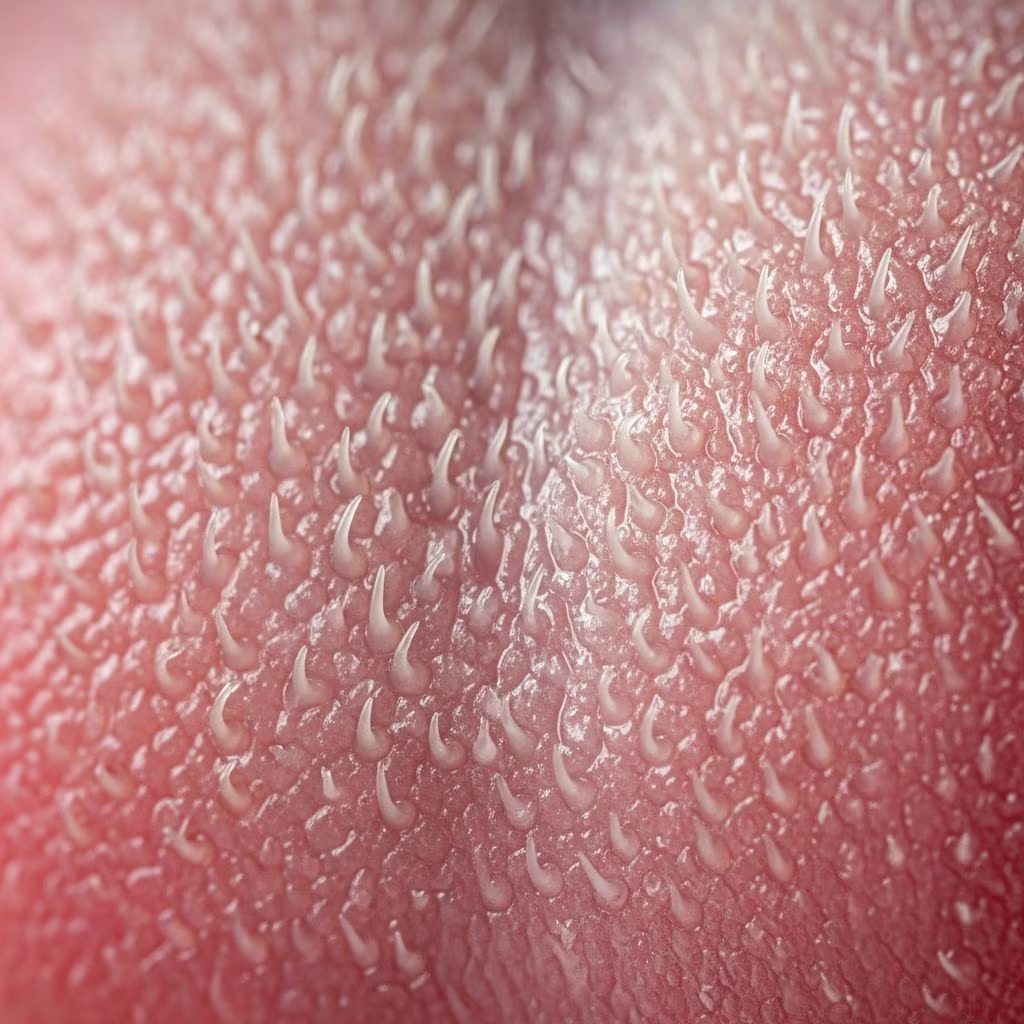
The cat tongue stands out as one of the most extraordinary features in the animal kingdom, equipped with specialized structures that serve multiple vital roles in daily life. Covered in tiny, backward-pointing spines, it enables precise grooming, efficient feeding, and even a clever water-lapping technique. This article delves into its intricate anatomy, diverse functions, sensory capabilities, and maintenance needs, drawing from veterinary insights to help cat owners appreciate and protect this essential organ.
Anatomy of the Feline Tongue
The feline tongue is a highly mobile, muscular structure anchored at the base and free at the tip, positioned on the floor of the mouth. It extends from the basihyoid bone posteriorly to the front of the jaw, allowing extensive movement for various tasks. Composed primarily of muscle bundles interwoven with connective and adipose tissues, it features abundant blood vessels, making it prone to heavy bleeding if injured.
The surface is adorned with specialized papillae, small mushroom-shaped projections that define its texture. These include:
- Filiform papillae: The most abundant, elongated, and cylindrical, pointing backward with stiff, keratinized tips. They dominate the apex and body, providing the signature roughness essential for grooming.
- Foliate papillae: Leaf-like ridges along the lateral edges of the tongue’s root, prominent in cats and aiding in taste perception.
- Fungiform papillae: Mushroom-shaped, housing taste buds, scattered mainly on the rostral surface to detect flavors.
Surrounding the tongue are salivary gland ducts that secrete enzymes to combat bacteria and facilitate swallowing. The mucosa lining includes sublingual folds and caruncles, with unique glands like the lingual molar salivary gland in cats. Muscles such as the styloglossus enable retraction and elevation, supporting precise control.
Key Functions in Everyday Life
Beyond taste detection, the cat tongue excels in practical tasks. It guides food and water into the mouth, assists in mastication and deglutition, and acts as a ladle for drinking. The backward-curled tip forms a spoon-like hollow, allowing cats to dart their tongue into liquid, lift a water column via inertia, and snap it shut before gravity pulls it back—a method 97% more efficient than dog lapping.
| Function | Description | Anatomical Adaptation |
|---|---|---|
| Grooming | Removes dirt, loose fur, and parasites | Stiff filiform papillae act like a brush |
| Feeding | Rasps meat from bones, scoops wet food | Backward spines and giant fungiform papillae |
| Drinking | Lifts water column efficiently | Curved tip and rapid tongue flick |
| Thermoregulation | Spreads saliva for evaporation cooling | Extensive papillae surface area |
During grooming, papillae strip away debris and distribute saliva, which contains antimicrobial enzymes, across the coat. For eating, they scrape flesh effectively, suited to a carnivorous diet.
Sensory Capabilities and Taste Perception
Cats possess around 470 taste buds, far fewer than humans’ 9,000, concentrated in papillae pores. They lack sweet receptors but excel at detecting bitter (to avoid toxins) and umami (for proteins), aligning with their obligate carnivore status. The tongue’s sensory nerves transmit pain, temperature, and texture signals, enhancing foraging precision.
Foliate and fungiform papillae host these buds, with three-dimensional reconstructions showing their distribution optimized for canned food intake, where the tongue spoons and papillae enhance manipulation. This setup prioritizes meaty flavors over sweets, explaining disinterest in sugary foods.
Grooming: Nature’s Built-in Brush
Self-grooming occupies up to 50% of a cat’s waking hours, facilitated by the tongue’s filiform spines functioning as a velcro-like tool. These keratin hooks—same material as claws—detangle fur, remove mats, and exfoliate skin, promoting circulation and distributing natural oils for shine.
The stiff papillae penetrate dense coats, pulling out dead hair to prevent ingestion-related hairballs. Saliva adds hydration and cooling via evaporation, especially in hot weather. Owners note the raspy lick on skin, which can redden due to abrasion but cleans wounds effectively in the wild.
Drinking Habits: A Study in Efficiency
Cats drink delicately, barely wetting whiskers. High-speed imaging reveals the tongue touches the liquid surface minimally, retracting quickly to capture the upward water jet formed by surface tension and inertia. Jaws remain above water, unlike lapping dogs.
This adaptation conserves energy and keeps fur dry, ideal for desert-origin ancestors like the African wildcat. Bowl depth and water freshness influence this; moving water from fountains mimics prey streams, encouraging hydration.
Health Issues and Warning Signs
Despite resilience, cat tongues face risks. Common problems include:
- Injuries: Cuts from rough play or bones cause profuse bleeding; monitor for swelling.
- Infections: Stomatitis or glossitis from bacteria, leading to drooling or halitosis.
- Foreign objects: Strings or plant fibers tangled in papillae.
- Overgrowth: Feline calicivirus causes papillae hypertrophy, altering texture.
- Nutritional deficiencies: Riboflavin lack smooths papillae.
Signs of trouble: excessive pawing, drooling, bad breath, color changes (red/pale), or refusal to eat. Pale tongues signal anemia; black spots may be lentigo, benign in adults.
Care Tips for Optimal Tongue Health
Support your cat’s tongue through diet and vigilance:
- Provide high-quality, complete nutrition to sustain keratin production and taste bud function.
- Offer dental treats or water additives to reduce plaque, indirectly benefiting the tongue.
- Regular vet checkups detect issues early; annual exams include oral inspection.
- Prevent hazards: no strings, cooked bones, or toxic plants.
- Encourage hydration with fountains; monitor for excessive thirst indicating kidney issues.
- Groom manually if mobility limits self-care in seniors, using soft brushes.
For hairball control, use laxatives or diets with malt paste. If abnormalities persist, biopsies may diagnose cancer or immune disorders.
Fun Facts About Cat Tongues
- Each papilla is 0.5mm long, numbering in hundreds per tongue.
- Breed variations: Sphynx tongues feel harsher sans fur; Scottish Folds have similar structures.
- Wild felids share this trait for survival grooming and hunting.
- Human skin licks exfoliate mildly, aiding minor wounds.
Frequently Asked Questions
Why is my cat’s tongue rough?
The roughness comes from filiform papillae, tiny keratin spines for grooming and feeding.
Can cats taste sweet flavors?
No, cats lack sweet receptors, focusing on proteins via umami and amino acids.
What if my cat’s tongue bleeds?
Apply pressure; if persistent, seek vet care for stitches or infection checks.
How do cats drink water without getting wet?
The tongue curls into a ladle, flicking up a water column snapped mid-air.
Is a pink tongue normal?
Yes, but black spots (lentigo) are common in orange cats; pale may indicate health issues.
References
- Structure and Function of the Tongue, Teeth and Mouth in Cats — PetPlace. Accessed 2026. https://www.petplace.com/article/cats/pet-health/structure-and-function-of-the-tongue-teeth-and-mouth-in-cats
- Oral Cavity – Dissection Lab Guide — University of Minnesota Pressbooks (.edu). Accessed 2026. https://pressbooks.umn.edu/dogcatanatomylabguide/chapter/oral-cavity/
- The Cat’s Tongue: Structure, Functions & Care — RumbleBox. Accessed 2026. https://rumble-box.com/en/blogs/katzen-leben/die-zunge-der-katze
- Cat Tongues: Everything You Wanted to Know & More — Hill’s Pet. Accessed 2026. https://www.hillspet.com/cat-care/behavior-appearance/cat-tongues-explained
- All About Your Cat’s Tongue — WellPets. Accessed 2026. https://www.wellpets.com/blog/111-all-about-your-cat-s-tongue/
- Three-dimensional reconstruction of gustatory papillae — PMC (PubMed Central, peer-reviewed). 2023. https://pmc.ncbi.nlm.nih.gov/articles/PMC12081509/



