

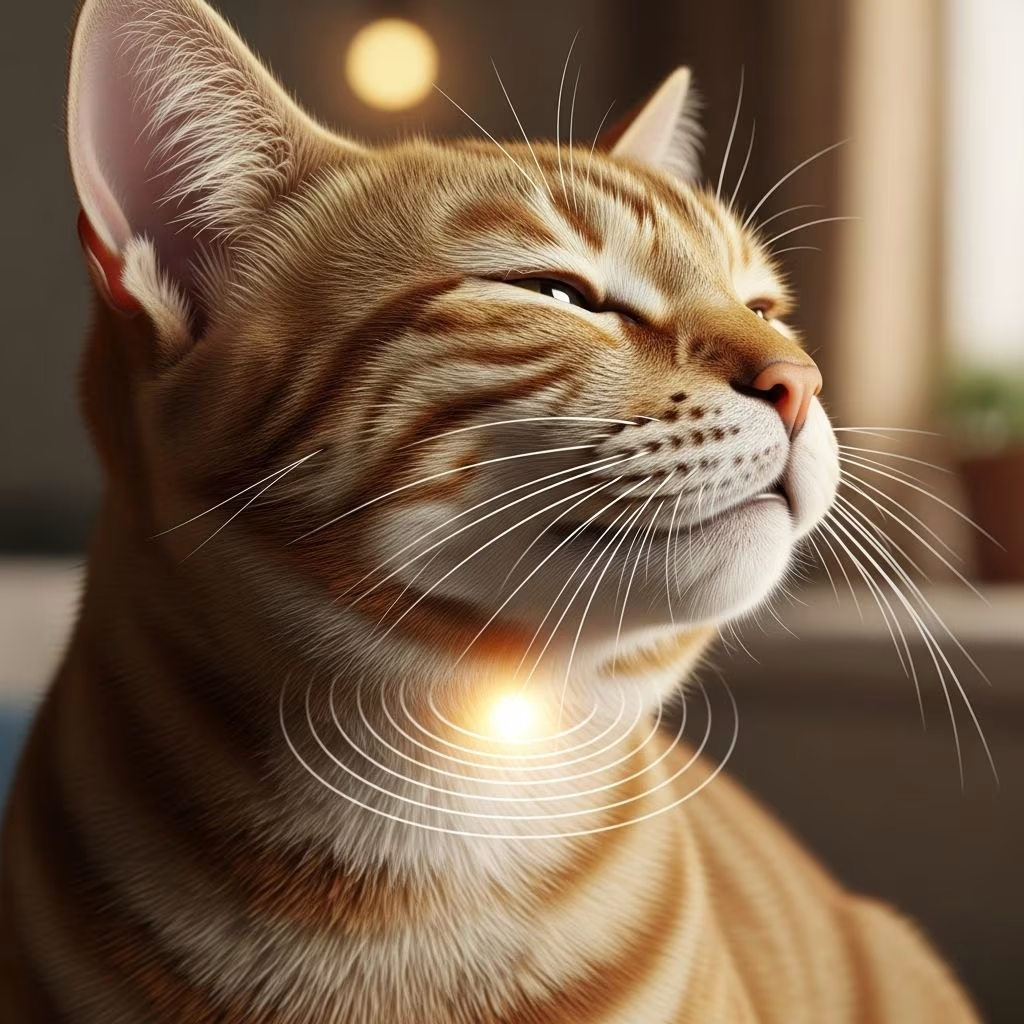
Cat purring captivates pet owners with its rhythmic, soothing hum, often signaling a moment of pure bliss during a gentle stroke or cozy cuddle. Yet this familiar sound hides layers of complexity, serving purposes from emotional expression to physical healing. Recent scientific breakthroughs have reshaped our understanding, revealing specialized anatomical features and neural processes that enable this unique vocalization.
How Cats Produce Their Iconic Purr
The mechanism behind purring has puzzled researchers for decades, with early theories ranging from blood flow through major veins to rapid muscle contractions in the larynx. Modern studies point to a more elegant explanation involving passive vibrations in the vocal cords, augmented by unique anatomical adaptations.
Domestic cats generate purrs at frequencies of 20-30 Hz, remarkably low for their small size of around 4.5 kg. Larger animals like elephants produce similar low tones with longer vocal folds, but cats achieve this through specialized ‘pads’ – fatty tissue masses embedded in their vocal cords. These pads increase density, allowing slower vibrations without constant brain input.
Experiments confirm this: researchers isolated larynges from euthanized cats and simulated airflow, producing purr-like oscillations at 25-30 Hz purely through passive mechanics, no muscle activity required. This challenges the 1970s ‘active muscle contraction’ idea, where laryngeal muscles supposedly pulsed 30 times per second. Instead, purring aligns with standard mammalian vocalization – an initial neural signal triggers self-sustaining airflow-induced oscillations.
A neural oscillator in the brain coordinates this, sending signals to the larynx and diaphragm during both inhalation and exhalation – unlike meows, which occur only on exhale. Electrical stimulation of the infundibular brain region can induce purring, underscoring central nervous system control.
Key Anatomical Features Enabling Purring
- Vocal Pads: Fibrous-fatty tissues that lower vibration frequency, mimicking human ‘vocal fry’ for deep tones.
- Laryngeal Muscles: Open and close the glottis rapidly, separating vocal cords to create vibrations.
- Neural Oscillator: Brain-based rhythm generator operating at purr frequency.
- Diaphragm Sync: Ensures continuous sound across breathing cycles.
Frequency varies slightly: egressive (exhale) phases at 20.94-27.21 Hz, ingressive (inhale) at 23-26.09 Hz, with individual cat differences in amplitude and duration.
Emotional and Situational Reasons Cats Purr
While purring evokes images of relaxed felines, it’s not exclusively a happiness indicator. Cats purr in diverse contexts, reflecting a spectrum of internal states.
| Context | Purring Purpose | Examples |
|---|---|---|
| Contentment | Expressing pleasure and bonding | During petting, nursing kittens |
| Fear/Anxiety | Self-soothing or appeasement | At vet visits, in new environments |
| Pain/Injury | Pain management and healing | Recovering from wounds or illness |
| Hunger | Communication for needs | Mealtime anticipation |
| Mating | Attraction signal | During courtship |
Kittens start purring within days of birth to bond with mothers and solicit milk, a behavior persisting into adulthood. Mothers purr to guide kittens and during nursing. In stressful situations, purring acts as a defense, calming both the cat and humans – ever notice a cat purring while being examined by a vet?
The Healing Power of the Purr
Beyond emotion, purring’s 25-50 Hz vibrations may promote physical recovery, earning it the label of a ‘natural healing mechanism.’ These frequencies align with those used in veterinary and human therapy for bone growth, pain relief, and tissue repair.
Studies suggest purring strengthens bones, eases breathing difficulties, reduces swelling, and accelerates wound healing. Cats’ resilience to injuries – like surviving high falls – may partly stem from constant low-level purring, providing therapeutic vibrations even during rest.
In humans, similar frequencies (20-50 Hz) aid fracture healing and muscle strain recovery. This could explain why injured cats purr: not just enduring pain, but actively mitigating it through self-generated therapy. Research shows purring during distress helps manage pain and soothe the nervous system.
Evolutionary Insights into Feline Purring
Purring likely evolved as a multipurpose tool. In wild felines, only small species like cheetahs and pumas purr; big cats roar instead due to different laryngeal structures. Domestic cats retained purring for survival advantages: mother-kitten communication, territorial signaling, and self-healing in harsh environments.
The neural oscillator may represent an ancient adaptation, conserved across species for rhythmic vocalizations. Comparative anatomy shows vocal pads as a feline innovation, enabling efficient low-frequency communication without large body size.
Common Myths About Cat Purring Debunked
- Myth: Purring always means happiness. Reality: It signals various emotions, including fear and pain.
- Myth: Only domestic cats purr. Reality: Some wild cats do, but not roaring species.
- Myth: Purring comes from the heart or blood vessels. Reality: Larynx and neural control are key.
- Myth: Cats purr only when relaxed. Reality: They purr 24/7 at low volumes when content.
- Myth: All purrs are identical. Reality: Tones vary by context and individual.
Interpreting Your Cat’s Purr: A Guide
Not all purrs are equal. Listen for volume, consistency, and body language:
- Soft, steady purr + relaxed posture: Pure contentment.
- Loud, intermittent purr + tense tail: Anxiety or discomfort.
- Weak purr + hiding: Possible pain; consult a vet.
- Rapid purr + kneading: Maternal or joyful bonding.
Observe patterns: a sudden increase might indicate hunger or stress. Combine with ear position, eye narrowing, and tail movement for full context.
Frequently Asked Questions (FAQs)
Do all cats purr?
Most domestic cats do, starting at 2-3 days old. Rare cases of laryngeal issues prevent it.
Why do cats purr when dying?
In terminal illness, purring provides comfort, pain relief, and self-soothing vibrations.
Can purring cure human ailments?
While not a cure, exposure to purr frequencies may aid relaxation and minor healing, per therapeutic studies.
Is cat purring contagious?
No, but it induces calm in listeners via soothing vibrations and oxytocin release.
How to encourage purring?
Gentle strokes, quiet environments, play, and food motivate it. Avoid overstimulation.
Practical Tips for Cat Owners
Leverage purring for better bonding:
- Record purrs for calming playback during your cat’s stress.
- Use purr frequency speakers (25-50 Hz) for anxiety relief.
- Monitor changes as health indicators.
- Combine petting with slow blinks to deepen trust.
Understanding purring enriches the human-feline relationship, turning a simple sound into a window on your cat’s world.
References
- How do cats purr? New finding challenges long-held assumptions — Science Magazine. 2022-11-16. https://www.science.org/content/article/how-do-cats-purr-new-finding-challenges-long-held-assumptions
- Purr — Wikipedia (references primary studies). 2024-01-01. https://en.wikipedia.org/wiki/Purr
- Why and how do cats purr? — Library of Congress. 2023-05-15. https://www.loc.gov/everyday-mysteries/item/why-and-how-do-cats-purr/



