

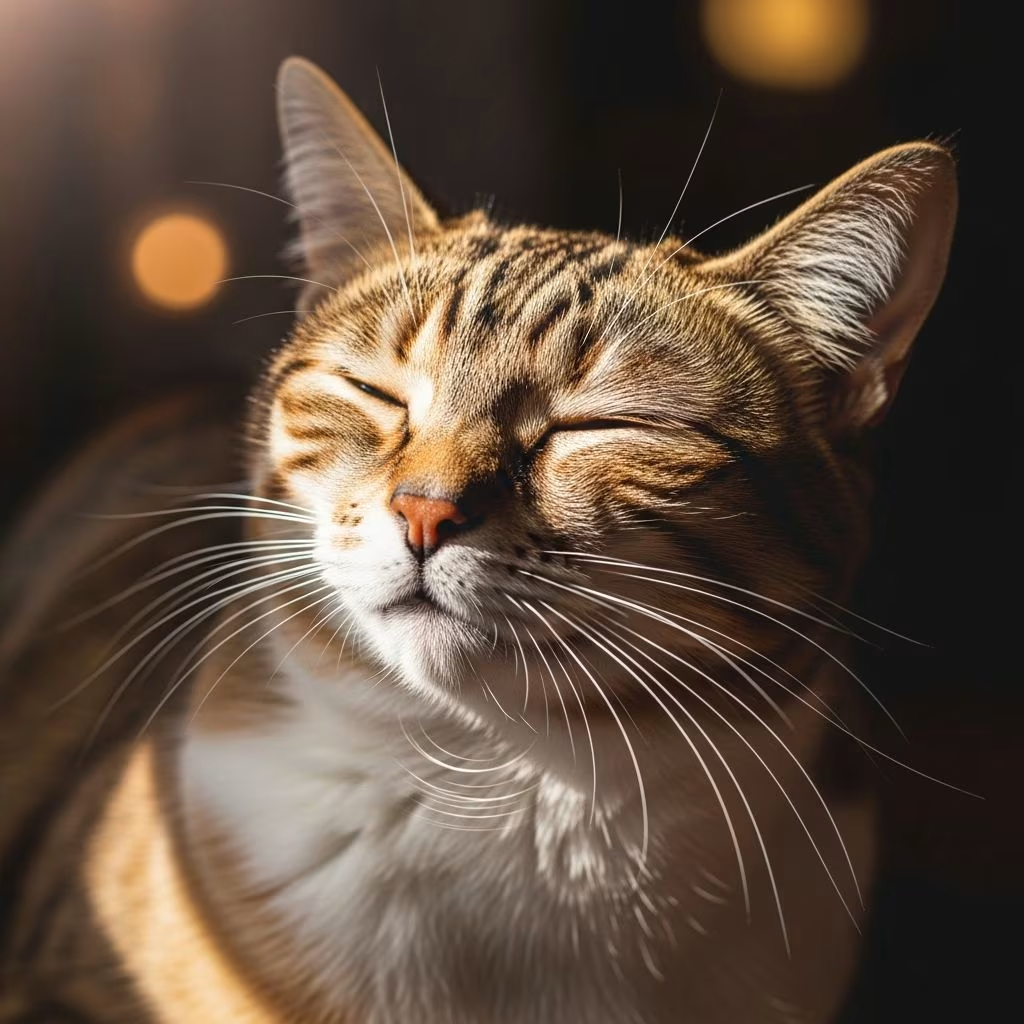
Cat purring captivates pet owners worldwide with its rhythmic, soothing hum. This unique vocalization, produced at frequencies around 25-30 Hz, serves multiple purposes beyond simple happiness, including self-healing and communication. Recent scientific breakthroughs have demystified its production, revealing specialized anatomical features in domestic cats.
How Cats Produce Their Iconic Purr
The mechanism behind purring has puzzled researchers for decades. Traditionally, the active muscle contraction theory suggested cats rapidly twitch laryngeal muscles 25-30 times per second to generate the sound. However, a groundbreaking 2023 study challenged this by isolating larynges from domestic cats and simulating airflow, producing purr-like vibrations without neural input or muscle activity. This demonstrates purring as a passive, self-sustaining oscillation once initiated, akin to meowing or hissing.
Key to this process are **vocal cord pads** – fatty, fibrous tissues embedded in the larynx. These pads increase vocal fold density, enabling low-frequency vibrations in small cats, similar to vocal fry in humans. Frequencies range from 20-30 Hz, occurring continuously during inhalation and exhalation.
- Neural trigger: A brain-based neural oscillator sends an initial signal to the larynx and diaphragm.
- Airflow oscillation: Air passes through the glottis, causing vocal folds to vibrate rhythmically.
- Sustained vibration: No ongoing muscle contractions needed; pads ensure low Hz output.
Studies confirm electromyographic activity in laryngeal muscles, but the isolated larynx experiments prove it’s not essential for sound production.
Emotional Reasons Cats Purr
While contentment is the most recognized trigger, purring expresses a spectrum of emotions. Kittens purr within days of birth to bond with mothers and solicit milk, strengthening early attachments.
| Emotion | Purring Context | Examples |
|---|---|---|
| Contentment | Relaxation, petting | Curled up sleeping or being stroked |
| Fear/Anxiety | Self-soothing | Hiding from threats or in new environments |
| Affection | Social bonding | Nuzzling owners or other cats |
| Hunger | Communication | Kneading while waiting for food |
Cats purr 20-30% louder when interacting with humans, suggesting intentional communication to elicit care. Intensity varies with arousal levels, louder during stress.
The Healing Power of Purring Frequencies
Beyond emotions, purring may promote physical recovery. The 25 Hz frequency aligns with ranges promoting bone growth, fracture healing, pain reduction, and wound repair in humans and animals. Researcher Elizabeth von Muggenthaler proposes purring as a natural healing mechanism, observed in injured cats self-soothing.
- Bone density: Vibrations stimulate osteoblasts, increasing strength by up to 30% in lab tests.
- Pain relief: Low frequencies ease muscle tension and inflammation.
- Tissue repair: Enhances circulation and cellular regeneration.
Veterinarians note cats purr during veterinary visits or post-surgery, aiding recovery. This evolutionary trait likely helped wild felines survive injuries without modern medicine.
Purring Across Feline Species
Not all cats purr. Domestic cats, cheetahs, and some wildcats produce purrs, but big cats like lions roar instead due to specialized larynges. Purring cats lack the elongated vocal folds for roars, limiting them to softer, continuous sounds.
| Species | Can Purr? | Other Vocalizations |
|---|---|---|
| Domestic Cat | Yes (25-30 Hz) | Meow, hiss, growl |
| Cheetah | Yes | Chirp, yelp |
| Lion/Tiger | No | Roar, snarl |
| Cougar | Yes (variable) | Scream, purr |
Evolutionarily, purring supports solitary lifestyles, signaling location or status without alerting prey.
Decoding Purr Variations
Purring isn’t uniform. Frequencies shift slightly between inhalation (23-26 Hz) and exhalation (21-27 Hz), with amplitude and duration reflecting mood.
- Solicitation purr: Higher-pitched, mixed with meows to urge feeding.
- Stress purr: Steady, low-volume for calming.
- Healing purr: Consistent during pain or recovery.
Owners can distinguish these by context and intensity, fostering better bonds.
Evolutionary Origins and Survival Benefits
Purring likely evolved as a multipurpose tool. In wild ancestors, it communicated kitten needs discreetly, masked hunting injuries, and deterred predators via vibration signals. Modern domestic cats retain this, purring to manipulate human caregivers effectively.
Central nervous system oscillators ensure reliability, even under duress. This adaptability underscores purring’s role in feline resilience.
FAQs About Cat Purring
What frequency do cats purr at?
Typically 25-30 Hz, with slight variations by breath phase.
Do cats only purr when happy?
No, they purr for contentment, stress, pain, hunger, and bonding.
Can purring heal bones?
The vibrations promote bone growth and healing, as shown in studies on low-frequency effects.
Why can’t lions purr?
Their larynx supports roaring, not the self-sustaining low-frequency oscillation of purring cats.
Is purring voluntary?
Initiated neurally but sustained passively via vocal anatomy.
Enhancing Your Cat’s Purring Moments
To encourage healthy purring, provide safe spaces, gentle petting, and routine feeding. Monitor for excessive stress-purring, signaling vet needs. Understanding this behavior deepens the human-feline connection.
References
- How do cats purr? New finding challenges long-held assumptions — Science Magazine. 2023-01-03. https://www.science.org/content/article/how-do-cats-purr-new-finding-challenges-long-held-assumptions
- Purr — Wikipedia (citing peer-reviewed studies). 2024-05-15. https://en.wikipedia.org/wiki/Purr
- Why and how do cats purr? — Library of Congress. 2023-08-20. https://www.loc.gov/everyday-mysteries/item/why-and-how-do-cats-purr/



