Secrets of the Desert Tortoise: Survival and Conservation
Discover the remarkable adaptations and conservation efforts protecting desert tortoises in their arid habitats.
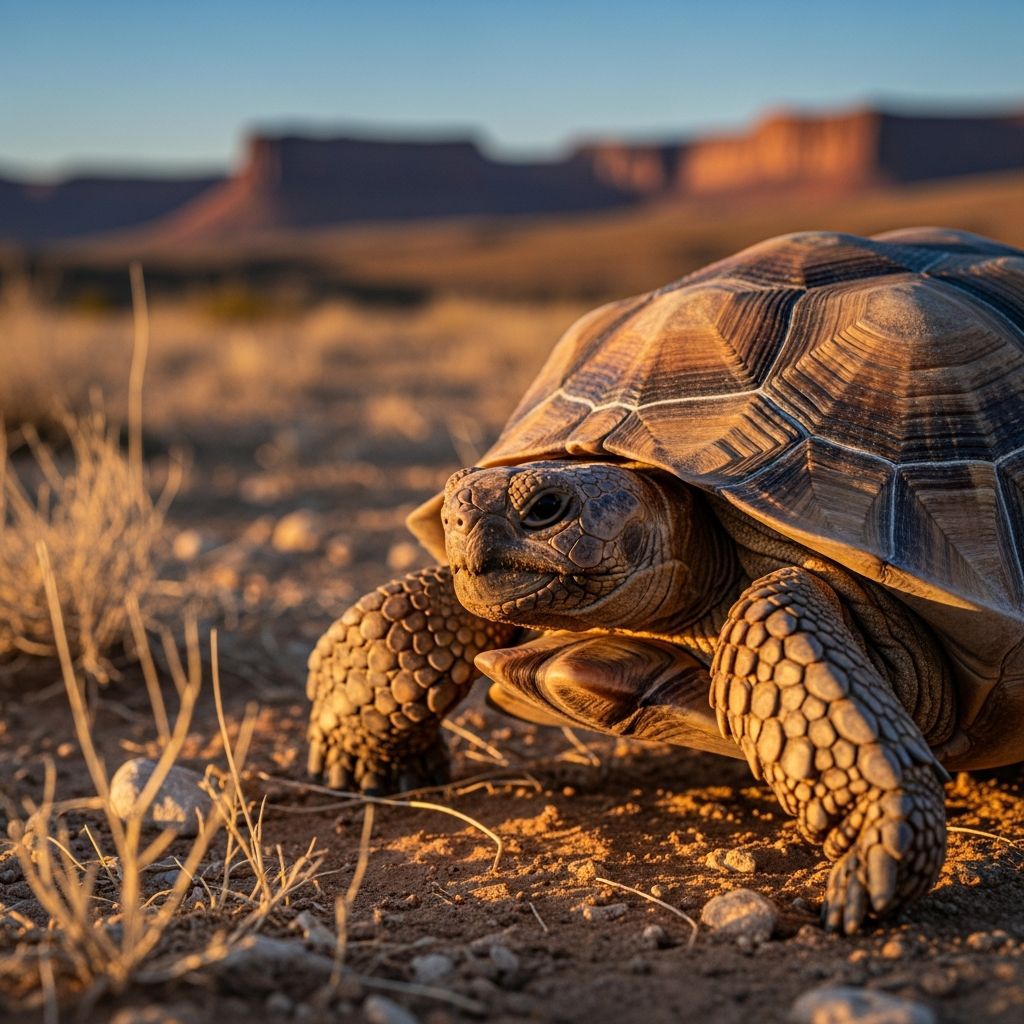
The desert tortoise is one of nature’s most remarkable survivors, perfectly adapted to thrive in one of Earth’s harshest environments. These ancient reptiles have evolved extraordinary mechanisms to cope with extreme heat, prolonged droughts, and scarce resources. Yet despite their resilience, desert tortoises face unprecedented challenges from habitat destruction, climate change, and human activity. Understanding the secrets of their survival and supporting conservation efforts is crucial to ensure these iconic desert dwellers continue to inhabit the arid landscapes they call home.
Understanding the Desert Tortoise
Desert tortoises belong to the genus Gopherus and are slow-moving reptiles that have inhabited North American deserts for millions of years. These creatures are perfectly engineered for desert life, possessing an array of physiological and behavioral adaptations that allow them to survive in environments where most animals cannot. The Mojave desert tortoise is currently listed as “Threatened” under the federal Endangered Species Act due to significant threats from habitat destruction and over-exploitation, while California has designated it as an endangered species.
These solitary herbivores spend most of their lives in the shade, moving deliberately through the desert landscape in search of vegetation and water. Their slow metabolism and ability to remain inactive for extended periods make them uniquely suited to desert conditions. Adult desert tortoises can live for over 50 years in the wild, making them long-lived species that require stable, protected habitats to maintain healthy populations.
Remarkable Adaptations for Desert Survival
The desert tortoise possesses an impressive suite of adaptations that enable survival in one of Earth’s most challenging environments. Understanding these mechanisms reveals the remarkable engineering that nature has provided these creatures.
Burrowing and Temperature Regulation
One of the most critical adaptations of the desert tortoise is its ability to construct elaborate burrow systems. Using their powerful forelimbs, these reptiles can excavate burrows extending up to 9 meters (32 feet) in length. These underground shelters maintain relatively stable temperatures and humidity levels, providing refuge from the desert’s extreme heat and cold. Tortoises construct different burrow types for different seasons—summer burrows are typically shallower and shorter, while winter hibernation burrows provide deeper, more insulated shelter.
Being ectothermic, desert tortoises cannot regulate their body temperature internally as mammals do. Instead, they rely on behavioral thermoregulation and their burrow systems to maintain appropriate body temperatures. During the hot summer months, tortoises enter a state called estivation, spending up to 95% of their time in their burrows to conserve water and energy. In winter, they hibernate for periods lasting up to nine months, emerging during the most active seasons from March to June and September to October.
Water Conservation Mechanisms
Water scarcity presents one of the greatest challenges in desert environments, and desert tortoises have evolved sophisticated mechanisms to minimize water loss and maximize retention. These reptiles produce urine with exceptionally high levels of uric acid and possess the remarkable ability to reabsorb water from their bladder to rehydrate themselves. This physiological adaptation allows them to survive extended periods without access to fresh water sources.
Additionally, desert tortoises can fully retract their heads and legs into their shells, sealing the opening to minimize water loss through evaporation. They also dig shallow depressions in the earth to capture and store rainwater during rare precipitation events, allowing them to store water in their urinary bladders for later use. These multiple water-conservation strategies work in concert, enabling survival in arid environments where water is critically scarce.
Dietary Adaptations
Desert tortoises are primarily herbivorous, consuming a variety of grasses, shrubs, cacti, wildflowers, and succulents. Remarkably, they obtain much of their required water from succulent plants, reducing their dependence on drinking sources. Their slow metabolism and ability to consume vegetation opportunistically allows them to maintain nutrition in environments where food availability fluctuates seasonally. They are most active during spring and early summer, taking advantage of seasonal plant growth to accumulate energy reserves for less productive months.
Ecological Importance and Ecosystem Role
Beyond their own survival needs, desert tortoises play a crucial role in maintaining the health and balance of desert ecosystems. These animals are classified as a keystone species, meaning they have a disproportionately large influence on their ecosystems relative to their abundance.
Burrow Sharing and Wildlife Habitat
The elaborate burrow systems constructed by desert tortoises provide essential shelter for numerous other desert species. Gila monsters, collared peccaries, roadrunners, burrowing owls, lizards, and snakes all utilize tortoise burrows for protection from extreme temperatures and predators. During peak heat periods and winter months, these shared burrows become critical survival infrastructure for entire desert communities. Without tortoise burrows, many of these species would lack adequate shelter in the harsh desert environment.
Seed Dispersal and Plant Diversity
As desert tortoises move through their habitat consuming vegetation, they disperse seeds across the landscape through their excrement. This seed dispersal mechanism contributes significantly to plant biodiversity and helps establish new vegetation in different areas. By distributing seeds across their home ranges, tortoises help maintain the botanical diversity that is essential to desert ecosystem health and resilience.
Critical Threats to Desert Tortoise Survival
Despite their remarkable adaptations, desert tortoises face mounting threats that have brought populations to critically low levels. These threats stem from both direct human activity and indirect effects of environmental change.
Habitat Loss and Fragmentation
The primary threat to desert tortoise survival is habitat loss and degradation through residential development, agricultural expansion, and industrial activities. Human-made barriers such as walls and fences fragment tortoise habitats, isolating populations and making breeding more difficult. Habitat fragmentation reduces genetic diversity among populations, which weakens overall population resilience. Additionally, invasive grasses alter the delicate balance of desert ecosystems by outcompeting native plants that serve as food sources for tortoises, while also increasing fire risks that cause widespread habitat destruction.
Climate Change and Drought
Climate change presents an increasingly serious threat to desert tortoise populations. Increasing temperatures and prolonged drought conditions create environments that become unsuitable for tortoise habitation, affecting both reproduction and survival rates. The main reason that the Mojave desert tortoise is threatened stems from human alteration or destruction of its habitat, while increased drought and wildfires cause direct mortality of these desert-adapted animals. Extreme drought conditions can significantly impact tortoise survival rates, as demonstrated in recent conservation studies.
Additional Mortality Factors
Beyond habitat issues, desert tortoises face mortality from vehicle strikes, irresponsible off-highway vehicle use, predation from non-native ravens, vandalism, disease, and the release of captive tortoises into wild populations. Young tortoises face particularly high mortality rates from predation, though adult tortoises are rarely killed by predators once they reach maturity.
Head-Starting: A Promising Conservation Strategy
One of the most effective conservation approaches for desert tortoises is head-starting, a technique where hatchlings are raised in controlled environments during their most vulnerable years before being released into protected habitats. Recent research demonstrates that this method can significantly improve survival rates of juvenile tortoises.
How Head-Starting Works
The head-starting process involves several carefully orchestrated phases. Eggs are incubated in temperature-controlled environments at facilities like The Living Desert’s Tennity Wildlife Hospital, where they hatch safely under optimal conditions. Young tortoises are then provided nutrient-rich diets to support healthy growth rates during their most vulnerable developmental stages. After initial growth and development, tortoises are transported to outdoor rearing facilities where they re-acclimate to desert conditions for approximately six months while learning predator avoidance behaviors. Before release into the wild, radio trackers are attached to their shells to enable long-term monitoring of dispersal, survivability, and habitat use.
Research Findings on Head-Starting Effectiveness
Researchers from the University of Georgia’s Savannah River Ecology Laboratory in collaboration with UC Davis conducted a comprehensive study in the Mojave National Preserve to investigate head-starting effectiveness. Over three years, researchers tracked released tortoises using radio transmitters, periodically recording each animal’s location and behavior. Their findings revealed important insights into juvenile desert tortoise behavior and the effectiveness of head-starting as a conservation tool.
The research demonstrated that a tortoise’s space use depended on the head-starting treatment it received. Smaller and younger tortoises had smaller home ranges and higher site fidelity—a tendency to return to previously visited locations—compared to larger individuals. However, regardless of treatment type, all tortoises showed decreased home range size and increased site fidelity over time since release, indicating they were successfully settling into their release sites. Remarkably, survival rates did not differ significantly among different treatment groups or with tortoise age or size, with high survival rates across all groups except during the final year of monitoring when extreme drought conditions challenged all tortoises.
Habitat Requirements for Tortoise Survival
Successful conservation requires understanding and protecting the specific habitat characteristics that desert tortoises need to thrive. These requirements span multiple environmental factors that work together to support healthy populations.
Soil and Topography
Desert tortoises require firm soil suitable for burrowing, making soil composition a critical habitat component. Topography also plays an important role in determining habitat quality, with researchers investigating how terrain features influence tortoise population viability and movement patterns. Areas with appropriate soil types and favorable topography support higher-quality tortoise habitat and more stable populations.
Vegetation and Food Availability
Mojave desert tortoises rely on areas with high plant species diversity both for food and protection from weather and predators. They prefer sparse, low-growing shrubs for shelter and sunny areas for basking, while avoiding rocky terrain that makes movement difficult. Conservation efforts now include initiatives to enhance food availability for tortoises, such as the Mojave Desert Land Trust’s project fostering 1,000 desert dandelion plants to provide tortoise food sources.
Water Availability
Water availability improvements serve as a hedge against the worst effects of climate change and drought on tortoise populations. While tortoises obtain much of their water from succulent plants, maintaining adequate moisture levels in their habitat supports overall population health and resilience.
Ongoing Conservation Initiatives
Multiple organizations and research institutions are working collaboratively to protect and recover desert tortoise populations through comprehensive conservation programs. The National Park Service, university research programs, and nonprofit organizations combine habitat protection, restoration, and population management strategies to address the multifaceted challenges facing this threatened species.
Habitat Protection and Restoration
Conservation organizations focus on protecting existing high-quality tortoise habitat while working to restore degraded areas. This includes managing invasive plant species, reducing fire frequency through controlled burns, and establishing corridors to reconnect fragmented populations.
Research and Monitoring
Ongoing research projects investigate optimal habitat characteristics and develop improved conservation methodologies. Multi-year studies allow scientists to understand how various environmental and human factors affect tortoise populations, creating templates for identifying and maintaining high-quality desert tortoise habitat.
Frequently Asked Questions
Q: Why are desert tortoises threatened with extinction?
A: Desert tortoises face extinction threats primarily due to habitat loss and degradation from human development, climate change, drought, wildfires, invasive species, and vehicle strikes. Their slow reproductive rate and long life cycle make populations particularly vulnerable to these pressures.
Q: How do desert tortoises survive without regular water?
A: Desert tortoises have evolved remarkable water-conservation adaptations including the ability to produce concentrated urine and reabsorb water from their bladder, store water from succulent plants, and dig depressions to capture rainwater. They also spend up to 95% of summer months in burrows to minimize water loss.
Q: What is head-starting and how does it help desert tortoises?
A: Head-starting is a conservation technique where hatchling tortoises are raised in controlled environments during their most vulnerable years before being released into protected habitats. Research shows this approach dramatically improves survival rates compared to hatchlings in the wild, where predation and harsh conditions cause high mortality.
Q: Why are desert tortoise burrows important to other animals?
A: Desert tortoise burrows provide essential shelter for numerous other desert species including Gila monsters, collared peccaries, roadrunners, burrowing owls, lizards, and snakes. These burrows maintain stable temperatures and protect inhabitants from extreme heat, cold, and predators.
Q: How can individuals help protect desert tortoises?
A: Individuals can support desert tortoise conservation by supporting habitat protection organizations, avoiding off-highway vehicle use in tortoise habitats, never collecting wild tortoises or releasing captive tortoises into the wild, and reducing their carbon footprint to help mitigate climate change impacts.
Conclusion
The desert tortoise represents one of nature’s most impressive survival stories, with remarkable adaptations enabling life in Earth’s harshest environments. These ancient reptiles play crucial roles as keystone species, supporting entire desert ecosystems through their burrow systems and seed dispersal activities. However, their future remains precarious without continued conservation efforts addressing habitat loss, climate change, and other human-caused threats. Innovative approaches like head-starting demonstrate that thoughtful, science-based conservation can help reverse population declines. By understanding the secrets of desert tortoise survival and supporting comprehensive conservation initiatives, we can ensure these remarkable creatures continue to thrive in desert landscapes for generations to come.
References
- Head-starting and the Future of Mojave Desert Tortoise Conservation — University of Georgia’s Savannah River Ecology Laboratory. 2024. https://srel.uga.edu/the-power-of-progress-head-starting-and-the-future-of-mojave-desert-tortoise-conservation/
- Desert Tortoise Facts & Conservation — International Fund for Animal Welfare (IFAW). 2024. https://www.ifaw.org/animals/desert-tortoises
- Mojave Desert Tortoise Habitat, Threats, and Conservation Facts — The Nature Conservancy. 2024. https://www.nature.org/en-us/get-involved/how-to-help/animals-we-protect/desert-tortoise/
- Habitat and Technology – Desert Report — Desert Report. 2024. https://desertreport.org/habitat-and-technology/
- Desert Tortoise Resources & Information — The Living Desert Zoo. 2024. https://www.livingdesert.org/conservation/desert-tortoise/
- Desert Tortoise Conservation — Arizona Game & Fish Department. 2024. https://www.azgfd.com/species/desert-tortoise-2/
- Desert Tortoise – Joshua Tree National Park — U.S. National Park Service. 2024. https://www.nps.gov/jotr/learn/nature/tortoise.htm
Similar Articles








Read full bio of Sneha Tete