

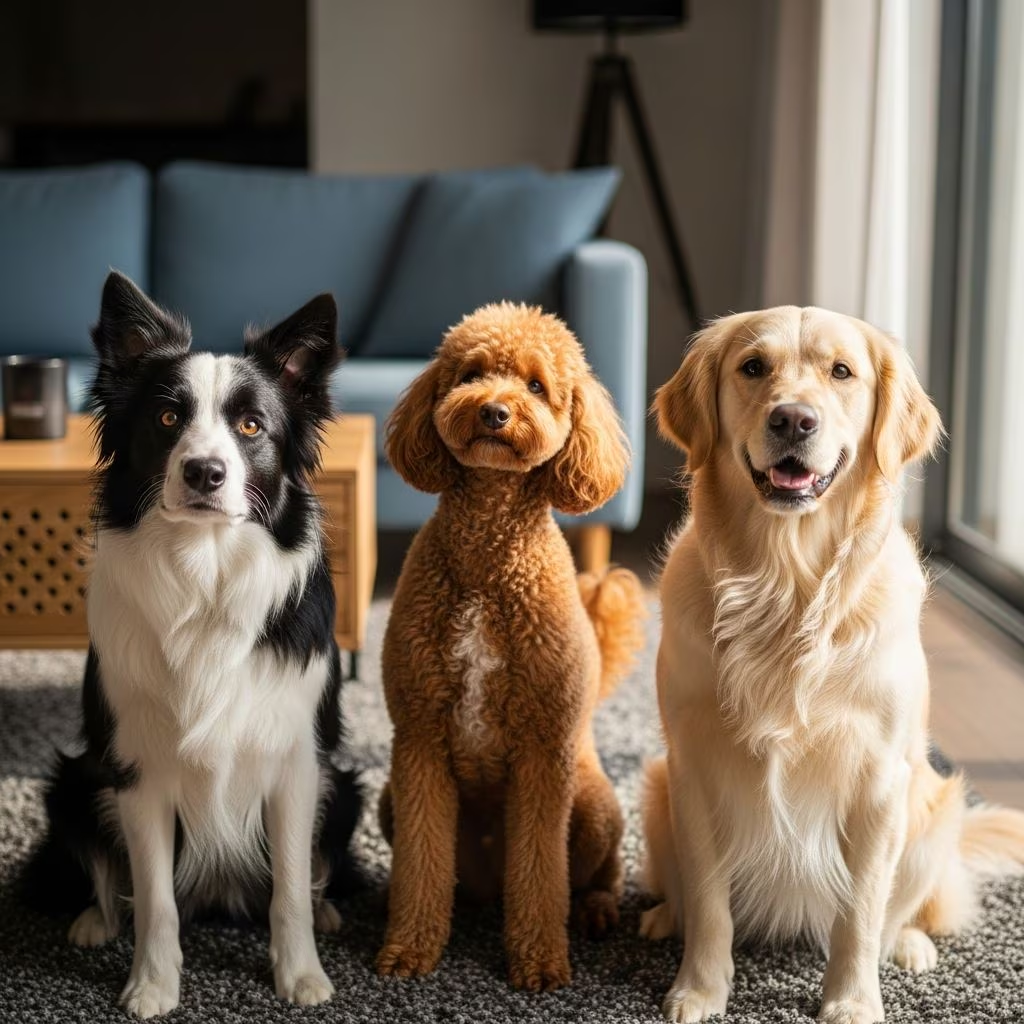
Dogs thrive on clear communication, and while basic commands like sit and stay form the foundation, inventive cues elevate training to new heights. These personalized signals—ranging from subtle hand gestures to playful phrases—tap into a dog’s natural perceptiveness, fostering deeper understanding and reliability in diverse situations.
Why Dogs Excel at Non-Verbal Communication
Dogs possess an extraordinary ability to interpret human body language, often surpassing verbal instructions in clarity. This skill stems from their evolutionary history alongside humans, where visual and gestural cues were essential for cooperation in hunting and herding. Studies and trainer observations confirm dogs can distinguish up to 20 distinct hand signals, making them ideal for silent directives.
In environments with excessive noise, such as parks or busy streets, verbal commands fade, but a quick gesture cuts through the chaos. For hearing-impaired dogs or those with selective listening, these visual prompts ensure consistent responses. Beyond practicality, they build trust: dogs learn to anticipate needs, reducing confusion and strengthening the human-canine bond.
Hand Signals: The Silent Language of Obedience
Hand signals leverage dogs’ innate focus on movement, turning training into an engaging visual game. Start simple by pairing a gesture with a familiar word—raise your palm flat for ‘stay’ or slice the air horizontally for ‘down’. Positive reinforcement, like treats or toys, solidifies the association, allowing you to fade verbal cues over time.
Benefits extend to focus enhancement: dogs trained this way ignore distractions better, as they tune into precise movements. Short, 5-10 minute sessions in low-distraction areas yield the best results, gradually building to real-world scenarios.
| Common Hand Signal | Gesture Description | Best Use Case |
|---|---|---|
| Sit | Fist to chest, then up | Quick stops during walks |
| Down | Palm down, sweeping to floor | Calming in crowds |
| Come | Arm sweeps to chest | Recalls in open areas |
| Stay | Flat palm facing dog | Noisy environments |
Innovative Verbal Twists for Everyday Scenarios
Verbal cues don’t have to be standard; customize them for specific needs. A trainer might use ‘park it’ to direct a dog to a mat for grooming, combining the phrase with a pointing gesture. Another example: ‘medicine time’ paired with a gentle pat on the head signals daily pills without resistance.
These tailored phrases prevent overexcitement. For instance, a calm ‘not this time’ informs a dog they’re staying home during errands, curbing door-dashing enthusiasm. Such cues teach emotional regulation, vital for multi-dog homes or travel.
Combining Signals for Advanced Training
The magic happens when hand signals merge with verbal ones. Dogs read unintentional cues too—like a trainer sitting with hands pocketed to test verbal reliance alone. This reveals if body language dominates, guiding refinements.
Play-based integration boosts retention. During fetch, a circling hand means ‘drop it,’ turning games into lessons. For interrupters, a sharp whistle or clap halts unwanted behaviors like jumping, redirecting to positives without scolding.
Real-World Applications and Success Stories
Shepherds historically used expansive gestures for distant control, a practice echoed in modern agility. Urban dwellers employ subtle nods for ‘quiet’ in apartments. One account highlights a dog trained to ‘find the mess,’ circling yard waste for easy cleanup—practical and bonding.
- Household Helpers: Cues for ‘toy box’ send pups to tidy up.
- Health Routines: ‘Pill pose’ positions dogs for easy dosing.
- Social Settings: ‘Space cue’ creates distance from strangers.
- Fun Tricks: ‘Dance party’ prompts joyful spins.
Consistency across family members prevents mixed signals. Track progress with a journal, noting reliable cues.
Common Pitfalls and How to Avoid Them
Inconsistent gestures confuse dogs, so standardize movements. Overloading sessions leads to fatigue; keep them brief and rewarding. Avoid punishment—focus on rewards to maintain enthusiasm.
For stubborn cases, return to basics: lure with treats, then fade aids. Patience yields confident responders.
Training Roadmap: Step-by-Step Guide
- Foundation (Week 1): Pair 3 basic signals with words in quiet spaces.
- Build (Weeks 2-3): Add distractions, phase verbal cues.
- Customize (Week 4+): Introduce personal cues like ‘chill spot.’
- Maintain: Weekly refreshers with play.
Frequently Asked Questions (FAQs)
Can any dog learn hand signals?
Yes, all breeds and ages respond well, especially with positive methods. Puppies grasp faster, but seniors improve too.
What if my dog ignores signals outdoors?
Gradually increase distractions and use high-value rewards. Test indoors first.
Are visual cues better than verbal?
Neither is superior; combining them maximizes clarity, especially in noise.
How do I teach a ‘stay home’ cue?
Use a firm phrase with a blocking hand, rewarding calm stays.
What’s the fastest way to success?
Short, daily sessions with 100% consistency and praise.
Enhancing Bonds Through Creative Cues
Personalized signals turn routine into adventure, revealing your dog’s cleverness. They adapt to life stages—energetic pups love active gestures, while seniors appreciate gentle ones. Experiment safely, observing responses to refine your unique ‘doggy dialect.’
This approach not only boosts obedience but infuses joy. Dogs mirror our creativity, responding with eager precision that delights owners daily.
References
- Training with Hand Signals – Silent communication with your dog — Bakersfield Dog Trainers. 2023. https://bakersfielddogtrainers.com/dog-training-hand-signals-silent/
- Hand Signals vs. Verbal Cues: Which Should You Use in Dog Training? — Alan’s K9 Academy. 2024. https://www.alansk9academy.com/blogs/hand-signals-vs-verbal-cues-which-should-you-use-in-dog-training
- Dog training starts with Non Verbal communication first — Churchmount Sheepdogs (YouTube). 2022-10-15. https://www.youtube.com/watch?v=7QQgc_KjKiI
- The Role of Hand Signals in Dog Training — Kastens Dog Training. 2024. https://kastensdogtraining.com/the-role-of-hand-signals-in-dog-training/
- Fun and Useful Unconventional Cues and Behaviors — Whole Dog Journal. 2023-05-20. https://www.whole-dog-journal.com/blog/fun-and-useful-unconventional-cues-and-behaviors/



