

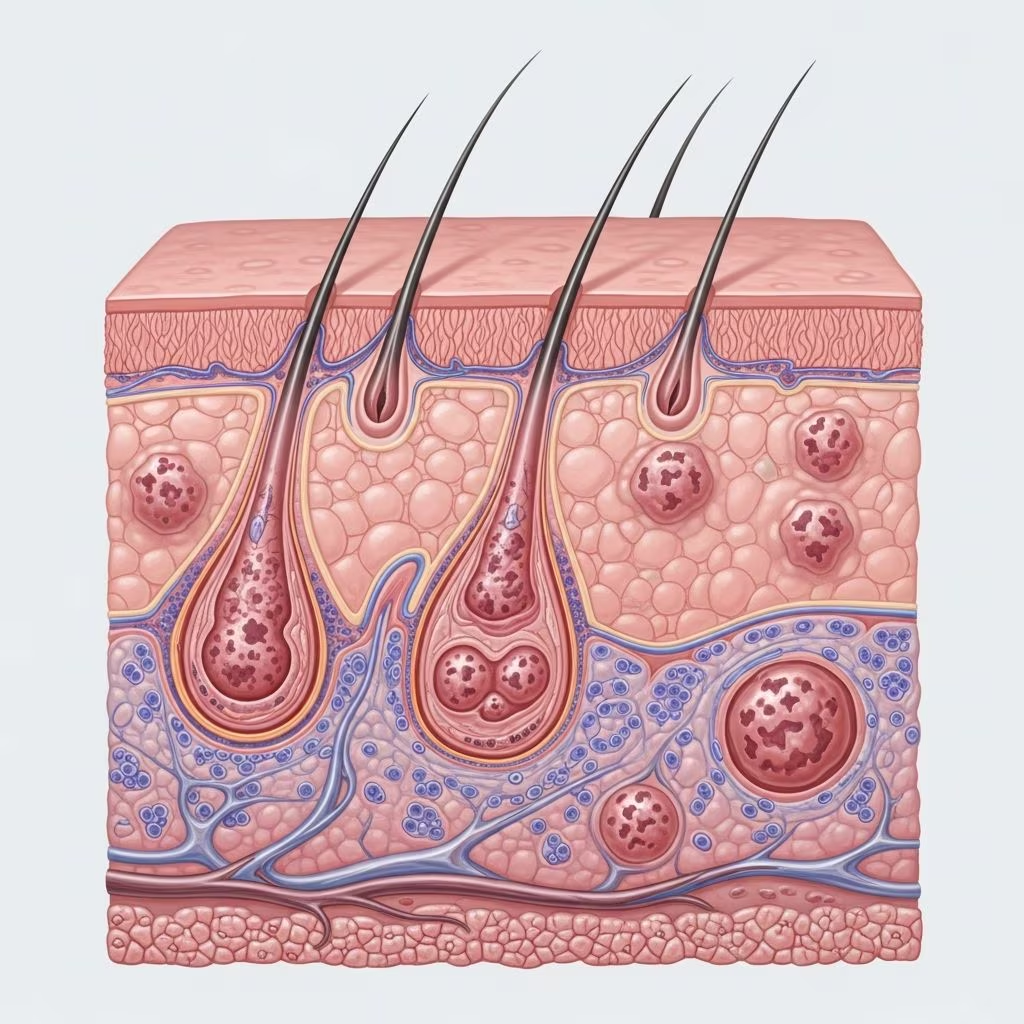
While primary skin tumors originating directly in cutaneous tissues are relatively common in veterinary medicine, secondary malignancies that spread to the skin from internal organs represent a distinct clinical challenge. These metastatic lesions arise when cancer cells from distant sites establish themselves within dermal and subcutaneous layers, often indicating advanced disease progression. Understanding the pathophysiology, recognition, and management of these secondary tumors is essential for veterinary professionals dealing with oncologic cases.
The Rarity of Cutaneous Metastases in Companion Animals
One of the most striking aspects of metastatic skin disease in dogs and cats is its relative infrequency. Despite the high prevalence of internal malignancies in companion animals, the appearance of these cancers as secondary skin lesions occurs only sporadically in clinical practice. This rarity means that when veterinarians encounter cutaneous manifestations of systemic cancer, they present a diagnostic puzzle requiring careful consideration and systematic investigation.
The infrequent nature of these presentations makes each case particularly valuable from a diagnostic standpoint. Skin metastases may sometimes represent the initial clinical sign of an occult malignancy, making thorough physical examination and appropriate follow-up investigations critical components of patient evaluation. A comprehensive medical history, knowledge of previous neoplastic disease, and awareness of established metastatic patterns significantly improve diagnostic accuracy and clinical outcomes.
Primary Tumor Origins and Metastatic Patterns
Understanding which internal cancers are most likely to metastasize to the skin helps guide diagnostic investigations when cutaneous lesions are encountered. Several epithelial malignancies demonstrate a tendency toward cutaneous spread, establishing recognizable patterns that aid in clinical decision-making.
Gastrointestinal and Urinary Tract Origins
Carcinomas arising from gastrointestinal tissues represent one category of malignancies capable of establishing skin metastases in both dogs and cats. Similarly, renal carcinomas and transitional cell carcinomas, which originate from the urinary system, have been documented as sources of cutaneous metastatic lesions. These internal primary tumors may remain clinically silent or produce vague systemic signs before skin involvement becomes apparent, making diagnosis particularly challenging in early disease stages.
Pulmonary and Mammary Carcinomas
Lung carcinomas present an interesting pattern of cutaneous metastasis, particularly in felines. A distinctive syndrome known as the lung-digit syndrome in cats demonstrates a predilection for metastatic bronchial carcinoma to establish itself in the digits of affected animals. This specific pattern provides valuable diagnostic guidance when recognizing atypical digit involvement with underlying malignancy.
Mammary carcinomas, particularly inflammatory forms in canines, also demonstrate potential for skin metastasis. These aggressive variants may spread beyond the primary mammary tissue to involve the overlying and surrounding skin, creating extensive cutaneous involvement that can progress rapidly without appropriate intervention.
Clinical Recognition and Presentation Patterns
Secondary skin tumors present with considerable variability in their clinical appearance and location. Unlike primary cutaneous malignancies that often display characteristic features associated with their tissue of origin, metastatic lesions may appear as:
- Nodular masses of varying size and consistency
- Ulcerative lesions with poorly defined borders
- Hairless or alopecic patches
- Discolored regions of skin
- Non-healing wounds or chronic inflammatory changes
The unpredictable nature of metastatic skin disease means that any unusual cutaneous lesion, particularly those displaying aggressive characteristics or lacking response to standard dermatologic therapy, warrants consideration of systemic disease. Multiple lesions distributed across different body regions should heighten suspicion for metastatic involvement rather than primary cutaneous malignancy.
Diagnostic Approach to Suspected Metastatic Skin Disease
Establishing a definitive diagnosis of metastatic skin involvement requires a multifaceted approach that combines clinical observation, cytologic examination, and histopathologic analysis. Cytology alone frequently proves insufficient for accurate classification, necessitating tissue sampling and pathologic interpretation.
Biopsy and Histopathologic Examination
Obtaining representative tissue samples through punch biopsy or excisional biopsy remains the gold standard for confirming metastatic disease. Adequate sampling ensures that pathologists can evaluate cellular morphology, growth patterns, and architectural features necessary for accurate classification. The histologic appearance of metastatic lesions often differs from that of primary skin tumors, reflecting the cellular characteristics of the tissue from which they originated.
Comprehensive Clinical Investigation
Beyond dermal assessment, confirmation of metastatic disease typically requires identification of the primary tumor through systematic investigation. This may involve:
- Thoracic imaging to evaluate pulmonary involvement
- Abdominal ultrasonography or computed tomography
- Regional lymph node assessment and sampling
- Laboratory evaluation including complete blood count and chemistry panels
- Specialized imaging based on clinical suspicion
The diagnostic timeline may span weeks as investigations progressively reveal the extent and origin of metastatic disease. Patient monitoring throughout this period requires careful documentation of lesion progression and any systemic signs that might guide further diagnostic efforts.
Metastatic Potential of Common Skin Tumors
While this discussion focuses on secondary skin involvement, understanding the metastatic capacity of primary skin malignancies provides important context for comprehensive patient assessment. Different tumor types demonstrate substantially different risks for distant spread.
Soft Tissue Sarcomas and Their Metastatic Behavior
Soft tissue sarcomas represent an important category of tumors that arise from connective tissues including muscle, fat, nerves, blood vessels, and fibrous tissue. These tumors vary significantly in their propensity for metastasis, with risk correlating directly to histologic grade. Low-grade tumors demonstrate metastatic rates around 10%, while intermediate-grade lesions progress to distant sites in approximately 20% of cases. High-grade soft tissue sarcomas carry substantially higher risk, with up to 40% developing metastatic disease. When metastasis occurs in soft tissue sarcoma, the lungs represent the most frequent site of involvement.
The aggressive nature of high-grade sarcomas necessitates multimodal treatment approaches combining surgery, radiation therapy, and chemotherapy rather than surgery alone. Even with comprehensive treatment, recurrence rates exceed 70% within the first year following initial surgical intervention, indicating the biologically aggressive nature of these lesions.
Mast Cell Tumors and Regional Dissemination
Mast cell tumors represent the most common malignant skin tumor in dogs, comprising approximately 11% of all canine skin cancers. The metastatic pattern of mast cell tumors differs from soft tissue sarcomas, with initial spread occurring predominantly to locoregional lymph nodes before progression to distant sites including the spleen, liver, and other organs.
Location of mast cell tumors influences their biologic behavior significantly. Tumors arising on the scrotum and nasal plane demonstrate higher histologic grades and earlier metastasis compared to lesions at other body sites. Subcutaneous mast cell tumors generally exhibit less aggressive behavior than cutaneous variants, though this distinction remains subject to ongoing clinical evaluation and research refinement.
Assessment of metastatic risk in mast cell tumors incorporates multiple parameters beyond simple grade classification. Ki-67 proliferation indices exceeding 23 positive cells per five high-power fields indicate elevated risk for recurrence and metastatic development. Mitotic counts greater than four figures per ten high-magnification fields, infiltrative histologic patterns, and the presence of multinucleated neoplastic mast cells all correlate with reduced survival times and increased metastatic risk.
Treatment Considerations for Metastatic Skin Involvement
Managing patients with confirmed metastatic skin disease requires individualized treatment planning that considers the extent of cutaneous involvement, the identity and stage of the primary tumor, and the patient’s overall health status and prognosis. Treatment approaches range from palliative care to aggressive multimodal therapy.
Surgical Management
Surgical removal of accessible metastatic skin lesions may provide local control and potentially improve quality of life by eliminating ulcerative or painful lesions. However, surgery rarely addresses the underlying systemic disease, and local control may be temporary if the primary malignancy remains uncontrolled or if additional cutaneous sites of involvement develop.
Systemic Therapy Approaches
Chemotherapy and radiation therapy play central roles in managing metastatic skin disease as components of comprehensive treatment protocols. Low-grade and intermediate-grade soft tissue sarcomas often respond favorably to surgery and radiation therapy alone. High-grade and recurrent tumors present greater therapeutic challenges and typically require combination approaches incorporating multiple treatment modalities for optimal outcomes.
For mast cell tumors with regional or distant metastases, treatment options depend on disease extent and patient factors. Approximately 30% of dogs with mast cell tumors develop aggressive variants requiring follow-up treatment with chemotherapy or radiation beyond initial surgical removal. Consultation with veterinary oncologists becomes particularly valuable when managing complicated cases or when standard therapeutic options prove insufficient.
Prognostic Considerations and Quality of Life
The presence of metastatic disease fundamentally alters prognosis compared to localized primary tumors. Patients demonstrating cutaneous evidence of systemic cancer face significant therapeutic challenges and generally experience shorter overall survival times. This reality necessitates honest communication with pet owners regarding realistic treatment goals and expectations.
Palliative care approaches focused on maintaining comfort and quality of life become increasingly important when curative intentions prove unrealistic. Pain management, control of clinical signs resulting from tumor-related complications, and supportive care assume paramount importance in these cases.
Diagnostic Checklist for Veterinary Practitioners
| Investigation Component | Purpose | Priority Level |
|---|---|---|
| Thorough physical examination | Identify all skin lesions and systemic abnormalities | High |
| Detailed medical history | Uncover previous neoplastic disease or relevant exposures | High |
| Tissue biopsy with histopathology | Confirm diagnosis and classify lesions | High |
| Thoracic imaging | Detect pulmonary primary tumors or metastases | High |
| Abdominal imaging | Identify abdominal primary tumors or organ involvement | High |
| Regional lymph node assessment | Determine extent of locoregional disease | Medium |
| Complete blood count and chemistry panel | Evaluate systemic health and organ function | Medium |
Key Takeaways for Clinical Practice
- Metastatic skin involvement occurs infrequently but represents serious systemic disease requiring comprehensive investigation
- Multiple epithelial malignancies including gastrointestinal, urinary, pulmonary, and mammary carcinomas can establish cutaneous metastases
- Cutaneous manifestations may represent the initial clinical sign of occult malignancy, necessitating thorough primary tumor investigation
- Histopathologic examination proves essential for accurate diagnosis as cytology alone frequently proves insufficient
- Treatment approaches should address both local skin involvement and the underlying systemic disease
- Prognosis depends on primary tumor type, disease extent, and patient factors, with realistic communication essential for owner expectations
Frequently Asked Questions
How common are metastatic skin tumors in dogs and cats?
Skin metastases from non-primary skin tumors are extremely rare in both species, with only sporadic cases documented in veterinary literature. This rarity makes each case diagnostically significant and valuable for clinical learning.
What should owners do if they notice unusual skin lesions on their pets?
Any unusual skin lesion, particularly those appearing suddenly, failing to respond to standard treatment, or showing rapid progression, warrants veterinary evaluation. Early diagnosis improves treatment options and outcomes.
Can metastatic skin disease be cured?
Cure depends on the underlying primary tumor type, disease stage, and extent of involvement. While some cases may achieve remission or extended disease-free periods with appropriate treatment, metastatic disease generally carries a more guarded prognosis than localized disease.
What diagnostic tests are necessary to confirm metastatic skin involvement?
Tissue biopsy with histopathologic examination confirms cutaneous involvement, while imaging studies, lymph node assessment, and laboratory work help identify the primary tumor and determine disease extent.
References
- Soft Tissue Sarcomas in Dogs — Cornell University College of Veterinary Medicine, Riney Canine Health Center. Accessed 2026. https://www.vet.cornell.edu/departments-centers-and-institutes/riney-canine-health-center/canine-health-information/soft-tissue-sarcomas-dogs
- Metastatic Lesions — Veterian Key. Accessed 2026. https://veteriankey.com/metastatic-lesions/
- Diagnosis, Prognosis and Treatment of Canine Cutaneous Mast Cell Tumors — PMC/NIH. 2023. https://pmc.ncbi.nlm.nih.gov/articles/PMC8870669/
- Tumors of the Skin in Dogs — Dog Owners — MSD Veterinary Manual. Accessed 2026. https://www.msdvetmanual.com/dog-owners/skin-disorders-of-dogs/tumors-of-the-skin-in-dogs
- Common Skin Cancers in Dogs: What Pet Owners Should Know — Tufts University School of Veterinary Medicine. Accessed 2026. https://vet.tufts.edu/news-events/news/common-skin-cancers-dogs-what-pet-owners-should-know



