
Secondary Immunodeficiencies In Animals: A Vet’s Guide
Explore how acquired immune weaknesses in pets and livestock lead to recurrent infections and require targeted veterinary strategies.
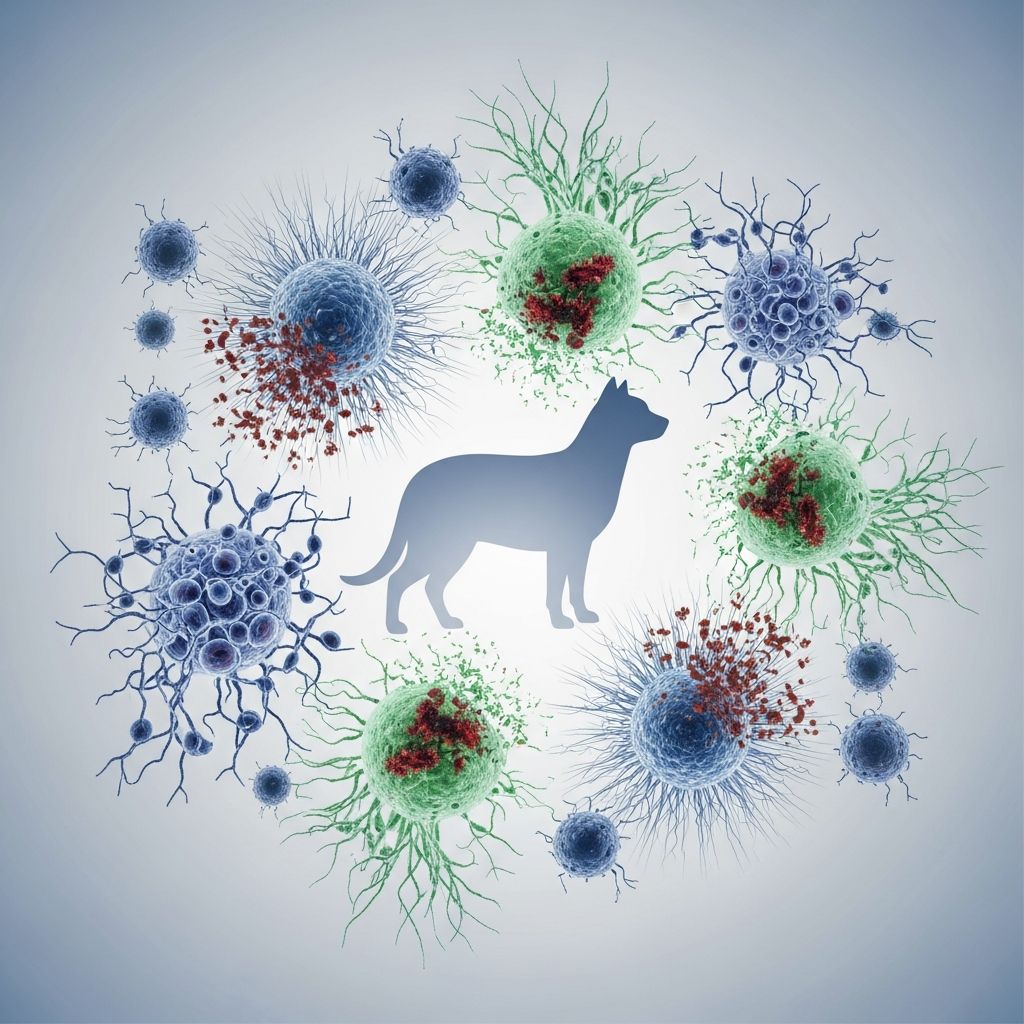
Secondary immunodeficiencies represent a critical category of immune disorders in veterinary medicine, where the animal’s defense system becomes compromised not by genetic flaws but by external or acquired factors. Unlike primary forms that stem from congenital defects, these conditions arise later in life due to infections, stressors, nutritional deficits, or therapeutic interventions, leading to heightened susceptibility to opportunistic pathogens. Understanding these disorders is essential for timely intervention, as they often manifest through persistent or recurrent infections that challenge standard treatments.
Defining Secondary Immunodeficiencies
Secondary immunodeficiencies occur when an underlying condition disrupts normal immune function, impairing the body’s ability to combat infections. This can affect innate immunity (e.g., phagocytosis), humoral responses (antibody production), or cell-mediated defenses (T-cell activity). Animals may experience transient suppression during acute illness or chronic impairment from ongoing diseases. In dogs, for instance, up to 26% of those with enteric, dermatologic, or parasitic issues show marked immunosuppression, particularly in cases of distemper or parvovirus. Horses commonly face failure of passive transfer (FPT) in foals, where inadequate colostrum intake leaves them vulnerable to bacterial septicemia.
Key Causes Across Species
Various triggers contribute to these immune lapses, varying by species and context. Viral infections like canine distemper suppress lymphocyte counts and activity, while bacterial or parasitic loads overwhelm phagocytic cells. In equines, stress from transport or weaning exacerbates risks.
- Viral and Bacterial Infections: Pathogens such as parvovirus in dogs reduce immunoglobulin levels and lymphocyte function during acute phases.
- Parasitic Infestations: Conditions like giardiasis lead to persistent immune damping, predisposing to secondary infections.
- Nutritional and Metabolic Issues: Malnutrition depletes essential nutrients for immune cell production; in foals, FPT is the leading acquired deficiency.
- Pharmacological Suppression: Corticosteroids inhibit inflammatory responses, mimicking natural stress-induced suppression.
- Neoplasia and Chronic Diseases: Tumors like lymphosarcoma impair antibody synthesis.
- Age and Stress: Older animals or those under environmental strain show transient declines.
Species-Specific Manifestations
Dogs: Common Vulnerabilities
Dogs frequently encounter secondary immunodeficiencies linked to dermatologic or gastrointestinal diseases. Studies on 238 dogs revealed severe cases in those with German Shepherd pyoderma (GSP), where phagocytosis inhibition and elevated lysozyme levels were noted. Distemper and parvovirus patients exhibited profound lymphopenia and hypogammaglobulinemia, with 26% overall showing significant suppression. Chronic cases persisted in pyoderma or dermatophytosis, suggesting bidirectional relationships where immunosuppression fosters infections.
Horses: Foal and Adult Risks
In horses, FPT remains the predominant secondary issue, preventable via proper colostrum management. Affected foals face septicemia risks as maternal antibodies wane. Adults may suffer transient suppression from viruses, steroids, or tumors, with opportunistic infections signaling underlying deficits. Conditions like equine viral arteritis or metabolic disorders further compound vulnerabilities.
Other Species: Cats, Cattle, and Beyond
Cats with feline leukemia virus (FeLV) or feline immunodeficiency virus (FIV) experience acquired suppression, mirroring viral impacts in dogs. In ruminants, stressors like weaning or transport induce temporary immune dips, increasing respiratory disease incidence. Production animals under nutritional stress show similar patterns, emphasizing management in herd health.
Clinical Signs and Recognition
Animals with secondary immunodeficiencies present with recurrent or refractory infections. Key indicators include:
- Multiple pneumonia episodes annually.
- Concurrent infections in distant sites, e.g., pneumonia plus sinusitis.
- Opportunistic pathogens invading normally resistant tissues.
- Bone or CNS infections like osteomyelitis or meningitis.
- Failure of prolonged antibiotic therapy.
- Persistent skin or mucosal infections.
Innately, bacterial overload signals antibody or phagocyte defects; viral/fungal dominance points to T-cell issues. Lethargy, anorexia, and poor growth in young animals further alert clinicians.
Diagnostic Approaches
Diagnosis hinges on history, clinical exams, and targeted assays. Start with CBC, biochemistry, and urinalysis to detect lymphopenia or hypergammaglobulinemia. Advanced tests include:
| Test | Purpose | Species Example |
|---|---|---|
| Lymphocyte counts and function | Assess cell-mediated immunity | Dogs with distemper |
| Immunoglobulin levels (IgG, IgM) | Evaluate humoral response | Foals with FPT |
| Phagocytosis assays | Measure innate defenses | GSP dogs |
| Complement activity | Detect hemolytic deficits | Dogs with pyoderma |
| Bone marrow evaluation | Identify production failures | General |
Persistent cases warrant ruling out neoplasms via imaging or biopsy.
Management and Treatment Strategies
Treatment targets the root cause while supporting immunity. No cures exist for some chronic forms, but prevention is paramount.
- Address Underlying Cause: Antivirals for acute infections; deworming for parasites.
- Supportive Care: Plasma transfusions for foals; antibiotics for secondary bacterial invasions.
- Preventive Measures: Vaccination protocols, stress minimization, nutrition optimization.
- Immunomodulators: Limited use; monitor for efficacy.
- Herd Management: Colostrum testing in foals; biosecurity in kennels.
Prognosis improves with early detection; chronic cases like neoplasia may require euthanasia if refractory.
Prevention in Practice
Proactive strategies mitigate risks: ensure colostrum intake in neonates, maintain balanced diets, minimize steroid overuse, and vaccinate appropriately. Regular health checks in high-risk breeds like German Shepherds aid early spotting.
Frequently Asked Questions (FAQs)
What distinguishes secondary from primary immunodeficiencies?
Primary are congenital, appearing in young animals; secondary are acquired, often in adults from infections or stress.
Can secondary immunodeficiencies be reversed?
Many transient forms resolve with cause treatment; chronic ones like tumors may persist.
Which dog breeds are at higher risk?
German Shepherds with pyoderma show pronounced suppression.
How is FPT prevented in foals?
Administer colostrum within hours of birth and test IgG levels.
What infections signal immune compromise?
Recurrent bacterial, opportunistic fungal/viral, or multi-site infections.
Research Insights and Future Directions
Studies underscore infection-immunosuppression cycles, as in dogs where parvovirus precedes deep deficits. Equine research highlights FPT’s preventability. Ongoing immunology advances promise better diagnostics, like flow cytometry for lymphocyte subsets.
References
- Secondary immunodeficiency in dogs with enteric, dermatologic, infectious or parasitic diseases — Toman M, et al. Zentralbl Veterinarmed B. 1998-08-01. https://pubmed.ncbi.nlm.nih.gov/9719765/
- Secondary immunodeficiencies of horses — PubMed. 2000. https://pubmed.ncbi.nlm.nih.gov/10752142/
- Immunodeficiency Diseases in Animals — MSD Veterinary Manual. https://www.msdvetmanual.com/immune-system/immunologic-diseases/immunodeficiency-diseases-in-animals
- Immunodeficiency Disorders — HAHPets. https://www.hahpets.com/articles/415741-immunodeficiency-disorders
- Immunodeficiencies in Horses — Cornell University College of Veterinary Medicine. https://www.vet.cornell.edu/research-departments/labs/equine-immunology/immunodeficiencies-horses
- Weak Immune System due to Hereditary Disorder in Dogs — PetMD. https://www.petmd.com/dog/conditions/genetic/c_dg_primary_immunodeficiency_disorders
- Secondary Immunodeficiency in Dogs with Enteric, Dermatologic… — Wiley Online Library. 1998. https://onlinelibrary.wiley.com/doi/10.1111/j.1439-0450.1998.tb00801.x
Similar Articles








Read full bio of medha deb


