

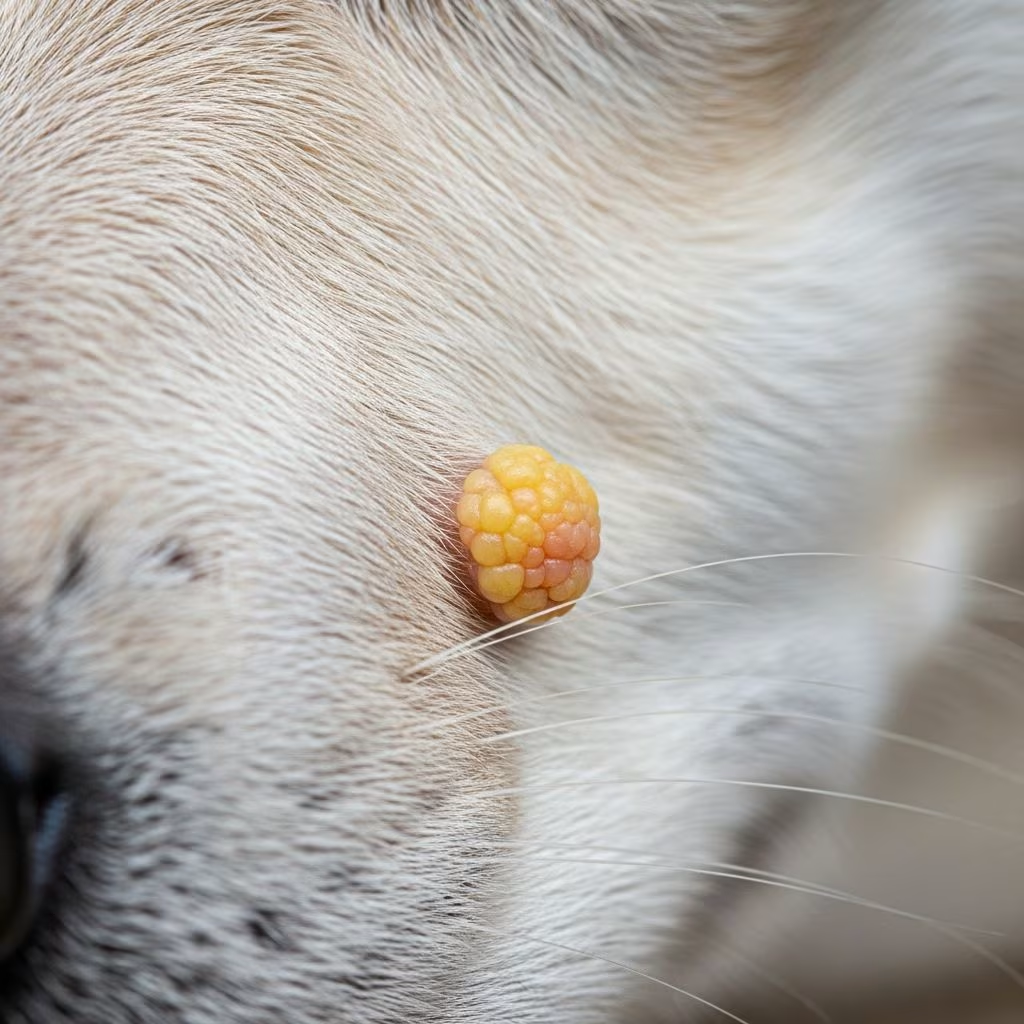
Sebaceous hyperplasia represents a frequent, non-cancerous skin issue in canines, characterized by enlarged oil-producing glands that form noticeable lumps on the skin. These growths arise when sebaceous glands, responsible for secreting sebum to lubricate the skin and coat, multiply excessively, leading to wart-like protrusions. Predominantly affecting middle-aged to senior dogs, this condition is benign but can sometimes lead to secondary complications if irritated or infected.
The Role of Sebaceous Glands in Canine Skin Health
Sebaceous glands are microscopic structures embedded in the dermis, attached to hair follicles throughout a dog’s body. They produce sebum, an oily substance that waterproofs the skin, prevents dryness, and gives the coat its natural shine. In healthy dogs, sebum flows freely through ducts into follicles, maintaining barrier function against pathogens and environmental stressors. Disruptions in this process, such as glandular overgrowth, result in hyperplasia, where cells proliferate abnormally, forming visible nodules without malignant potential.
This overactivity often stems from age-related hormonal shifts or genetic predispositions, altering sebum production and follicle dynamics. Unlike cysts, which trap sebum internally, hyperplasia features outwardly projecting masses due to expanded glandular lobules surrounding dilated ducts.
Common Locations and Visual Characteristics
These nodules typically emerge on the head, trunk, abdomen, chest, and limbs, with a preference for sun-exposed or friction-prone areas. On the eyelids, they may involve modified glands like meibomian ones, potentially irritating the eye. Pressure points such as elbows or paws can also host them, causing discomfort during movement.
- Appearance: Smooth, raised, hairless bumps ranging from 2-5 mm, often white, pink, or yellowish
- Texture: Soft to firm, sometimes lobulated like cauliflower, movable under the skin
- Discharge: May ooze greasy, white sebum if expressed
- Associated signs: Hair loss, mild scaling, or crusting around the lesion
Multiple growths are common, especially in predisposed breeds, distinguishing them from singular cysts.
Breeds and Age Groups at Higher Risk
Certain breeds exhibit genetic tendencies toward sebaceous gland disorders. Terriers like Manchester, Wheaten, and Welsh varieties, alongside Cocker Spaniels, Schnauzers, Huskies, Samoyeds, and Alaskan Malamutes, report higher incidences. Older dogs over seven years face elevated risks due to cumulative skin changes, including drier epidermis prompting excess sebum to compensate.
| Breed Group | Examples | Risk Factors |
|---|---|---|
| Terriers | Manchester, Wheaten, Welsh | Genetic predisposition to glandular overgrowth |
| Spaniels & Hounds | Cocker Spaniel, Schnauzer | Hormonal influences on skin pH |
| Northern Breeds | Husky, Samoyed, Malamute | Thicker coats trapping sebum |
Potential Causes and Triggering Factors
Although the precise etiology remains elusive, experts link hyperplasia to sebaceous gland hyperactivity influenced by hormonal fluctuations, UV exposure, or chronic inflammation. Skin trauma, such as scratches or grooming injuries, can block ducts, fostering glandular expansion. pH imbalances—shifting from the normal 7.5 alkaline state—arise from frequent shampoos, poor diet, allergies, or metabolic issues like diabetes, promoting overproduction.
- Genetic mutations affecting gland regulation
- Age-induced hormonal changes
- Environmental irritants (sunlight, allergens)
- Skin microbiome disruptions from harsh cleaners
- Underlying conditions altering sebum flow
In hairless or short-haired breeds, inactive follicles exacerbate accumulation.
Symptoms and When to Worry
Most nodules remain asymptomatic, posing only cosmetic concerns. However, vigilance is key for changes indicating complications.
- Benign indicators: Stable size, no pain, intact skin
- Warning signs: Rapid growth, ulceration, bleeding, foul odor, redness, or swelling signaling infection
- Behavioral cues: Excessive licking, scratching, limping (if on paws), or squinting (eyelid involvement)
Rupture releases thick, cheesy material, inviting bacterial invasion and pain. Rarely, irritation near eyes causes corneal damage.
Accurate Diagnosis Methods
Veterinary assessment starts with physical examination, noting lesion morphology and distribution. Fine-needle aspiration reveals sebaceous cells without atypia, confirming benign hyperplasia over adenomas or carcinomas. Biopsy provides definitive histology: hyperplastic lobules with peripheral basal cells encircling dilated ducts. Imaging or bloodwork rules out systemic drivers like endocrine disorders.
Treatment Approaches: From Conservative to Surgical
Asymptomatic cases require monitoring alone, with regular grooming to prevent trauma. For problematic lesions:
- Topical therapies: Retinoid creams or antiseptics reduce size and inflammation
- Cryotherapy/Laser: Freezing or ablation for small, multiple nodules
- Surgical excision: Ideal for solitary, irritated growths; full removal prevents recurrence
- Expression: Manual sebum evacuation under sedation for cysts mimicking hyperplasia
Antibiotics address infections; anti-inflammatories ease discomfort. Recent studies highlight efficient topical treatments shrinking nodules without invasiveness.
Home Management and Prevention Strategies
Pet owners play a vital role in minimizing progression.
- Use pH-balanced, oatmeal-based shampoos sparingly to preserve microbiome
- Provide omega-3 supplements for skin moisture
- High-quality diets low in carbs/sugars support pH stability
- Protect from sun with pet-safe sunscreen on light-skinned areas
- Regular vet check-ups for early detection
Avoid over-bathing; brush gently to distribute sebum evenly.
Distinguishing from Malignant or Similar Conditions
Hyperplasia mimics adenomas (benign tumors) or carcinomas (rare, aggressive). Adenomas feature cauliflower-like lobes; carcinomas ulcerate deeply with inflammation. Cysts are enclosed sacs versus open nodules. Cytology differentiates: hyperplasia shows normal sebocytes.
| Condition | Key Features | Risk Level |
|---|---|---|
| Hyperplasia | Wart-like, multiple, head/trunk | Benign |
| Adenoma | Lobulated, oily discharge | Benign |
| Carcinoma | Ulcerated, rapid growth | Malignant |
| Cyst | Fluctuant, may rupture | Benign |
Frequently Asked Questions (FAQs)
Is sebaceous hyperplasia painful for my dog?
Typically not, unless secondarily infected or traumatized.
Can it spread to other dogs?
No, it’s not contagious; genetic/environmental.
How do I prevent it in prone breeds?
Maintain skin health via diet, grooming, and vet monitoring.
Will it go away on its own?
Sometimes stabilizes, but growths persist without intervention.
Is surgery always necessary?
Only for symptomatic cases; many manage conservatively.
References
- Sebaceous Cyst in Dogs: Appearance, Diagnosis, and Treatment — ToeGrips. 2023-05-15. https://toegrips.com/sebaceous-cyst-dog/
- Sebaceous Adenoma In Dogs — Dogs Naturally Magazine. 2024-01-10. https://www.dogsnaturallymagazine.com/sebaceous-adenoma-in-dogs/
- Sebaceous Cysts in Dogs – Signs, Causes, Diagnosis — WagWalking. 2024-03-22. https://wagwalking.com/condition/sebaceous-cysts
- Efficient Topical Treatment of Canine Nodular Sebaceous Hyperplasia — PMC (NCBI). 2024-02-01. https://pmc.ncbi.nlm.nih.gov/articles/PMC10885944/
- Sebaceous and Modified Sebaceous Gland Tumors — We Are The Cure. 2023-11-08. https://wearethecure.org/learn-more-about-canine-cancer/canine-cancer-library/sebaceous-and-modified-sebaceous-gland-tumors/
- Sweat Gland, Hair Follicle, and Sebaceous Gland Tumors — VCA Animal Hospitals. 2024-06-12. https://vcahospitals.com/know-your-pet/skin-sebaceous-gland-tumors



