

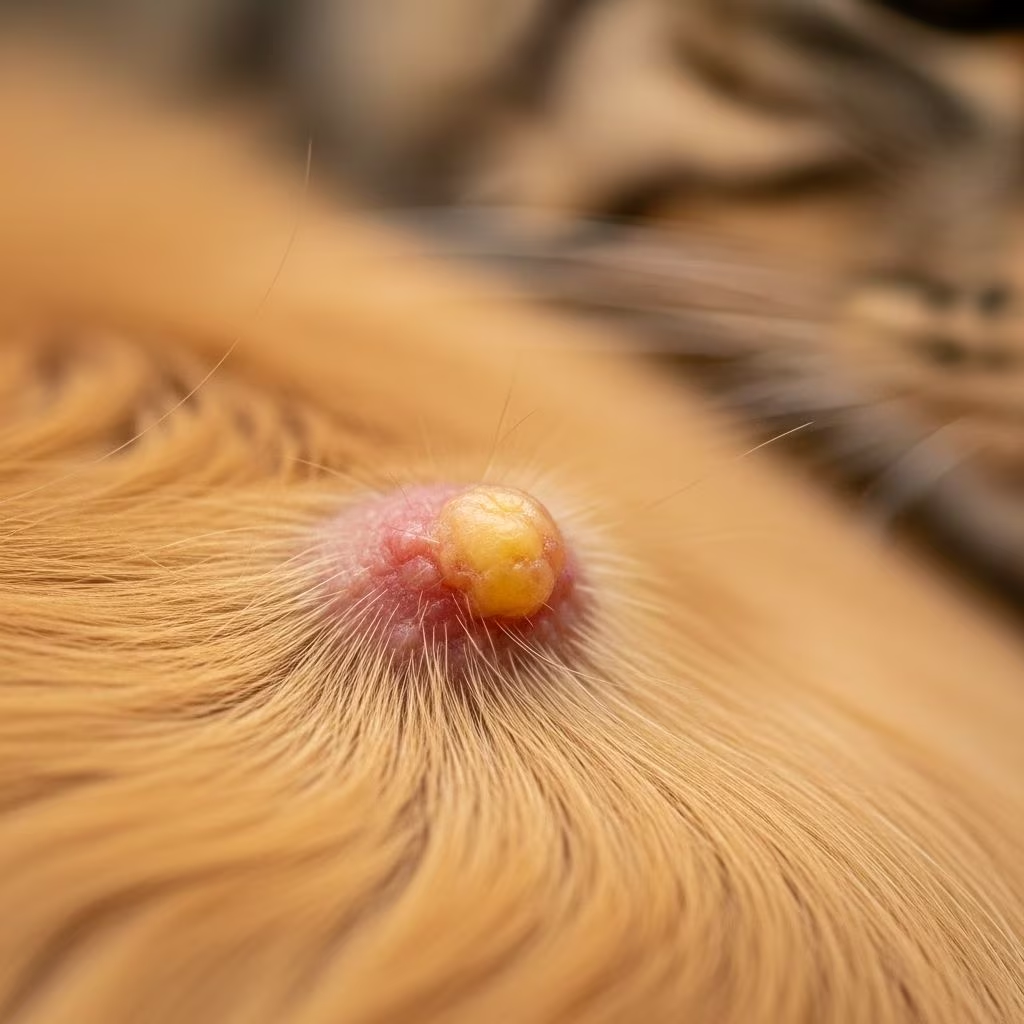
Understanding Sebaceous Gland Tumors in Dogs and Cats
Sebaceous glands are specialized oil-producing glands located throughout your pet’s skin. These glands secrete an oily substance called sebum that helps maintain healthy skin and coat by providing moisture and protection. While these glands serve important functions, they can occasionally develop tumors or abnormal growths. Sebaceous gland tumors represent the third most common type of skin tumor in dogs, accounting for 21–35% of all cutaneous epithelial tumors. Understanding these tumors is essential for pet owners who notice unusual growths or changes in their dog’s or cat’s skin.
What Are Sweat Gland, Hair Follicle, and Sebaceous Gland Tumors?
These tumors develop from disordered growth of cells related to the sweat glands, hair follicles, and sebaceous glands in your pet’s skin. Although dogs and cats do not sweat the same way humans do, they still possess sweat glands throughout their bodies. Hair follicles and sebaceous glands work together to maintain a healthy coat and skin barrier. When cells in these structures begin growing abnormally, tumors can form.
Most of these tumors are benign, meaning they do not spread to other parts of the body and are not life-threatening. However, some tumors, such as matrical carcinoma and sebaceous gland adenocarcinoma, are malignant. The good news is that these malignant forms are very rare. Some pets may develop one or more of these tumors in multiple locations on their body over time.
Types of Sebaceous Gland Tumors
Sebaceous gland tumors are classified into several distinct types based on their characteristics and degree of cellular maturation. Understanding the differences between these types helps veterinarians determine the appropriate treatment approach and expected outcomes.
Sebaceous Gland Hamartomas
Sebaceous gland hamartomas are solitary tumors that typically appear shortly after birth. These tumors are elongated or circular in shape and usually reach approximately 2 inches (5 centimeters) in length or diameter. They represent a benign growth pattern that is generally identified early in a pet’s life.
Sebaceous Gland Overgrowth (Hyperplasia)
This condition occurs primarily in older dogs and cats and appears as lumps that are rarely larger than 0.4 inches (1 centimeter) in diameter. The affected areas often have a shiny, horn-like surface. Manchester Terriers, Wheaten Terriers, and Welsh Terriers are among the breeds at greatest risk for developing this condition. The head and abdomen are the most commonly affected areas.
Sebaceous Gland Adenomas
Sebaceous gland adenomas are common benign tumors in older dogs. Certain breeds show higher predisposition, including Coonhounds, English Cocker Spaniels, Cocker Spaniels, Huskies, Samoyeds, and Alaskan Malamutes. These tumors tend to be larger than overgrowth lesions, typically exceeding 0.4 inches (1 centimeter) in width. They are often multiple and can occur anywhere on the body but are most commonly found on the head.
Sebaceous adenomas may develop a crust on their surface and can become inflamed or infected, particularly if they are traumatized by the pet’s licking or chewing. These tumors are sometimes called “old dog warts” because of their appearance, though they are not viral-induced like true warts.
Sebaceous Gland Epitheliomas
Sebaceous epitheliomas are a more aggressive type of sebaceous adenoma that can extend deeper into the skin layers. These tumors often appear as ulcerated lumps and have a higher risk of recurrence than simple adenomas. The solitary form typically occurs on the head and eyelids, though generalized forms have been reported in some cases.
Sebaceous Gland Adenocarcinomas
Sebaceous gland adenocarcinomas are rare malignant tumors that occur in middle-aged or older dogs. Cavalier King Charles Spaniels, Cocker Spaniels, and Scottish, Cairn, and West Highland White Terriers are the breeds at greatest risk. Male dogs may be predisposed to developing these tumors. These malignant tumors spread within the skin and may eventually spread to regional lymph nodes as the disease progresses.
Causes and Risk Factors
The exact cause of sebaceous gland tumors remains not fully understood, but several factors influence their development. Age is a significant risk factor, with most tumors occurring in middle-aged to older pets. Sebaceous gland tumors are more common in females, occurring in approximately 60% of female dogs, with an average age of onset between 9.5 and 10.5 years.
Breed predisposition plays an important role in tumor development. Certain breeds such as terriers, poodles, cocker spaniels, and miniature schnauzers are particularly susceptible. Genetic factors and hormonal influences, particularly androgen levels, are suspected in the pathophysiology of these tumors. Hyperadrenocorticism (Cushing’s disease) should be assessed in female dogs and those with recurrent adenomatous hyperplasia.
Symptoms and Clinical Signs
The most notable sign of sebaceous gland tumors is the appearance of solid, firm, or raised areas (lesions) on the skin. These masses vary in appearance depending on the tumor type and may present differently on individual pets.
Physical Appearance of Lesions
Sebaceous adenomas typically appear as single to multiple raised, hairless, lobulated white to pale pink skin masses. Sometimes these lesions may be pigmented. The masses may ooze an oily white material and typically range in size from one-quarter inch to 1 inch in diameter. These growths most commonly occur on the trunk, legs, feet, or face.
Secondary Complications
While many sebaceous gland tumors cause no bothersome symptoms, complications can arise if the mass becomes traumatized or secondarily infected. When this occurs, your pet may excessively lick or chew at the lesion, causing further damage to the surrounding skin and potentially leading to infection.
If a mass grows near or on the edge of the eyelid, it can irritate the eye or cause corneal ulcers (scratches on the clear surface of the eye). You may notice your pet squinting, pawing at their face, or scratching excessively if this occurs. Prompt veterinary attention is recommended in these cases to prevent vision complications.
Diagnosis and Evaluation
When you notice an unusual skin mass on your pet, your veterinarian will perform a thorough examination. The diagnosis of sebaceous gland tumors typically involves physical examination and histopathological analysis. During the examination, your veterinarian will assess the size, location, appearance, and characteristics of the mass.
If surgical removal is planned or suspected, a biopsy or complete histopathological examination will be performed after removal. The tissue sample is sent to a pathologist who can confirm the tumor type and whether it is benign or malignant. This confirmation is crucial for determining the appropriate follow-up care and monitoring plan.
Treatment Options for Sebaceous Gland Tumors
Treatment decisions depend on several factors, including the tumor type, whether it is benign or malignant, its location, and whether it is causing any complications or concerns to your pet.
Benign Tumors
For benign sebaceous gland tumors, surgical removal is optional unless the mass becomes inflamed, infected, or causes your pet discomfort. Many benign tumors remain stable for extended periods without requiring intervention. However, if the mass grows, becomes bothersome, or is of any concern, surgical removal is the recommended treatment.
Surgical removal procedures tend to be straightforward for benign tumors. Your veterinarian will remove the mass while minimizing damage to surrounding healthy tissue. Once removed, the tissue is sent to a pathologist to confirm its benign nature. Following successful removal, most benign tumors do not recur, though some pets may develop new tumors at other locations on their body.
Malignant Tumors
For malignant forms such as sebaceous gland adenocarcinomas, surgery is the treatment of choice. Your veterinarian will not only remove the tumor but also remove tissue surrounding the tumor and any involved lymph nodes. This more extensive surgical approach aims to eliminate any remaining cancer cells that may not be visible.
In addition to surgery, chemotherapy and radiation treatment may be prescribed for malignant tumors. Your veterinarian may consult with a veterinary oncologist or veterinary dermatologist for assistance in developing a comprehensive treatment plan tailored to your pet’s specific condition.
Recovery and Long-Term Prognosis
The prognosis for pets with sebaceous gland tumors is generally favorable, particularly when tumors are benign. Most benign tumors do not recur locally after successful removal, with local tumor recurrence rates as low as 1.1% for adenomatous hyperplasia. However, pets that develop sebaceous gland overgrowth or adenoma often develop new tumors at other sites, with de novo tumor development occurring in up to 10% of cases.
For benign epitheliomas, the prognosis remains good with a local tumor recurrence rate of approximately 6%. Dogs that develop multiple tumors may require periodic monitoring and occasional removal of new masses as they appear.
Malignant tumors carry a more guarded prognosis, though outcomes vary depending on the stage at which the tumor is identified and the aggressiveness of the treatment plan. Early detection and prompt treatment significantly improve the chances of successful management.
Prevention and Monitoring
While you cannot prevent sebaceous gland tumors entirely, regular monitoring of your pet’s skin can help detect abnormalities early. During routine grooming and petting, take time to feel your pet’s skin and note any new lumps, bumps, or masses. If you notice any changes or new growths, schedule a veterinary appointment promptly.
Regular veterinary check-ups become increasingly important as your pet ages. Your veterinarian can examine your pet’s skin systematically and identify any concerning lesions before they become problematic. Maintaining your pet’s overall health through proper nutrition, exercise, and preventive care may also contribute to better skin health overall.
Frequently Asked Questions
Q: Are sebaceous gland tumors contagious to other pets or humans?
A: No, sebaceous gland tumors are not contagious. They develop from abnormal cell growth in your pet’s skin and cannot be transmitted to other animals or people.
Q: How quickly do these tumors grow?
A: Growth rates vary depending on the tumor type. Benign tumors often grow slowly or remain stable for extended periods. Malignant tumors may grow more rapidly and require prompt treatment.
Q: Can sebaceous gland tumors turn into cancer?
A: Most sebaceous gland tumors are benign and do not transform into cancer. However, some tumors are inherently malignant from the start, such as sebaceous gland adenocarcinomas.
Q: Should all sebaceous gland tumors be removed?
A: Not necessarily. Benign tumors that are not causing problems, not infected, and not affecting quality of life may be monitored without removal. However, removal is recommended if the tumor becomes problematic or if there is any concern about its nature.
Q: What is the recovery time after surgical removal?
A: Most pets recover quickly from sebaceous gland tumor removal surgery. Recovery typically takes 7-14 days, during which your veterinarian will provide specific post-operative care instructions including wound management and activity restrictions.
Q: Are certain dog breeds more prone to these tumors?
A: Yes, certain breeds including terriers, poodles, cocker spaniels, miniature schnauzers, and huskies show higher predisposition to developing sebaceous gland tumors.
Q: Can I manage these tumors at home without veterinary care?
A: While benign tumors that are not causing problems may not require immediate removal, professional veterinary evaluation is essential to confirm that a tumor is benign and to monitor for any changes or complications.
References
- Tumors of the Skin in Dogs — MSD Veterinary Manual. 2024. https://www.msdvetmanual.com/dog-owners/skin-disorders-of-dogs/tumors-of-the-skin-in-dogs
- Histopathological and Immunohistochemical Characterization of Sebaceous Gland Tumors in Dogs — National Center for Biotechnology Information (NCBI). 2024. https://pmc.ncbi.nlm.nih.gov/articles/PMC11117200/
- Sweat Gland, Hair Follicle, and Sebaceous Gland Tumors — VCA Animal Hospitals. 2024. https://vcahospitals.com/know-your-pet/skin-sebaceous-gland-tumors
- Skin Sebaceous Gland Tumors — Veterinary Society of Surgical Oncology (VSSO). 2024. https://vsso.org/skin-sebaceous-gland-tumors
- Sebaceous Adenoma — Animal Allergy & Dermatology of Colorado. 2024. https://animalallergycolorado.com/animal-disease-index/sebaceous-adenoma



