

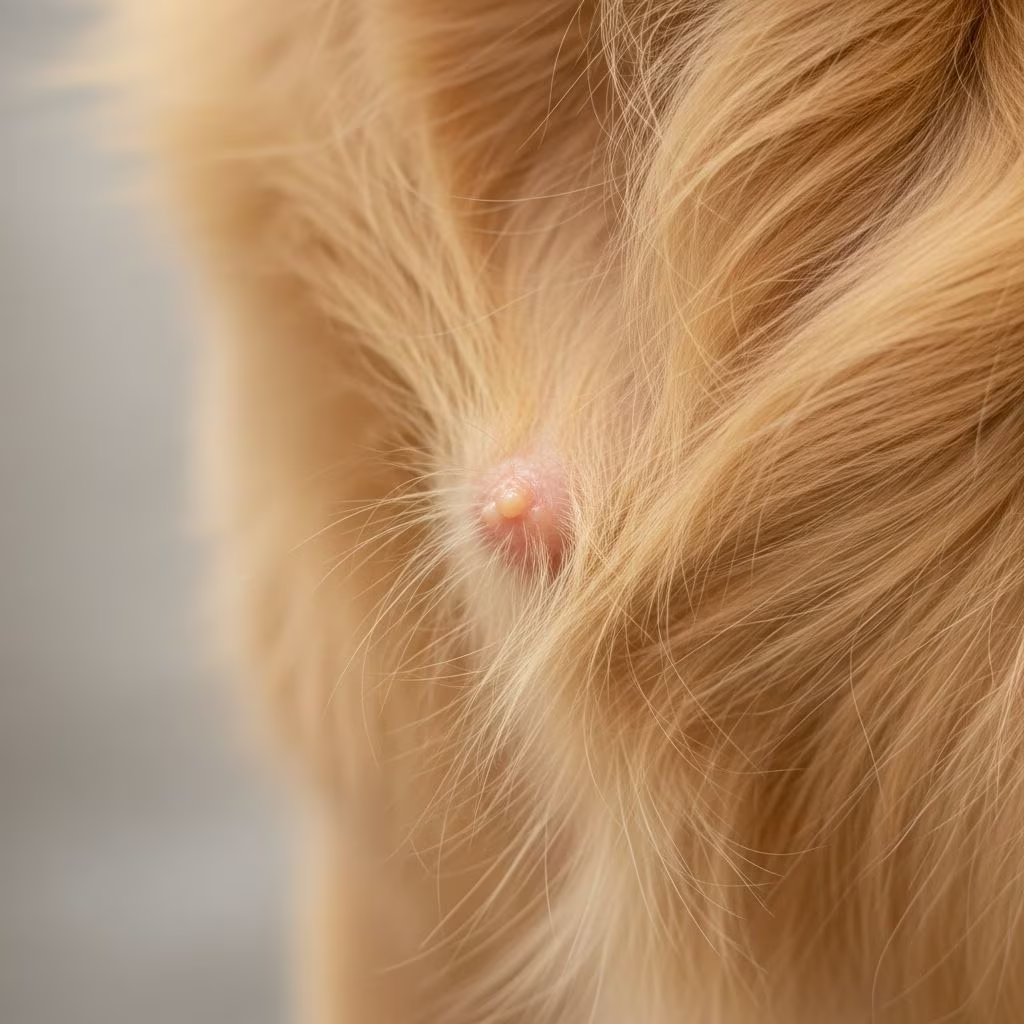
Sebaceous adenomas represent one of the most frequently encountered benign skin tumors in dogs, originating from the sebaceous glands responsible for producing oils that keep the skin and coat healthy. These growths typically appear as raised, wart-like masses and are particularly common in older dogs, though they can affect canines of any age. While generally harmless, they warrant attention to rule out malignancy and manage any discomfort or cosmetic concerns.
Origins and Development of Sebaceous Adenomas
Sebaceous glands are microscopic structures located near hair follicles throughout a dog’s skin, secreting sebum to lubricate and protect the epidermis. When these glands undergo abnormal proliferation, they form adenomas—non-cancerous tumors characterized by well-differentiated cells resembling normal glandular tissue. Unlike malignant counterparts, adenomas do not invade surrounding tissues or metastasize.
Factors contributing to their development include advancing age, genetic predispositions in certain breeds, and possibly chronic inflammation or hormonal influences. Breeds such as Cocker Spaniels, Poodles, and Dachshunds show higher incidences, suggesting a hereditary component. These tumors often emerge on the trunk, head, legs, or eyelids, presenting as multiple nodules over time.
Recognizing the Signs: Clinical Presentation
Owners frequently discover sebaceous adenomas during routine grooming or petting sessions. Key visual and tactile indicators include:
- Firm or soft, raised lumps ranging from pinpoint size to several centimeters, often white, pink, or yellowish.
- Surface resembling cauliflower or a wart, sometimes with a greasy discharge if ruptured.
- Hair loss or thinning around the growth, creating bald patches.
- Multiple lesions clustered on the abdomen, back, or limbs, increasing with the dog’s age.
- Occasional ulceration, redness, or swelling if irritated or secondarily infected.
In most instances, these growths cause no pain or itching, distinguishing them from inflammatory conditions. However, if located near joints, eyes, or mouth, they may hinder movement or lead to secondary bacterial infections, manifesting as foul odor, crusting, or pus.
Distinguishing Adenomas from Similar Conditions
| Condition | Key Features | Difference from Sebaceous Adenoma |
|---|---|---|
| Histiocytoma | Small, round, red, button-like on young dogs | Self-resolves; more vascular, lacks greasy center |
| Mast Cell Tumor | Variable size, itchy, may ulcerate | Potentially malignant; requires biopsy for grade |
| Lipoma | Soft, subcutaneous fat mass | Movable under skin; no epidermal attachment |
| Sebaceous Adenitis | Scaly, flaky skin with hair loss | Inflammatory gland destruction, not tumoral growth |
| Squamous Cell Carcinoma | Crusted, erosive plaques | Malignant, sun-exposed areas, invasive |
This comparison underscores the importance of professional evaluation, as appearances can overlap with serious pathologies.
Diagnostic Approaches for Confirmation
Veterinarians initiate diagnosis through a thorough physical exam, noting lesion number, distribution, and characteristics. Fine-needle aspiration cytology follows, extracting cells via a needle for microscopic review, often revealing sebaceous cells in clusters. This minimally invasive technique provides rapid preliminary results, identifying benign adenomas in over 90% of suspected cases.
For definitive assessment, excisional biopsy or full-thickness skin sampling is recommended, especially if malignancy is suspected. Histopathology examines tissue architecture, confirming glandular hyperplasia without atypia. Advanced imaging like ultrasound aids in evaluating deep involvement, while bloodwork rules out systemic issues.
Management Strategies: From Watchful Waiting to Intervention
Treatment philosophy prioritizes the tumor’s behavior, location, and impact on quality of life. Asymptomatic adenomas often require only periodic monitoring every 3-6 months, tracking size and changes via photos or measurements.
Surgical excision remains the gold standard for problematic growths. Under general anesthesia, the mass and a margin of normal tissue are removed, with histopathology on the specimen. This curative approach suits solitary or bothersome lesions, though recurrence elsewhere is common due to multifocal gland hyperactivity.
For dogs with numerous tumors, oral retinoids like isotretinoin (1 mg/kg daily) offer systemic control, shrinking existing growths and preventing new ones. Monitoring includes quarterly blood tests for liver function and lipids, given potential side effects like gastrointestinal upset or elevated triglycerides. Cyclosporine may adjunctively modulate immunity in select cases.
Distinguishing from Sebaceous Adenitis: A Common Confusion
Sebaceous adenitis differs fundamentally as an autoimmune disorder destroying sebaceous glands, leading to dry, scaly skin rather than discrete tumors. Symptoms encompass flaky dandruff, moth-eaten alopecia, and thickened skin, progressing from head to trunk. Biopsy reveals gland loss and inflammation, not proliferation.
Management involves lifelong topical therapies (medicated shampoos, emollients), omega-3 supplements, and immunosuppressants like cyclosporine. Unlike adenomas, it demands intensive grooming to remove scales and prevent infections, with variable response rates.
Home Care and Prevention Tips
Supportive measures enhance outcomes:
- Regular grooming to monitor skin and prevent trauma.
- Balanced diet rich in omega fatty acids for skin health.
- Avoid irritants; use hypoallergenic shampoos if needed.
- Protect from sun exposure to minimize malignant transformation risk.
- Annual dermatology check-ups for at-risk breeds.
No proven prevention exists, but early detection via vigilant ownership curtails complications.
Prognosis and Long-Term Outlook
Benign sebaceous adenomas carry an excellent prognosis post-removal, with most dogs enjoying normal lifespans. Multiple or recurrent cases necessitate ongoing vigilance, but rarely threaten life. Malignant adenocarcinomas, though rare (less than 5% of sebaceous tumors), demand aggressive surgery, chemo, or radiation, yielding guarded outcomes.
Pet owners report high satisfaction with management, emphasizing communication with vets to tailor plans.
Frequently Asked Questions (FAQs)
Are sebaceous adenomas cancerous in dogs?
Overwhelmingly no; they are benign. Biopsy confirms rarity of malignancy.
Do sebaceous adenomas hurt my dog?
Rarely; discomfort arises only from irritation or infection.
Can my dog live normally with sebaceous adenomas?
Yes, with monitoring or treatment as needed.
Why does my older dog have so many?
Age-related glandular changes promote multifocal development.
Is surgery always necessary?
No; reserve for symptomatic or rapidly growing lesions.
How do I differentiate adenoma from adenitis?
Adenomas are lumps; adenitis causes diffuse scaling—consult a vet for biopsy.
References
- Sebaceous Adenomas on Dogs — ElleVet Sciences. 2023. https://www.ellevetsciences.com/blog/sebaceous-adenomas-on-dogs/
- Tumors of the Skin in Dogs – Dog Owners — Merck Veterinary Manual. 2024-02-01. https://www.merckvetmanual.com/dog-owners/skin-disorders-of-dogs/tumors-of-the-skin-in-dogs
- Sebaceous Adenoma — Veterinary Dermatology Specialists in Lacey. 2023. https://www.dcfawa.com/sebaceous-adenoma
- Canine sebaceous adenitis — PMC – NIH. 2021-02-09. https://pmc.ncbi.nlm.nih.gov/articles/PMC7877684/
- Sebaceous Adenitis in Dogs — VCA Animal Hospitals. 2024. https://vcahospitals.com/know-your-pet/sebaceous-adenitis-in-dogs



