

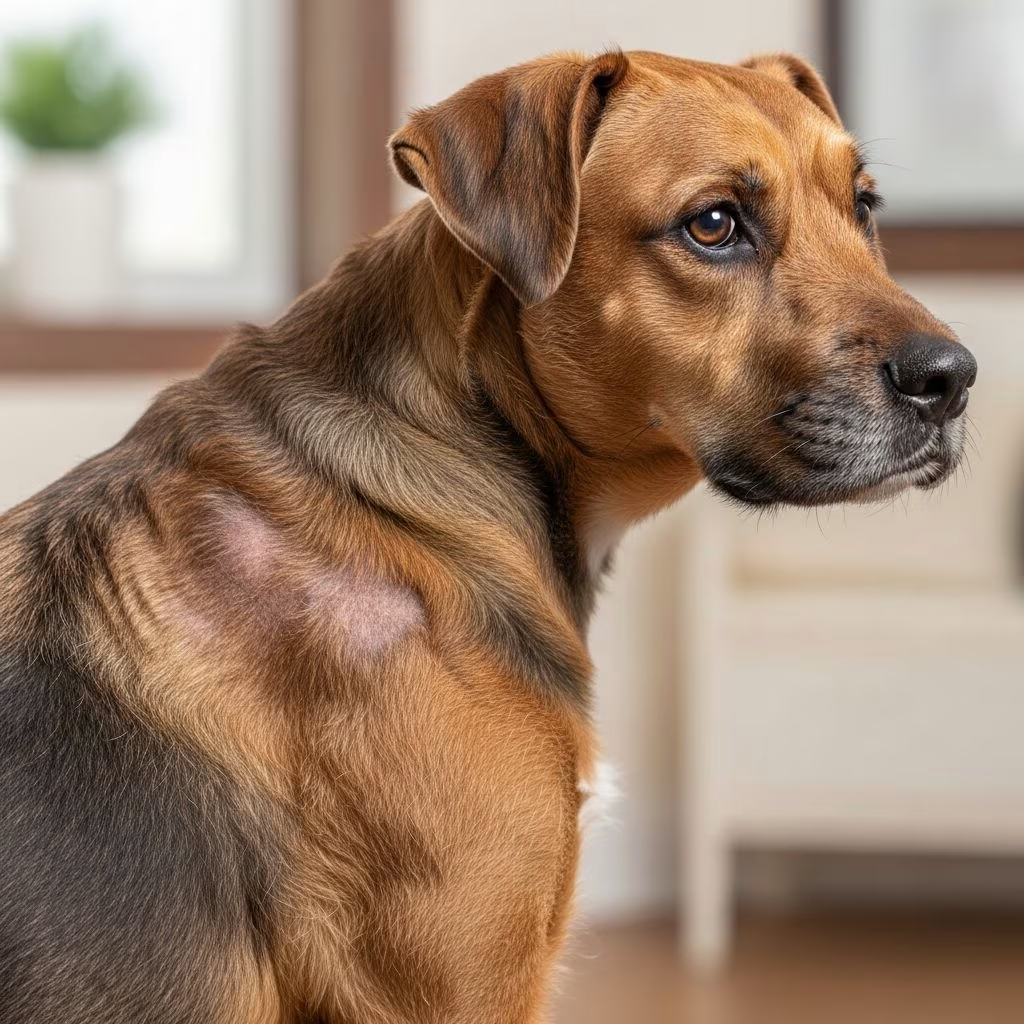
Understanding Seasonal Flank Alopecia in Dogs
Seasonal flank alopecia is a skin condition that affects dogs, characterized by patches of hair loss that typically occur during specific seasons, most commonly during the winter months. The term “alopecia” refers to hair loss, while “flank” describes the specific location on the dog’s body where this condition manifests. This condition is purely cosmetic in nature and does not cause physical discomfort, itching, or irritation to the affected dog, though it can be concerning for pet owners who notice their dog’s coat thinning dramatically.
The condition typically begins in early adulthood and often continues on a yearly basis throughout the remainder of the dog’s life once it starts. While the exact cause remains unknown, researchers believe the condition is related to the dog’s hormonal response to changes in daylight duration and seasonal light exposure patterns.
What Causes Seasonal Flank Alopecia?
The exact cause of seasonal flank alopecia has not been definitively determined, but scientific evidence suggests it involves an abnormal response of hair follicles to normal hormonal changes that occur with changing day length. As daylight hours decrease during fall and winter months, dogs normally experience hormonal shifts that prepare them for colder weather, including the development of a thicker winter coat. However, in dogs with seasonal flank alopecia, this normal physiological process goes awry.
Researchers have identified that melatonin and prolactin secretion may play significant roles in the development of this condition. These hormones, which are regulated by light exposure, normally trigger appropriate hair growth cycles. In affected dogs, the hair follicles fail to respond appropriately to these hormonal signals, resulting in hair loss instead of the expected winter coat growth.
The condition occurs primarily in geographic regions north of the 45-degree parallel, where seasonal changes in daylight are more pronounced. Additionally, certain breeds appear to have a genetic predisposition to this condition, particularly Boxers, Airedale Terriers, English Bulldogs, and Schnauzers, though any pure or mixed breed can be affected. Research has suggested that in Boxer dogs specifically, seasonal flank alopecia may have a genetic component that increases susceptibility to the condition.
Recognizing the Signs and Symptoms
Identifying seasonal flank alopecia requires understanding the characteristic signs and symptoms that distinguish it from other skin conditions. The condition presents with very specific clinical features that pet owners should recognize.
Primary Symptoms
The most obvious sign of seasonal flank alopecia is hair loss in well-demarcated areas, typically on the flanks—the sides of the abdomen just in front of the rear legs. In most cases, this hair loss is symmetrical, meaning each side of the body is equally affected, though the symmetry is not always identical on both sides. The affected areas are clearly defined with distinct boundaries between the hairless skin and normal-haired areas.
Beyond the flanks, hair loss can also occur in other locations on the dog’s body. These alternative sites include along the sides of the chest, at the tail base, along the dorsal surface (back), or even across the bridge of the nose. The exact pattern and location can vary between individual dogs.
Skin Changes and Pigmentation
When hair falls out, pet owners often notice that the visible skin in the affected areas becomes darker than usual—a condition called hyperpigmentation. This darkening of the skin is a characteristic feature of seasonal flank alopecia and helps distinguish it from other causes of canine hair loss. In some cases, the new hair that grows back may be dull, dry, and patchy, appearing different from the original coat.
Seasonal Pattern
The hair loss follows a predictable seasonal pattern. Typically, hair loss begins in the fall months and hair regrows in the spring as daylight hours increase. Less commonly, some dogs may exhibit hair loss in the spring with regrowth occurring in the fall. The cycle of hair loss and regrowth typically follows this seasonal pattern, occurring repeatedly throughout the dog’s life.
Which Dogs Are Most Affected?
While seasonal flank alopecia can affect any dog breed, certain breeds show a much higher predisposition to the condition. The most commonly affected breeds include:
Boxers — consistently show the highest incidence and may have a genetic component to their susceptibility. English Bulldogs — another breed with frequent occurrence of the condition. Airedale Terriers — regularly affected by seasonal flank alopecia. Miniature and Standard Schnauzers — show increased susceptibility compared to other breeds.
The condition typically first appears in dogs between 1 and 6 years of age, with most cases beginning in early adulthood. Once the condition develops, it typically persists throughout the dog’s remaining life, occurring year after year in a cyclical pattern.
How Veterinarians Diagnose the Condition
In most cases, veterinarians can tentatively diagnose seasonal flank alopecia based solely on clinical signs and the dog’s history. Well-demarcated regions of hair loss in a predisposed breed during the expected seasonal timeframe is highly suggestive of this condition. The classic appearance of pigmented bald spots combined with the history of recurrence makes diagnosis relatively straightforward in recurring cases.
However, it is crucial for veterinarians to rule out other possible causes of hair loss before confirming a diagnosis of seasonal flank alopecia. Other conditions that must be excluded include:
Skin infections such as pyoderma or bacterial folliculitis. Parasitic infections including demodectic mange. Fungal infections such as ringworm (dermaphytosis). Endocrine disorders including hypothyroidism and Cushing’s disease. Other dermatological conditions that may present with similar symptoms.
In some cases, veterinarians may recommend additional diagnostic tests such as skin scrapings, fungal cultures, or blood work to definitively rule out these alternative diagnoses before confirming seasonal flank alopecia.
Treatment Options for Seasonal Flank Alopecia
Since seasonal flank alopecia is purely cosmetic and does not cause the dog any physical discomfort or health problems, no treatment is strictly necessary. Many pet owners choose to simply accept the seasonal hair loss and wait for natural regrowth when weather conditions change. However, for those who prefer to treat the condition for cosmetic reasons, options are available.
Melatonin Therapy
Melatonin is the most commonly used and generally recommended treatment for seasonal flank alopecia. This natural hormone, produced by the pineal gland and regulated by light exposure, helps regulate the dog’s circadian rhythms and hair growth cycles. When administered as a supplement, melatonin typically leads to hair regrowth within 2 to 3 months.
The timing of melatonin administration is critical for successful treatment. Veterinarians typically recommend starting melatonin approximately one month before the expected time of hair loss—ideally before the onset of winter months. This proactive approach can prevent or significantly reduce the severity of seasonal hair loss. The supplement should be continued through the remainder of the season for maximum effectiveness.
Melatonin can be administered in several forms. It may be given orally as a tablet or liquid supplement, or veterinarians may use compounded injectable formulations for dogs that have difficulty taking oral medications. A third option involves melatonin implants, though some dogs may experience adverse reactions with implants, potentially causing abscesses at the injection site.
It is essential for pet owners to consult with their veterinarian to determine an appropriate melatonin dose for their specific dog, as dosing can vary based on the dog’s size, age, and individual response to the medication. It is also important to note that supplements are not regulated by the FDA, which means there can be differences in the effectiveness and quality of different melatonin products.
Understanding the Prognosis
As a purely cosmetic condition, the prognosis for seasonal flank alopecia is excellent from a health standpoint. Even if the condition recurs year after year, it will have little or no impact on the dog’s overall health, lifespan, or quality of life. Dogs with seasonal flank alopecia do not experience pain, discomfort, or systemic health problems as a result of the condition.
However, the progression of the condition from a cosmetic standpoint is unpredictable and varies considerably between individual dogs. In some dogs, seasonal flank alopecia occurs as an isolated incident, happening only once in the dog’s lifetime, with complete hair regrowth afterward. In many cases, dogs with seasonal flank alopecia will be affected every year, establishing a predictable annual cycle of hair loss and regrowth. In other dogs, the condition progresses over time, with increasingly severe hair loss or longer periods before regrowth occurs. Rarely, the hair may fall out and never fully regrow, resulting in permanent bald patches.
As dogs age, typically around 6 or 7 years old, some may experience progressively less hair regrowth, potentially due to aging of the hair follicles themselves. This age-related change is a natural progression in some affected dogs.
Distinguishing Seasonal Flank Alopecia from Other Conditions
While seasonal flank alopecia has a characteristic appearance, it is important to understand how it differs from other canine dermatological conditions. Unlike allergic dermatitis or parasitic infections, seasonal flank alopecia does not cause itching, redness, inflammation, or secondary skin infections in the affected areas. The skin may become hyperpigmented but remains otherwise healthy. Additionally, while some cases may develop secondary skin infections, these are not a primary feature of the condition.
The key distinguishing feature is the seasonal nature of the hair loss and the spontaneous regrowth when environmental conditions change, without requiring any medical intervention in most cases.
Frequently Asked Questions
Q: How long does seasonal flank alopecia last?
A: In most cases, seasonal flank alopecia lasts during winter months, and as daylight hours increase in spring, it can self-resolve. However, in dogs that cycle repeatedly, the condition may persist for several months, and hair regrowth typically occurs within three to eight months of initial hair loss.
Q: Can seasonal flank alopecia be prevented?
A: While the condition cannot be prevented entirely, starting melatonin supplementation about one month before the expected onset of hair loss may help prevent or reduce the severity of the condition in dogs with a history of seasonal flank alopecia.
Q: Is seasonal flank alopecia painful or uncomfortable for dogs?
A: No, seasonal flank alopecia does not cause pain, itching, or discomfort to affected dogs. It is purely a cosmetic condition that does not impact the dog’s health or well-being.
Q: Will my dog’s hair always grow back?
A: In most cases, yes, the hair will regrow when seasonal conditions change. However, the regrowth may be slower in some dogs, and rarely, hair may not fully regrow, resulting in permanent bald patches.
Q: Are there any other treatments besides melatonin?
A: Melatonin is the primary treatment recommended for seasonal flank alopecia. Since the condition is purely cosmetic, no other specific treatments are typically necessary, though your veterinarian can discuss other options if desired.
Q: Can dogs of any breed develop seasonal flank alopecia?
A: While certain breeds like Boxers, English Bulldogs, and Airedale Terriers are more predisposed, seasonal flank alopecia can develop in any pure or mixed breed dog.
References
- Seasonal Flank Alopecia — VCA Animal Hospitals. 2024. https://vcahospitals.com/know-your-pet/seasonal-flank-alopecia
- Canine Flank Alopecia — Clinician’s Brief. 2024. https://www.cliniciansbrief.com/article/canine-flank-alopecia
- Seasonal Flank Alopecia in Dogs — PetMD. 2024. https://www.petmd.com/dog/conditions/skin/seasonal-flank-alopecia-dogs
- Canine Flank Alopecia — Veterinary Practice. 2023. https://www.veterinary-practice.com/article/canine-flank-alopecia
- Investigation of the Association of the MLPH Gene with Seasonal Flank Alopecia in Rhodesian Ridgebacks — PubMed/NCBI. 2024. https://pubmed.ncbi.nlm.nih.gov/39449035/
- Seasonal Flank Alopecia — Mar Vista Animal Medical Center. 2024. https://www.marvistavet.com/seasonal-flank-alopecia.pml



