

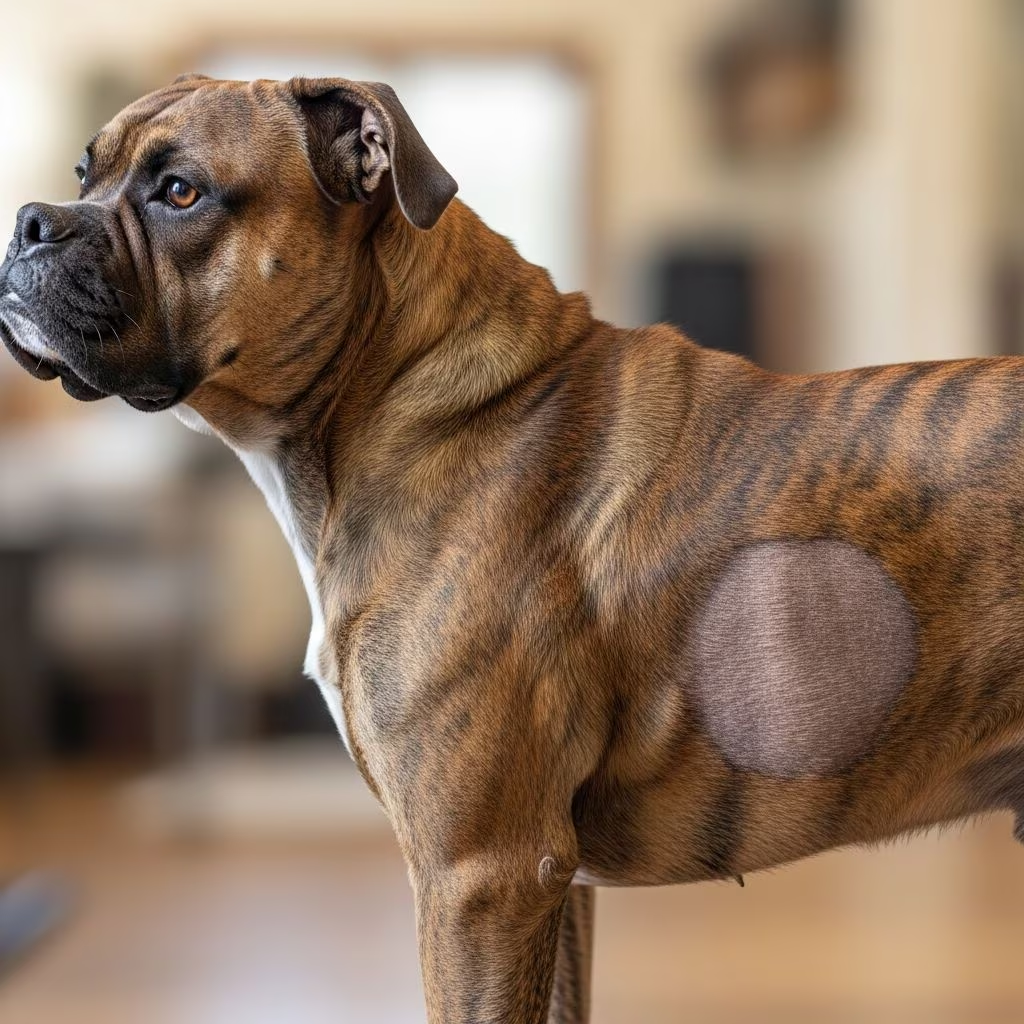
Understanding Seasonal Flank Alopecia in Dogs
Seasonal flank alopecia is a dermatological condition that affects dogs during specific times of the year, typically characterized by localized hair loss on the flanks without accompanying signs of significant skin disease. This condition represents one of the more common seasonal skin presentations in veterinary medicine, particularly in certain breed predispositions. Unlike inflammatory skin conditions, seasonal flank alopecia is primarily a cosmetic concern that may recur throughout a dog’s lifetime, though the underlying mechanisms remain partially understood by the veterinary community.
What is Seasonal Flank Alopecia?
Seasonal flank alopecia is a non-inflammatory skin condition in dogs that typically manifests during winter months, though the specific timing can vary based on geographic location and individual dog characteristics. Affected dogs experience well-demarcated patches of hair loss without accompanying systemic signs of disease. The condition typically begins in early adulthood and frequently continues on a yearly basis throughout the remainder of the dog’s life. What distinguishes this condition from other forms of alopecia is its predictable seasonal pattern and the absence of pruritus or secondary skin inflammation in most cases.
What Causes Seasonal Flank Alopecia?
The precise etiology of seasonal flank alopecia remains undetermined, though current research points to several contributing factors. The most prominent theory suggests an abnormal response of hair follicles to the normal hormonal changes that occur with seasonal variations in daylight duration. Specifically, the reduction in daylight exposure during fall and winter months typically triggers increased melatonin and prolactin secretion from the pineal gland in normal dogs, which facilitates the growth of a dense winter coat. However, in dogs with seasonal flank alopecia, this normal physiological response appears to be disrupted, resulting in follicular arrest or dysplasia rather than appropriate hair growth.
Geographic location plays a significant role in the manifestation of this condition. Seasonal flank alopecia occurs primarily north of the 45-degree parallel, suggesting that the absolute duration of sunlight exposure during winter months is a critical factor. Additionally, certain breeds demonstrate a genetic predisposition to this condition. Boxer dogs, in particular, show evidence of a genetic component, suggesting that inherited factors may influence susceptibility to abnormal follicular responses to hormonal changes. While seasonal flank alopecia may appear hormonally associated, it is not related to thyroid abnormalities or other endocrine disorders; however, it may be associated with follicular hormone receptors localized specifically in the flank region.
Signs and Symptoms of Seasonal Flank Alopecia
The clinical presentation of seasonal flank alopecia is highly characteristic and typically quite distinctive. Understanding these signs helps owners recognize the condition and seek appropriate veterinary guidance.
Primary Clinical Features
- Hair loss in well-demarcated areas, typically on the flanks—both sides of the abdomen just in front of the rear legs
- Symmetrical hair loss pattern, with each side of the body equally affected in most cases
- Hyperpigmentation of the visible skin where hair has fallen out, with the affected skin appearing notably darker than surrounding areas
- Hair loss occasionally occurring in other locations including the sides of the chest, tail base, or bridge of the nose
- Well-defined borders between affected and unaffected skin
- Absence of pruritus, irritation, or discomfort in affected dogs
Seasonal Pattern and Progression
Typically, hair loss begins in the fall and regrows during spring months. However, some dogs exhibit the reverse pattern, with hair loss occurring in spring and regrowth in fall, though this is less common. The cycle of hair loss and regrowth generally follows a predictable seasonal pattern, recurring repeatedly throughout the dog’s life. In the Northern Hemisphere, lesions most commonly develop between November and April, corresponding with periods of reduced daylight.
The progression and severity can vary considerably between individual dogs. In some cases, hair loss represents an isolated incident occurring only once, with complete regrowth afterward. In many dogs with seasonal flank alopecia, the condition recurs every year with similar severity and pattern. More rarely, the condition may progress over time, potentially resulting in incomplete hair regrowth or situations where hair never fully returns to affected areas.
Diagnosis of Seasonal Flank Alopecia
In most cases, seasonal flank alopecia can be tentatively diagnosed based on clinical signs alone. Well-demarcated regions of hair loss in a predisposed breed is highly suggestive of this condition. The characteristic presentation—symmetrical alopecia on the flanks with hyperpigmentation, occurring seasonally in genetically predisposed breeds—provides strong diagnostic indicators.
However, veterinarians typically perform diagnostic procedures to exclude other conditions that may present similarly. Differential diagnoses that should be ruled out include:
- Skin infections such as bacterial pyoderma or ringworm (dermaphytosis)
- Parasitic conditions including demodectic mange
- Endocrine disorders such as hypothyroidism or Cushing’s disease
- Other inflammatory dermatological conditions
Diagnostic testing may include fungal cultures, skin scrapings, or other dermatological evaluations to definitively rule out these conditions before confirming a diagnosis of seasonal flank alopecia. In recurring cases with a clear historical pattern, diagnosis becomes relatively straightforward based on the dog’s presentation and seasonal timing.
Treatment Options for Seasonal Flank Alopecia
Since seasonal flank alopecia is purely a cosmetic condition with no impact on the dog’s overall health or comfort, treatment is entirely optional. Many owners choose not to pursue treatment, accepting the temporary nature of the hair loss. However, for those who prefer to address the cosmetic aspect, several treatment options exist.
Melatonin Therapy
Melatonin is the most commonly used treatment for seasonal flank alopecia and typically leads to hair regrowth within 2–3 months. This hormone naturally regulates the body’s circadian rhythms and plays a crucial role in seasonal coat cycles in many mammals. By administering melatonin supplementation, veterinarians essentially trick the body into perceiving seasonal conditions differently, potentially normalizing hair follicle function.
For dogs with a history of recurrent seasonal flank alopecia, melatonin treatment may be started approximately one month prior to the typical time of onset and continued through the remainder of the season. This proactive approach often prevents hair loss or minimizes its severity. Melatonin can be administered through multiple routes including oral supplements, compounded injections, or melatonin implants. However, important considerations exist regarding melatonin treatment.
Since supplements are not regulated by the US Food and Drug Administration (FDA), there can be significant differences in the effectiveness and quality of various melatonin products. Additionally, while melatonin is generally well-tolerated, some dogs may experience adverse reactions, including abscess formation at implant sites. Pet owners should consult with their veterinarian or a board-certified veterinary dermatologist to determine the most appropriate melatonin formulation, dosage, and administration method for their individual dog.
Affected Breeds and Risk Factors
While seasonal flank alopecia can occur in any breed, certain breeds show marked predisposition to this condition. The most commonly affected breeds include Boxers, English Bulldogs, Airedale Terriers, and Schnauzers. Research suggests a genetic component in these breeds, particularly in Boxer dogs, though the specific genetic mechanisms remain incompletely understood. Recent genetic investigations have explored the potential role of specific genes, such as the melanophylin (MLPH) gene, in the development of seasonal flank alopecia in certain breeds.
The condition typically first appears in dogs aged 1 to 6 years old and frequently continues throughout the remainder of the dog’s life. Geographic location significantly influences disease manifestation, with the condition occurring primarily in temperate regions north of the 45-degree parallel where seasonal variations in daylight are more pronounced.
Prognosis and Long-term Outlook
The prognosis for seasonal flank alopecia is excellent from a health perspective. As a purely cosmetic condition, even if it recurs year after year, it will have little to no impact on the dog’s overall health, comfort, or quality of life. Dogs with seasonal flank alopecia experience no pain, pruritus, or systemic illness associated with the condition.
From a cosmetic standpoint, however, the progression of the condition is somewhat unpredictable. The course of the condition varies significantly between individual dogs. Some dogs experience isolated incidents of hair loss followed by complete regrowth and never experience recurrence. Many dogs with seasonal flank alopecia are affected every year with consistent patterns and severities. In some cases, the condition progressively worsens over time, potentially resulting in incomplete hair regrowth and longer intervals between the onset of hair loss and its eventual return. In rare instances, hair may fall out and never fully regrow, resulting in permanent alopecic patches.
Interestingly, in some dogs, repeated episodes may result in an increase in hair loss severity and longer periods until complete regrowth occurs, suggesting that the condition can have cumulative effects over successive years. However, some dogs experience improvement with age, with around age 6 or 7 potentially showing progressively less hair regrowth due to normal aging processes.
Frequently Asked Questions About Seasonal Flank Alopecia
Q: How long does seasonal flank alopecia typically last?
A: In most cases, seasonal flank alopecia lasts during the winter months, with hair loss typically occurring between November and March in the Northern Hemisphere. As daylight duration increases in spring, the condition typically self-resolves with spontaneous hair regrowth occurring 3–8 months after onset. However, the duration can vary significantly between individual dogs and between successive occurrences in the same dog.
Q: Will my dog’s hair grow back in the same color as before?
A: In most cases, hair regrows with the same color and texture as the original hair. However, in some dogs, the regrowing hair may have a different color than the original hair, creating a distinct appearance in the previously affected areas.
Q: Is seasonal flank alopecia painful or itchy for my dog?
A: No, seasonal flank alopecia is not painful or itchy. Other than the hair loss itself, affected dogs experience no discomfort, irritation, or itchiness. If your dog is scratching or showing signs of skin irritation, this may indicate a different skin condition that requires veterinary evaluation.
Q: Can seasonal flank alopecia be prevented?
A: While the condition cannot be completely prevented, melatonin therapy started one month before the expected onset of hair loss may prevent the condition or minimize its severity in dogs with a known history of recurrent seasonal flank alopecia.
Q: Should I treat my dog’s seasonal flank alopecia?
A: Treatment is entirely optional since seasonal flank alopecia is a cosmetic condition with no impact on your dog’s health. The decision to treat should be based on your aesthetic preferences and your dog’s individual circumstances. Consult with your veterinarian to discuss treatment options if you choose to pursue intervention.
Q: Does seasonal flank alopecia indicate an underlying thyroid problem?
A: No, seasonal flank alopecia is not associated with thyroid abnormalities or other endocrine disorders. However, your veterinarian may recommend thyroid testing to rule out other conditions that can cause similar hair loss patterns.
References
- Seasonal Flank Alopecia — VCA Animal Hospitals. 2024. https://vcahospitals.com/know-your-pet/seasonal-flank-alopecia
- Canine Flank Alopecia — Clinician’s Brief. 2024. https://www.cliniciansbrief.com/article/canine-flank-alopecia
- Canine Flank Alopecia — Veterinary Practice. 2024. https://www.veterinary-practice.com/article/canine-flank-alopecia
- Seasonal Flank Alopecia — Mar Vista Animal Medical Center. 2024. https://www.marvistavet.com/seasonal-flank-alopecia.pml
- Seasonal Flank Alopecia in Dogs — PetMD. 2024. https://www.petmd.com/dog/conditions/skin/seasonal-flank-alopecia-dogs
- Investigation of the Association of the MLPH Gene with Seasonal Flank Alopecia — National Center for Biotechnology Information. 2024. https://pubmed.ncbi.nlm.nih.gov/39449035/



