

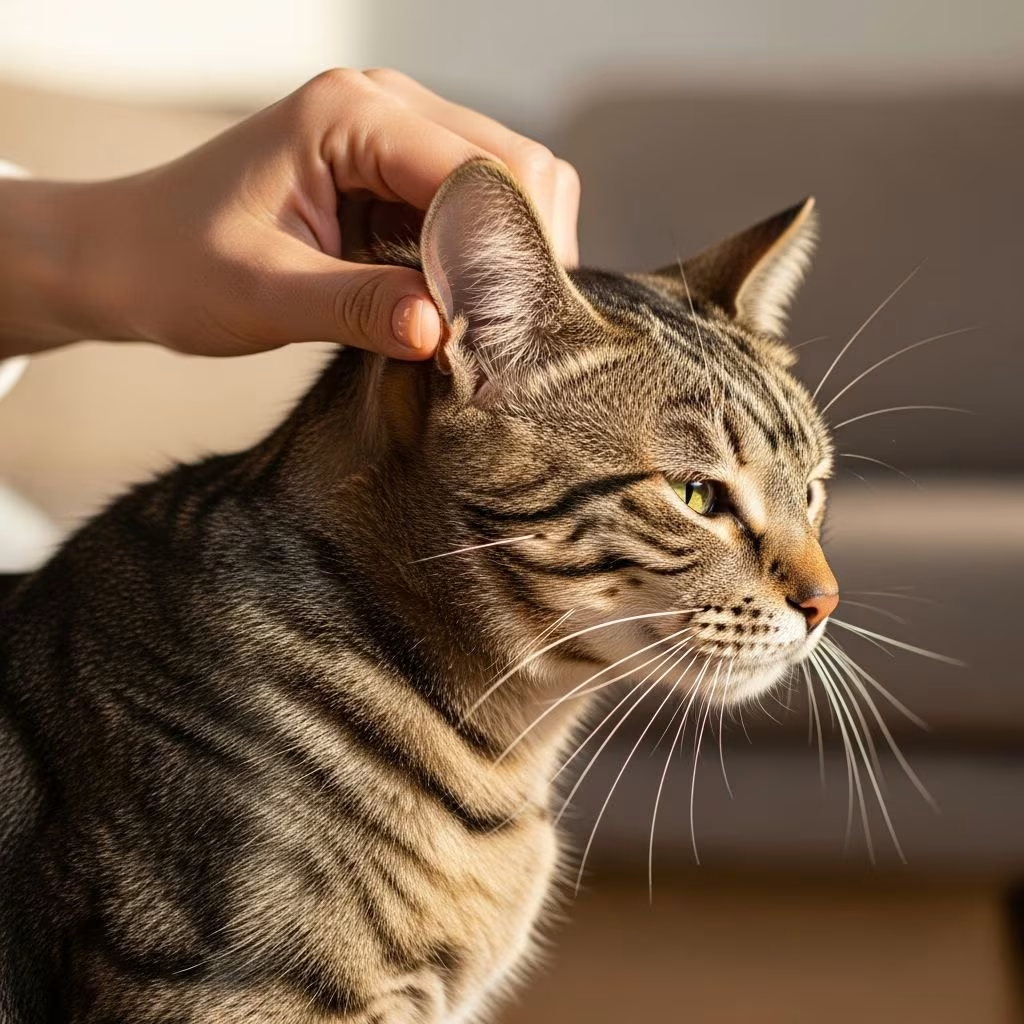
Scruffing involves grasping the loose skin at the back of a cat’s neck to restrain or lift them, a practice rooted in observations of mother cats carrying kittens. While it may seem instinctive, recent veterinary consensus leans against routine use due to potential stress and injury risks, especially in adult cats.
The Biological Roots of Scruffing
In nature, mother cats transport very young kittens by gently biting the scruff, triggering a primitive flexor reflex that causes the kitten to go limp for safe relocation. This reflex, however, fades rapidly after the first few weeks of life, rendering it ineffective and potentially distressing for older kittens and adults.
Wild adult cats experience scruffing during high-stress scenarios like mating, fights, or predator attacks—none of which promote relaxation. Mimicking these in a domestic setting can evoke similar fear responses rather than calm.
Why Scruffing Triggers Stress in Adult Cats
Adult cats lack the flexor reflex, so scruffing often leads to a shutdown response mistaken for relaxation. This is akin to learned helplessness, where the cat freezes due to perceived lack of control, not comfort. Early conditioning from maternal handling may reinforce this, but it manifests as fear, not submission.
- Fearful behaviors: Cats may hiss, growl, or swat post-scruffing, indicating defensive instincts activation.
- Trust erosion: Repeated use diminishes human-animal bonds, fostering avoidance or aggression.
- Physical discomfort: Improper grip causes neck pain, muscle strain, or skin trauma, particularly if lifting without body support.
Studies highlight conflicting results: a 2008 experiment using clips showed some immobilization, but a 2019 follow-up noted increased negative reactions, underscoring scruffing’s unreliability.
When Scruffing Might Be Unavoidable
Despite drawbacks, scruffing has limited applications in emergencies. International Cat Care opposes routine scruffing but acknowledges contexts where safety demands it.
| Situation | Rationale | Precautions |
|---|---|---|
| Violent aggression | Protect handler or others from injury | Use minimal force; support body fully |
| Emergency vet procedures | Failed passive restraint; life-saving needs | Combine with towel wrap; monitor distress |
| Critical trauma assessment | Prevent self-harm or escape | Release immediately post-procedure |
Always prioritize de-escalation first and consult professionals for high-risk cats.
Mastering Proper Scruffing Technique
If scruffing is essential, execute it correctly to minimize harm. Approach calmly, use one hand to scoop under the chest for support, and grasp only the loose scruff skin at the skull base—never suspend fully by neck alone, as this risks spinal damage in heavier adults.
- Position cat on a stable surface.
- Gently fold scruff skin between thumb and fingers.
- Lift hindquarters slightly while cradling body.
- Observe for distress: flattened ears, dilated pupils, tail thrashing.
Stop at any discomfort signs and transition to alternatives.
Humane Alternatives to Scruffing
Modern cat care emphasizes positive, low-stress methods over restraint. These build trust and reduce vet visit anxieties.
Positive Reinforcement Training
Condition cats to accept touch via treats, play, and praise. Start with short sessions targeting sensitive areas like paws or ears, gradually increasing duration. Tools like clickers accelerate learning, associating handling with rewards.
Low-Stress Handling Aids
- Towel wraps: Burrito-style swaddling muffles claws and calms via gentle pressure.
- Fear Free techniques: Vet protocols using pheromone sprays and dim lighting.
- Carrier training: Make carriers cozy hubs for routine access.
Environmental Adjustments
Provide high perches, hiding spots, and vertical space to let cats control interactions. Feliway diffusers mimic calming pheromones, easing multi-cat tensions.
Understanding Cat Body Language
Key to any handling: decode signals. Relaxed cats slow-blink, hold tails upright with soft curves; stressed ones crouch, lash tails, or vocalize sharply.

Charts like this aid quick assessment, preventing escalation.
Expert Consensus and Research Insights
Veterinary behaviorists like Dr. Lore Haug warn scruffing removes agency, heightening aggression risks. Organizations such as International Cat Care formally oppose it, favoring consent-based care.
Humane societies echo this: scruffing teaches helplessness, not cooperation, leading to handling phobias.
FAQs on Cat Scruffing
Is scruffing ever okay for adult cats?
Only in safety-critical moments; otherwise, opt for gentler methods to preserve welfare.
Why does my cat go limp when scruffed?
It’s likely a freeze response from stress or learned helplessness, not relaxation.
How do I train my cat to tolerate handling?
Use daily positive sessions with high-value treats, progressing slowly.
What if scruffing causes injury?
Monitor for limping, swelling; seek vet care promptly.
Are there breed differences in scruff tolerance?
Generally no; body size matters more—heavier cats suffer greater strain.
Building a Stress-Free Cat-Home Environment
Beyond handling, holistic care prevents scruffing needs. Multi-level scratching posts reduce territorial spats; puzzle feeders combat boredom-induced agitation. Regular health checks catch pain early, a common aggression trigger.
Adopt ‘catified’ spaces: window perches for stimulation, quiet retreats for decompression. These empower cats, minimizing restraint scenarios.
Long-Term Benefits of Restraint-Free Care
Owners using alternatives report stronger bonds, fewer scratches, and smoother vet visits. Cats become willing participants, enhancing mutual enjoyment.
In shelters, low-stress protocols boost adoptions by 20-30%, proving welfare-focused shifts yield tangible gains.
References
- Scruffing Cats: The Surprising Truth About This Common Handling Myth — Humane Society of Huron Valley. 2023. https://www.hshv.org/scruffing-cats-the-surprising-truth-about-this-common-handling-myth/
- Scruffing a Cat: When and How to Use This Handling Technique — Lake City Animal Hospital. 2024. https://lakecityanimalhospital.com/blog/scruffing-a-cat/
- Is Scruffing a Cat OK? — Catology. 2023. https://www.catology.com.au/scruffing-cat/
- Position Statements: Scruffing Cats — International Cat Care. 2024. https://icatcare.org/position-statements



