

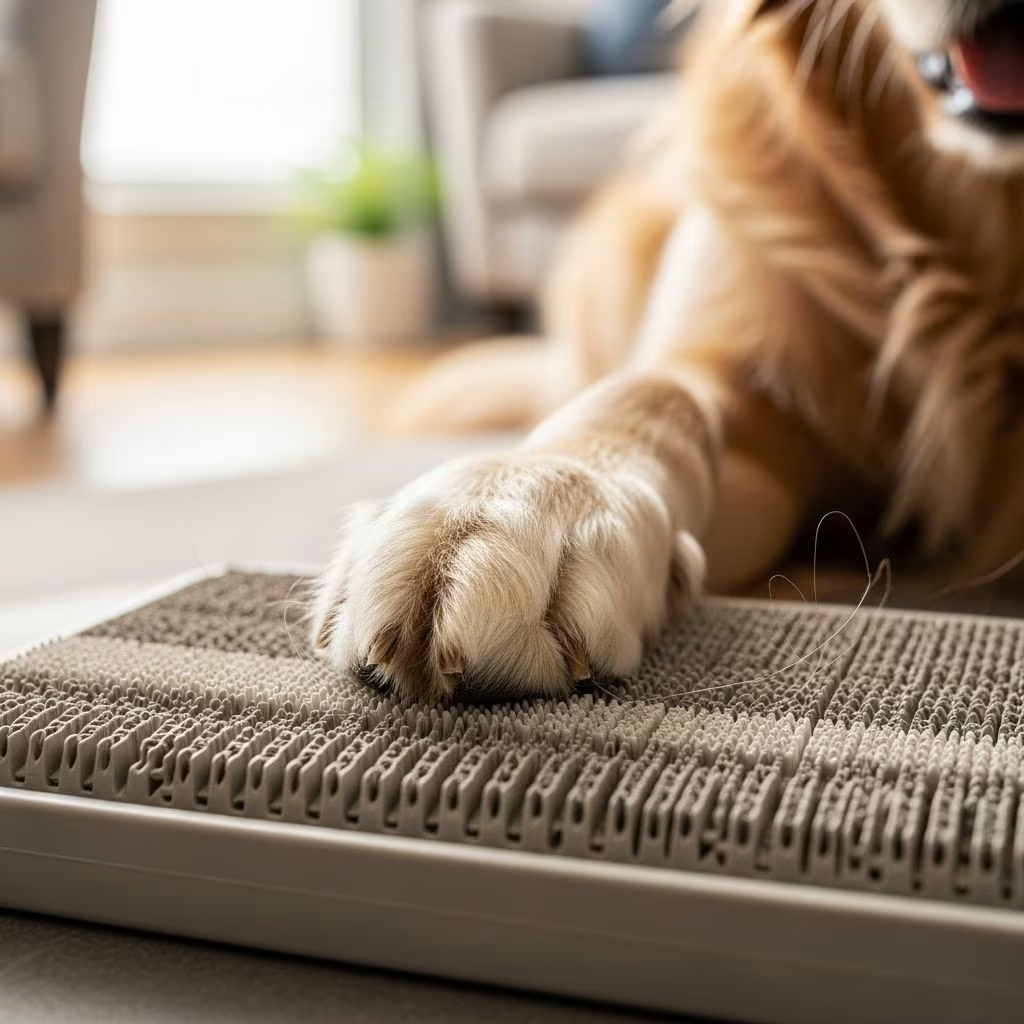
Many dog owners struggle with nail trimming sessions that leave their pets anxious and resistant to grooming. Traditional nail clipping can trigger fear responses in sensitive dogs, making the experience stressful for both pet and owner. Scratch pads present an innovative solution that harnesses a dog’s natural scratching behavior to maintain healthy nail length while eliminating the anxiety associated with conventional trimming methods.
Understanding the Importance of Proper Nail Maintenance
Maintaining appropriate nail length is fundamental to your dog’s long-term health and mobility. When nails become excessively long, they begin to press against the ground as your dog stands or walks, forcing the toes to flatten or twist unnaturally. This abnormal positioning places stress on the foot structure and can gradually damage the bone architecture of the paw over time. The consequences extend beyond discomfort—prolonged exposure to pressure from overgrown nails can lead to joint complications and altered gait patterns that affect the entire skeletal system.
Beyond structural concerns, long nails create safety hazards during daily activities. When a nail hits the floor during walking, it can jam the toe joint, causing immediate discomfort and potential injury. This makes regular nail maintenance not just a cosmetic concern but a critical aspect of preventive pet healthcare.
The Emergence of Scratch Pads as a Natural Alternative
Scratch pads represent a fundamental shift in how owners approach dog nail care. Rather than relying solely on manual trimming tools, these devices work with the dog’s natural instincts. Most dogs instinctively scratch at surfaces—whether carpet, furniture, or outdoor ground—and scratch pads redirect this behavior toward productive nail maintenance.
The mechanism is straightforward yet effective. By scraping their nails against the textured surface of a scratch pad, dogs naturally file down their nail edges, keeping them shorter and more blunt. This gentle, ongoing maintenance reduces the need for frequent manual trims and, more importantly, eliminates the fear and stress many dogs experience during traditional grooming sessions.
How Dogs Naturally Protect Their Paw Pads
A common concern among dog owners is whether scratch pads might injure their pet’s sensitive paw pads. Research and trainer observations have consistently shown this worry to be unfounded. When dogs scratch on a board, they naturally flex their nails outward, extending them away from the paw pads. This instinctive protective mechanism evolved over time as dogs engaged in natural scratching behaviors.
Additionally, if your dog regularly walks or runs on cement or pavement, a brief three-minute scratch board session poses no risk to their paw pads, even when nails aren’t fully extended. The benefits of maintaining appropriate nail length through scratchboarding substantially outweigh any theoretical risks, particularly when the tool is used appropriately and in moderation.
Types of Scratch Pads Available for Dogs
The market now offers various scratch pad options, each with distinct features designed to encourage participation and maintain effectiveness:
- Basic Flat Scratch Pads: The simplest option, featuring a textured surface where dogs scrape their nails. These can be purchased commercially or created at home using sandpaper.
- DIY Scratch Pads: Homemade versions offer a budget-friendly alternative and allow customization. Experts recommend using 80 or 120-grit sandpaper, depending on your dog’s nail hardness. The choice between grits depends on individual variation—some dogs may require coarser sandpaper while others do well with finer options.
- Treat-Compartment Models: Modern commercial designs incorporate treat boxes or snack dispensers, providing immediate reward incentives that encourage repeated use. These products, such as the Scratch and Snack Pad, combine nail maintenance with enrichment activities.
- Elevated or Angled Designs: Some scratch pads feature angled surfaces or raised construction that encourages dogs to engage their front paws at optimal angles for effective filing.
Training Your Dog to Use a Scratch Pad Effectively
Successfully introducing a scratch pad requires patience and positive reinforcement. Dogs don’t instinctively understand that a new object serves a specific purpose, so training bridges the gap between the tool and the desired behavior.
Initial Introduction: Begin by placing the scratch pad in an area where your dog spends time. Allow them to investigate it without pressure. Some dogs naturally paw at new textures, making this exploration phase crucial.
Encouraging Interaction: If your dog doesn’t immediately engage, you can hold the scratch pad and tap it, then reward your dog for pawing at the board. This shaping technique teaches them that interacting with the pad produces positive outcomes. With consistency, most dogs learn to associate scratching behavior with rewards.
Consistency and Frequency: Using the scratch pad every couple of days helps maintain nail length consistently over time. For optimal results, establish a routine that fits naturally into your dog’s daily schedule. Recommended usage involves 10-15 minute sessions a few times weekly.
Monitoring and Adjustment: Watch your dog’s technique to ensure they’re scraping with their nails rather than the pads of their feet. Additionally, verify that nails aren’t being worn too short—any visible pink indicates the quick has been exposed, and sessions should stop immediately.
Integrating Scratch Pads Into Your Complete Grooming Strategy
While scratch pads offer significant benefits, veterinarians and professional trainers emphasize that they work best as part of a comprehensive approach rather than a complete replacement for all nail care. These tools reduce the frequency of traditional trimming sessions but don’t eliminate the need for them entirely.
Regular inspection of your dog’s feet and nails remains essential when using scratch pads. Monthly checks allow you to monitor nail length, assess paw pad condition, and catch any issues early. Some dogs may require periodic professional grooming to address specific nail care needs that scratch pads alone cannot resolve.
The most effective nail care routine combines regular scratch pad use with occasional professional trims, creating a balanced approach that maintains optimal nail health while minimizing stress and handling.
Advantages for Dogs with Anxiety or Sensitivity
Dogs that struggle with paw handling or experience grooming-related anxiety derive particular benefit from scratch pad training. By providing a self-directed method of nail maintenance, these tools eliminate the need for restraint and direct handling of sensitive feet. This independence can be profoundly calming for anxious dogs and can gradually improve their overall tolerance for grooming activities.
For dogs with previous negative experiences related to nail trimming, scratch pads offer a pathway to positive association with nail care. Each successful scratching session reinforces the idea that nail-related activities lead to treats and praise rather than fear and discomfort.
Key Considerations for Scratch Pad Success
Several factors influence how effectively your dog will utilize a scratch pad:
- Surface Texture: The grit of sandpaper or textured material affects how well nails file. Experiment within the recommended range (80-120 grit) to find what works for your dog’s nail hardness.
- Both Front Paws: Ensure your dog uses both front feet evenly, as imbalanced use can lead to uneven nail wear.
- Front Versus Back Paws: Scratch pads work more effectively for front paws than back paws, though back paw training is possible. Since back nails typically stay naturally shorter, this limitation rarely poses problems.
- Individual Variation: Just as human nails differ, dog nails vary in hardness, growth rate, and composition. What works perfectly for one dog may require adjustment for another in your household.
- Regular Inspection: Check nails frequently during the initial training period to ensure proper technique and appropriate nail length maintenance.
Frequently Asked Questions
Can a scratch pad completely replace traditional nail trims?
Scratch pads reduce the frequency of traditional trims but don’t completely eliminate the need for them. Most dogs benefit from occasional professional grooming combined with regular scratch pad use.
How often should my dog use a scratch pad?
Recommended usage is 10-15 minutes a few times per week. Using the scratch pad every couple of days helps maintain consistent nail length between professional grooming appointments.
Will scratch pads hurt my dog’s paw pads?
No. Dogs naturally flex their nails outward when scratching, protecting their paw pads. Even dogs that walk regularly on cement experience no paw pad damage from moderate scratch pad use.
What grit sandpaper should I use for a DIY scratch pad?
Use 80 or 120-grit sandpaper, with selection depending on your dog’s nail hardness. If uncertain, start with 80-grit and assess whether it’s appropriate for your individual dog.
How do I know if my dog has scratched their nails too short?
Any visible pink indicates the quick has been exposed and scratching should stop immediately. Monitor the shortest nail regularly to prevent over-filing.
Making the Transition to Scratch Pad Nail Care
Introducing scratch pads to your dog’s routine represents an investment in their long-term comfort and your grooming peace of mind. Whether you create a simple DIY version or invest in a commercial product with treat compartments, the underlying principle remains consistent: partnering with your dog’s natural behaviors to maintain health without stress.
Start slowly, celebrate small successes, and remember that every dog learns at their own pace. With patience and positive reinforcement, most dogs develop a genuine preference for maintaining their nails through scratching, transforming nail care from a source of anxiety into an enriching, rewarding activity.
References
- The Scratch and Snack Pad — Heusom. Accessed March 31, 2026. https://heusom.com/products/the-scratch-and-snack-pad
- Scratch Board Use for Dog Nail Trims — Ready to Go Vet Rehab. March 27, 2020. https://www.readytogovetrehab.com/blog/2020/3/27/scratch-board-use-for-dog-nail-trims-9y6rx
- When to Stop a Scratchboard Session when DIY Filing Your Dog’s Nails — YouTube. Accessed March 31, 2026. https://www.youtube.com/watch?v=hC75aqGLlnE
- Shorter Nails, Less Stress: How to Use a Scratchboard — Fear Free Happy Homes. Accessed March 31, 2026. https://www.fearfreehappyhomes.com/shorter-nails-less-stress-use-a-scratchboard/
- Is Your Scratchboard Enough for a Well-Rounded Nail Care Routine? — 4 Paws Adrift. Accessed March 31, 2026. https://www.4pawsadrift.com/blog/Nail_File
- Scratch Boards: What They Solve & What They Don’t Solve — Creating Great Grooming Dogs. Episode 197. Accessed March 31, 2026. https://www.creatinggreatgroomingdogs.com/scratch-boards-what-they-solve-what-they-dont-solve-ep197/
- Scratch Boards With Treat Compartments: Review — Dogkind Training. Accessed March 31, 2026. https://www.dogkindtraining.com/blog/scratch-boards-with-treat-drawers



