

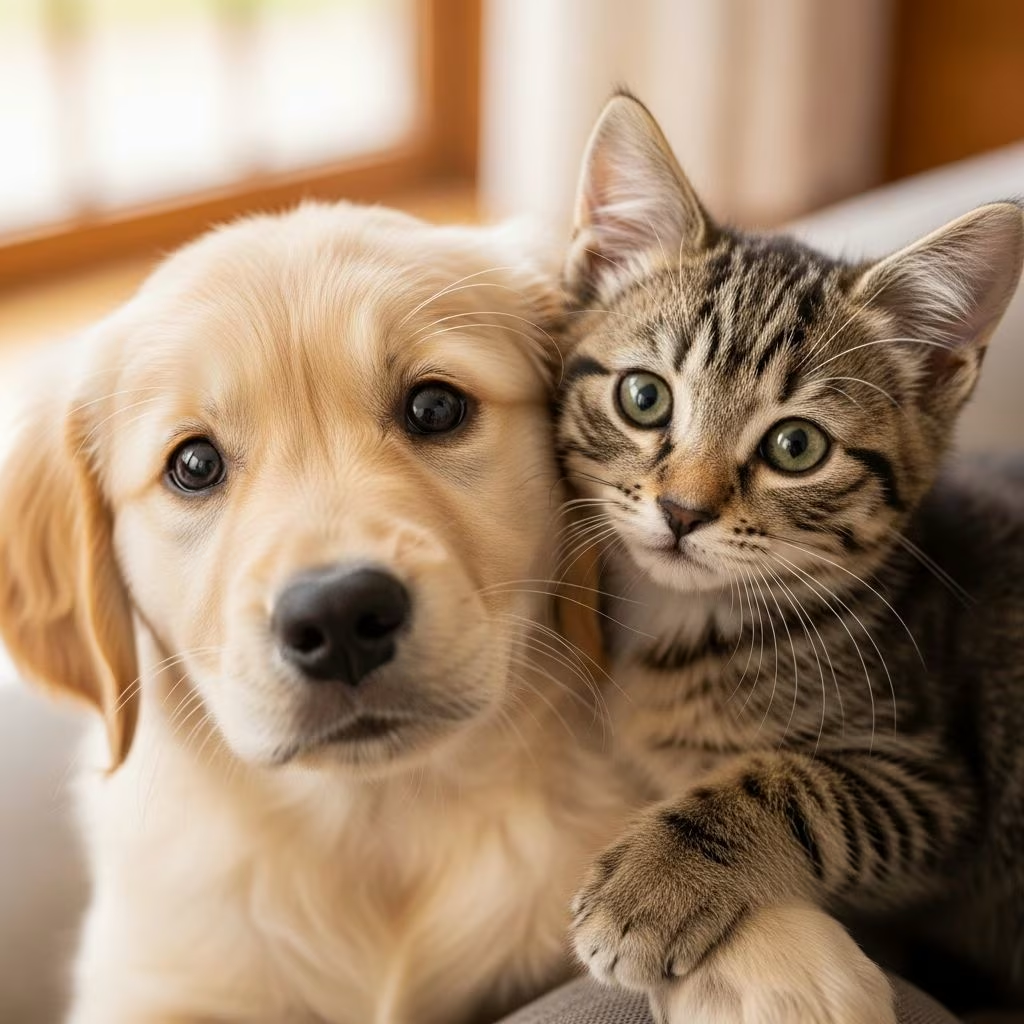
Humans have a profound affinity for dogs and cats, often describing them as irresistibly adorable. This reaction stems from deep evolutionary mechanisms that activate caregiving instincts through specific physical and behavioral traits. Understanding these elements reveals why our pets captivate us so completely.
Evolutionary Foundations of Adorable Traits
The appeal of cuteness in animals like dogs and cats traces back to survival strategies. Large eyes, rounded faces, and soft fur mimic the features of human infants, prompting protective responses. This “baby schema,” first identified by ethologist Konrad Lorenz, elicits nurturing behaviors essential for species propagation.
Research demonstrates that these juvenile characteristics bias our brains toward attention and care. A rapid burst of activity in the orbitofrontal cortex, a reward-processing region, occurs upon viewing such features, ensuring we prioritize vulnerable young. Natural selection favors individuals who respond strongly to these cues, enhancing offspring survival rates across species.
- Large, expressive eyes: Proportionally bigger in juveniles, they convey innocence and helplessness.
- Disproportionate head size: Bulging craniums relative to body size signal youth and dependency.
- Soft, plump features: Chubby cheeks and short limbs invite gentle handling.
Dogs exemplify this through selective breeding. Modern breeds retain neotenous traits—adult retention of puppy-like features—amplifying their charm. Cats, while less domesticated in appearance, share similar infantile proportions that trigger parallel responses.
Neurological Impact: How Cuteness Hijacks the Brain
When we encounter a fluffy kitten or playful puppy, our neural networks light up in predictable patterns. Cuteness engages multisensory processing, combining visual, tactile, auditory, and even olfactory cues to heighten engagement. Babies and baby animals exemplify this: their coos, scents, and textures reinforce visual appeal, demanding sustained attention.
Neuroimaging studies reveal heightened activity in emotion and reward centers. Viewing cute images activates the nucleus accumbens, linked to pleasure and motivation, compelling longer gazes and increased effort to interact. This isn’t limited to parents; both genders and children exhibit preferences for cuter faces, indicating a universal hardwired response.
| Brain Region | Role in Cuteness Response | Example Trigger |
|---|---|---|
| Orbitofrontal Cortex | Reward and attention bias | Large eyes in puppies |
| Nucleus Accumbens | Pleasure and motivation | Playful kitten behaviors |
| Prefrontal Cortex | Emotional processing | Soft fur texture |
These activations extend beyond observation. Experiments show viewers of cute puppy photos perform better on precision tasks, like delicate operations, suggesting cuteness enhances carefulness for handling fragile beings.
The Paradox of Cute Aggression in Pet Lovers
Overwhelming adoration for pets often manifests as an urge to squeeze or nibble—termed “cute aggression.” This counterintuitive impulse balances intense positive emotions, allowing functional behavior amid joy.
Studies confirm exposure to cute cat or dog images increases bubble-wrap popping and expressions like “I want to squeeze it!” Participants viewing enhanced cute baby animal photos report stronger aggressive play urges, which paradoxically hasten emotional return to baseline, aiding resilience.
Brain scans link cute aggression to amplified reward system activity, particularly for animals. It may signal strength relative to the vulnerable pet, reinforcing caregiving confidence. Evolutionary theorists propose it communicates emotional intensity beyond smiles, strengthening social bonds.
“Cute aggression helps express the depth of affection, turning overwhelming cuteness into actionable care.”
Behavioral Cues Amplifying Pet Charm
Beyond appearance, actions like tail wagging, purring, or head tilting supercharge cuteness. These signals mimic infant helplessness, spilling over our parental instincts to cross-species affection.
Dogs’ “puppy dog eyes”—raised brows creating sad, pleading expressions—evolved post-domestication to solicit human attention. Cats’ kneading and chirping evoke nursing behaviors, deepening bonds. Both species’ play bows and zoomies trigger joy responses, making interactions addictive.
- Auditory appeals: High-pitched barks or mews demand response.
- Tactile invitations: Nuzzling invites petting, releasing oxytocin.
- Social mimicry: Copying human yawns or smiles fosters connection.
Such behaviors, combined with physical traits, create a feedback loop: our care elicits more cuteness, solidifying companionship.
Cuteness as a Force for Compassion and Ethics
Pet cuteness extends influence beyond homes, fostering broader empathy. Images of adorable animals boost charitable donations and moral consideration for wildlife. This expansion of caregiving boundaries promotes prosocial actions.
In experiments, cuter depictions increase aid willingness, suggesting cuteness nudges ethical decisions. For pet owners, daily exposure heightens overall kindness, as sustained reward activation builds compassionate habits.
Breeding and Modern Pet Aesthetics
Human intervention has exaggerated cuteness in pets. Dogs’ flattened faces, bulging eyes, and curly tails result from millennia of selection for juvenile appeal. Cats’ wide-eyed stares and plush coats similarly cater to our biases.
While beneficial for bonding, extreme traits raise welfare concerns, like breathing issues in brachycephalic breeds. Balancing aesthetics with health ensures sustained cuteness without compromise.
Individual Variations in Cuteness Perception
Not all find the same pets cute; culture, experience, and personality modulate responses. Parents may amplify reactions, while high empathy correlates with stronger cute aggression. Age and gender show minimal differences, underscoring universality.
Cross-cultural studies affirm baby schema’s consistency, though preferences for specific breeds vary. Personal pets often rank highest, blending familiarity with innate triggers.
Practical Tips for Enhancing Pet Cuteness
Owners can accentuate natural charm:
- Groom for fluffiness to highlight soft features.
- Train tricks emphasizing playful innocence.
- Use toys mimicking baby-like vulnerability.
- Capture photos with angles enlarging eyes.
These amplify evolutionary pulls, strengthening bonds.
Frequently Asked Questions
Why do big eyes make dogs and cats cuter?
Large eyes mimic infant proportions, activating brain reward centers for nurturing.
Is cute aggression harmful to pets?
No, it’s a harmless emotional regulator; channel into gentle play.
Do all people react the same to pet cuteness?
Core responses are universal, with personal factors adding nuance.
Can cuteness improve pet adoption rates?
Yes, cuter profiles increase interest and successful placements.
How has breeding affected pet cuteness?
Selective pressures retained puppy/kitten traits into adulthood.
References
- How cute things hijack our brains and drive behaviour — University of Oxford. 2023-10-12. https://www.ox.ac.uk/research/how-cute-things-hijack-our-brains-and-drive-behaviour
- Cute Aggression: Why You Want to Squeeze Adorable Creatures — BrainFacts.org (Society for Neuroscience). 2019-09-10. https://www.brainfacts.org/thinking-sensing-and-behaving/emotions-stress-and-anxiety/2019/cute-aggression-why-you-want-to-squeeze-adorable-creatures–091019
- The code for cuteness — BBC Earth. 2022-05-18. https://www.bbcearth.com/news/the-code-for-cuteness
- Survival of the Cutest — Observatory Wiki. 2024-08-05. https://observatory.wiki/Survival_of_the_Cutest



