

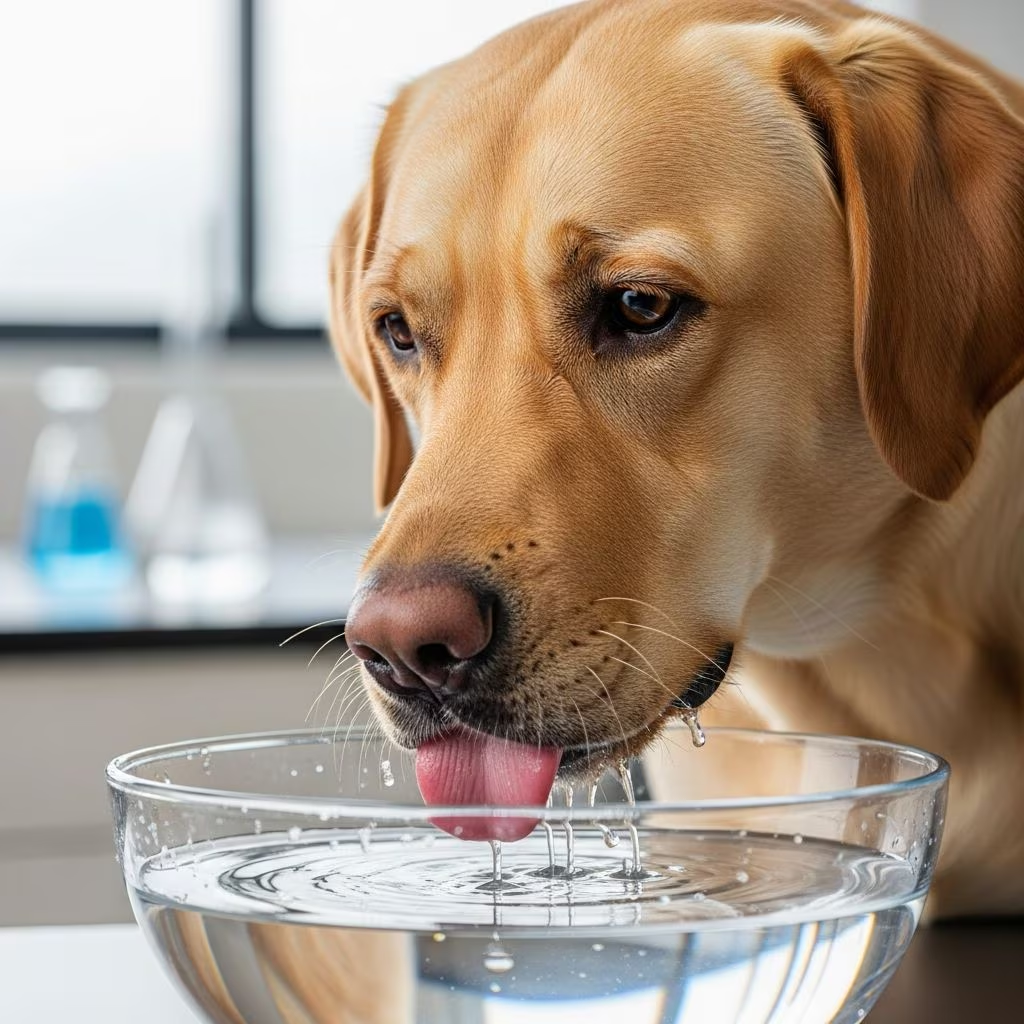
Dogs employ a remarkable biomechanical process to consume water, relying on rapid tongue movements rather than suction like humans. This method, rooted in fluid dynamics, allows them to lift water against gravity efficiently despite lacking cheeks to form a seal.
Mechanics of the Canine Lapping Technique
Observing a dog at the water bowl reveals a sequence of precise actions. The tongue curls backward into a rounded shape, resembling a piston rather than a simple scoop. As the dog accelerates its tongue upward at speeds exceeding gravity—approximately five times stronger—it punches into the water surface, forming a vertical column of liquid.
This column rises due to inertia, and the dog snaps its mouth shut at the peak moment to capture about 1-2 milliliters per lap. High-speed imaging confirms that liquid adheres to the tongue’s dorsal surface, not pooling in a ladle as once thought. Water trapped below the tongue simply spills out, explaining the familiar puddles.
- Tongue curl: Forms a larger contact area for bigger water columns.
- High acceleration: Overcomes gravity to draw liquid upward.
- Mouth closure timing: Essential for retaining the column’s top portion.
Larger breeds use more tongue surface, generating bigger columns but also greater splashes compared to small dogs.
Contrasts with Feline Drinking Methods
While dogs and cats share the core lapping principle, execution differs. Cats delicately touch the water with straight tongues, relying on precise acceleration to nip the column’s top, then shuffle it rearward via palate grooves. Dogs’ aggressive curls prioritize volume over neatness.
| Aspect | Dogs | Cats |
|---|---|---|
| Tongue Shape | Backward curl (piston-like) | Straight tip touch |
| Water Capture | Large column, messy spill | Precise nip, minimal waste |
| Acceleration | ~5x gravity, high volume | High but controlled |
| Mess Level | High (no cheeks) | Low |
These adaptations suit their lifestyles: dogs guzzle during activity, cats sip fastidiously.
Factors Influencing Daily Water Consumption
A healthy adult dog requires 1 ounce of water per pound of body weight daily, adjustable for variables. Puppies and active seniors may need more due to inefficient kidney function or higher energy expenditure.
- Diet type: Canned food provides moisture, reducing bowl intake; dry kibble demands more drinking.
- Climate and activity: Heat or exercise boosts needs to prevent dehydration.
- Age: Young pups urinate frequently, prompting thirst; elders face cognitive or organ challenges.
- Medications: Diuretics, steroids, or anti-seizure drugs increase urination and thirst.
Monitor for balance: too little risks organ strain; excess signals issues.
Recognizing Excessive Thirst in Dogs
Polydipsia—excessive drinking—often pairs with polyuria (frequent urination). Normal intake varies, but sudden spikes warrant attention.
Common benign causes:
- Hot weather or post-exercise recovery.
- Salty treats drawing fluids.
- Dry indoor air, especially evenings with heating.
Medical red flags:
- Kidney disease: Impaired filtration pulls water to excrete toxins, causing cycles of thirst and urination.
- Diabetes mellitus: High blood sugar spills glucose into urine, dragging water along.
- Cushing’s disease: Excess cortisol disrupts fluid balance.
- Electrolyte shifts: Sodium imbalances from dehydration or toxins.
Dehydration signs include tacky gums, skin tenting, lethargy, or ropy saliva. Vomiting/diarrhea exacerbates this loop, as dogs drink to soothe upset stomachs but risk regurgitation if gulping too fast.
Optimizing Your Dog’s Water Access
Facilitate healthy habits with strategic setups. Elevate bowls for large breeds to reduce neck strain; use wide, stable designs to minimize tipping and spills.
Encourage steady intake:
- Multiple stations around home for convenience.
- Fountains with flowing water appeal to instincts, increasing voluntary drinking.
- Fresh changes 2-3 times daily to deter bacteria.
For nighttime gulpers, address root causes like daytime restriction or anxiety with play and humidifiers rather than limiting access.
Health Monitoring Through Drinking Patterns
Track intake alongside output. A 50-pound dog should drink about 50 ounces daily under normal conditions. Deviations guide vet visits: pair with weight loss, appetite changes, or behavioral shifts.
Breed variations matter—brachycephalics like Bulldogs lap less efficiently, prone to spills; sighthounds with deep chests may prefer slower sips.
Practical Tips to Reduce Mess and Promote Wellness
Harness physics knowledge: place mats under bowls to contain splashes; opt for stainless steel over plastic for durability and cleanliness.
Enhance hydration indirectly:
- Mix broth into water for appeal.
- Offer ice cubes for prolonged engagement.
- Post-walk cooling with measured amounts prevents bloat risk in deep-chested breeds.
Annual bloodwork catches subclinical issues early, ensuring thirst reflects needs, not disease.
FAQs on Canine Water Habits
Q: Why does my dog splash water everywhere?
A: The curled tongue forms large columns that spill due to no cheeks; larger dogs amplify this.
Q: How much water should my dog drink daily?
A: Roughly 1 oz per lb of body weight, more for activity, heat, or wet food adjustments.
Q: Is excessive nighttime drinking normal?
A: Often tied to dry air, stress, or sodium; persistent cases need vet evaluation for diabetes or kidney issues.
Q: Can dogs drink too much water at once?
A: Yes, rapid intake post-dehydration risks vomiting or hyponatremia; encourage sips.
Q: What’s the difference between dog and cat drinking?
A: Dogs curl tongues for volume with mess; cats use precise touches for efficiency.
Advanced Insights from Fluid Dynamics Research
Studies using X-rays and models reveal tongue radius scales with size: Great Danes form taller columns than Yorkies, optimizing per-lap yield. Future work on bats hints at broader animal physics, but canines exemplify evolutionary efficiency in cheekless drinkers.
This blend of instinct and physics underscores why dogs thrive despite apparent sloppiness—it’s optimized survival engineering.
References
- The Surprising Physics of How Dogs and Cats Drink Water — APS News. 2023-08. https://www.aps.org/apsnews/2023/08/dogs-cats-drink-water
- How Dogs Employ Advanced Physics Whenever They Drink — PetCareRx. N/A. https://www.petcarerx.com/article/how-dogs-employ-advanced-physics-whenever-they-drink/4438
- Why Is My Dog Drinking a Lot of Water? — PetMD. N/A. https://www.petmd.com/dog/symptoms/why-is-my-dog-drinking-a-lot-of-water



