

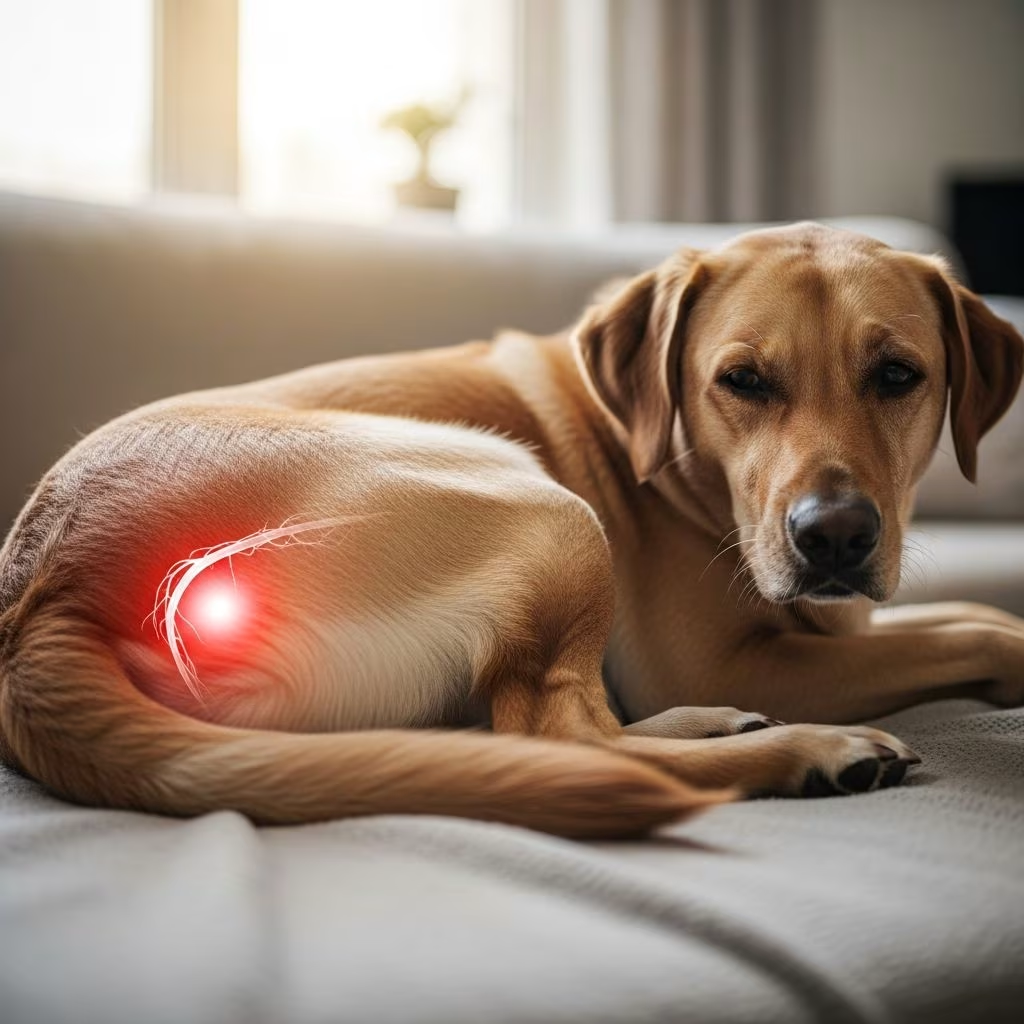
The sciatic nerve, a vital pathway running from the lower spine through the hind limbs, plays a crucial role in a dog’s mobility. When damaged, it leads to pain, weakness, and coordination problems that can severely impact daily life. Understanding this condition helps pet owners seek timely veterinary care.
Understanding the Sciatic Nerve’s Role
This major nerve originates from the lumbosacral region, branching into tibial and peroneal components that control hind leg muscles, sensation, and reflexes. Injury disrupts signals, causing varied symptoms depending on the affected branch. For instance, tibial nerve issues result in hock joint dropping, paw knuckling, and reduced paw sensation.
Peroneal nerve damage manifests as inability to flex the hock, with sensory loss on the leg’s front and sides. These distinctions guide diagnosis and treatment.
Common Triggers of Sciatic Nerve Damage
Sciatic problems arise from trauma, compression, or iatrogenic events. Bite wounds top the list at 24%, followed by surgical mishaps like TPLO or TPO procedures. Other causes include fractures, intervertebral disc disease, lumbosacral stenosis, and low back pain syndromes.
- Traumatic injuries: Direct blows or stretches during accidents.
- Iatrogenic damage: Occurring during surgeries, with studies noting cases in small breeds like Maltese dogs.
- Degenerative conditions: Nerve root impingement from spinal narrowing.
Recognizing these origins is key to prevention, especially monitoring post-surgical recovery.
Recognizing Warning Signs
Dogs exhibit hindlimb lameness, weakness, or shifting gait severity between legs. Pain elicitation occurs via palpation along the nerve tract near the greater trochanter or during hamstring stretches (hip flexion with stifle extension).
| Symptom | Description | Affected Nerve Branch |
|---|---|---|
| Dropped hock | Hock joint fails to support properly | Tibial |
| Paw knuckling | Toes drag during walking | Tibial/Peroneal |
| Reduced sensation | Loss of feeling in paw or leg | Varies |
| Hock extension issues | Unable to straighten hock | Peroneal |
| Proprioception loss | Poor limb awareness (75% of cases) | Sciatic general |
About 80% show hock flexion or extension deficits, with variable deep pain loss in 13%. Self-mutilation from neuropathic ‘pins and needles’ signals urgent intervention.
Diagnostic Approaches
Veterinarians start with physical exams, testing nerve stretches and palpation for pain. Imaging like X-rays assesses compression or fractures. Advanced diagnostics may include myelography or CT for stenosis.
Electromyography confirms nerve dysfunction, while superficial pain tests track recovery. Differential diagnoses rule out hip dysplasia or arthritis.
Conservative Treatment Strategies
Many cases resolve with time, as peripheral nerves regenerate. Multimodal care combines rest, medications, and rehab.
Pain Management Medications
- NSAIDs: Reduce inflammation in mild-moderate cases.
- Gabapentin/Pregabalin: Target neuropathic pain.
- Amantadine: Counters central sensitization in chronic pain.
Physical Rehabilitation Techniques
Passive range-of-motion (PROM) prevents contractures early post-injury. Balance exercises like uphill walking or obstacle courses build compensatory muscles.
- Laser therapy (photobiomodulation): Promotes healing along the nerve tract; rat studies support use.
- Hydrotherapy: Underwater treadmill enhances mobility with low impact, followed by jet massages.
- Nerve gliding: Mobilizes nerve safely to reduce adhesions.
- Core strengthening: Underwater walks support the spine.
Protocols include twice-weekly sessions with PROM at home.
Supportive Home Care
Provide orthopedic bedding to ease pressure. Monitor for self-trauma; restrict activity initially. Weight management reduces nerve strain.
Advanced Interventions
For persistent cases, escalate to injections or surgery.
Epidural Steroid Injections
Methylprednisolone acetate targets L7-S1 inflammation under sedation. A 3-dose protocol (initial, 2 weeks, 1 month) yields lasting relief, often 1-2 doses suffice. Position laterally for unilateral effects.
Surgical Options
Decompress fractures or trapped nerves promptly. For large gaps (e.g., 20mm), epineural neurorrhaphy sutures ends after releasing tension, showing recovery in small dogs: improved gait, sensation by 3 weeks post-op.
Laminectomy/foraminotomy relieves stenosis; salvage like fusion or amputation for non-recovery. Nerve grafts succeed rarely.
Recovery Timeline and Prognosis
Regeneration takes weeks to months; early therapy boosts outcomes. Post-neurorrhaphy, proprioception and reflexes improve with rehab. Most (~80%) regain function variably; severe neurotmesis may need ongoing management.
Track milestones: pain return by 3 weeks, ambulation without knuckling by months.
Prevention Tips for Pet Owners
- Supervise play to avoid bites/trauma.
- Choose experienced surgeons for orthopedics.
- Maintain ideal weight and spinal health via exercise.
- Regular vet checks for at-risk breeds (small, active).
Frequently Asked Questions
Can sciatic nerve damage heal on its own?
Yes, peripheral nerves regenerate with time and supportive care, though full recovery varies.
What home exercises help my dog?
Gentle PROM, balance walks; consult a physiotherapist for tailored plans.
Is surgery always needed?
No, conservative multimodal therapy succeeds in many; surgery for compression or gaps.
How do I know if it’s sciatic pain?
Lameness, hock issues, pain on nerve palpation/stretch; vet confirmation essential.
Which breeds are prone?
Small breeds like Maltese from iatrogenic; active dogs from trauma.
References
- Pain Management in Dogs With Low Back Pain and Sciatica — Today’s Veterinary Practice. 2023. https://todaysveterinarypractice.com/pain_management/pain-management-in-dogs-with-low-back-pain-and-sciatica/
- Sciatic Nerve Injury in Dogs: Vet-Explained Causes, Prevention — Dogster. 2023. https://www.dogster.com/ask-the-vet/sciatic-nerve-injury-in-dogs
- Epineural Neurorrhaphy of a Large Nerve Defect Due To Iatrogenic Sciatic Nerve Injury in a Dog — PMC (NCBI). 2022-07-20. https://pmc.ncbi.nlm.nih.gov/articles/PMC9324001/
- Pinched Nerves in Dogs: Symptoms, Signs, and Treatment Options — Reelfoot Animal Hospital. 2024-01-30. https://www.reelfootanimalhospital.com/site/blog/2024/01/30/pinched-nerve-dogs
- Sciatic Nerve Injury in Dogs and Cats — Barnes Veterinary Services. 2023. https://barnesveterinaryservices.com/new-blog/sciatic-nerve-injury-in-dogs-and-cats



