

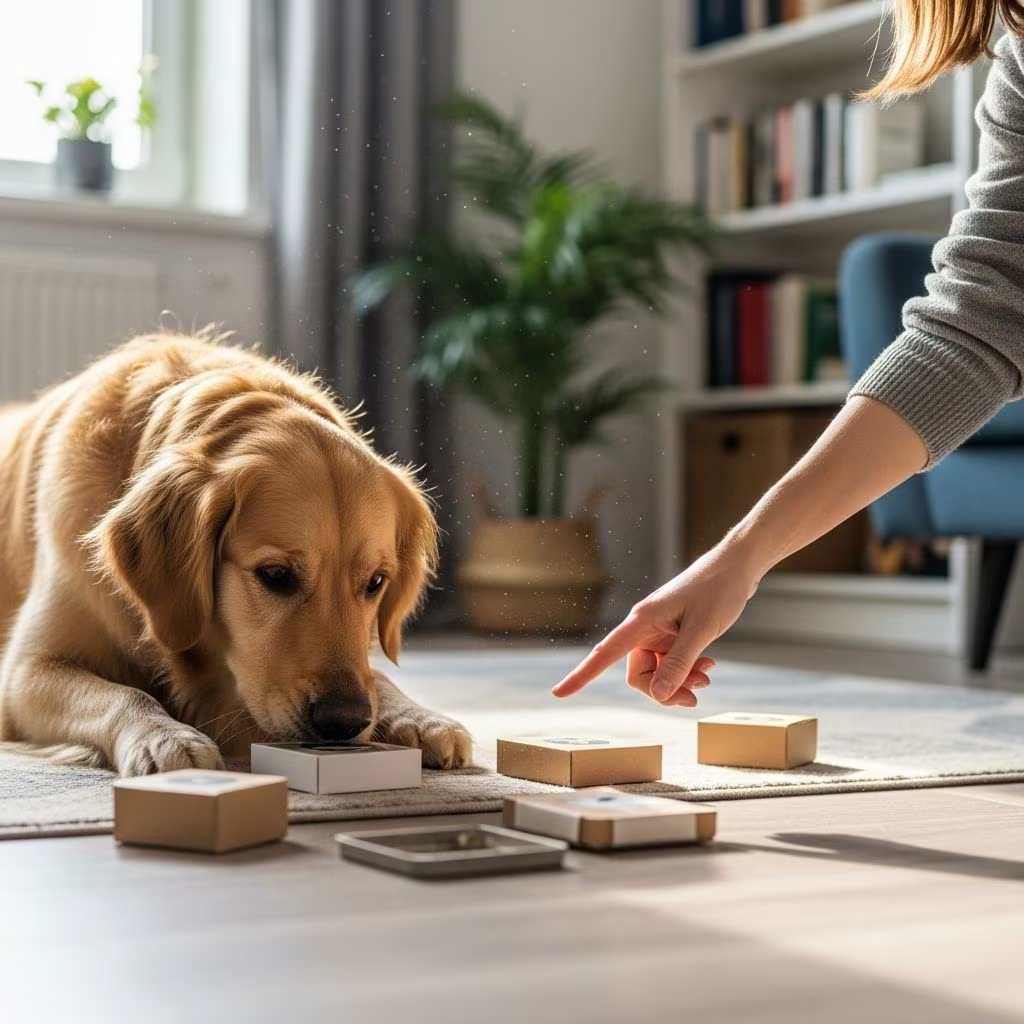
Dogs possess an extraordinary sense of smell—up to 100,000 times more powerful than humans—with around 300 million olfactory receptors compared to our mere 6 million. This natural superpower makes **scent training** (also called nosework or scentwork) one of the most rewarding activities you can do at home. Not only does it tap into your dog’s instincts, but it also provides essential mental stimulation, reduces stress, builds confidence, and strengthens your bond.
Whether your dog is high-energy, shy, reactive, or simply bored, scent games offer a low-impact way to tire them out mentally without exhausting them physically. Professional trainers from organizations like the American Kennel Club (AKC) emphasize that scent work mimics real-world detection tasks, making it accessible for all breeds and ages. Best of all, you don’t need fancy equipment or a large space—just a few household items and 10-15 minutes a day.
Why Scent Training? The Science and Benefits
Scent training engages your dog’s brain like no other activity. Studies show that working a dog’s nose releases endorphins, lowering cortisol levels and promoting calm behavior. It’s particularly beneficial for anxious or reactive dogs, as it redirects focus from triggers to the task at hand.
- Mental Enrichment: Challenges the brain, preventing boredom and destructive behaviors.
- Confidence Building: Success in finding scents boosts self-esteem, ideal for shy pups.
- Physical Exercise: Encourages sniffing, which burns energy equivalent to a long walk.
- Bonding: You become the source of fun and rewards, improving focus on you over distractions.
- Real-World Skills: Mimics search-and-rescue, detection, or hunting work.
Trainers note that regular sessions (3-5 times weekly) can improve obedience and reduce reactivity by 50% in just weeks. On rainy days or for senior dogs, it’s a perfect indoor alternative to fetch or runs.
What You’ll Need: Simple Scent Training Kit
Gather these affordable, easy-to-find supplies. Most are under $20 total and available at home or online.
| Item | Purpose | Tips |
|---|---|---|
| Essential Oils (Birch, Anise, Clove, or Thyme) | Target scent (non-toxic, pet-safe) | Start with birch; dilute 1-2 drops per swab. Avoid tea tree or eucalyptus. |
| Cotton Swabs & Tweezers | Hold and place scent | Cut swabs in half; use tweezers to avoid human contamination. |
| Scent Vessels (Tins, Small Jars, PVC Pipes) | Contain scent safely | Poke holes in metal tins or lids; clean between uses. |
| Boxes/Containers (Cardboard, Plastic) | Hide searches | Drill holes in lids; 6-12 identical ones for advanced games. |
| Disposable Gloves | Prevent contamination | Invert and trash after use to keep scent ‘novel.’ |
| High-Value Treats or Toys | Rewards | Use chicken, cheese, or tug toys your dog loves. |
For food-based starters, use kibble, cheese, or toys like rabbit fur for natural trails. Advanced users can DIY PVC scent snorkels: Cut 4-inch PVC pipes, cap ends, drill holes—line them up for detection drills.
Step-by-Step Beginner’s Guide to Scent Training
Start in a quiet, distraction-free room like your bathroom or living room. Sessions last 5-15 minutes; end on success. Always reward at the source to teach precise indication (sit, paw, or stare).
Step 1: Prep the Odor (Keep It Clean)
Wear gloves in a separate room. Apply 1-2 drops of oil to cotton swabs; store in a sealed jar. Insert swab into vessel with tweezers. Dispose of gloves/tools in a sealed bag outside to avoid contamination—dogs detect human scent overlay.
Step 2: Introduce the Scent (Hand Targeting)
- Hold scent tin in one hand, treat in the other, 12 inches apart.
- Wait for dog to ignore treat hand and sniff tin—say “Yes!” and feed treat at the tin.
- Repeat 5-10x, switching hands to prevent patterning.
- Success: Dog alerts to correct hand 3x in a row within 3 seconds.
If your dog licks treats, use a tug toy instead.
Step 3: Add Containers (Box Game)
- Place scented vessel in a holed plastic container.
- Hold container; repeat hand game, rewarding at box.
- Set box on floor between feet; cue “Search!” or “Find it!”
- Hide in another room, release dog to find.
Progress to 3-6 identical boxes (1 scented); dogs learn discrimination.
Step 4: Trail Tracking (Outdoor Fun)
Drag food/toy along ground (10-20 feet), hide at end.
- Start with lead on; let nose lead.
- Wind direction matters—trail downwind for ground scent focus.
- Intensify: Soak duck/chicken in water for pungent trails.
Use ham or fur toys for non-food dogs.
Step 5: Fade Food, Advance Odors
Replace food with pure target odor. Add distractions, elevations (under couch), or multiple hides. Introduce new scents sequentially: Birch first, then Anise. Watch for natural alerts like sits—reward to shape them.
Advanced Scent Games and Variations
Once basics are solid, level up for ongoing challenge.
- Snorkel Line: PVC pipes in a row; dog checks each nose-first.
- Patterned Searches: 4×4 grid of boxes; hide in corners.
- Vehicle/Interior: Hide in cars or rooms like AKC trials.
- Competitive Nosework: Join NACSW/UKC events.
- Trail Aging: Let trails sit 30min+ for realism.
Rotate scents weekly; vary rewards to maintain drive.
Training Tips for Success
- Sessions: 3-5x/week, 10min max. End happy.
- Cues: Consistent “Search!” or “Pay attention!”
- Errors: If failing, simplify (shorter trails, stronger scent).
- Safety: Pet-safe oils only; supervise chews.
- Progress: Video sessions to track improvement.
For reactive dogs, start behind baby gates. Pre-walk games calm high-arousal pups.
Frequently Asked Questions (FAQs)
Can any dog do scent training?
Yes! All breeds, ages, and energy levels benefit. Puppies start at 8 weeks; seniors love low-impact mental work.
How long until my dog gets it?
Basics in 1-2 weeks with daily practice. Advanced in months.
What if my dog isn’t food-motivated?
Use toys, play, or praise. Drag fur/sheepskin for trails.
Is it safe indoors?
Absolutely—odorless to humans, non-toxic oils. Great for apartments.
How to avoid contamination?
Gloves, tweezers, separate prep area, trash disposables outside.
Troubleshooting Common Issues
| Problem | Solution |
|---|---|
| Dog ignores scent | Stronger odor, higher rewards, shorter distance. |
| Random alerting | More reps at source; identical hides. |
| Losing interest | End sessions early; vary games. |
Scent training transforms restless dogs into focused partners. Start today—your pup’s nose is waiting!
References
- How to Teach Your Dog Scent Work at Home — American Kennel Club. 2023-05-15. https://www.akc.org/expert-advice/training/how-to-teach-your-dog-scent-work/
- The Beginner’s Guide to Scent Training for Dogs — Tug-E-Nuff (UK Sniffer Dogs). 2024-02-10. https://us.tug-e-nuff.com/blogs/news/scent-training-for-dogs
- Scent Work at Home — All Pets Education and Training. 2023-11-20. https://www.allpetseducationandtraining.com.au/scent-work-at-home.html
- A Beginner’s Guide to Scent Training for Dogs — Mossy Oak. 2024-08-05. https://www.mossyoak.com/our-obsession/blogs/how-to/a-beginners-guide-to-scent-training-for-dogs
- Scent Work 1 E-Book — Berkeley Humane. 2021-05-01. https://berkeleyhumane.org/wp-content/uploads/2021/05/Scentwork-1-E-Book-Combo-1.pdf
- How to Make PVC Scent Snorkels at Home — K9 Conservationists. 2023-07-12. https://k9conservationists.org/how-to-make-pvc-scent-snorkels-at-home-for-detection-dogs/



