

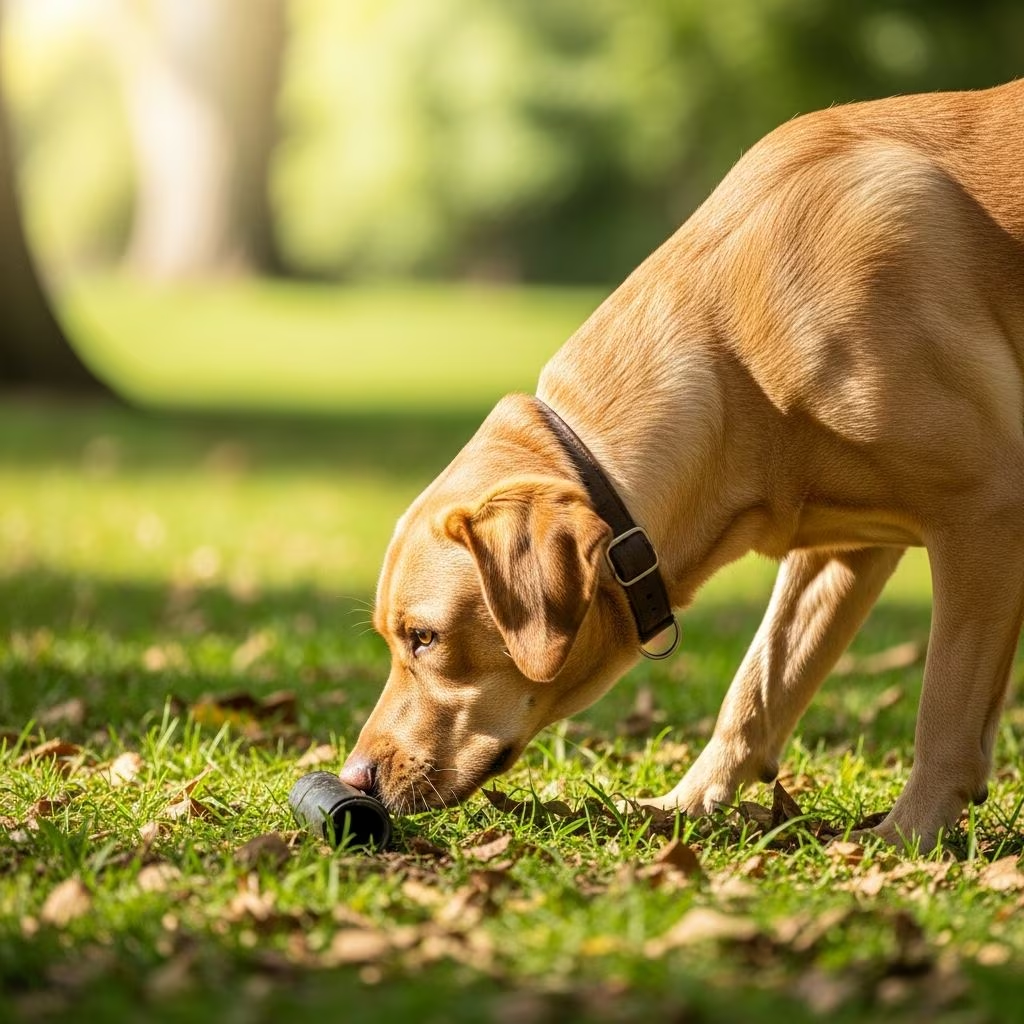
Dogs rely on their sense of smell to interpret the world around them, and this natural ability can be channeled into a rewarding form of physical and mental activity. Scent detection training taps into your dog’s instinctive behaviors, providing an outlet that goes far beyond traditional exercise routines. This type of activity engages the canine mind in ways that standard obedience training or casual walks cannot replicate, making it an increasingly popular choice among dog owners and trainers seeking to enhance their pets’ overall well-being.
Understanding the Fundamentals of Scent Detection Training
Scent detection training, often called nose work or scent work, involves teaching dogs to locate specific odors and communicate their findings to their handlers. During these activities, dogs learn to search through various environments while identifying target scents such as essential oils or hidden food rewards. The training begins with simple exercises where dogs search for treats hidden in boxes or other containers, gradually progressing to more complex scenarios involving multiple search areas and environmental challenges.
The foundation of effective scent detection work rests on understanding how dogs naturally use their olfactory senses. Unlike humans who rely heavily on visual information, dogs perceive their environment primarily through smell. By formalizing and directing this instinctive behavior, handlers create a structured activity that feels natural and enjoyable to their canine companions while simultaneously providing measurable benefits to their physical and mental health.
Mental Enrichment and Cognitive Development
One of the most significant advantages of scent detection training is the mental stimulation it provides. Dogs engaging in scent work activities experience enhanced cognitive engagement that satisfies their need for purposeful activity. This type of mental exercise proves particularly valuable for high-energy dogs that might otherwise develop destructive behaviors due to insufficient mental stimulation, as well as for dogs with reserved or anxious temperaments who benefit from having a focused task.
During scent detection sessions, dogs must solve problems independently without explicit direction from their handlers regarding the location of hidden odors. This requirement forces the dog’s brain to work in complex ways—analyzing environmental cues, making decisions about where to search next, and committing to their own discoveries. Over time, dogs participating in regular scent work demonstrate improved focus and the ability to concentrate on tasks in distracting environments.
The cognitive benefits extend beyond the training session itself. Dogs who regularly participate in scent work activities often show improved problem-solving abilities in everyday situations, greater adaptability to novel environments, and enhanced capacity to remain calm when faced with uncertainty. This cognitive development creates a positive feedback loop where mental engagement leads to better overall behavior in the dog’s daily life.
Emotional Wellness and Stress Reduction
Scent detection training offers remarkable stress-relief benefits for both dogs and their handlers. The act of sniffing itself appears to have a calming physiological effect on dogs, similar to how focused breathing exercises benefit humans. Dogs typically relax following scent work sessions, often settling into restful sleep afterward as their nervous systems transition from active engagement to recovery mode.
For dogs displaying fearful or reactive tendencies, scent work provides a low-pressure environment where they can build confidence at their own pace. A shy or reserved dog might initially move cautiously through search areas, hesitant about engaging with the activity. However, as they experience small successes in locating hidden odors, their confidence gradually increases. Trainers frequently observe dramatic transformations where previously withdrawn dogs become energetic and enthusiastic, entering training areas with wagging tails and visible excitement.
This stress-reduction benefit proves particularly valuable for dogs with anxiety disorders or those recovering from traumatic experiences. The structured nature of scent work, combined with the dog’s ability to work at their own pace and the inherent reward system built into the activity, creates a therapeutic environment that supports emotional healing and resilience building.
Behavioral Applications and Real-World Problem-Solving
The skills developed through scent detection training transfer directly into a dog’s everyday behavior. Confidence and focus acquired during scent work sessions manifest in improved behavior across various situations. Dogs learn that they possess the ability to solve problems, make decisions, and succeed through their own efforts rather than relying exclusively on handler direction.
Research into canine optimism and decision-making processes reveals that dogs engaged in scent work demonstrate increased confidence when approaching novel situations. In studies comparing dogs who participated in scent work versus those who received traditional obedience training, scent-work dogs approached unfamiliar containers more quickly and confidently, suggesting they developed a more positive outlook regarding potential success in new scenarios.
This behavioral shift proves especially valuable for dogs that require a structured job or purpose to feel fulfilled. Many dogs develop behavioral problems not from malice or disobedience, but from lacking meaningful engagement. Providing these dogs with scent detection activities redirects their natural drive and energy into productive channels, reducing frustration-based behaviors and creating a more balanced, content canine companion.
Physical Exercise with Controlled Impact
While scent detection training is primarily recognized for its mental benefits, it also provides legitimate physical exercise. Dogs move through search areas, exploring different spaces and adjusting their body position as they investigate various locations for hidden odors. Unlike high-impact sports such as agility or flyball that can stress joints and require intense physical conditioning, scent work offers moderate physical activity suitable for dogs of varying ages and physical capabilities.
This controlled physical engagement makes scent work an excellent option for senior dogs, puppies, and dogs recovering from injury or surgery. The activity can be scaled in intensity by varying the difficulty of hides, changing search environments, or adjusting session duration, ensuring appropriateness for individual dogs’ physical abilities while still providing meaningful exercise and engagement.
Building Autonomy and Independence
Scent detection training empowers dogs by placing decision-making authority in their capable paws. Unlike many dog sports where handlers provide constant cues and direction, scent work requires dogs to think independently and trust their own instincts. The handler’s role transforms from director to observer and supporter, allowing the dog to experience genuine autonomy in their work.
This shift toward independence creates psychological benefits that extend far beyond the training environment. Dogs learn that their instincts are reliable and valuable, that they can make effective decisions without constant guidance, and that they possess competence in challenging situations. This sense of empowerment contributes to overall confidence and emotional resilience, helping dogs navigate novel situations throughout their lives with greater assurance and less anxiety.
The autonomy developed through scent work proves particularly beneficial for dogs that participate in other canine sports. The independent problem-solving skills, ability to work through uncertainty, and confidence in trusting their own information enhance performance in obedience, agility, and tracking activities. Sport handlers frequently discover that adding scent work to their training regimen improves their dogs’ overall performance and decision-making in their primary discipline.
Strengthening the Human-Canine Partnership
Scent detection training creates unique opportunities for deepening the relationship between dogs and their handlers. As handlers learn to observe their dogs more carefully—noting searching patterns, recognizing alert behaviors, and understanding individual communication styles—they develop profound insights into their dog’s personality and abilities. This observational skill building transforms handlers into more intuitive, responsive partners.
Dogs, in turn, experience their handlers as supporters and advocates rather than directors and controllers. This shift in dynamic creates a more collaborative partnership where trust flows bidirectionally. The handler trusts the dog’s nose and decision-making ability, while the dog trusts the handler to create safe environments and recognize their alerts. Over time, this mutual trust foundation enhances communication and cooperation in all aspects of the dog-handler relationship.
Accessibility and Inclusive Participation
Scent detection training offers remarkable inclusivity compared to many canine sports and activities. Dogs of all sizes, ages, physical abilities, and temperaments can participate meaningfully. Unlike activities requiring specific physical capabilities or competitive drive, scent work accommodates individual differences and allows each dog to participate at their appropriate level.
Shy dogs can work through their anxiety gradually. Senior dogs can engage without joint stress. Young puppies can begin learning foundational concepts appropriate to their developmental stage. Dogs recovering from illness or injury can maintain mental engagement during periods when physical exercise must be limited. This universal accessibility makes scent work an excellent choice for diverse canine populations seeking enrichment and engagement.
Beginning Your Scent Detection Journey
Starting a scent detection program requires minimal equipment and expense. The foundational exercise involves hiding treats or toys in boxes and allowing dogs to search for them, rewarding successful finds. Dogs quickly learn that searching results in reward, and they naturally begin applying sniffing behaviors to locate hidden items.
Most formal training progresses from simple box searches to more complex environments featuring multiple hiding locations, varied surfaces, and challenging weather conditions. Handlers attend classes where they learn to recognize their dog’s alert behaviors and understand the progression of training concepts. This instructor-led approach ensures dogs and handlers develop correct foundations while benefiting from expert feedback and guidance.
Selecting Appropriate Activities for Your Dog
| Dog Situation | Why Scent Work Suits Them | Expected Benefits |
|---|---|---|
| High-energy dogs | Channels energy into productive mental activity | Reduced destructive behaviors, improved focus |
| Anxious or fearful dogs | Low-pressure environment supporting confidence building | Increased confidence, reduced anxiety responses |
| Senior dogs | Mental engagement without physical strain | Maintained cognitive function, purposeful activity |
| Dogs needing a job | Provides meaningful purpose and engagement | Reduced frustration-based behaviors, fulfilled lifestyle |
| Sport dogs in training | Develops independent problem-solving skills | Enhanced performance across multiple disciplines |
Frequently Asked Questions
Can all dogs participate in scent work training?
Yes, dogs of all ages, sizes, and temperaments can participate in scent detection training. The activity can be adapted to accommodate individual physical abilities and learning styles, making it universally accessible for canine companions at any stage of life.
How long does it take to see results from scent work training?
Many dogs show initial enthusiasm during their first training session. Behavioral and confidence improvements typically become noticeable within several weeks of regular participation. Long-term benefits including significant confidence building and behavioral modification may require months of consistent engagement.
Is scent work training expensive?
Scent work training is remarkably affordable. Basic home practice requires only common household items and treats. Formal class participation varies by location and instructor but generally costs less than many other dog sports. The time investment required is minimal compared to other canine activities.
Can scent work replace traditional exercise?
Scent work provides both mental and moderate physical exercise but should ideally be combined with regular walking and other activities to ensure comprehensive fitness. However, for dogs with physical limitations, scent work offers meaningful engagement when other exercise forms prove inappropriate.
How do I know if my dog is naturally good at scent work?
Most dogs demonstrate natural scenting ability since olfaction is fundamental to canine perception. Dogs that show keen interest in sniffing during walks, that investigate novel scents eagerly, and that explore environments methodically typically excel at structured scent work activities.
The Long-Term Impact of Scent Detection Training
Scent detection training offers benefits that extend throughout a dog’s lifetime. The confidence, independence, and problem-solving skills developed through nose work create foundation improvements affecting how dogs navigate their entire existence. A dog that learned to trust their instincts and believe in their own capabilities approaches novel situations with greater assurance, experiences lower baseline anxiety, and demonstrates improved resilience when facing challenging circumstances.
Handlers who engage with scent work often discover that the activity transforms not just their dogs’ behavior and emotional well-being, but also their own relationship with their canine companion. By stepping into the role of observer and supporter rather than director, handlers develop deeper appreciation for their dogs’ individual personalities, capabilities, and perspectives. This shift in perspective often ripples outward, affecting all interactions and creating a more harmonious, trusting partnership grounded in mutual respect and genuine partnership.
References
- What is Nosework Training for Dogs? — Everyday Dog Austin. Accessed March 2026. https://www.everydogaustin.org/post/what-is-nosework-training-for-dogs
- How Nosework Transforms Fearful, Reactive, and High-Energy Dogs — Delta Tails. Accessed March 2026. https://www.deltatails.com/blog/how-nosework-transforms-fearful-reactive-and-high-energy-dogs
- Nose work for dogs: enrich his life through scent — Animal Wellness Magazine. Accessed March 2026. https://animalwellnessmagazine.com/nose-work-for-dogs-enrich-his-life-through-scent/
- How Nose Work Can Boost Your Dog’s Confidence, Independence and Joy — Red Pointy Dog. Accessed March 2026. https://www.redpointydog.com/post/how-nose-work-can-boost-your-dog-s-confidence-independence-and-joy
- Why Nosework Belongs in Every Sport Dog’s Training Plan — Scent Abilities Northwest. Accessed March 2026. https://scentsabilitiesnw.com/blog/why-nosework-belongs-in-every-sport-dogs-training-plan/



