

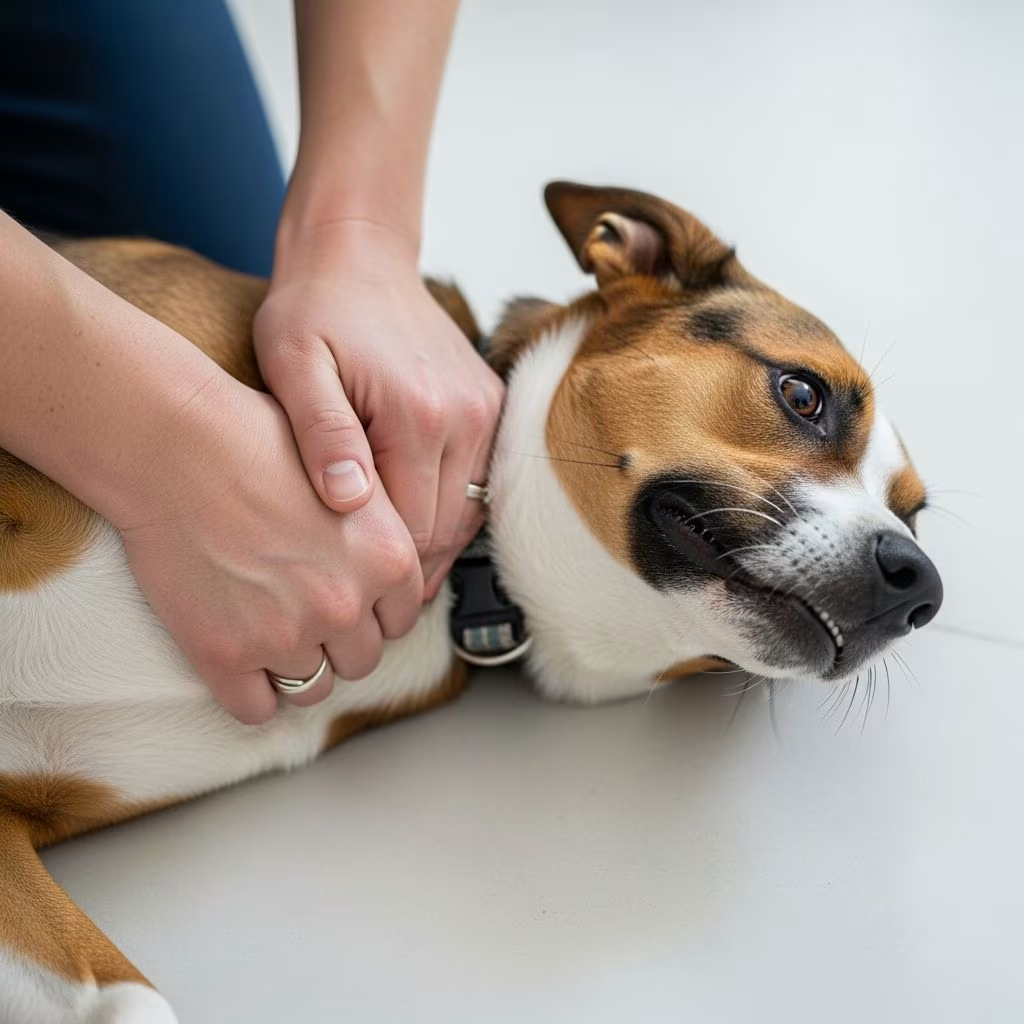
Choking in dogs happens when a foreign object blocks the airway, preventing normal breathing. Quick action by owners can dislodge the obstruction and save lives, as many incidents involve everyday items like toys or treats. Understanding the signs and proper techniques empowers pet parents to act confidently during crises.
Recognizing Choking Symptoms in Dogs
Dogs cannot speak, so they communicate distress through physical cues. Watch for exaggerated gagging, pawing at the mouth, excessive drooling, blue gums, or labored breathing sounds like wheezing or honking. A panicked expression, collapse, or refusal to eat signals severe blockage. Mild cases may resolve with coughing, but persistent symptoms demand immediate intervention.
- Partial blockage: Coughing, retching, breathing with effort.
- Full blockage: No sound, weak movements, unconsciousness approaching.
- Danger signs: Cyanosis (blue tongue/gums), limp body.
Distinguish choking from other issues like heatstroke or allergic reactions, which may mimic symptoms but require different responses.
Immediate Safety Measures Before Assisting
Approach calmly to avoid startling the dog, which could worsen the situation. Secure the environment by removing hazards like wires or sharp objects. If the dog is aggressive in panic, protect yourself with gloves or a muzzle if possible. Never force the mouth open on a conscious, struggling pet, as bites are common.
Assess breathing: If air passes and the dog coughs productively, allow a moment for self-resolution. Only intervene if breathing stops or weakens significantly.
Step-by-Step First Aid for Conscious Dogs
For dogs actively choking but alert, prioritize non-invasive methods. Start by gently restraining and inspecting the mouth if safe.
- Examine the mouth: Pull the tongue forward carefully; sweep fingers in a hooking motion to remove visible objects without pushing deeper.
- Chest thrusts: Stand behind the dog. Place hands in the armpits behind front legs. Compress sharply inward and upward 5 times, mimicking bellows action to expel air and dislodge blockage. Adjust force for size: gentle for small breeds, firm for large ones.
- Back blows: If thrusts fail, deliver 5 sharp slaps between shoulder blades with heel of hand while supporting the chest.
- Alternate and repeat: Cycle thrusts and blows, checking airway each time.
For small dogs under 15 pounds, suspend by hind legs upside down briefly, applying abdominal thrusts upward toward the head.
Handling Unconscious Choking Dogs
If the dog collapses, lay it on its side on a firm surface. Check for pulse at inner thigh (femoral artery). Proceed to advanced aid.
| Step | Action | Dog Size Adjustment |
|---|---|---|
| 1. Clear airway | Open mouth, pull tongue forward, remove object if visible | Same for all |
| 2. Rescue breaths | Close mouth, blow into nostrils 5 times until chest rises | Small: Full mouth seal; Large: Stronger puffs |
| 3. Thrusts/Blows | 5 abdominal thrusts or back blows | Small: Heel of hand; Large: Fisted grip |
| 4. Repeat cycle | Until breathing resumes or vet arrival | Monitor pulse continuously |
Align head and neck straight to avoid further obstruction during breaths.
CPR Protocol if Heart Stops
In extreme cases, combine compressions with breaths. For every 30 chest compressions (rate: 100-120/min), give 2 breaths.
- Small dogs: Side-lying, squeeze chest between thumb and fingers.
- Large/Barrel-chested: On back, heels of hands on sternum, compress 1/3-1/2 chest depth.
Reassess every 2 minutes. Continue en route to vet.
Professional Veterinary Interventions
Rush to an emergency clinic immediately, even if resolved, as fragments may remain. Vets use sedation, forceps, bronchoscopy, or intubation to clear airways safely. Oxygen therapy and X-rays check for damage like swelling or aspiration pneumonia.
Call ahead for instructions; perform aid in transit if needed.
Preventing Choking Incidents
Proactive habits reduce risks significantly.
- Supervise play with toys; choose durable, appropriately sized ones without small parts.
- Select kibble matching jaw size; soak hard food for puppies/seniors.
- Avoid cooked bones, rawhide; opt for safe chews.
- Train “leave it” command; manage multi-pet households.
- Regular vet checks for dental issues predisposing to choking.
Pet first aid classes build skills.
Post-Choking Care and Monitoring
After dislodging, observe for breathing, coughing blood, lethargy, or refusal to eat. Vet exam rules out throat trauma, infections, or lung issues. Hydrate slowly; soft food prevents irritation. Full recovery often occurs within days with prompt care.
Frequently Asked Questions
What should I do first if my dog chokes?
Stay calm, assess breathing, and check mouth if safe. Call vet while aiding.
Is the human Heimlich safe for dogs?
Adapted versions work; use chest thrusts for simplicity and safety.
How do I know if it’s choking or something else?
Look for pawing mouth, drool, blue gums. Coughing alone may be kennel cough.
Can puppies choke easier?
Yes; smaller airways and curious chewing increase risks. Use puppy-safe items.
What if first aid fails?
Drive to ER performing CPR if needed; time critical.
References
- Dog Choking: Causes and How to Help — Veteris. 2023. https://veteris.co.uk/petcare-advice/dog-choking-causes-and-how-to-help
- Dog Choking Prevention: Everything You Need to Know — American Kennel Club. 2024-02-15. https://www.akc.org/expert-advice/health/dog-choking/
- Cat and Dog Choking (Unconscious) training — ProTrainings. 2023. https://www.protrainings.com/training_video/cat-and-dog-choking-unconscious
- How to Perform the Heimlich Maneuver if Your Dog Is Choking — PetMD. 2024-01-10. https://www.petmd.com/dog/emergency/common-emergencies/e_dg_choking
- First aid tips for pet owners — American Veterinary Medical Association. 2025. https://www.avma.org/resources-tools/pet-owners/emergencycare/first-aid-tips-pet-owners



