

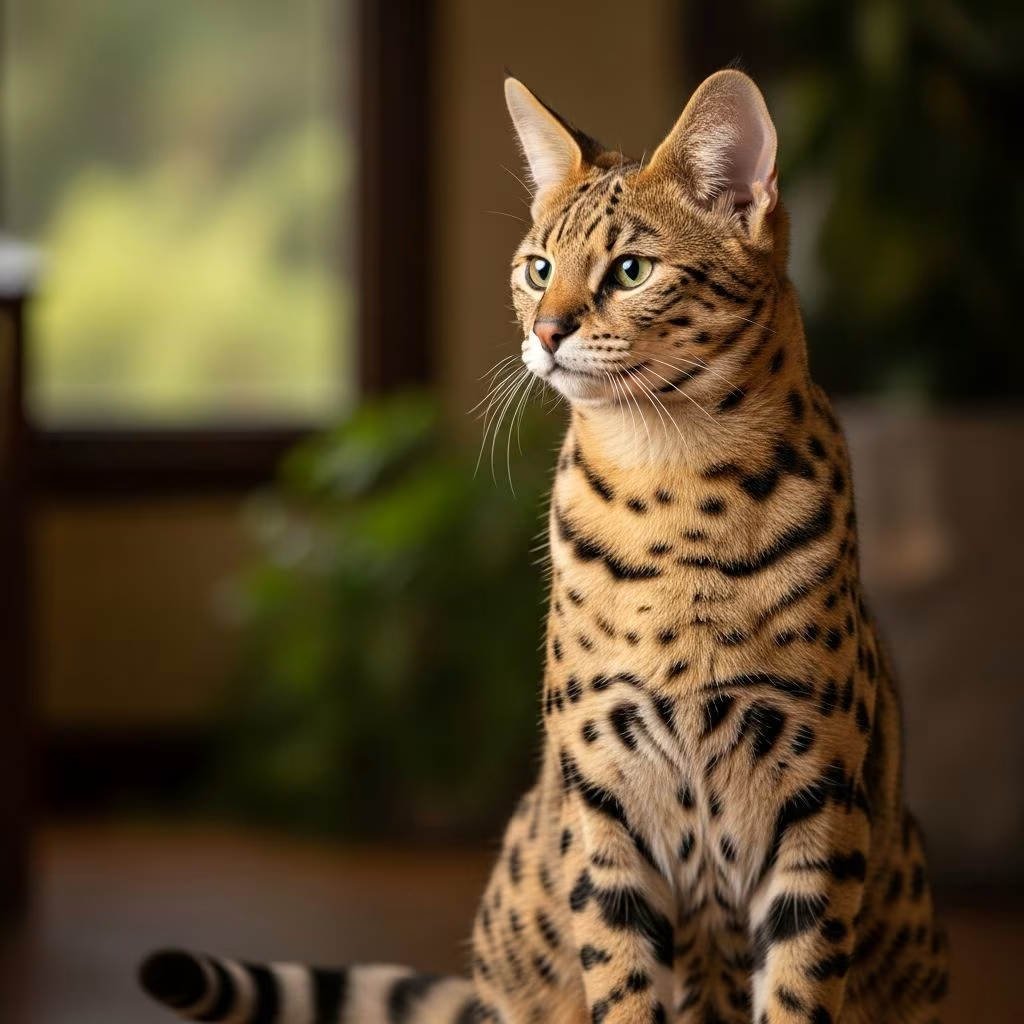
The Savannah cat represents a remarkable fusion of wild elegance and household companionship. Emerging from a deliberate cross between the African serval and domestic cats, this breed captivates with its towering stature, bold patterns, and spirited demeanor. Owners often describe them as dog-like in loyalty and playfulness, making them ideal for active households seeking an adventurous pet.
Origins of the Savannah Breed
The journey of the Savannah cat began in the 1980s when breeder Judee Frank paired a domestic cat with a serval, a slender wild feline native to African grasslands. This hybridization aimed to capture the serval’s exotic aesthetics while retaining domestic manageability. The breed gained official recognition from The International Cat Association (TICA) in 2001, solidifying its place in pedigreed cat circles.
Breeding Savannahs involves tracking filial generations, denoted as F1, F2, and beyond. F1 cats, closest to their serval parent (at least 50% serval genetics), exhibit the most pronounced wild traits. Subsequent generations dilute the serval influence, leading to calmer dispositions suitable for varied homes.
Defining Physical Traits
Savannah cats command attention with their statuesque builds. They boast long, lean bodies, disproportionately lengthy legs, and a hindquarters that rises above the shoulders, evoking a cheetah’s poise. Their heads are compact and triangular, topped with oversized, erect ears featuring ocelli—small spots on the back that enhance their alert expression.
Coat patterns mimic the serval’s camouflage: bold, dark spots on tawny, silver, or smoke backgrounds. Tear-mark stripes descend from the eyes, adding to their fierce allure. Weights range from 12 to 25 pounds, with males often larger, though their slim frames make them appear even grander.
| Feature | Description | Notable Aspect |
|---|---|---|
| Ears | Tall, rounded, wide-set | Ocelli on backs for serval-like vigilance |
| Legs | Extraordinarily long | Hind end higher than shoulders |
| Coat | Short, spotted/marble | Brown tabby, silver, black smoke variants |
| Eyes | Hooded, almond-shaped | Green, gold, or brown hues |
| Tail | Medium, ringed | Black tip, shorter than average |
Generations Explained: From F1 to Later Filials
- F1 Savannahs: Direct serval offspring, largest at up to 30 pounds for males. Fiercest appearance and temperament; high energy and prey drive demand experienced owners.
- F2: 25-50% serval blood; striking looks with improved sociability. Balanced for playfulness and trainability.
- F3 and Beyond: More domestic, smaller sizes (12-20 pounds), milder personalities. Ideal for families, often leash-trainable.
Earlier generations (F1-F3) retain vivid wild markings that intensify with age, while later ones blend seamlessly into home life.
Vibrant Personality and Behavior
Savannahs pulse with intelligence and vitality. They leap up to 8 feet vertically, scaling cabinets and doors with ease, driven by boundless curiosity. Far from aloof, they shadow owners, greet at doors, and crave involvement in daily activities.
Dog-like traits shine through: many fetch toys, walk on leashes, and relish water play, dipping paws in baths or chasing faucets. Their vocalizations include chirps and trills beyond standard meows. Loyalty bonds them tightly to families, though they shun lap-sitting for active proximity.
High energy necessitates stimulation; boredom breeds mischief like door-opening or shelf-raiding, dubbed “savandalism.” Early socialization curbs territorial instincts, especially in early generations.
Care Essentials for Thriving Savannahs
Exercise and Enrichment
Daily sessions of chasing toys, puzzle feeders, and climbing structures prevent restlessness. Interactive play mimics hunting, channeling their athleticism. Outdoor enclosures or harness walks provide safe exploration.
Nutrition and Health
High-protein diets support their muscular frames. Monitor for hybrid-specific issues like hypertrophic cardiomyopathy, though lifespans reach 12-20 years with proper care. Annual vet checks are crucial.
Grooming Routine
Short coats require weekly brushing to reduce shedding. Dental care and nail trims maintain hygiene. Their active nature keeps them clean, but baths appeal to water-loving individuals.
Training Savannah Cats: Unlocking Potential
Capitalize on their smarts with clicker training for commands like sit, fetch, and leash manners. Positive reinforcement fosters cooperation. Faucet-turning or toilet-flushing tricks showcase their problem-solving prowess, but set boundaries early.
Challenges include litter training inconsistencies in early generations and high prey drives, making them unsuitable with small pets like birds or rodents.
Ideal Homes and Lifestyle Fit
Savannahs flourish in spacious environments with patient, engaged owners. They befriend dogs and kids post-socialization but may overwhelm sedentary households. Not isolation-tolerant, they demand companionship.
Legal restrictions apply: Some regions ban F1-F3 due to wild ancestry. Research local laws before adopting.
Adoption Costs and Considerations
Prices escalate with generation: F1s command $15,000+, while F5s range $1,000-$5,000. Reputable breeders prioritize health testing. Rescues offer later generations affordably.
Frequently Asked Questions (FAQs)
Are Savannah cats legal everywhere?
Regulations vary; early generations face bans in places like Hawaii or certain U.S. states due to serval lineage. Check local wildlife laws.
Do Savannah cats make good family pets?
Later generations excel with children and dogs when socialized young. Their energy suits active families.
How big do Savannah cats get?
Males: 15-30 lbs (F1 largest); females: 12-25 lbs. Heights reach 17 inches at shoulder.
Are Savannah cats hypoallergenic?
No, but short coats shed minimally. Not truly hypoallergenic.
Can Savannah cats be litter trained?
Most are, though early generations may prefer larger boxes or outdoor options due to size.
Why Choose a Savannah?
Savannah cats offer an unmatched blend of wild allure and devoted companionship. Their athletic grace, sharp minds, and playful spirits transform homes into adventure zones. With commitment to their needs, they reward owners with lifelong bonds.
References
- Savannah Cat Guide: Facts, Traits, and F1 Breed Info — Litter-Robot. 2023. https://www.litter-robot.com/blog/f1-savannah-cats/
- Savannah Cat Breed Information — Purina US. 2024. https://www.purina.com/cats/cat-breeds/savannah
- Savannah — The International Cat Association (TICA). 2024. https://tica.org/breed/savannah/
- Savannah Cat 101 – Personality, Traits, Price & Size — OutdoorBengal. 2023. https://www.outdoorbengal.com/blogs/cat-breeds/savannah-cat-101
- PERSONALITY – Savannah Cats are dangerous? — F1 Hybrids Savannah Cats. 2024. https://www.f1hybridssavannahcats.com/breed/personality
- Savannah: Personality, Diet, Grooming, Training — Petplan. 2024. https://www.petplan.co.uk/cat-insurance/cat-breeds/savannah.html
- Savannah cat — Wikipedia. 2025. https://en.wikipedia.org/wiki/Savannah_cat



