

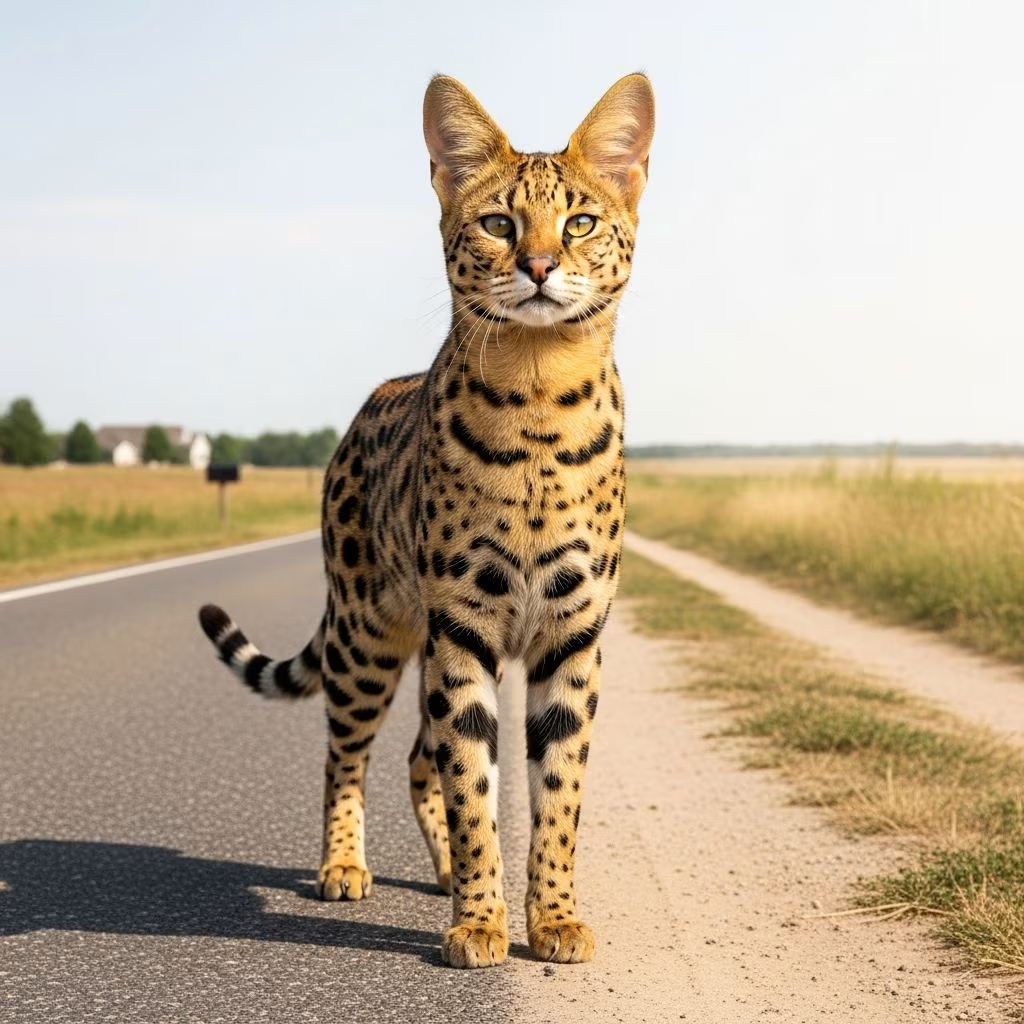
Savannah cats, the striking hybrids of domestic cats and African servals, captivate with their wild looks and dynamic personalities, but their ownership legality varies widely across the United States due to their wild ancestry.
Understanding the Savannah Cat Hybrid
These elegant felines emerge from crossing a domestic cat with a serval, a medium-sized wild African cat, resulting in a breed that blends exotic aesthetics with domesticated traits. The first generation, known as F1, carries the highest serval percentage—up to 50%—making them the most serval-like in size, appearance, and behavior. Subsequent generations, like F2 (25% serval) down to F5 or beyond (under 10% serval), become progressively more domestic.
Physically, Savannahs boast long legs, large rounded ears perched high on their heads, a slender neck, and a short, spotted coat in shades of brown, silver, black, or smoke. Males can weigh 12-25 pounds, females slightly less, with an illusion of greater size from their tall, lean build. Their lifespan ranges from 12-20 years with proper care.
Key Generations and Their Implications
Generations define not just looks but also temperament and legal status:
- F1 Savannahs: Closest to serval parentage (one serval parent), often largest (up to 30 lbs for males), most energetic, and challenging to tame. High prey drive and potential aggression make them least suitable for novice owners.
- F2 Savannahs: 25% serval blood; striking appearance with balanced wild-domestic traits. Ideal for active households seeking adventure without extreme wildness.
- F3-F5: Increasingly domestic; smaller, friendlier, and easier to manage. F5 and later are often fully legal everywhere as standard pets.
This generational hierarchy influences breeding costs, with F1s commanding premium prices due to rarity and size incentives for breeders.
National Overview of Legality
No uniform federal law governs Savannah cat ownership in the US; regulations fall to states, counties, and cities. Early generations (F1-F3) face the strictest scrutiny because their serval genetics classify them as wild or hybrid animals in many jurisdictions, potentially requiring permits, bans outright, or hefty fees.
The US Fish and Wildlife Service and state wildlife departments oversee exotic pets, often treating high-percentage serval hybrids like regulated wildlife. TICA, the International Cat Association, recognizes all generations for shows but notes legal variances.
State-by-State Legal Breakdown
Laws evolve, so verify with local authorities, but here’s a synthesized guide:
| State | F1-F2 Status | F3 and Later | Notes |
|---|---|---|---|
| California | Permit required | Generally legal | Strict exotic pet rules; health certificates needed. |
| Florida | Banned or permit-only | Legal with registration | Wildlife commission enforces; F1s often prohibited. |
| Texas | County-dependent; often banned | Usually legal | Local ordinances vary widely. |
| New York | Banned statewide | Banned or restricted | Hybrids considered dangerous exotics. |
| Georgia | Permit for F1-F3 | Legal | Breeding hub but regulated. |
| Others (e.g., PA, OH) | Varies; many ban F1-F4 | Legal in most | Check USDA and state ag depts. |
In states like Hawaii and Alaska, import bans apply due to invasive species risks. Always cross-reference with official state wildlife sites for updates.
Local Regulations and Hidden Pitfalls
Even in permissive states, cities or HOAs may impose bans. For instance, some urban areas prohibit any hybrid over F4. Renters face landlord restrictions, and travel across state lines can trigger quarantine or seizure without documentation proving generation.
Registration with bodies like TICA helps prove domestic status for later generations, easing legal hurdles.
Temperament and Suitability for Homes
Savannahs shine with intelligence, loyalty, and dog-like traits: leash-trainable, fetch-playing, water-loving. They’re curious explorers, chirping vocally and bonding deeply, but demand stimulation—puzzle toys, tall cat trees, daily play—or risk Savandalism: destructive antics from boredom.
High energy suits active families; they’re kid- and dog-friendly if socialized early. However, strong hunting instincts threaten small pets like birds or rodents. Early generations may spray-mark or show territoriality.
Care Essentials for Thriving Savannahs
Nutrition: High-protein diet mimicking serval needs; raw or premium kibble. Portion control prevents obesity in less active later gens.
Exercise: Vast spaces, vertical climbing, leash walks. Indoor-only risks frustration.
Grooming: Weekly brushing for short coat; low shedding. Dental care vital.
Health: Prone to hybrid vigor but watch for HCM, allergies. Vet specializing in exotics recommended; lifespan 12-20 years.
Acquiring a Legal Savannah Responsibly
Source from TICA-registered breeders verifying pedigrees and health tests. Avoid unverified sellers risking illegal F1s. Shelters occasionally have abandoned later gens—cheaper but verify history.
Costs: F1s $10,000+, F5s $1,000-2,000. Budget for enclosures, insurance.
Alternatives if Savannahs Are Restricted
- Bengal cats: Similar spots, legal everywhere, high energy.
- Egyptian Mau: Natural spots, athletic.
- Standard breeds like Abyssinian for activity without legal woes.
Frequently Asked Questions
Are F5 Savannah cats legal everywhere?
Yes, typically treated as domestic cats under 10% serval blood, but confirm local laws.
Can Savannah cats be apartment pets?
Challenging; need ample enrichment. Better for homes with yards.
Do Savannahs get along with other pets?
With socialization, yes to dogs/cats; no to small prey animals.
How to prove my Savannah’s generation?
Breeder pedigree, DNA tests, TICA papers.
Are Savannahs hypoallergenic?
No, but low-shedding coats help allergy sufferers.
Navigating Ownership Challenges
Prospective owners must research tirelessly: contact state wildlife agencies (e.g., .gov sites), join forums cautiously, consult vets. Non-compliance risks fines, confiscation, euthanasia. Responsible ownership means prioritizing welfare over aesthetics.
In summary, while later-generation Savannahs offer exotic charm legally in most places, early ones demand navigating a patchwork of rules. Commit fully or choose alternatives.
References
- Savannah Cat Breed Profile: Traits, History & Care — ErgoPurrch. 2024. https://ergopurrch.com/blogs/cat-breeds/savannah-cat-breed-profile
- Savannah Cat Breed Information — Purina US. 2025. https://www.purina.com/cats/cat-breeds/savannah
- Savannah — The International Cat Association (TICA). 2025. https://tica.org/breed/savannah/
- Savannah Cat 101 – Personality, Traits, Price & Size — OutdoorBengal. 2024. https://www.outdoorbengal.com/blogs/cat-breeds/savannah-cat-101
- PERSONALITY – Savannah Cats are dangerous? — F1 Hybrids Savannah Cats. 2024. https://www.f1hybridssavannahcats.com/breed/personality
- What’s a Savannah Cat? Meet the Breed — ASPCA Pet Insurance. 2025. https://www.aspcapetinsurance.com/resources/savannah/
- Savannah: Personality, Diet, Grooming, Training — Petplan. 2025. https://www.petplan.co.uk/cat-insurance/cat-breeds/savannah.html
- Savannah cat — Wikipedia. 2026-01-28. https://en.wikipedia.org/wiki/Savannah_cat



