

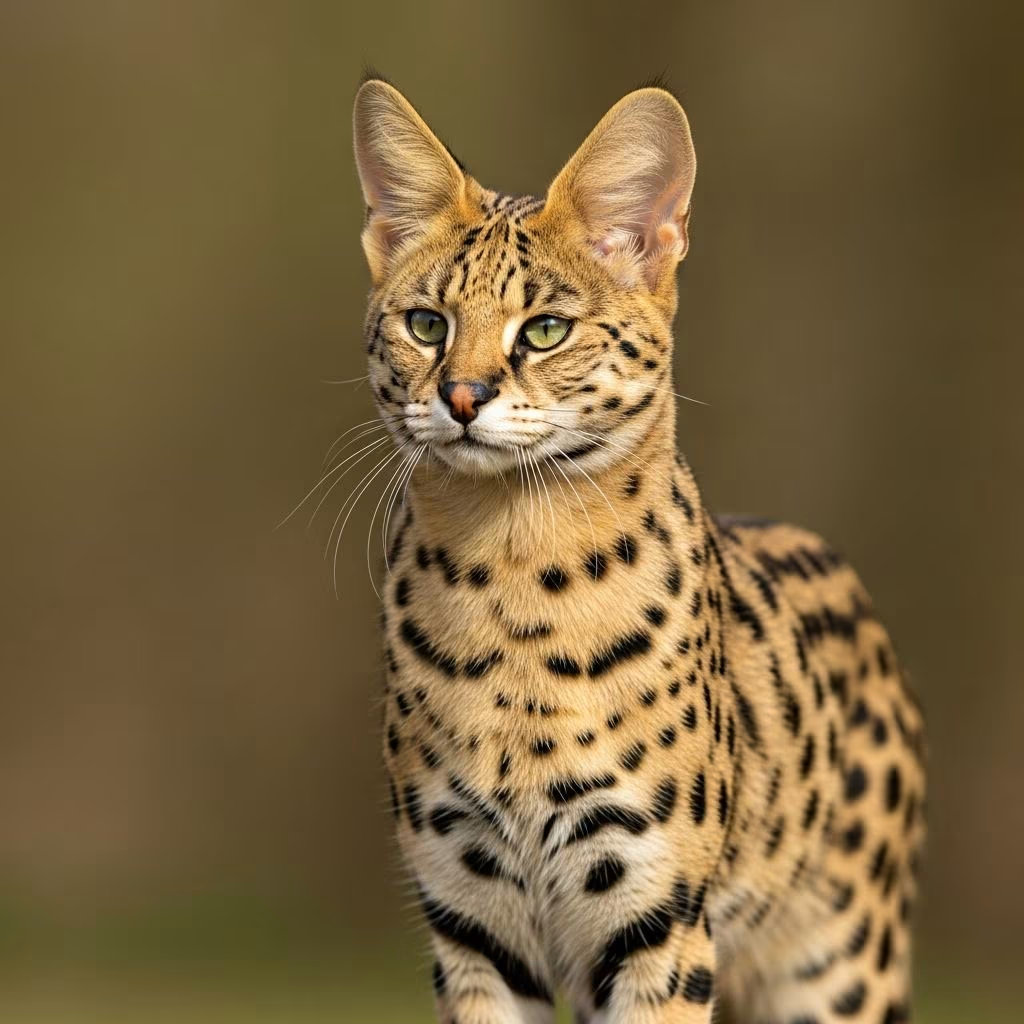
Owning a Savannah cat in Pennsylvania hinges on its generation, as state laws classify early hybrids like F1 and F2 as dangerous wild animals requiring special permits, while later generations are generally permitted as domestic pets.
Understanding Savannah Cats: A Hybrid Marvel
Savannah cats emerge from crossing the African serval with domestic cats, yielding a breed celebrated for its striking looks and dynamic personality. These hybrids inherit the serval’s tall, lean frame, bold spotted coats, and oversized ears, creating an exotic allure in a housecat package. Unlike pure wild cats, selective breeding has domesticated later generations, blending wild aesthetics with companionable traits.
Physically, Savannahs boast long legs that elevate their hindquarters above shoulders, hooded eyes in shades of green or gold, and short tails tipped in black. Their coats feature dark spots on tawny, silver, or smoke backgrounds, with patterns sharpening over time. Males in early generations can tip scales at 25 pounds or more, towering up to 17 inches at the shoulder, though size diminishes in subsequent filial (F) numbers.
Generations of Savannah Cats: From Wild to Tame
Savannah generations, denoted as F1 through F5 and beyond (often SBT for stud book traditionals), reflect serval ancestry percentage. F1s, direct serval offspring, carry 50% wild genes, appearing most feral with up to 30-pound males and intense behaviors. F2s retain about 25% serval blood, still large and spirited, while F3 and later dilute wild traits further, resembling standard cats in temperament by F4-F5.
- F1: 50% serval; largest, most wild-like; high energy, potential aggression.
- F2: 25% serval; bold markings, active hunters; leash-trainable.
- F3-F4: 12.5-6.25% serval; playful, social; ideal for families.
- F5+ (SBT): Under 6% serval; fully domestic, TICA-registerable.
This hierarchy profoundly impacts legality, as Pennsylvania targets high-percentage hybrids.
Pennsylvania’s Regulatory Landscape for Exotic Pets
Pennsylvania enforces the Dangerous Wild Animals Act under Title 58, prohibiting private ownership of certain species without permits, including serval hybrids. Early Savannahs (F1-F3) often fall under ‘wild animal’ definitions due to serval lineage exceeding thresholds, mandating USDA-licensed facilities or exemptions. Local ordinances in counties like Allegheny or Philadelphia may impose stricter bans.
Permits demand proof of secure enclosures, liability insurance, veterinary records, and microchipping. F4 and later generations typically evade these, treated as domestic shorthairs by the Pennsylvania Game Commission, though buyers must verify breeder documentation. Always cross-check with local animal control, as HOAs or municipalities add layers.
| Generation | Serval % | PA Legality | Permit Needed? |
|---|---|---|---|
| F1-F2 | 25-50% | Restricted | Yes, special license |
| F3 | 12.5% | Often restricted | Case-by-case |
| F4+ | <6.25% | Legal | No |
Temperament and Lifestyle Fit for Savannah Owners
Savannahs radiate dog-like loyalty, shadowing owners and thriving on interaction. Their intelligence shines in tricks like fetching or leash-walking, but demands mental stimulation—puzzle feeders, agility courses, or water play, as many adore splashing. High prey drives make them chase small pets, unfit for homes with birds or rodents.
Early generations exhibit ‘Savandalism’—destructive antics from boredom—necessitating vertical spaces, catios, and daily play. They’re vocal chirpers, not meowers, and live 12-20 years, maturing slowly. Socialize kittens early for dog/cat compatibility and child-friendliness.
Care Essentials: Feeding, Grooming, and Health
Feed high-protein diets mimicking serval needs: raw or premium kibble with novel proteins, portioned to prevent obesity in active adults. Weekly brushing maintains short, coarse coats; claw trims and dental care are routine.
Health concerns include hybrid vigor but risks like pectus excavatum or untimed heat cycles in early gens. Annual vet checks, vaccinations (minus rabies for some F1s), and spaying/neutering stabilize temperament. Exercise via harness walks or climbing trees prevents obesity.
Costs and Acquisition: Realistic Expectations
F1 kittens command $15,000-$20,000 from reputable catteries; F4s range $1,500-$5,000. Factor enclosures ($2,000+ for F1s), insurance ($200/year), and food ($100/month). Avoid impulse buys—research TICA-registered breeders via official registries, shunning mills or shelters with abandons due to unmet needs.
Navigating Legal Gray Areas and Local Variations
Even permitted Savannahs face airline cargo bans and HOA restrictions. Philadelphia’s urban code bans ‘wild animals,’ potentially snaring F3s. Rural areas like Lancaster prove laxer. Consult the PA Department of Agriculture’s Bureau of Dog Law for updates, as laws evolve with incidents.
Ethical ownership prioritizes welfare: F1s need 10x space of domestics, mental enrichment, and experienced handlers. Rescue groups occasionally rehome later gens.
Frequently Asked Questions
Are F1 Savannah cats legal in Pennsylvania?
No, F1s require dangerous wild animal permits due to 50% serval genes; most owners lack approval.
Can I own an F4 Savannah without a permit?
Yes, F4+ are domestic cats under state law, but confirm locally.
Do Savannah cats make good family pets?
Later generations do with socialization; early ones suit active, experienced homes.
How do I verify a Savannah’s generation?
Demand breeder pedigrees and TICA papers tracing serval lineage.
What if my city bans exotic pets?
Stick to F5+ or consider alternatives like Bengals; check municipal codes.
References
- Savannah Cat Guide: Facts, Traits, and F1 Breed Info — Litter-Robot. 2023. https://www.litter-robot.com/blog/f1-savannah-cats/
- Savannah Cat Breed Information — Purina US. 2024. https://www.purina.com/cats/cat-breeds/savannah
- Savannah — The International Cat Association (TICA). 2025. https://tica.org/breed/savannah/
- Savannah Cat 101 – Personality, Traits, Price & Size — OutdoorBengal. 2024. https://www.outdoorbengal.com/blogs/cat-breeds/savannah-cat-101
- PERSONALITY – Savannah Cats are dangerous? — F1 Hybrids Savannah Cats. 2023. https://www.f1hybridssavannahcats.com/breed/personality
- Savannah: Personality, Diet, Grooming, Training — Petplan. 2024. https://www.petplan.co.uk/cat-insurance/cat-breeds/savannah.html
- Savannah cat — Wikipedia (citing primary breeding standards). 2025. https://en.wikipedia.org/wiki/Savannah_cat



