

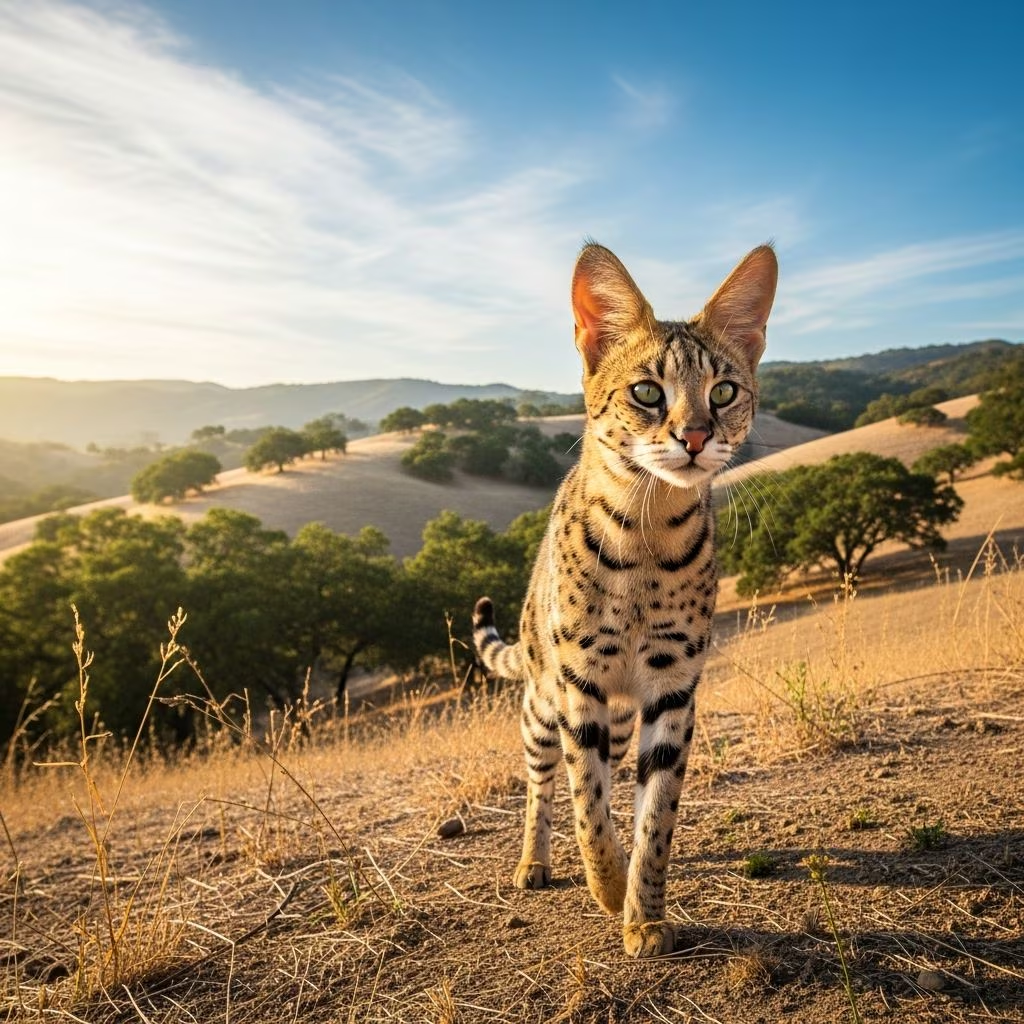
Savannah cats, hybrids of domestic cats and African servals, captivate with their wild looks and dynamic personalities, but their ownership in California hinges on specific regulations tied to their generation classification.
Understanding Savannah Cats and Their Unique Heritage
These striking felines emerge from crossing a serval—a wild African cat known for its tall frame and spotted coat—with a domestic shorthair, resulting in a breed that blends exotic aesthetics with pet-like companionship. Early generations (F1 to F3) carry more serval traits, making them larger, more energetic, and subject to stricter controls, while later ones (F4 and beyond) resemble typical house cats more closely.
Physically, Savannahs boast long legs, a slender body, large rounded ears often with ocelli markings on the back, hooded eyes in shades of green or gold, and bold spotted or marbled coats in brown, silver, or black. Males in F1 generations can reach 25-30 pounds and stand tall with hindquarters higher than shoulders, creating a graceful, serval-like silhouette. Their short tails end in black tips, and they exhibit exceptional jumping prowess, leaping up to 8 feet.
California’s Exotic Pet Regulations Overview
California enforces stringent rules on hybrid and wild cats through the California Fish and Game Code, particularly Section 2116-2127, which prohibits private ownership of servals and most early-generation hybrids without special permits. The state classifies animals by their wild content percentage: F1 Savannahs (50%+ serval) fall under full prohibitions as they exceed allowable domestic thresholds.
| Generation | Serval Percentage | California Legality | Typical Size |
|---|---|---|---|
| F1 | 50%+ | Illegal without rare permit | 20-30 lbs |
| F2 | 25-50% | Generally prohibited | 15-25 lbs |
| F3 | 12.5-25% | Often restricted; check local laws | 12-20 lbs |
| F4+ | <12.5% | Legal in most areas | 10-15 lbs |
This table summarizes generational differences, highlighting why F4 and later Savannahs are viable options for California residents, as they dip below the 12.5% wild threshold set by state code.
Generation Breakdown: Which Ones Can You Own?
Early Generations (F1-F2): High Risk, Low Availability
F1 Savannahs, direct offspring of a serval parent, embody the wildest traits: immense size, intense prey drive, and potential aggression. These are outright banned for private ownership in California due to public safety concerns and escape risks. F2s, with one grandparent serval, retain significant wildness—vocal chirps, water-loving antics, and door-opening smarts—but mirror F1 restrictions.
Mid Generations (F3): Gray Areas and Local Variations
F3 cats dilute serval influence further, showing milder temperaments yet still demanding experienced handlers. Legality varies by county; cities like Los Angeles or San Diego may impose additional bans. Always verify with local animal control.
Later Generations (F4-F5+): Your Best Bet for Compliance
By F4, Savannahs are fully domestic in behavior and size, legally ownable statewide without permits. They retain charm—leash-trainable, fetch-playing, loyal companions—minus the wild edge. Lifespans stretch 12-20 years, with slow maturation.
Navigating Local Ordinances Across the State
Beyond state law, California’s 58 counties enforce unique rules. For instance, HOA communities or urban zones like San Francisco often prohibit all hybrids. Rural areas prove more lenient for F4+. Consult the California Department of Fish and Wildlife (CDFW) portal or call 916-445-0411 for county-specific guidance. Microchipping and spay/neuter mandates frequently apply.
- Key Action Steps: Search your ZIP code on CDFW’s site, contact municipal animal services, and review lease/HOA pet clauses.
- Penalties for Non-Compliance: Fines up to $1,000, confiscation, or misdemeanor charges.
Finding Ethical Breeders and Avoiding Scams
Reputable breeders register with TICA (The International Cat Association), provide generation proofs, health guarantees, and socialization records. Expect F4 kittens at $1,500-$4,000; avoid “bargains” signaling mills or mislabeled early gens. Visit facilities, meet parents, and demand vet checks for HCM, PKD, and allergies.
Adoption shines brighter: Shelters occasionally list surrendered later-gen Savannahs, rescuing them from mismatched homes. Platforms like Petfinder filter by breed.
Caring for Your Legal Savannah: Daily Essentials
High-Energy Lifestyle Needs
Savannahs demand 30-60 minutes daily play—interactive toys, puzzle feeders, vertical spaces. Their dog-like loyalty means they trail owners, crave involvement, and thrive leash-walking outdoors (harness essential).
Diet and Health Maintenance
Feed raw or high-protein kibble mimicking serval diets: 40%+ protein, taurine-rich. Annual vet visits screen for hybrid-specific issues like patellar luxation. Grooming stays minimal with short coats.
Training and Socialization Tips
Start leash training young; use clickers for fetch. Early exposure curbs prey drive around small pets. Water play delights many—install fountains.
Alternatives if Savannahs Aren’t Feasible
- Bengal cats: Similar spots, fully domestic, legal everywhere.
- Egyptian Mau: Natural spots, athletic build.
- Highland Lynx: Curled ears, playful vibe.
These breeds deliver exotic flair sans legal headaches.
Frequently Asked Questions
Are all Savannah cats illegal in California?
No, only F1-F3 face bans; F4+ are permitted statewide, subject to local rules.
Can I get a permit for an F1 Savannah?
Rarely granted to private owners; reserved for sanctuaries or exhibitors via CDFW application.
How do I prove my Savannah’s generation?
Request breeder pedigree papers and DNA tests from services like UC Davis Veterinary Genetics Lab.
Do Savannahs make good family pets?
Later generations yes—with active families; supervise around kids due to high energy.
What’s the average cost of a legal Savannah kitten?
$2,000-$5,000 from ethical sources, plus setup costs ($1,000+).
Pros and Cons of Savannah Ownership
| Pros | Cons |
|---|---|
| Stunning appearance and athleticism | High exercise demands |
| Intelligent, loyal, trainable | Potential destructiveness if bored |
| Long lifespan, water-loving | Legal complexities in CA |
| Unique vocalizations | Strong prey drive |
Final Thoughts on Responsible Ownership
Owning a Savannah in California rewards diligent research with an extraordinary companion. Prioritize later generations, ethical sourcing, and robust enrichment to ensure harmony. Stay updated via CDFW, as laws evolve.
References
- Savannah Cat Guide: Facts, Traits, and F1 Breed Info — Litter-Robot. 2023. https://www.litter-robot.com/blog/f1-savannah-cats/
- Savannah Cat Breed Information — Purina US. 2024. https://www.purina.com/cats/cat-breeds/savannah
- Savannah — The International Cat Association (TICA). 2025. https://tica.org/breed/savannah/
- Savannah Cat 101 – Personality, Traits, Price & Size — OutdoorBengal. 2024. https://www.outdoorbengal.com/blogs/cat-breeds/savannah-cat-101
- PERSONALITY – Savannah Cats are dangerous? — F1 Hybrids Savannah Cats. 2023. https://www.f1hybridssavannahcats.com/breed/personality
- Savannah: Personality, Diet, Grooming, Training — Petplan. 2024. https://www.petplan.co.uk/cat-insurance/cat-breeds/savannah.html
- Savannah cat — Wikipedia. 2025. https://en.wikipedia.org/wiki/Savannah_cat



