

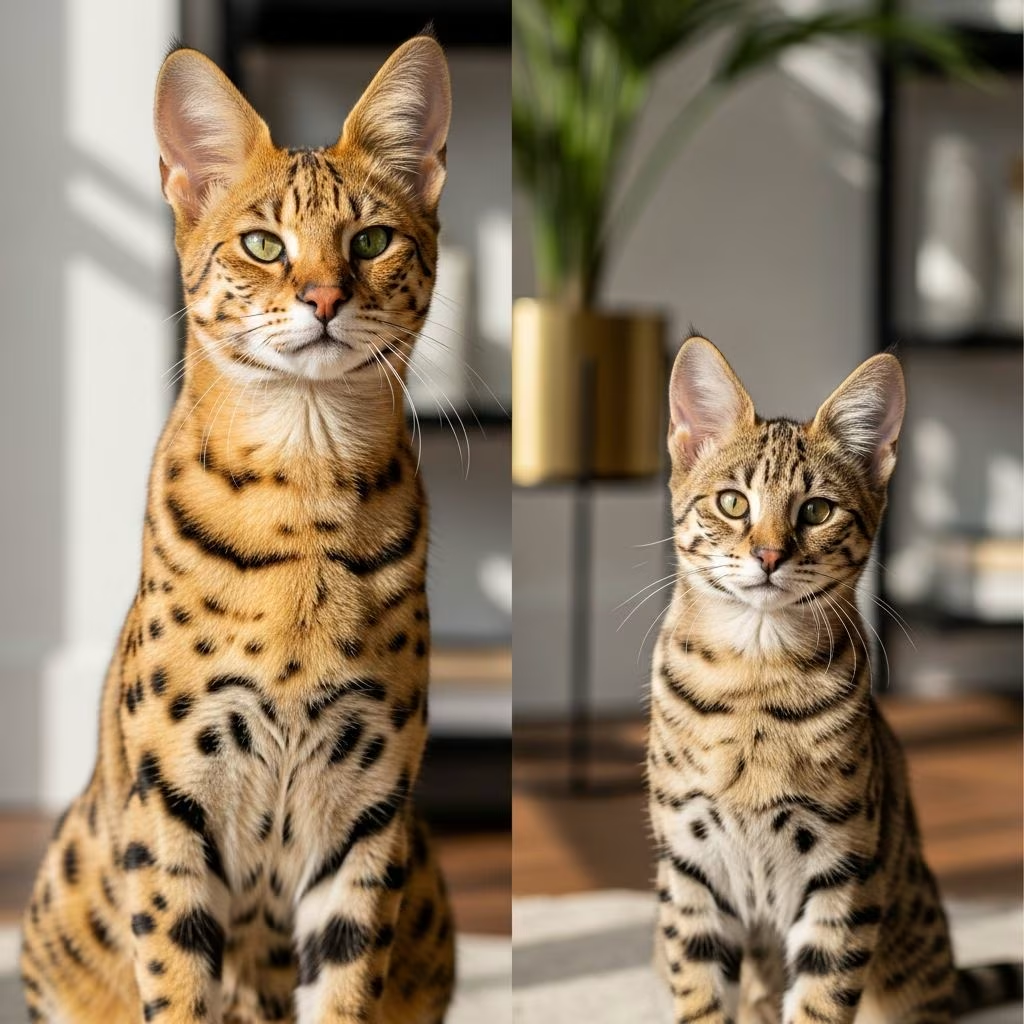
The Savannah cat represents a fascinating intersection of domestic and wild feline genetics. This hybrid breed combines the majestic appearance of the African Serval with the companionability of domestic cats, creating a unique pet that captivates cat enthusiasts worldwide. However, potential owners often find themselves puzzled by the terminology surrounding these remarkable animals, particularly when distinguishing between different generations. Understanding these distinctions is crucial for anyone considering bringing a Savannah cat into their home.
The Foundation: Understanding Hybrid Cat Generations
The letter “F” in Savannah cat classifications stands for filial, a scientific term indicating how many generations a cat is removed from its wild ancestor, the African Serval. This generational system provides a standardized method for breeders and owners to understand the genetic composition and expected characteristics of individual cats. The filial designation ranges from F1 through F7 or higher, with each successive generation containing progressively less Serval genetics.
The generational system evolved from established breeding practices and scientific nomenclature used across various hybrid animal programs. Each generation represents a deliberate pairing strategy designed to balance the exotic qualities enthusiasts seek with the temperament and health considerations necessary for a domesticated companion animal. The lower the number following the “F,” the closer the cat is genetically to its wild Serval ancestor, which directly influences the animal’s appearance, behavior, and care requirements.
Genetic Composition: The Science Behind the Generations
The most fundamental difference between F1 and F2 Savannah cats lies in their genetic makeup and the percentage of African Serval DNA they carry. An F1 Savannah cat represents the first generation hybrid offspring and contains approximately 50% Serval genetics. This substantial wild genetic component comes from a direct cross between a purebred African Serval parent (typically the male) and a domestic cat mother. This genetic split creates a cat that is literally half-wild in its genetic composition.
F2 Savannah cats, conversely, represent the second generation of hybrids and carry significantly less Serval DNA—approximately 35%. This reduction occurs because an F2 is born from an F1 parent crossed with another Savannah cat, typically one from a later generation. The dilution of wild genetics continues with each successive generation, gradually increasing the proportion of domestic cat DNA while the Serval influence wanes. This genetic progression explains many of the behavioral and physical differences owners notice between the generations.
Size and Physical Characteristics
The genetic differences manifest visibly in the physical dimensions of these two generations. F1 Savannah cats represent the largest generation of the breed due to their substantial Serval heritage. Male F1 cats typically stand 16 to 18 inches at the shoulder and weigh between 17 to 25 pounds, with some females ranging from 13 to 19 pounds. These measurements make them noticeably taller and more slender than average domestic cats, giving them an exotic, statuesque appearance that immediately captures attention.
F2 Savannah cats are slightly more compact, though still substantially larger than typical house cats. Males generally measure 15 to 18 inches at the shoulder and weigh 16 to 25 pounds, with some individuals reaching 30 pounds or more. Females tend to be smaller, typically ranging from 12 to 16 pounds. Despite their reduced Serval genetics, F2 cats still retain the characteristic tall, lean build that makes Savannahs distinctive. Interestingly, both generations often appear heavier than their actual weight due to their elongated body structure and long legs.
Temperament and Personality Distinctions
Perhaps the most noticeable differences between these generations emerge in their behavioral profiles and social tendencies. F1 Savannah cats carry their wild heritage more prominently in their personality. With 50% Serval genetics, these cats display more pronounced wild instincts, including higher energy levels and a more independent nature compared to their F2 counterparts. F1 cats tend to bond intensely with one or two specific people in their household rather than distributing affection broadly across family members. This selective bonding reflects their wild ancestry and can present challenges for families expecting a cat that readily accepts strangers or adapts easily to new social environments.
F2 Savannah cats exhibit a notably different temperament profile. Owners frequently describe their personality as reminiscent of a loyal dog—affectionate, playful, and eager for interaction with their human companions. While still energetic and requiring significant mental and physical stimulation, F2 cats display a more balanced approach to human relationships. They actively enjoy cuddling, curling up on laps, and spending quality time with their families. Despite their reduced wild genetics, F2 cats still require substantially more attention and engagement than standard domestic breeds, setting them apart from typical house cats in terms of social demands.
Neither generation is considered aggressive or dangerous when properly socialized and raised in a loving, stable environment. However, the behavioral consistency and predictability differ between them. F1 cats may exhibit more unpredictable wild impulses, while F2 cats offer greater behavioral reliability and emotional accessibility for their owners.
Training and Behavioral Management
Both F1 and F2 Savannah cats demonstrate exceptional intelligence and trainability compared to standard domestic cats. F2 cats, with their reduced wild component and greater desire to please their owners, respond particularly well to training programs. These intelligent felines can learn to walk on leashes, fetch objects, respond to voice commands, and even use specialized litter training systems. Their eagerness to engage with their owners and innate problem-solving abilities make them responsive to consistent, positive reinforcement-based training methods.
F1 Savannah cats, while equally intelligent, may present more challenging training scenarios due to their stronger independent streak and wild instincts. Their training requires patience, consistency, and an understanding that their wild genetics may sometimes override learned behaviors, particularly in stimulating or exciting situations. Early socialization during kittenhood becomes essential for both generations, helping them develop appropriate responses to various environments, people, and experiences they may encounter throughout their lives.
Health Considerations and Medical Care
Both F1 and F2 Savannah cats generally maintain robust health profiles, though certain genetic predispositions warrant awareness. F1 cats, with their direct Serval ancestry, typically exhibit fewer inherited health vulnerabilities from domestic cat breeding lines. However, F2 cats, containing less Serval genetics and more domestic cat DNA from various breeds, may inherit breed-specific health conditions found in their domestic ancestry.
Common health concerns documented in F2 Savannah cats include:
- Upper respiratory infections (URI)
- Feline lower urinary tract disease
- Heart disease
- Dental disease
- Hyperthyroidism
- Diabetes
- Chronic kidney disease
Regular veterinary monitoring, preventative care, and awareness of these potential conditions help owners maintain their cats’ health. Both generations typically enjoy lifespans of 13-20 years with proper care, with some F2 cats reaching 17-20 years. Responsible breeding practices, health screening, and genetic testing by reputable breeders help minimize disease transmission and promote healthy offspring.
Exercise and Activity Requirements
Both F1 and F2 Savannah cats require substantial daily exercise—a minimum of one hour per day is recommended. These cats possess natural prey drive, athletic prowess, and intelligence that demand consistent mental and physical stimulation. Without adequate outlets for their energy, both generations may develop destructive behavioral patterns or become frustrated. Interactive play sessions, climbing structures, puzzle toys, and environmental enrichment activities help satisfy their need for activity and engagement.
F1 cats, driven by their stronger wild instincts, may display more pronounced hunting behaviors and require environments that accommodate running, climbing, and exploring. F2 cats, while still highly active, may direct more of their energy toward interactive play with their owners, making them somewhat easier to exercise in typical domestic settings.
Grooming and Maintenance Needs
Both generations require moderate grooming maintenance to keep their coats healthy and prevent matting. Regular brushing helps manage shedding and promotes skin health. Their distinctive spotted or marbled coat patterns require minimal intervention beyond routine brushing, making them relatively low-maintenance compared to long-haired breeds. Dental care, nail trimming, and ear cleaning should be incorporated into regular grooming routines for both generations.
Selecting the Right Generation for Your Household
Choosing between an F1 and F2 Savannah cat requires honest assessment of your household dynamics, lifestyle, and expectations. F1 cats represent an excellent choice for experienced cat owners who understand exotic feline behavior, have considerable time for interaction, and appreciate the more unpredictable, wild aspects of these animals. These cats thrive in homes where owners embrace their independent nature and enjoy the challenge of working with a partially-wild companion.
F2 Savannah cats suit a broader range of potential owners. Families with children, active individuals who can dedicate time to play and interaction, and those seeking a more predictable, affectionate companion often find F2 cats more compatible with their lifestyles. These cats balance the exotic appeal of the Savannah breed with greater social compatibility and behavioral consistency.
Consider these factors when making your decision:
- Time availability: How many hours daily can you dedicate to interaction and play?
- Experience level: Have you owned cats previously, particularly high-energy or semi-wild animals?
- Family composition: Do you have young children, elderly relatives, or other pets requiring particular consideration?
- Home environment: Can you provide adequate space for running, climbing, and exploring?
- Travel frequency: How often will your cat be left alone or require specialized care?
- Behavioral expectations: Do you prefer a predictable companion or enjoy the unpredictability of semi-wild instincts?
Cost and Availability Considerations
F1 Savannah cats command premium prices in the market due to their rarity and the difficulty involved in breeding them. Their direct Serval parentage makes them significantly more expensive than F2 cats. F2 cats, while still considerably pricier than standard domestic cats, offer more accessible entry points into Savannah cat ownership. Availability also differs, with F2 cats more commonly available from breeders, while F1 specimens require more extensive searching and often involve longer waiting periods.
Legal and Regulatory Considerations
Before acquiring either generation, prospective owners should investigate local and regional regulations. Some jurisdictions restrict ownership of F1 or F2 Savannah cats due to their wild heritage, requiring special permits or prohibiting ownership entirely. Researching these legal requirements prior to commitment ensures compliance and prevents potential legal complications.
FAQ Section
Can F1 and F2 Savannah cats live together peacefully?
Yes, with proper introductions and socialization, F1 and F2 Savannah cats can coexist. However, their different energy levels and social needs may require careful management and separate enrichment spaces.
Are F1 Savannah cats legal to own everywhere?
No, regulations vary significantly by location. Some areas prohibit F1 ownership or require special permits. Always verify local laws before acquiring an F1 cat.
How much exercise do F1 and F2 Savannah cats actually need?
Both require at least one hour of vigorous daily exercise. Many owners provide two or more hours to prevent behavioral problems and maintain health.
Do F2 Savannah cats get along with other pets?
F2 cats often integrate well with other pets when properly socialized as kittens. F1 cats may display stronger predatory instincts toward smaller animals.
References
- “F1 vs. F2 Savannah Cat: How Are They Different?” — Catster. 2024. https://www.catster.com/cat-breeds/f1-vs-f2-savannah-cat/
- “Difference Between a F1 and a F2 Savannah Cat” — F2 Savannah Cat. https://www.f2savannahcat.com/blog/difference-between-a-f1-and-a-f2-savannah-cat.html
- “F1 Thru F5 Savannah Cat Size Guide” — Savannah Cat Breed. https://savannahcatbreed.com/which-cat-is-right-for-you/
- “F1 F2 F3 Explained for Savannah Cats” — Savannah Cat Association. https://savannahcatassociation.org/f1-f2-f3-explained/



