

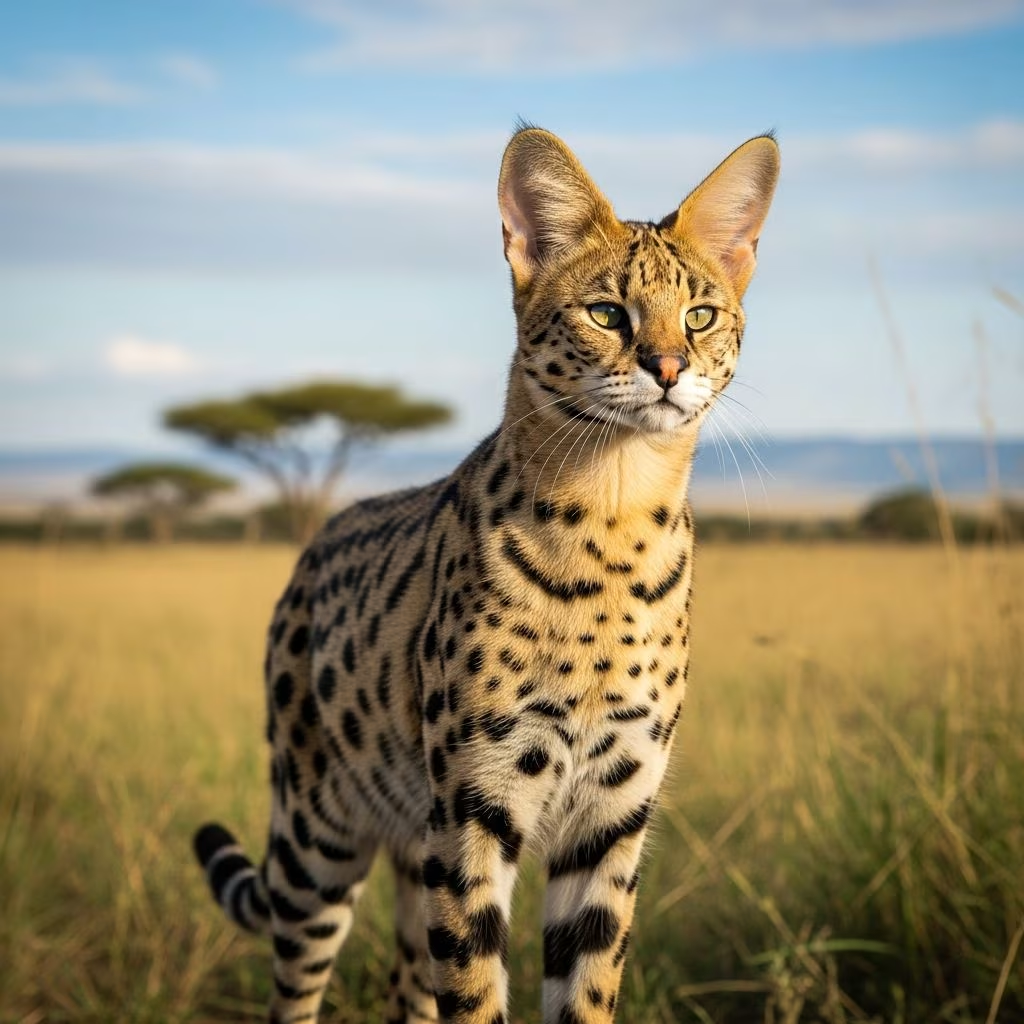
The Savannah cat stands out as one of the most captivating hybrid breeds, merging the elegant wild features of the African serval with the companionship of a domestic feline. Known for their towering stature, dramatic spotted coats, and boundless energy, these cats demand dedicated owners ready to provide ample stimulation and space.
Origins and Development Timeline
The journey of the Savannah cat began in 1986 with an unexpected litter in Pennsylvania. A domestic Siamese cat bred with a male African serval named Ernie produced a single female kitten, later dubbed ‘Miracle’ and then ‘Savannah,’ marking the birth of the breed.
Early efforts faced challenges, including low fertility rates in hybrids and unpredictable temperaments. Breeder Judee Frank initially cared for the pair, while Suzi Wood Mustacio owned the parents. Patrick Kelley acquired an F2 female and pioneered further breedings, producing the first F3 kittens by crossing back to domestic cats.
Joyce Sroufe joined Kelley, leveraging her experience with Bengals and servals to advance the breed. Together, they drafted the initial breed standard presented to The International Cat Association (TICA) in 1996. TICA granted championship status in 2012, solidifying the Savannah’s place among recognized breeds.
- 1986: First F1 kitten ‘Savannah’ born from Siamese and serval.
- 1989: F2 litter produced, with Kelley acquiring key foundation cats.
- 1995-1996: Sroufe’s fertile males and breed standard development.
- 2000s: European pioneers like Margitta Graeves export high-quality lines.
Generations are denoted as F1 (closest to serval, 50% wild blood) through F5 and beyond (more domestic). F1s and F2s retain pronounced wild traits, while later generations offer milder dispositions suitable for homes.
Distinctive Physical Attributes
Savannahs boast a sleek, muscular build with long legs that elevate them to impressive heights, often exceeding 17 inches at the shoulder. Their heads are small and wedge-shaped, topped with oversized, upright ears featuring ocelli—white spots on the backs for a serval-like vigilance.
The coat is short, dense, and plush, displaying bold rosettes or spots in shades of brown, silver, black, or smoke against tawny, ivory, or ruddy backgrounds. Tails are shorter and thicker than typical domestics, adding to their balanced proportions.
| Generation | Size Range | Serval Percentage | Typical Coat Pattern |
|---|---|---|---|
| F1-F2 | 17-24 inches tall, 20-25 lbs | 50-25% | Large, dark rosettes |
| F3-F4 | 14-18 inches tall, 15-20 lbs | 12.5-6.25% | Bold spots |
| F5+ | 12-16 inches tall, 12-18 lbs | <7% | Defined marbling |
Eye colors range from hazel and gold in early generations to vivid green or copper in later ones, enhancing their piercing gaze.
Temperament and Behavioral Traits
These cats embody curiosity and confidence, often likened to dogs in loyalty and trainability. They thrive on interaction, excelling in tricks like fetching, leash walking, and even swimming—rarities among felines.
High energy levels necessitate daily play sessions mimicking hunts, such as puzzle toys or climbing structures. Socialized early, Savannahs bond deeply with families, including children and dogs, but may view small pets as prey due to innate instincts.
Intelligence shines in problem-solving; they may learn to open doors or faucets. Vocalizations include chirps, trills, and purrs, communicating needs assertively.
Essential Care and Lifestyle Needs
Providing for a Savannah requires commitment to their active lifestyle. Ample vertical space—tall cat trees, shelves, and window perches—is crucial for their love of heights.
Diet should mimic a high-protein, low-carb wild diet: quality kibble or raw food with novel proteins like quail or rabbit to prevent allergies. Portion control prevents obesity despite their lean frames; adults need 300-500 calories daily based on activity.
Grooming is minimal: weekly brushing distributes oils and reduces rare shedding. Nail trims biweekly and monthly baths if needed. Dental care via brushing or additives combats common hybrid vulnerabilities.
Health Considerations and Lifespan
Savannahs enjoy a lifespan of 12-20 years, with later generations faring best. Early gens risk hybrid vigor issues like irritability or infertility, but screenings mitigate this.
Common concerns include hypertrophic cardiomyopathy (HCM), monitored via annual echos; digestive sensitivities; and patellar luxation. Reputable breeders provide health guarantees, OFA certifications, and genetic testing.
- Annual vet exams with bloodwork.
- Vaccinations tailored to indoor/outdoor status.
- Parasite preventives year-round.
Training and Enrichment Strategies
Harness training from kittenhood enables safe outdoor adventures. Clicker training reinforces commands, channeling energy productively. Rotate toys to stave off boredom-induced mischief like counter surfing.
Enrichment includes scent games, agility courses, and companionship—solitude leads to destructive behaviors.
Legal Status and Ownership Realities
Bans exist in some U.S. states and countries for F1-F3 due to serval lineage, classifying them as wildlife. Always verify local laws; later generations face fewer restrictions.
Costs range from $1,500 (F5) to $20,000+ (F1), reflecting rarity and vetting. Ethical breeders prioritize temperament over size.
Frequently Asked Questions
Are Savannah cats good for first-time owners?
No, their demands suit experienced guardians prepared for high maintenance.
Can Savannahs live indoors only?
Yes, with sufficient enrichment; secure enclosures allow safe outdoor time.
Do Savannah kittens grow into large adults?
Size varies by generation; F1s reach dog-like proportions.
How do I choose a healthy Savannah breeder?
Seek TICA-registered catteries with health-tested parents and contracts.
Are Savannahs hypoallergenic?
Not fully, but low shedding aids allergy sufferers.
Pros and Cons Overview
| Pros | Cons |
|---|---|
| Stunning appearance | High energy needs |
| Trainable and loyal | Potential legal bans |
| Long lifespan | Expensive acquisition |
| Affectionate with family | Strong prey drive |
References
- Savannah Cat Breed Profile: Traits, History & Care — ErgoPurrch. 2023. https://ergopurrch.com/blogs/cat-breeds/savannah-cat-breed-profile
- A Timeline of the Savannah Cat Breed’s Development from 1986 to Present Day — SavannahGans. 2022-10-15. https://www.savannahgans.com/blog-1/savannahcathistory
- Savannah Cat History — Savannah Cat Association. 2024. https://savannahcatassociation.org/savannah-cat-history/
- Savannah Facts — Wisdom Panel. 2025. https://www.wisdompanel.com/en-us/cat-breeds/savannah
- Savannah Cat History — Savannah Breed Section. 2023. https://savannahbreedsection.com/savannah-cat-history/
- Savannah Cat Breed Overview — PetSafe. 2024-05-20. https://www.petsafe.com/blog/savannah-cat-breed/
- Savannah — The International Cat Association (TICA). 2025-01-10. https://tica.org/breed/savannah/



