

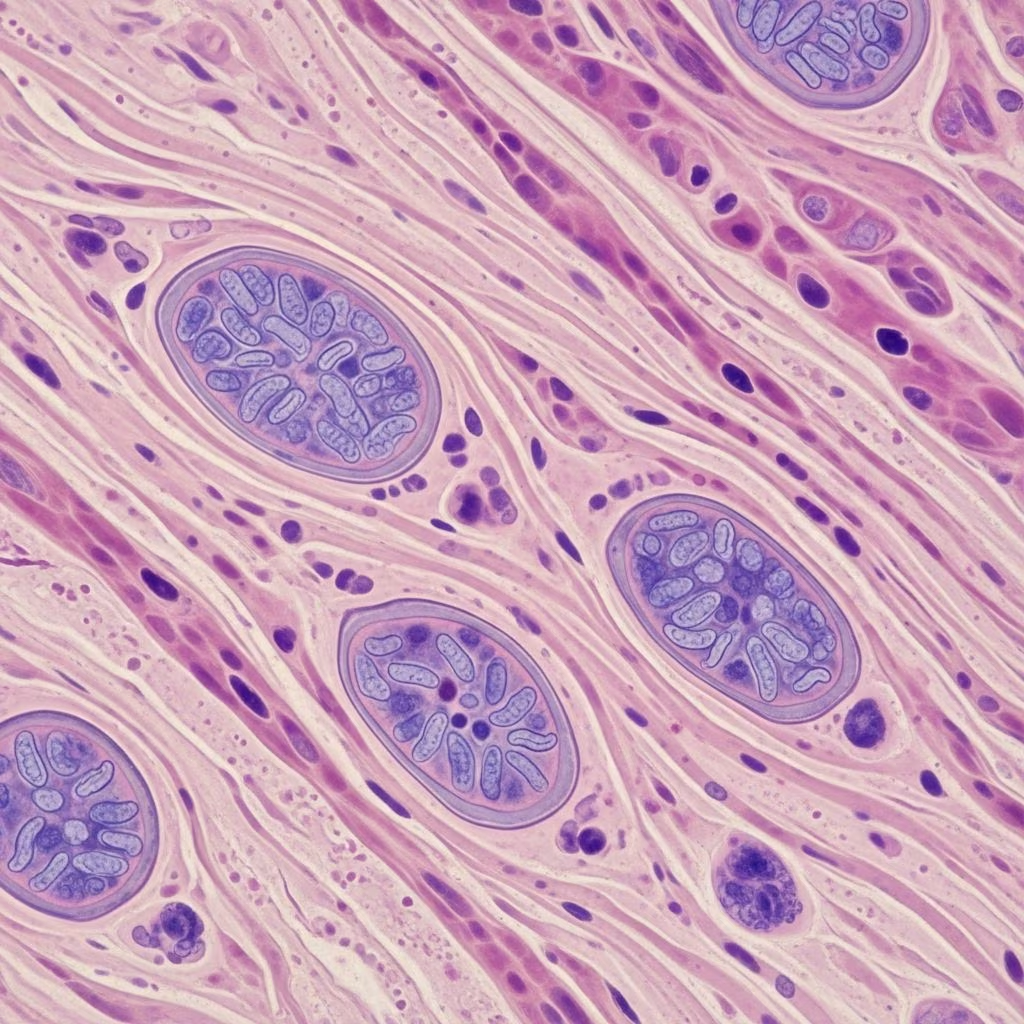
Sarcocystosis represents a significant parasitic concern in veterinary medicine, involving protozoan organisms from the genus Sarcocystis that infect a broad array of animals including mammals, birds, and reptiles. These intracellular parasites follow a two-host lifecycle, with carnivores or omnivores serving as definitive hosts and herbivores or intermediate species harboring the tissue cysts. While many infections remain subclinical, certain strains can trigger severe health issues, economic losses in agriculture, and challenges in wildlife management.
Biological Characteristics of Sarcocystis Parasites
The genus Sarcocystis comprises over 200 species, each typically adapted to specific host combinations. These apicomplexan protozoans form distinctive sarcocysts—elongated, cyst-like structures filled with bradyzoites—within the muscles and occasionally other tissues of intermediate hosts. Sporocysts, the infectious form shed in definitive host feces, measure about 10-15 micrometers and contain banana-shaped sporozoites.
Under a microscope, sarcocysts appear as white or grayish streaks aligned with muscle fibers, ranging from microscopic to several millimeters in length depending on the host and species. Their walls vary in thickness and structure, aiding species identification—a critical step for assessing zoonotic potential and disease severity.
Lifecycle and Transmission Dynamics
The lifecycle hinges on predator-prey relationships. Definitive hosts ingest raw meat harboring sarcocysts, freeing bradyzoites in the intestine to invade enterocytes, multiply, and produce merozoites. These develop into gametocytes, leading to oocyst formation and sporocyst release in feces.
Intermediate hosts acquire infection by ingesting contaminated feed, water, or pasture with sporocysts. Sporozoites released in the gut migrate systemically, forming schizonts in vascular endothelium before encysting in skeletal muscle, heart, or neural tissues. This cycle perpetuates through predation or scavenging, amplified in intensive farming where dogs or cats access livestock offal.
- Key transmission routes: Fecal contamination of feed/water, raw meat feeding to carnivores, wildlife scavenging.
- Environmental persistence: Sporocysts remain viable for months in cool, moist conditions.
- Host range: Includes cattle, sheep, pigs, horses, dogs, poultry, and wildlife like deer and ducks.
Species-Specific Manifestations in Domestic Animals
Cattle: Vascular and Muscular Involvement
In cattle, S. cruzi (syn. S. bovicanis) predominates, targeting vascular endothelium during acute phases. This elicits Dalmeny disease, named after an Ontario outbreak in 1963, characterized by fever, anemia, weight loss, and abortions. High morbidity affects herds, though mortality is variable.
Chronic infections manifest as eosinophilic myositis, with visible sarcocysts in beef at slaughter, leading to carcass condemnation and economic downgrading. Lesions appear as pale streaks in skeletal and cardiac muscle, rarely causing live-animal signs.
Sheep and Goats: Neurological Risks
Sheep face threats from CNS-invading species, resulting in ataxia, paralysis, and tremors due to cysts in brain or spinal cord. Heavy burdens correlate with mortality, particularly in lambs.
Pigs: Liver and Muscle Pathology
Species like S. suicanis, S. porcifelis, and S. suihominis infect pigs. While often asymptomatic, vascular schizogony in livers causes hepatitis, and muscle cysts prompt meat inspection issues. Rare clinical cases include myositis.
Horses: Equine Protozoal Myeloencephalitis
S. neurona stands out in horses, causing EPM—a progressive neuromuscular disorder with ataxia, weakness, and head tilt. Opossums act as definitive hosts, shedding sporocysts that contaminate pasture.
Effects on Companion Animals and Wildlife
Dogs and Cats
Dogs primarily act as definitive hosts for species like S. canis, shedding sporocysts asymptomatically after raw meat consumption. Rarely, as intermediates, they develop encephalitis, hepatitis, or myositis from wild carnivore-sourced strains.
Cats host cycles involving livestock, with similar low pathogenicity unless heavy burdens occur.
Wildlife Implications
Species like mule deer suffer fatal infections experimentally, with fawns showing paralysis. In Michigan, ducks and rabbits harbor visible cysts, rendering meat unfit for consumption or pet feeding. Hunters report lameness in heavily parasitized game.
| Host | Primary Species | Main Signs | Economic/Health Impact |
|---|---|---|---|
| Cattle | S. cruzi | Fever, anemia, myositis | Carcass downgrade, abortions |
| Horses | S. neurona | Ataxia, weakness | EPM treatment costs |
| Pigs | S. suicanis | Hepatitis, muscle cysts | Meat condemnation |
| Sheep | Various | Neurological deficits | Mortality in flocks |
| Wildlife (deer, ducks) | S. hemionilatrantis | Paralysis, death | Hunting losses |
Diagnostic Approaches
Antemortem diagnosis proves challenging due to nonspecific signs. Fecal flotation reveals sporocysts in definitive hosts—small ovoid structures with sporozoites.
For intermediates, serology (complement fixation, ELISA) detects antibodies, while PCR identifies species from tissue. Postmortem, muscle digestion or histology confirms cysts; large ones in sheep or ducks are naked-eye visible.
- Histopathology: Cyst walls with septa distinguish species.
- Imaging: Ultrasound rarely useful; MRI for equine CNS lesions.
- Dermal tests: Hypersensitivity reactions in some cases.
Treatment Options and Protocols
Treatment targets symptomatic cases, as subclinical infections self-limit. For EPM in horses, ponazuril (5 days loading, then 28 days) or diclazuril offers 60-80% improvement; sulfa-pyrimethamine combinations serve as alternatives.
Cattle with Dalmeny disease receive supportive care (fluids, anti-inflammatories); anticoccidials like decoquinate show promise anecdotally. Dogs with hepatitis/myositis respond to decoquinate.
No broad-spectrum cure exists; focus remains supportive to mitigate acute vascular damage.
Prevention and Control Strategies
Breaking the lifecycle demands hygiene and biosecurity. Prevent definitive hosts from accessing raw offal—cook or freeze meat to kill cysts (freezing at -4°C for 3 days suffices).
- Farm practices: Cover feed, rotate pastures, restrict dogs/cats from livestock areas.
- Wildlife management: Avoid feeding raw game to pets; dispose of carcasses properly.
- Slaughter hygiene: Condemn heavily infected meat; educate hunters on risks.
Vaccines are absent; selective breeding for resistance is experimental.
Zoonotic Considerations
Canadian strains lack zoonotic threat, but global travel risks human infection as definitive hosts via undercooked pork/beef (S. suihominis, S. hominis) or intermediates from reptile feces in Asia. Symptoms include myalgia, diarrhea, nausea.
Pet owners should avoid raw diets; cook wildlife meat thoroughly.
FAQs
What animals are most affected by sarcocystosis?
Cattle, horses, sheep, pigs, and wildlife like deer and ducks face the highest risks, with varying severity.
Can sarcocystosis be fatal?
Yes, heavy infections cause death in sheep, young wildlife, and rarely pigs or cattle.
How do you prevent Sarcocystis in livestock?
Implement strict sanitation, ban raw meat feeding to carnivores, and control fecal contamination.
Is treatment always necessary?
No, only for clinical cases like EPM; most resolve without intervention.
Does sarcocystosis affect meat quality?
Yes, cysts lead to trimming or condemnation at inspection.
References
- Sarcocystis species – Learn About Parasites — Western College of Veterinary Medicine, University of Saskatchewan. 2023. https://wcvm.usask.ca/learnaboutparasites/parasites/sarcocystis-species.php
- Sarcocystosis – State of Michigan — Michigan Department of Natural Resources. 2022. https://www.michigan.gov/dnr/managing-resources/wildlife/wildlife-disease/wdm/sarcocystosis
- Sarcocystosis in Dogs – MSD Veterinary Manual — MSD Veterinary Manual. 2024. https://www.msdvetmanual.com/dog-owners/bone-joint-and-muscle-disorders-of-dogs/sarcocystosis-in-dogs
- Sarcocystis species-pigs – Learn About Parasites — Western College of Veterinary Medicine, University of Saskatchewan. 2023. https://wcvm.usask.ca/learnaboutparasites/parasites/sarcocystis-species-pigs.php
- Sarcocystis – StatPearls — NCBI Bookshelf, National Center for Biotechnology Information. 2023-10-01. https://www.ncbi.nlm.nih.gov/books/NBK574577/
- Bovine sarcocystosis: Sarcocystis species — USDA Agricultural Research Service. 2018. https://www.ars.usda.gov/research/publications/publication/?seqNo115=395239



