

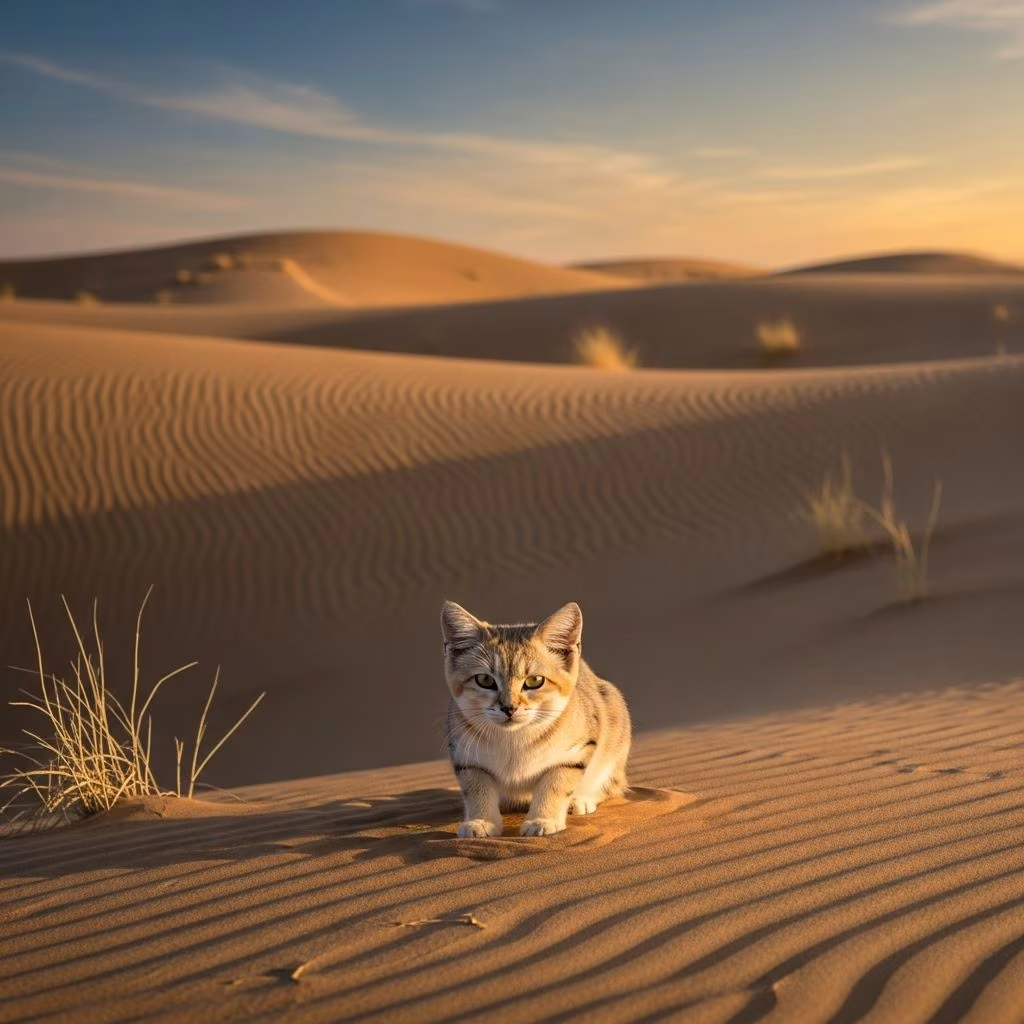
Sand cats, small yet resilient felines, dominate some of the planet’s most unforgiving landscapes through a suite of specialized adaptations. These creatures endure scorching days exceeding 120°F and freezing nights below 30°F without reliable water or abundant prey.
Native Habitats and Range
Sand cats inhabit vast arid zones across North Africa, the Middle East, Central Asia, and parts of the Indian subcontinent. They favor flat sandy plains, rocky valleys, and semi-arid shrublands where vegetation is minimal and soil remains loose enough for digging. Regions like the Sahara Desert and Arabian Peninsula exemplify their preferred terrain, where surface temperatures swing dramatically.
These cats avoid compacted soil areas, as burrowing is essential to their lifestyle. They thrive in environments too extreme for larger predators, giving them a niche advantage. Populations are scattered, with individuals maintaining territories that can span several square miles.
Physical Features for Extreme Climates
The sand cat’s body is a masterpiece of evolutionary engineering. Their dense, pale fur provides crucial insulation against both blistering daytime heat and frigid nights, while blending seamlessly with sandy surroundings for camouflage.
Unique paw pads covered in long, thick hairs protect against scalding sands and enable silent movement across dunes, preventing footprints that could alert predators. Low-set ears, larger than those of similar-sized cats, capture faint high-frequency sounds muffled by dry desert air, aiding nocturnal hunts.
| Feature | Adaptation Benefit | Example Conditions Handled |
|---|---|---|
| Dense fur coat | Insulation from heat/cold | 124°F days to 31°F nights |
| Hairy paw pads | Heat protection, stealth | Hot sands, shifting dunes |
| Large, low-set ears | Sound detection in dry air | Faint prey squeaks |
| Compact body | Energy efficiency, burrowing | Scarce food/water |
Water and Food Efficiency Strategies
Sand cats rarely drink free-standing water, deriving hydration entirely from prey like rodents, birds, reptiles, insects, and even scorpions. Efficient kidneys concentrate urine to minimize loss, allowing survival for weeks or months without external sources.
- Prey moisture sustains them in waterless regions.
- Occasionally raid human camps for milk or water.
- Metabolic water from food oxidation supplements needs.
Hunting occurs nocturnally or at dawn/dusk, when they travel up to 5 miles nightly. They dig out buried prey and cache excess kills in sand for later. Omnivorous tendencies include scavenging and targeting venomous reptiles.
Behavioral Adaptations and Daily Routines
Primarily nocturnal, sand cats rest in burrows during peak heat, emerging to hunt under cooler conditions. They dig extensive burrow networks up to 3-4 feet deep, often renovating abandoned ones or creating multiples within their range.
Solitary by nature, they share burrows sequentially without overlapping occupancy. Low, skulking gaits minimize exposure while stalking. Feces burial masks scents from jackals, owls, and snakes—their main threats.
Reproduction and Family Life
Breeding aligns with prey abundance, often post-rains. Litters of 2-5 kittens are born in burrows after a 59-67 day gestation. Newborns weigh 1.5-3 ounces, eyes opening at 10-14 days, and weaning by 6-7 weeks.
Mothers fiercely protect young, teaching hunting by 3 months. Juveniles reach near-adult size by six months and disperse after a year, as desert life demands rapid independence.
Threats and Conservation Efforts
Classified as Least Concern by IUCN, sand cats face habitat loss from development, trapping for pets, and retaliatory killings by herders mistaking them for livestock threats. Venomous snakes, jackals, and eagles pose natural risks.
Conservation involves protected areas in native ranges and anti-poaching. Captive breeding programs, like at Smithsonian’s National Zoo, aid genetic diversity.
Comparing Sand Cats to Other Desert Mammals
| Species | Water Source | Primary Shelter | Hunting Time |
|---|---|---|---|
| Sand Cat | Prey moisture | Self-dug burrows | Nocturnal/crepuscular |
| Fennec Fox | Prey, occasional water | Burrows | Nocturnal |
| Jerboa | Seeds/insects | Deep burrows | Nocturnal |
| Desert Hare | Plants | Scrapes/burrows | Crepuscular |
FAQs
What do sand cats eat in the desert?
They consume rodents, birds, reptiles, insects, and scorpions, obtaining water from these prey items.
How long can sand cats go without water?
Weeks to months, thanks to prey-derived moisture and efficient kidneys.
Are sand cats endangered?
No, listed as Least Concern, though local threats persist.
Can sand cats survive extreme heat?
Yes, via burrowing, fur insulation, and panting; they avoid midday sun.
Where are sand cats found?
North Africa, Middle East, Central Asia deserts.
Observing Sand Cats in the Wild
Spotting these elusive felines requires patience in remote dunes at night. Camera traps reveal their activities, contributing to research. Their survival exemplifies nature’s ingenuity in arid extremes.
References
- Sand Cat – Smithsonian’s National Zoo and Conservation Biology Institute — Smithsonian. 2023. https://nationalzoo.si.edu/animals/sand-cat
- Sand Cat — Wild Cat Conservation. 2024. https://wildcatconservation.org/wild-cats/africa/sand-cat/
- How Sand Cats Survive in the Harsh Desert Environment — Labroots. 2023-05-15. https://www.labroots.com/trending/plants-and-animals/17395/sand-cats-survive-harsh-desert-environment
- Sand Cat – The Wild Cat That Adapted To The Desert — YouTube (Wild Cats). 2023. https://www.youtube.com/watch?v=kq0sa1u5DXs
- 7 Fascinating Sand Cat Facts – The World’s Most Elusive Feline — The Environmental Blog. 2025-11-07. https://www.theenvironmentalblog.org/2025/11/7-facts-sand-cat-feline/



