

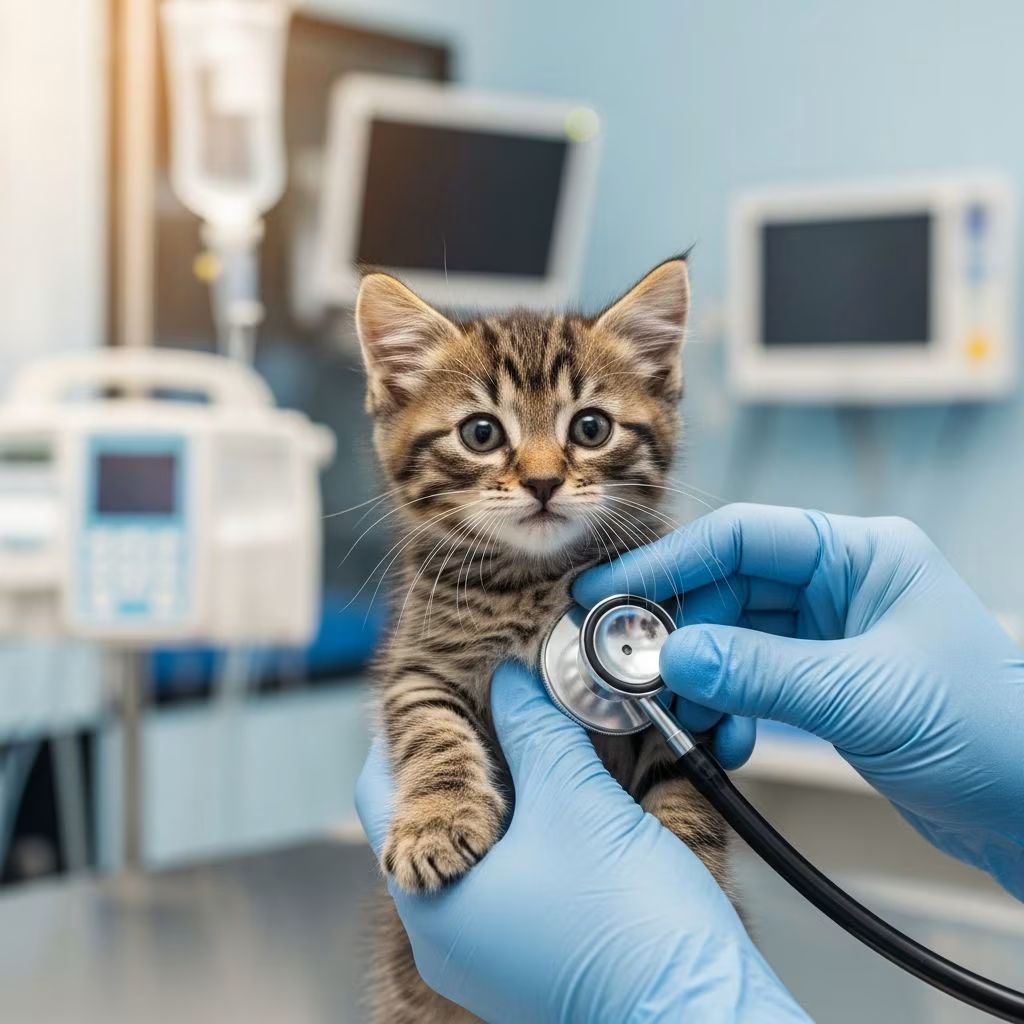
Sample Kitten Protocol: Medical Care Guidelines for Cat World
The Sample Kitten Protocol is a comprehensive medical care guide designed to standardize the treatment and management of kittens under six months of age in foster care and sanctuary settings. This protocol ensures consistency in medical care delivery while protecting the health and welfare of young felines. It serves as a reference document for Cat World staff, foster coordinators, veterinarians, veterinary technicians, and foster parents who are responsible for the care and medical management of kittens in their facility or home.
Overview and Purpose
The primary objective of this protocol is to establish clear, evidence-based guidelines for medical care that protect kitten health while promoting consistent treatment standards across all care settings. The protocol addresses four main areas: vaccination and preventive care, physical examinations, infectious disease management, and treatment of common kitten illnesses. By following these standardized procedures, caregivers can ensure that every kitten receives appropriate medical attention tailored to their age, health status, and housing arrangements.
Vaccination and Preventive Care
FVRCP Vaccination Schedule
The FVRCP vaccine protects kittens against Feline Rhinotracheitis virus, Calicivirus, and Panleukopenia Virus—three serious feline diseases. Modified live FVRCP vaccine is administered in the right forelimb, beginning at four weeks of age with boosters given every two weeks until the kitten exceeds twenty weeks of age. For kittens younger than four weeks at intake, the first vaccination should be scheduled to begin at four weeks of age. This vaccination schedule ensures developing immunity while accounting for maternal antibodies that may interfere with vaccine effectiveness in very young kittens.
Rabies Vaccination Protocol
Rabies vaccination is administered in the right rear limb at twelve weeks of age (three months), with a booster scheduled for one year later. If a kitten is younger than twelve weeks at intake, staff should schedule the first rabies vaccine for the twelve-week mark. This timing ensures compliance with most state and local rabies vaccination requirements while allowing the kitten’s immune system adequate time to develop protective antibodies.
Feline Leukemia Virus (FeLV) Vaccination
FeLV vaccination protocols depend on the kitten’s housing situation. Before moving kittens into group housing, a FeLV/FIV test must be conducted to ensure they are not infected with these retroviruses. For kittens destined for long-term group housing, FeLV vaccination can begin as early as eight weeks of age, based on the vaccine label and when housing status is determined. The vaccination schedule includes a booster three weeks after the initial vaccine, followed by another booster one year later. This tiered approach provides comprehensive protection while minimizing disease transmission in multi-cat environments.
Deworming Protocol
Prophylactic deworming begins at two weeks of age and continues every two weeks until twelve weeks of age. Two medications are used in the deworming protocol: Pyrantel and Ponazuril. The Pyrantel dose is calculated at 0.1 ml per pound of body weight, while Ponazuril is administered at 50 mg/kg once, with dosing dependent on suspension concentration. Staff must verify the concentration of the suspension before administration to ensure accurate dosing. This regular deworming schedule prevents parasitic infections that could compromise the kitten’s growth and development.
Flea Prevention and Control
Flea prevention begins at intake for kittens six weeks of age or older, using Revolution administered by weight. If fleas are present at intake, Revolution can be given extra-label following consultation with a veterinary technician for appropriate dosing adjustments. This prophylactic approach prevents flea infestations that can cause anemia, dermatitis, and tapeworm transmission in young, vulnerable kittens.
Probiotic Supplementation
Kittens that have begun weaning may be started on Fortiflora or ProBi probiotics prophylactically until twelve weeks of age. For Fortiflora, kittens under 1.5 kg receive one-quarter packet twice daily, while kittens over 1.5 kg receive one-half packet twice daily. For Pro-Bi, kittens under 1 kg receive 0.1 ml twice daily, and those over 1 kg receive 0.2 ml twice daily. Probiotic supplementation supports healthy gastrointestinal flora and helps prevent digestive upset during the weaning transition.
Physical Examination Protocols
Intake Examinations
Foster staff or Hope House technicians are responsible for conducting comprehensive intake examinations on all kittens entering the program. These examinations establish a baseline of the kitten’s health status and identify any pre-existing conditions requiring treatment. Intake exams include assessment of body weight and condition (categorized as ideal, thin, or emaciated), evaluation of skin condition and identification of any lesions or external parasites such as fleas or ticks. Technicians also assess for ocular or nasal discharge, evaluate ears, eyes, nose, and mouth for abnormalities, and check gum color. Determining whether teeth are present helps verify the kitten’s age.
Additionally, intake exams evaluate hydration status, assess for any breathing abnormalities including rapid breathing, severe congestion, or cough, and examine the abdomen for distention or other abnormalities. Staff observe the kitten’s ability to urinate and defecate and document the appearance of urine and stool, noting any abnormalities. Finally, examiners assess mobility by observing the kitten’s ability to move, crawl, and walk, noting any orthopedic or musculoskeletal issues such as limping or swollen legs.
Physical Examination Components
A complete physical examination includes vital sign assessment including temperature, pulse, and respiration rate, as well as evaluation of mucous membrane color and capillary refill time (CRT). These vital signs provide important information about cardiovascular and respiratory function. Oral examinations check for ulcers, which may indicate viral infections or nutritional deficiencies. Body condition assessment determines whether the kitten is appropriately nourished, and appetite history evaluation helps identify feeding or digestive issues.
Management of Common Kitten Illnesses
Constipation Management
Constipation in kittens requires careful attention, particularly in orphaned kittens who may not receive adequate stimulation. For kittens experiencing greater than twenty-four hours without defecation, subcutaneous fluids (SCF) should be administered at a dose of 20 ml/kg. For kittens experiencing greater than forty-eight hours without defecation, trained staff may administer a warm water enema. For kittens weighing less than 300 grams, enemas use 0.5 ml of fluid, while kittens weighing over 300 grams receive 1 ml. Adequate environmental stimulation, particularly for orphaned kittens, helps prevent constipation from developing.
Subcutaneous Fluid Administration
Subcutaneous fluid therapy provides hydration support for dehydrated kittens. Fluids should be warmed prior to administration. Lactated Ringer’s solution (LRS) is administered at a dose of 10 ml per pound of body weight subcutaneously. Once punctured, fluid bags should be dated and discarded if partially used and over two weeks old to prevent bacterial contamination and ensure sterility.
Feline Upper Respiratory Infection (URI) Management
Feline upper respiratory infections are common in shelter and foster settings due to the contagious nature of the causative organisms. Approved staff perform examinations on any kitten showing URI signs, with findings documented in the medical record as a tech exam. Clinical signs and examination findings guide initial treatment decisions for uncomplicated cases in otherwise healthy kittens.
URI examinations include assessment of hydration status, measurement of temperature, pulse, and respiration, evaluation of mucous membrane color and capillary refill time, oral examination for ulcers, body condition assessment, and appetite history evaluation. Staff document the kitten’s weight and any additional findings. Approved staff and trained veterinary technicians may start treatments for uncomplicated URI cases based on their assessment and these established protocols.
For kittens with negative FeLV/FIV test results, isolation protocols depend on the level of concern for false negative testing, and daily retesting may be considered. More complex cases or kittens requiring intensive care should be discussed with the veterinary technician or veterinarian.
Weight Loss Management
Weight loss immediately following transition to foster care is common due to increased activity and environmental adjustment. If no other clinical signs are present and the kitten is extremely bright, alert, and responsive (BAR), feeding should be increased by twenty-five percent with monitoring only. However, if vomiting, diarrhea, lethargy, dehydration, or fever are present, additional testing and treatment based on these signs should be pursued as outlined in the protocol.
Vaccination and Preventive Schedule Summary
| Vaccine/Preventive | Age to Start | Schedule | Route/Location |
|---|---|---|---|
| FVRCP | 4 weeks | Every 2 weeks until 20 weeks | Right forelimb |
| Rabies | 12 weeks | Initial, booster at 1 year | Right rear limb |
| FeLV (group housing) | 8 weeks | Initial, booster in 3 weeks, then 1 year | Standard IM/SC route |
| Deworming (Pyrantel) | 2 weeks | Every 2 weeks until 12 weeks | Oral |
| Flea Prevention | 6 weeks | At intake and as needed | Topical |
Staff Authorization and Training
Hope House technicians and clinic technicians are authorized to start treatments based on their assessment and adherence to these protocols. With additional training, the foster coordinator and foster staff may also initiate treatments for uncomplicated cases. This delegation of responsibility ensures that medical care can be provided promptly while maintaining quality standards through ongoing training and competency evaluation.
Frequently Asked Questions
Q: At what age should kittens begin receiving vaccinations?
A: Kittens begin receiving FVRCP vaccinations at four weeks of age with boosters every two weeks until they exceed twenty weeks of age. Rabies vaccination occurs at twelve weeks of age, and FeLV vaccination begins at eight weeks for kittens entering group housing.
Q: How often should kittens be dewormed?
A: Prophylactic deworming should begin at two weeks of age and continue every two weeks until twelve weeks of age using a combination of Pyrantel and Ponazuril based on the kitten’s weight and suspension concentration.
Q: What should I do if a kitten has not defecated for more than twenty-four hours?
A: For constipation lasting more than twenty-four hours without defecation, subcutaneous fluids (20 ml/kg) should be administered. For constipation exceeding forty-eight hours, trained staff may administer a warm water enema at 0.5-1 ml depending on body weight, while ensuring adequate stimulation for orphaned kittens.
Q: How are upper respiratory infections managed in foster kittens?
A: Approved staff perform comprehensive exams documenting hydration, vital signs, mucous membrane color, and oral ulcers. For uncomplicated cases with negative FeLV/FIV tests, treatment may be initiated based on clinical findings. More complex cases require veterinary consultation.
Q: Is weight loss after transition to foster care normal?
A: Yes, weight loss immediately after transition to foster care is common due to increased activity. If no other clinical signs are present and the kitten appears bright, alert, and responsive, increase feeding by twenty-five percent and monitor closely.
Q: What testing is required before kittens enter group housing?
A: Before moving kittens into group housing, a FeLV/FIV test must be conducted to ensure they are not infected with these retroviruses. This protects the health of the established cat population in group housing settings.
References
- Sample Kitten Protocol – Cat World — Best Friends Animal Society. 2021. https://bestfriends.org/network/resources-tools/sample-kitten-protocol-cat-world
- KAN-101.03-SOP Procedure, Medical Protocols, Kittens — Best Friends Animal Society. 2021. https://bestfriends.org/sites/default/files/inline-files/Kanab%20Kitten%20Medical%20Protocols.pdf



