

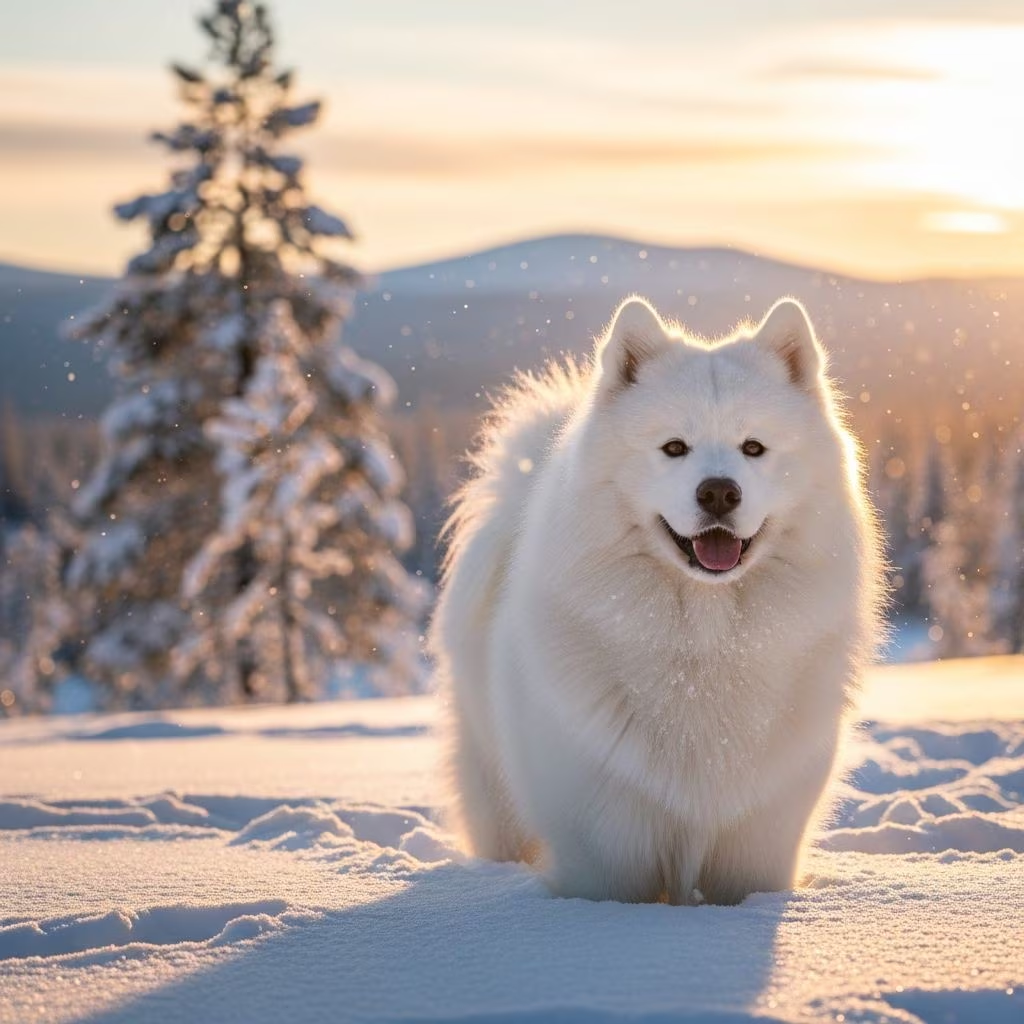
Origins in the Arctic Wilderness
The Samoyed breed emerged from one of Earth’s most inhospitable environments—the frozen expanse of northwestern Siberia, north of the Arctic Circle. These remarkable dogs trace their ancestry to the Nenets Herding Laika, a reindeer-herding spitz utilized extensively throughout northern Siberia by indigenous peoples. The Samoyedic peoples, semi-nomadic tribes of Asian descent, developed an extraordinary bond with these dogs over centuries, incorporating them into every aspect of daily survival.
Archaeological and genetic evidence suggests that Samoyeds have maintained breed integrity for approximately one thousand years, with minimal interference from modern breeding practices. DNA analysis confirms that Samoyeds represent a basal breed predating the emergence of contemporary dog breeds established in the nineteenth century. This ancient lineage speaks to the breed’s exceptional adaptation to extreme environmental conditions and the careful stewardship of generations of Siberian caretakers.
Roles in Samoyedic Culture
The Samoyedic peoples called their dogs “Bjelkier,” a term translating to “white [dog] that breeds white,” reflecting both their coloration and selective breeding practices. These dogs served multifaceted functions essential to tribal survival in the Arctic:
- Reindeer hunting and herding, particularly after the Samoyedic transition from hunting to pastoralism
- Sledge hauling across frozen terrain during long-distance journeys
- Protection against predators, including wolves and bears
- Guarding family possessions and children during daytime hunting expeditions
- Providing warmth during frigid Arctic nights through close sleeping proximity
According to historical records, the Samoyedic peoples demonstrated such profound trust in their dogs that parents would leave a single dog to guard their children and property while hunting. This extraordinary confidence reflects the deep interspecies relationship forged through generations of interdependence. Dogs were not mere working animals but cherished family members, sleeping within the choom (domed tent) and sharing meals with their human families.
European Discovery and Breed Standardization
European polar explorers encountered Samoyeds during mid-nineteenth-century Arctic expeditions, recognizing their exceptional capability for sledge work and survival in extreme conditions. Explorers incorporated these dogs into expedition parties bound for the Arctic and Antarctic regions, subsequently transporting them to Europe, particularly England.
The formal establishment of the Samoyed breed in Western culture is attributed to British zoologist Ernest Kilburn-Scott. In 1889, Kilburn-Scott spent considerable time living among the Samoyedic people near Arkhangelsk, returning to England with a male puppy and subsequently importing additional dogs. Kilburn-Scott is credited with naming the breed and championing its characteristics among European dog enthusiasts.
Early imported Samoyeds exhibited varied coloration, but Kilburn-Scott and other breed fanciers believed that authentic Siberian Samoyeds were predominantly white. This preference influenced selective breeding practices that established white as the standard coloration. Kilburn-Scott and fellow enthusiast Jackson collaborated to develop the first official breed standard in 1909, subsequently founding The Samoyede Club (later shortened to Samoyed Club) in the same year. By 1912, the breed achieved Kennel Club recognition in England.
Arctic Expeditions and Legendary Sled Dogs
During the Fram expedition to the North Pole (1893–1896), Norwegian explorer Fridtjof Nansen’s team purchased 33 dogs from the Nenets people. Although 28 dogs accompanied the expedition northward, none survived the rigorous journey. However, remaining dogs left aboard the ship, including puppies born during the voyage, proved instrumental in establishing the breed in European kennels. Nansen’s documented observations noted that “all the dogs were strong, tough and excellent at pulling sleds; they worked very well in hunting Polar bears.”
One of the most celebrated Samoyeds in breed history was Rex of White Way, owned by California breeder Agnes Mason. During the 1920s, when the Southern Pacific railroad faced a critical emergency with dwindling fuel and supplies aboard a stranded passenger train, the railroad enlisted renowned dogsled driver Lloyd Van Sickle. Van Sickle requisitioned Rex as the lead dog for the desperate 64-mile mercy mission over a 7,200-foot mountain pass. Rex’s legendary performance during this rescue established him as a breed exemplar. Samoyed historian Jim Cheskawich notes that Rex “demonstrated how a well-trained and willing Samoyed could perform in many venues,” participating in over 30 rescue operations and dominating Samoyed sled races.
Physical Characteristics and Distinctive Features
Samoyeds present a striking appearance characterized by their thick, white double-layered coat and distinctive physical proportions. These spitz-type dogs exhibit several defining features:
| Physical Characteristic | Description |
|---|---|
| Coat | Thick double layer, predominantly white, providing insulation against extreme cold |
| Tail | Plumed tail curled over the back, often draped to one side |
| Ears | Prick (erect) ears positioned on a broad head |
| Build | Squarely built, sturdy frame designed for sledge hauling |
| Expression | Characteristic “Sammy smile” created by upturned corners of mouth |
The breed’s curled tail, common among spitz-type and Arctic breeds, serves both functional and communicative purposes. This distinctive tail configuration reflects their evolutionary adaptation to Arctic conditions. The white double coat provides exceptional insulation, enabling Samoyeds to withstand extreme cold without additional protective clothing. During a recent Arctic expedition, Samoyeds demonstrated their cold-weather resilience by functioning effectively at minus-50 degrees Fahrenheit without requiring protective coats, despite observers’ initial preparations for such provision.
Temperament and Personality Traits
Contemporary Samoyeds retain the fundamental character traits developed through centuries of close human association. The breed demonstrates exceptional friendliness, easygoing disposition, and pronounced affection toward human companions. These dogs exhibit an innate understanding of and trust toward humanity, reflecting their ancestors’ deep integration into Samoyedic family life.
Each Samoyed possesses distinct individual personality variations, even within the same litter. Some dogs demonstrate exceptional attentiveness and obedience, while others display more independent temperament while maintaining loyalty to their household. Despite individual differences, the breed consistently exhibits strong herding instincts and responds enthusiastically to engagement and attention.
By nature, Samoyeds are not quarrelsome dogs, though they will defend what they perceive as their rights. Having evolved as all-purpose working dogs, they adapt readily to varying circumstances and environments. When raised with children, Samoyeds typically develop pronounced affinity for young family members, excelling as both playmates and protective guardians who demonstrate unwavering dedication during situations involving potential danger.
Working Capabilities and Modern Activities
The breeding of Samoyeds for Arctic work created dogs with exceptional capability for sustained physical activity and problem-solving. Modern breed clubs recognize the importance of channeling these inherent working drives through structured activities:
- Sled and cart racing competitions
- Excursion sledding or carting expeditions
- Weight pull competitions demonstrating pulling capacity
- Backpacking and hiking ventures
- Skijoring (skiing while attached to a dog)
- Therapy work in medical and care facilities
- Herding activities with sheep and ducks
Breed clubs actively encourage owners to engage their Samoyeds in diverse pursuits, recognizing that busy, mentally-stimulated dogs make superior companions. The herding instinct remains deeply ingrained in the breed psyche, with modern Samoyeds demonstrating strong prey drive and tendency to pursue small animals despite owner commands. This characteristic necessitates secure, fenced environments to prevent escape.
Behavioral Challenges and Management Considerations
Like all dog breeds, Samoyeds exhibit behavioral tendencies that require understanding and management. As working dogs demanding action and mental stimulation, Samoyeds easily become bored when lacking engaging activities or environmental enrichment. Boredom-related behaviors include excessive digging, which represents a natural behavior from their Siberian heritage when dogs excavated deep into snow for cold-weather protection.
Addressing destructive digging requires catching the behavior in progress and redirecting the dog while expressing disapproval through tone and brief confinement to sleeping quarters. The strong herding instinct means that Samoyeds will readily chase rabbits, cats, and other small animals despite owner commands to remain stationary, making secure fencing essential for safe dog ownership.
Owners should recognize that Samoyeds are not suited for those expecting a sedentary, confined dog. The breed requires dedicated time, regular activity engagement, and acceptance of the dog’s independent spirit. Those providing appropriate exercise, mental stimulation, and affectionate engagement receive what breed enthusiasts describe as “the greatest treasure a dog lover could own, being owned by a Sammy.”
Global Expansion and Breed Development
Following the establishment of breed standards in England during 1909, Samoyeds gradually gained popularity across Western Europe and North America. By 1920, approximately 40 Samoyeds had been registered with the American Kennel Club, indicating early acceptance of the breed among American dog enthusiasts.
A second generation of American Samoyed breeders expanded the breed’s popularity during the 1930s. Notable American kennels included Helen Harris’s Snowland operation in Pennsylvania and Agnes Mason’s White Way kennels in California, which produced significant dogs like Rex of White Way that contributed substantially to breed development and public recognition.
Today, Samoyeds maintain their status as both working dogs and beloved family companions worldwide. The breed club continues emphasizing the importance of maintaining working dog capabilities while recognizing the breed’s exceptional suitability as companion animals for families capable of meeting their substantial exercise and engagement requirements.
Health Resilience and Cold-Weather Adaptation
The Samoyed’s evolutionary development in extreme Arctic conditions created remarkable physiological adaptations to cold exposure. Their double coat provides exceptional insulation, with the undercoat creating an air-trapping barrier beneath the outer guard hairs. This sophisticated thermal system enables Samoyeds to maintain body temperature in conditions that would rapidly incapacitate other dog breeds.
Contemporary Samoyeds demonstrate this ancestral cold-weather resilience. During recent polar expeditions, Samoyeds performed exceptionally under extreme conditions including minus-50 degree temperatures, glare, ice, wind, and water overflow. Expedition observers noted with surprise that despite frigid conditions, the dogs “seemed to get stronger every day” and “were the only team that didn’t need coats.”
Frequently Asked Questions
What size are adult Samoyeds?
Samoyeds are medium-to-large dogs with squarely built, sturdy frames. Specific size measurements vary by breed standard, but they are substantial enough to perform sledge-hauling work while remaining agile for herding tasks.
Do Samoyeds require specialized grooming?
Yes, the thick double coat requires regular grooming to maintain health and appearance. The breed sheds seasonally and benefits from consistent brushing to prevent matting and manage loose hair.
Are Samoyeds suitable for families with children?
Samoyeds typically develop strong affinity for children and excel as family guardians and playmates. However, their size and energy require supervision with young children and adequate space for exercise.
How much exercise do Samoyeds need?
As working dogs, Samoyeds require substantial daily exercise and mental stimulation. Without adequate activity engagement, they may develop boredom-related behavioral problems.
Can Samoyeds live in warm climates?
While Samoyeds are adapted to cold environments, they can adjust to warmer climates with appropriate care including access to shade, fresh water, and protection from excessive heat exposure.
References
- The Samoyed Down Through History — Minute Man Samoyed Club. Accessed January 2026. https://minutemansamoyedclub.com/the-samoyed-down-through-history-2/
- Samoyed History: Where the Breed Originated — American Kennel Club. Accessed January 2026. https://www.akc.org/expert-advice/dog-breeds/samoyed-history/
- Samoyed dog — Wikipedia. Accessed January 2026. https://en.wikipedia.org/wiki/Samoyed_dog
- Samoyed Dog Breed: Origin, History, Personality & Care — Nylabone. Accessed January 2026. https://www.nylabone.com/dog101/samoyed
- Samoyed Dog Breed – Temperament, Personality, Characteristics — Hill’s Pet. Accessed January 2026. https://www.hillspet.com/dog-care/dog-breeds/samoyed



