

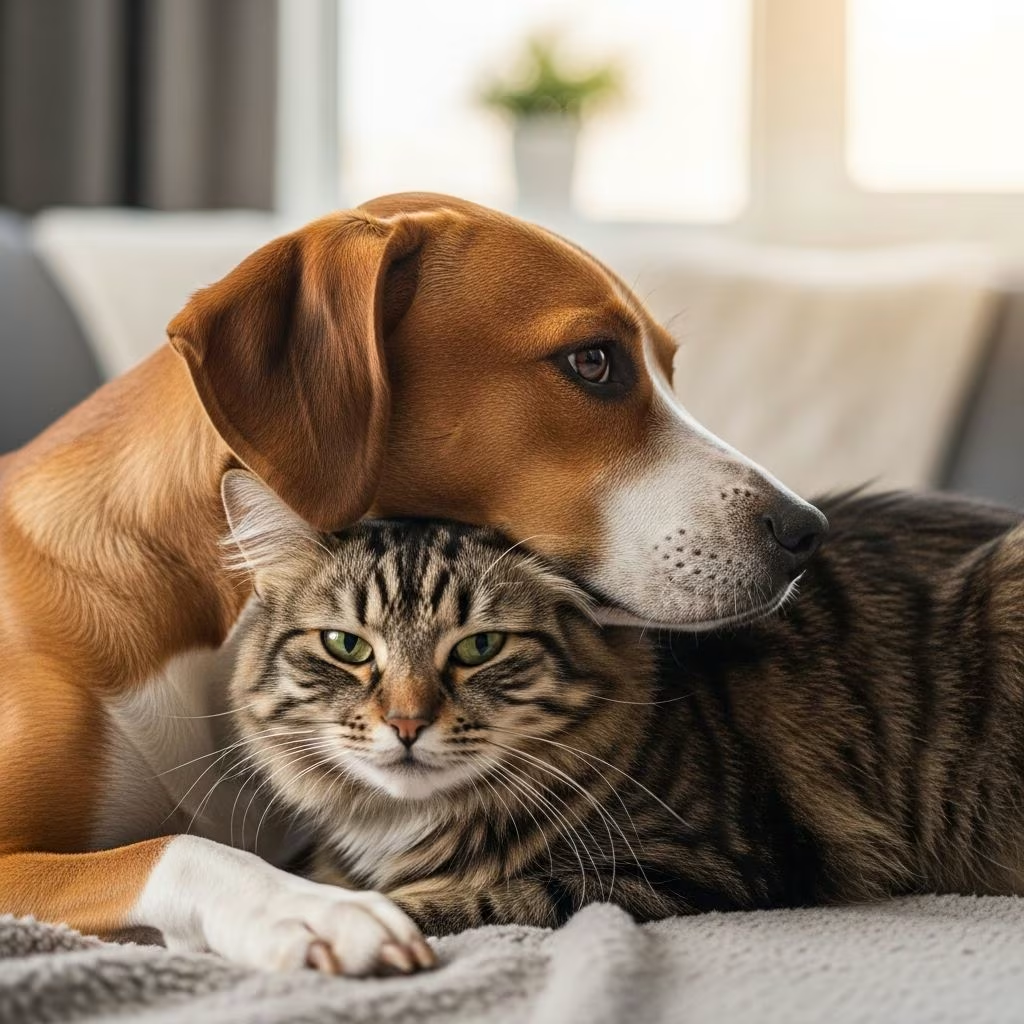
Same-sex behaviors occur in dogs and cats, mirroring patterns seen in over 1,500 mammal species where such interactions strengthen social ties and may aid survival. These actions, from mounting to grooming partnerships, reflect natural diversity rather than human-like orientation labels.
Understanding Animal Sexuality Beyond Labels
Sexuality in animals exists on a spectrum, not confined to binary categories. Researchers observe same-sex sexual behavior (SSSB) across mammals, birds, and more, challenging the ‘Darwinian paradox’—the idea that non-reproductive acts contradict evolution. In pets like dogs and cats, behaviors such as mounting or close affiliations serve social functions, not necessarily sexual identity.
Studies from Imperial College London highlight SSSB in over 1,000 species, including co-parenting and sexual acts, suggesting evolutionary benefits like the ‘bisexual advantage’ where flexible mating boosts reproduction. For domestic animals, this fluidity appears in play, dominance displays, and bonding.
Observed Behaviors in Canines and Felines
Dogs frequently display mounting between same-sex individuals, often unrelated to reproduction. This can signal dominance, play, or affiliation, common in social packs. Female dogs may mount males or other females during excitement or stress relief.
- Male dogs mounting males: Establishes hierarchy or practices mating skills in competitive groups.
- Female-female mounting: Builds alliances, seen in multi-dog households.
- Grooming and snuggling: Forms pair bonds, akin to bonobos or dolphins.
Cats show subtler signs. Same-sex cats, especially females, form lifelong companionships involving mutual grooming, sleeping entwined, and vocalizing. Mounting occurs less overtly but appears in ‘consortships’ similar to Japanese macaques. Unneutered males may engage in genital contact during rough play.
| Behavior | Dogs | Cats | Possible Function |
|---|---|---|---|
| Mounting | Common in both sexes | Occasional, playful | Dominance, practice |
| Grooming Pairs | Frequent in packs | Mutual in litters | Social bonding |
| Co-Habitation | Long-term allies | Entwined resting | Group cohesion |
Evolutionary Explanations for Pet Behaviors
Why do pets exhibit these traits? Hypotheses from recent research provide clarity. Social bonding tops the list: SSSB reduces conflict and enhances cooperation, vital for pack animals like dogs descended from wolves. In cats, solitary hunters turned social domestics, it fosters household harmony.
Hormonal drivers play a role. Fluctuations in testosterone and estrogen correlate with increased SSSB in rams and macaques, likely influencing dogs and cats. Genetic factors suggest an adaptive by-product: Genes promoting general mating success spill over to same-sex acts.
The ‘practice’ theory posits SSSB hones skills for heterosexual mating, prevalent in male-competitive species. Bisexuality as an evolutionary optimum allows more reproductive opportunities. A Yale study proposes indiscriminate ancestral sexuality narrowed later by sexual dimorphism.
Scientific Evidence from Mammal Studies
A University of Granada study across 1,500 mammals found SSSB strengthens bonds in primates like bonobos, paralleling dog packs. Imperial’s work on primates and bats tests models via genomics, showing no paradox—SSSB aids evolution.
National Wildlife Federation notes observations in chimps, finches, and albatrosses, with LGBTQ+ researchers boosting documentation. A PMC review confirms SSSB in most clades, concentrated in primates but widespread. These inform pet interpretations: Behaviors are normative, not aberrant.
Domestic Influences on Pet Sexuality
Spaying/neutering alters intensity but not occurrence. Intact pets show more mounting, yet fixed ones persist for social reasons. Environment matters: Multi-pet homes amplify bonding; isolation reduces it.
Breed differences emerge. Herding dogs like Border Collies form intense same-sex pairs for work synergy. Siamese cats bond tightly regardless of sex. Human intervention—selective breeding—may amplify social traits without targeting sexuality.
Debunking Myths About Pet Orientation
Labeling pets ‘gay’ anthropomorphizes. Animals lack cultural concepts of orientation; behaviors are contextual. Mounting isn’t always sexual—it’s multifunctional. No evidence pets form exclusive lifelong same-sex romantic bonds like some penguins, but alliances endure.
Health concerns? Excessive mounting signals stress or medical issues; consult vets. Otherwise, it’s healthy expression. Owners embracing diversity note happier, less aggressive pets.
Implications for Pet Owners
Recognize SSSB as normal to avoid punishment, which stresses animals. Facilitate bonds: Provide space for play, monitor hierarchies. Same-sex pairs thrive in adoptions, mirroring wild benefits.
Ethical breeding considers social needs. Shelters pair compatible same-sex pets successfully. Understanding reduces stigma, promoting welfare.
FAQs on Same-Sex Behaviors in Pets
Is mounting always sexual in dogs?
No, it often denotes dominance, excitement, or play, per mammal studies.
Do spayed cats still show these behaviors?
Yes, for social bonding, though less frequently.
Can same-sex pets raise litters together?
They co-parent effectively, like albatrosses, aiding survival.
Does this mean my pet is homosexual?
Animals operate on behavioral spectrums, not fixed identities.
Should I separate same-sex mounting pets?
Only if aggressive; otherwise, it’s natural socialization.
Broader Lessons from Nature
Pet behaviors echo the animal kingdom’s diversity, urging nuanced views. From dolphins’ alliances to primate consortships, SSSB enriches ecology. For owners, it fosters empathy, enhancing human-animal bonds.
References
- Beyond the heteronormativity: The spectrum of animal sexuality — The Varsity. 2024-09-29. https://thevarsity.ca/2024/09/29/beyond-the-heteronormativity-the-spectrum-of-animal-sexuality/
- Scientists explore the evolution of animal homosexuality — Imperial College London. 2019-11-05. https://www.imperial.ac.uk/news/190987/scientists-explore-evolution-animal-homosexuality/
- Same-Sex Behavior Among Animals Isn’t New. Science Is Finally … — National Wildlife Federation. 2023. https://www.nwf.org/Magazines/National-Wildlife/2023/Summer/Conservation/Same-Sex-Behavior-Animals-Science
- Same-sex sexual behaviour among mammals is widely observed … — PMC (NCBI). 2024. https://pmc.ncbi.nlm.nih.gov/articles/PMC11189198/
- Should Scientists Change How They View (and Study) Same Sex … — Yale Environment. Undated. https://environment.yale.edu/news/article/yale-paper-challenges-how-scientists-study-same-sex-behavior-in-animals



