

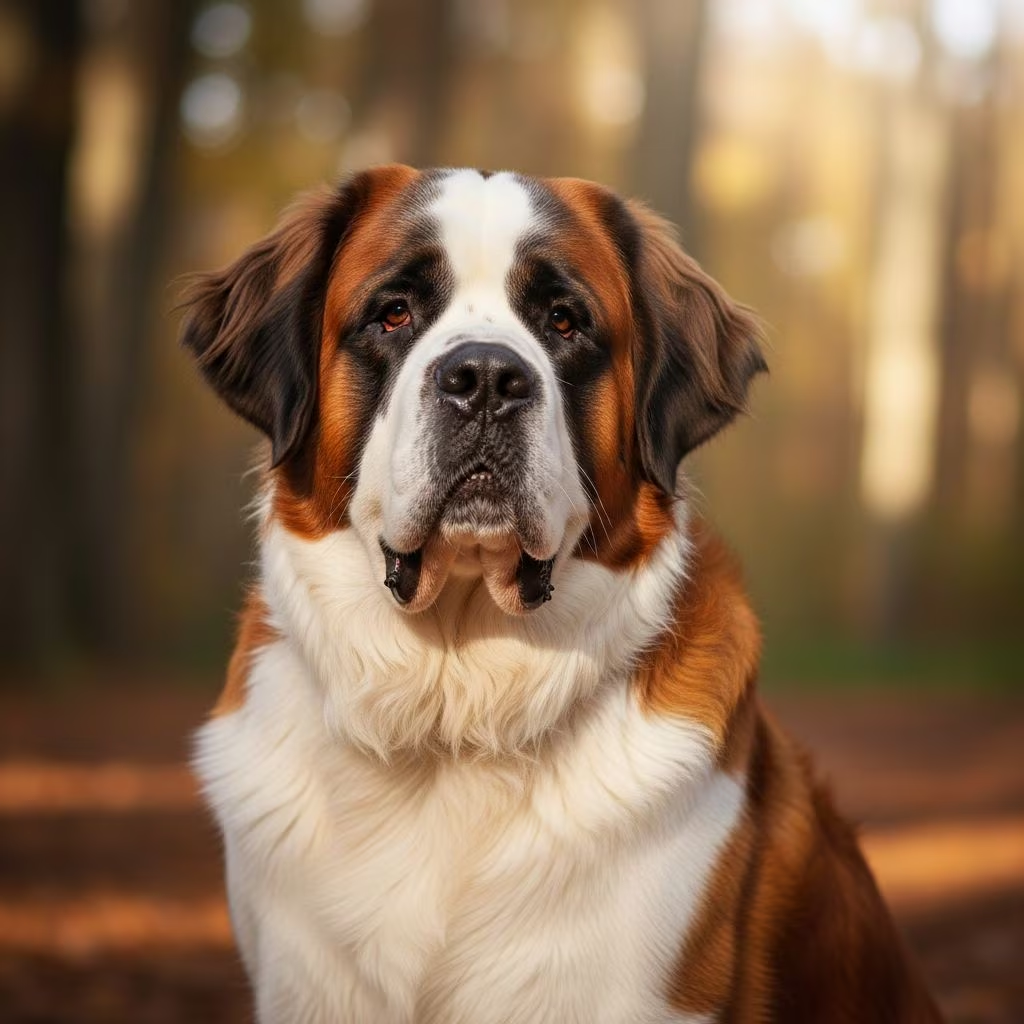
The Saint Bernard stands as one of the most recognizable dog breeds worldwide, celebrated for its enormous size, kind-hearted nature, and legendary role in Alpine mountain rescues. Originating from the rugged Swiss Alps, these dogs have evolved from lifesaving heroes to beloved family pets, blending strength with gentleness in a package that captivates dog lovers everywhere.
Origins in the Swiss Alps
The story of the Saint Bernard begins in the remote Great St. Bernard Pass, a treacherous route through the Swiss Alps where travelers faced deadly blizzards and avalanches. In the 11th century, monk Bernard of Menthon established a hospice there to shelter pilgrims, laying the foundation for the breed’s development. By the late 17th century, between 1660 and 1670, the monks at the hospice began breeding large, robust dogs from local Swiss valley stock, likely descendants of ancient mastiff-type dogs brought by Roman legions.
These early dogs served multiple purposes: guarding the hospice, pulling carts, and warming beds during harsh winters. Their true fame emerged in rescue operations, where they used their keen sense of smell to locate buried travelers, dig them out, and even carry small casks of brandy—though this is more myth than fact. Paintings from 1690 by Salvator Rosa depict similar dogs, and records from 1707 confirm their presence at the monastery. The monks selectively bred for traits like endurance, strength, and a calm demeanor, ensuring the dogs worked harmoniously in teams without aggression.
Challenges arose in the early 19th century, particularly during severe winters in 1816-1818, when many dogs perished, nearly wiping out the hospice strain. The monks replenished the line with valley dogs and later introduced Newfoundland blood in the 1850s to bolster numbers, inadvertently creating the longhaired variety. However, the longer coat proved problematic, as ice buildup hindered mobility in deep snow. By 1884, the Swiss Kennel Club formalized the breed standard, establishing the Saint Bernard as Switzerland’s national dog and preserving its original type against less disciplined breeding elsewhere, such as in England where Mastiff crosses altered the look.
Physical Characteristics and Build
Saint Bernards are the epitome of a **gentle giant**, boasting a massive, athletic frame that conveys power without clumsiness. Males typically stand 27-30 inches at the shoulder and weigh 140-180 pounds, while females are slightly smaller at 25-28 inches and 120-150 pounds. Their body is nearly square-proportioned, with a broad, powerful head featuring a gently arched skull, prominent zygomatic arches, and expressive wrinkles above the eyes that form when alert.
The breed appears in two varieties: shorthaired (smooth, dense coat) and longhaired (medium-length outer coat with feathering). Both shed heavily, especially seasonally, and their coat is rugged enough for cold weather but requires regular maintenance. The tail is thick and carried level or slightly curved, and drop ears frame the face without flopping excessively. Key to their Alpine heritage, the chest is deep and wide—at least as broad as a man’s fist—with well-sprung ribs that support lung capacity for high-altitude work.
| Trait | Male | Female |
|---|---|---|
| Height | 27-30 inches | 25-28 inches |
| Weight | 140-180 lbs | 120-150 lbs |
| Coat Types | Short or Long | Short or Long |
| Life Expectancy | 8-10 years | 8-10 years |
This table summarizes core size metrics, highlighting why space and strength considerations are vital for owners.
Temperament and Personality Traits
Renowned as patient ‘nanny dogs,’ Saint Bernards exhibit a calm, affectionate demeanor that belies their imposing stature. They are friendly with strangers, loyal to family, and remarkably tolerant of children, often displaying protective instincts without aggression. Their eager-to-please nature stems from centuries of monastic breeding, where docility was essential for team rescues.
These dogs thrive on human companionship, showing intelligence and a watchful eye, though they can be stubborn if not trained early. Generally non-aggressive toward other dogs, they may bark at intruders, serving as natural deterrents due to size alone. A bite force of around 500 PSI underscores their power, yet it’s rarely unleashed thanks to their placid temperament. Socialization from puppyhood ensures they remain sociable giants.
- Placid and easy-going: Prefers lounging over high energy.
- Devoted family member: Bonds deeply, watchful over kids.
- Intelligent yet stubborn: Responds to firm, positive training.
- Sociable: Gets along with strangers and pets if socialized.
- Low exercise needs: Short walks suffice, but needs space.
Care and Lifestyle Needs
Owning a Saint Bernard demands commitment to their substantial needs. They adapt well to cooler climates but overheat easily in warmth due to their thick build—air-conditioned spaces are ideal in summer. Daily exercise involves moderate walks (30-60 minutes) to prevent obesity, as their caloric intake must match low activity levels.
Grooming is a weekly ritual: brush shorthaired coats 2-3 times weekly, longhaired daily during sheds. Their signature drool requires towels at the ready, and nails need trimming monthly. Provide a spacious yard or home, as they dislike confinement. Nutrition focuses on large-breed puppy formulas transitioning to adult kibble rich in glucosamine for joints.
Health Considerations and Wellness
With a lifespan of 8-10 years, Saint Bernards are prone to breed-specific issues like hip and elbow dysplasia, common in giants due to rapid growth. Heart conditions such as dilated cardiomyopathy, bloat (gastric torsion), and osteosarcoma also affect them. Regular vet check-ups, weight management, and joint supplements mitigate risks.
Puppy owners should choose reputable breeders screening for genetic issues via OFA certifications. Spaying/neutering, flea prevention, and vaccinations form the wellness baseline. Early detection through annual exams extends quality life.
Training Essentials for Success
Saint Bernards respond best to positive reinforcement, leveraging their intelligence without harsh corrections that could foster stubbornness. Begin obedience basics—sit, stay, come—from 8 weeks, using treats and praise. Their size necessitates leash training to prevent pulling, and crate training aids housebreaking, which takes 4-6 months.
Socialization classes expose them to stimuli, curbing caution around new faces. Advanced tricks suit their smarts, but keep sessions short (10-15 minutes) to match attention spans. Consistency from all family members ensures a well-mannered companion.
Saint Bernard in Modern Life
Today, Saint Bernards excel as therapy dogs, family guardians, and show champions, their rescue legacy enduring in search-and-rescue roles. Famous examples include Beethoven from films, embodying their lovable chaos. They suit active families with space, offering unwavering loyalty in return for care.
Adoption from rescues prioritizes mixed breeds, but purebreds from ethical kennels preserve traits. Costs range $1,200-$2,500 for puppies, plus lifelong expenses for food and health.
Frequently Asked Questions (FAQs)
Are Saint Bernards good with kids?
Yes, their patient, gentle nature makes them excellent with children, often called ‘nanny dogs.’ Supervise interactions due to size.
How much do Saint Bernards drool?
Profusely, especially after drinking or eating. Keep towels handy.
Do they need a lot of exercise?
No, moderate daily walks prevent boredom and obesity; they prefer relaxed lifestyles.
What’s the best coat type for beginners?
Shorthaired is easier to groom than longhaired.
Can they live in hot climates?
Avoid prolonged heat; they fare best in cooler areas.
This guide equips prospective owners with knowledge to thrive with a Saint Bernard, honoring their heroic past while embracing their role as devoted pets.
References
- Breed Standards: Saint Bernard | United Kennel Club (UKC) — United Kennel Club. Accessed 2026. https://www.ukcdogs.com/saint-bernard/
- Breed History – Saint Bernard Club of America — Saint Bernard Club of America. Accessed 2026. https://saintbernardclubofamerica.club/breed-history/
- St. Bernard (dog breed) – Wikipedia — Wikipedia. Accessed 2026. https://en.wikipedia.org/wiki/St._Bernard_(dog_breed)
- St Bernard Dogs History Behind a Name — St. Bernard Whiskey. Accessed 2026. https://www.stbernardwhiskey.com/blog/st-bernard-dogs-history-behind-the-name
- St Bernard | Temperament, Lifespan & History – Pooch and Mutt — Pooch and Mutt. Accessed 2026. https://www.poochandmutt.co.uk/blogs/by-breed/st-bernard
- The St Bernard: the making of an Alpine legend — About Switzerland (Swiss Federal Department of Foreign Affairs). Accessed 2026. https://www.aboutswitzerland.eda.admin.ch/en/the-st-bernard-the-making-of-an-alpine-legend



