

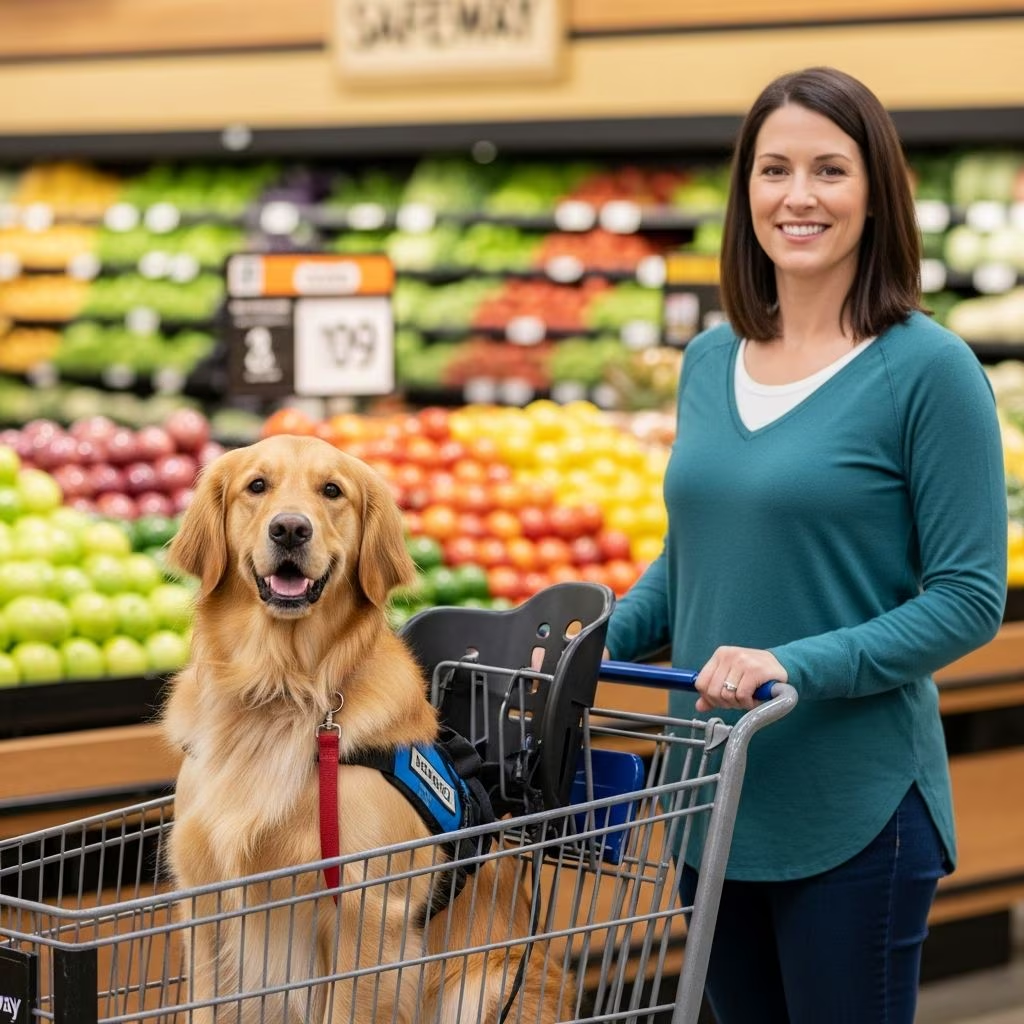
For many pet owners, running errands at the grocery store presents a dilemma: should you leave your beloved dog at home or attempt to bring them along? If Safeway is your primary shopping destination, understanding their stance on canine companions is essential before you arrive at your local store with your four-legged friend in tow. The answer isn’t always straightforward, as official policies intersect with practical realities and local regulations in ways that can confuse shoppers.
Understanding Safeway’s Stance on Canine Companions
Safeway’s official corporate policy prohibits most dogs from entering their stores, with a critical exception for service animals. This blanket restriction applies across the chain’s numerous locations, though enforcement and adherence to this policy can vary significantly depending on which store you visit. The company operates with a clear intent: to maintain health and safety standards that protect both customers and products, particularly given that Safeway stores sell consumable items meant for human consumption.
The distinction between what the corporate headquarters mandates and what actually happens at individual store locations is important. While Safeway headquarters establishes the no-pets policy across its 1,300+ locations spanning 35 states and the District of Columbia, some neighborhood stores may adopt a more lenient approach based on their specific circumstances and customer demographics.
The Critical Exception: Service Animals Under the Americans with Disabilities Act
Service dogs occupy a special legal category that transcends standard pet restrictions. Safeway must permit legitimate service animals to accompany their handlers throughout the store, regardless of the general no-pet policy. This requirement stems from the Americans with Disabilities Act (ADA), federal legislation designed to ensure equal access for individuals with disabilities.
It’s crucial to understand what qualifies as a service animal in this context. These are dogs that have undergone extensive individual training to perform specific work or execute particular tasks directly connected to a handler’s disability. A service dog trained to alert someone with diabetes to dangerous blood sugar levels, guide a visually impaired person through crowded spaces, or retrieve items for someone with mobility limitations all meet this definition.
The distinction between service dogs and emotional support animals represents a significant legal divide. Unlike service animals, emotional support dogs provide comfort through their presence alone, without performing trained tasks. The ADA does not recognize emotional support animals as having the same access rights as service dogs, meaning Safeway can legally exclude them under their standard pet policy.
Why Safeway Maintains Strict Pet Restrictions
The reasoning behind Safeway’s no-pet policy is rooted in public health regulation and food safety standards. The FDA Food Service Code explicitly prohibits live animals from businesses that serve or sell food, citing potential contamination and safety risks. This regulation exists because animals, regardless of how well-behaved or clean, present inherent food safety concerns that regulatory agencies take seriously.
Beyond regulatory compliance, practical concerns drive this policy:
- Bacterial and parasitic transmission risks from animal contact with food and surfaces
- Potential allergic reactions among customers, particularly children vulnerable to severe responses
- Property damage from anxiety-related accidents or destructive behavior
- Sanitation concerns related to shedding and potential bathroom accidents
- Customer experience disruption from unpredictable animal behavior or barking
These factors combine to create a compelling business and health case for maintaining the restriction. Most grocery chains across North America apply similar policies for identical reasons.
The Reality on the Ground: Policy Versus Practice
Here’s where the situation becomes nuanced. While Safeway maintains an official corporate policy against pets, enforcement varies dramatically by location and circumstance. In some neighborhoods, particularly those near beaches or other pet-centric communities, individual Safeway stores may quietly tolerate dogs despite the official policy. Some store employees and managers may choose not to confront customers bringing dogs inside, either due to conflict avoidance or personal pet-friendly philosophies.
This enforcement gap creates confusion for customers. California’s retail food code, like codes in many other states, explicitly prohibits animals in grocery stores with only narrow exceptions for service animals. Yet individual store employees face constraints on how they can verify whether a dog qualifies as a service animal, since federal law prohibits them from demanding documentation or requiring animals to wear identifying vests.
The practical result is a murky middle ground. A Safeway customer might bring a dog into the store and encounter no resistance, while another customer attempting the same thing at a different location faces immediate intervention. This inconsistency frustrates both customers who want clear rules and employees tasked with enforcement.
What Store Employees Can and Cannot Do
Understanding the legal boundaries that constrain Safeway staff provides insight into why policies often remain unenforced. Federal disability rights law severely limits what store employees can ask or require of someone with a dog. If a dog’s service animal status isn’t immediately obvious, staff members can pose only two questions: whether the animal is required because of a disability and what specific work or task the dog performs.
What employees absolutely cannot do includes:
- Demand papers, certificates, or official documentation of any kind
- Ask customers to name or describe their disability
- Require the dog to wear a vest, badge, or identification marking
- Request specific training records or organization affiliations
This legal framework, while protecting individuals with disabilities, simultaneously hamstrings store management trying to enforce pet restrictions. An employee cannot reliably distinguish between a trained service dog and a pet dog unless the distinction is apparent through the dog’s behavior or the handler’s voluntary disclosure.
How to Navigate Safeway Shopping With Your Dog
If you’re a dog owner who shops at Safeway, several strategies can help you navigate this situation responsibly:
Call Ahead and Ask Your Local Store
Before arriving with your dog, contact your specific Safeway location and speak with a manager. While the corporate policy is clear, local managers may provide information about how strictly their particular store enforces the restriction. This conversation can save you from an awkward scene at the entrance and helps store staff prepare for your visit.
Leave Your Pet at Home When Possible
The safest and most considerate approach remains leaving your dog at home during shopping trips. This prevents potential conflicts with other customers, reduces stress on your pet, and ensures compliance with health codes that exist for good reasons.
If Your Dog Is a Legitimate Service Animal
Service dog handlers should feel confident about their legal right to access Safeway with their working animals. If challenged by staff, calmly explain that your dog is a service animal trained to perform specific tasks. You have no obligation to provide documentation.
Keep Dogs Under Complete Control
Should your local Safeway permit dogs or should you visit with a service animal, maintaining absolute control is non-negotiable. Keep your dog leashed, respond immediately to any misbehavior, and promptly address any accidents or messes. Your responsibility extends to ensuring other customers and employees have a safe, hygienic shopping experience.
Identifying Pet-Friendly Shopping Alternatives
If Safeway’s pet restriction proves problematic, numerous retailers throughout North America have adopted more accommodating policies. Home Depot, Lowe’s, Pet-specific retailers like Petco, Tractor Supply Company, Bass Pro Shops, and several clothing retailers including Nordstrom, Macy’s, and TJ Maxx generally allow well-behaved dogs in-store. Specialty retailers like Barnes & Noble and LUSH cosmetics also tend toward pet-friendly environments.
However, store policies shift over time and can vary by location. When visiting any retailer you haven’t shopped with your dog previously, call ahead to confirm their current pet policy before making the trip.
The Broader Context: Food Safety and Public Health
Understanding Safeway’s pet policy requires appreciating the legitimate public health concerns driving it. Food safety regulations exist because contamination incidents can have serious health consequences for vulnerable populations. Infants, elderly individuals, and people with compromised immune systems face particular risks from foodborne pathogens that can originate from animal contact.
The regulatory framework—encompassing FDA food service codes, state retail food codes like California’s, and local health department rules—reflects decades of epidemiological research and foodborne illness investigations. While many pet owners reasonably believe their individual dogs present minimal risk, enforcement at scale requires categorical rules rather than case-by-case exceptions.
Frequently Asked Questions
Can I bring my emotional support dog into Safeway?
No. Emotional support animals are not recognized as service animals under the ADA and receive no legal protection for store access. Safeway’s policy explicitly excludes them.
What should I do if I see a non-service dog in Safeway?
While it may violate policy or local law, confronting the customer is best left to store management. You can report concerns to Safeway management if you believe health codes are being violated.
Are all Safeway locations bound by the same pet policy?
While Safeway’s corporate policy applies across all locations, local enforcement varies. Some stores may be more permissive than others based on their customer base and management discretion.
Can Safeway staff ask for service dog documentation?
No. Federal law prohibits retailers from requesting documentation, identification, or specific information about disabilities related to service animals.
What if my service dog is misbehaving in the store?
A truly working service dog should demonstrate appropriate behavior in public settings. That said, if your service dog is out of control or not housetrained, Safeway staff can legally request that you remove the animal.
References
- Are Dogs Allowed in Safeway? 2026 In-Store Pet Policy — Dogster. 2026. https://www.dogster.com/lifestyle/are-dogs-allowed-in-safeway
- Does Safeway Allow Dogs? 2026 Pet Policy & Shopping Tips — Hepper. 2026. https://articles.hepper.com/does-safeway-allow-dogs/
- Locals Say Supermarkets Are Allowing Pets Inside, and It’s Stirring Up Quite the Debate — Bay Area Telegraph. 2025-10-09. https://bayareatelegraph.com/2025/10/09/locals-say-supermarkets-are-allowing-pets-inside-and-its-stirring-up-quite-the-debate/
- About Us — Safeway. https://www.safeway.com/about-us.html



