Safety Tips for Taking Your Rabbit Outside
Essential safety guidelines for enjoying outdoor time with your pet rabbit.
Rabbits are naturally curious creatures that can benefit greatly from outdoor exploration and fresh air exposure. However, taking your rabbit outside requires careful planning and consideration to ensure their safety and well-being. Whether you’re allowing supervised outdoor time in a secured area or setting up a permanent outdoor habitat, understanding the potential hazards and how to mitigate them is essential for responsible rabbit ownership.
Understanding the Importance of Outdoor Safety
While outdoor time can provide mental stimulation, exercise, and natural grazing opportunities for your rabbit, the outdoor environment presents numerous challenges that don’t exist indoors. From predators to extreme weather conditions, rabbits are vulnerable to many threats when outside. Proper preparation and supervision can significantly reduce these risks and allow your rabbit to safely enjoy the benefits of outdoor exploration.
Protection from Predators
The most significant threat to outdoor rabbits is predation. Multiple animal species view rabbits as prey, making predator protection the top priority when allowing your rabbit outdoor access. Understanding which predators are active in your area is the first step in creating an effective defense strategy.
Common Predators to Watch For
Several predators pose threats to rabbits in outdoor settings. Ground-based predators include raccoons, weasels, coyotes, and foxes, which are particularly active during dawn and dusk hours. Additionally, neighborhood dogs—both your own and those of neighbors—can pose serious dangers to your rabbit, even during playtime. Aerial predators such as hawks, eagles, and owls can swoop down and capture rabbits, particularly during daylight hours.
Less commonly considered predators include snakes, rats, feral cats, and opossums. Determining which predators are present in your specific area will help you tailor your safety measures appropriately.
Creating Secure Housing
The foundation of outdoor rabbit safety is a sturdy, predator-resistant enclosure. Wire cages commonly used for indoor rabbits are insufficient for outdoor protection, as determined predators can bend, break, or chew through wire barriers. Instead, sturdy wooden hutches with reinforced wire mesh provide superior protection against predator attacks.
When constructing or selecting an outdoor hutch, ensure it meets these specifications:
- Utilize 1/2-inch by 1-inch welded wire mesh for the floor and sides
- Reinforce the structure with solid wood framing
- Install secure locks and bolts on all openings to prevent both predator entry and accidental escape
- Ensure the hutch is at least 4 feet tall and 6 feet long for adequate space
- Eliminate all sharp edges and potential injury hazards
- Raise the hutch 2 to 3 feet off the ground to prevent ground-based predators from accessing the floor
- Securely attach the hutch to a stable structure like your house or barn to prevent tipping
A raised, securely fastened hutch makes it significantly more difficult for predators to attack or knock over your rabbit’s housing.
Timing and Supervision
Most predators are most active during nighttime hours, making nighttime the highest-risk period for outdoor rabbits. Experts recommend bringing outdoor rabbits indoors each evening to minimize predation risk. During the day, when you can provide direct supervision, a sturdy covered pen within your yard can offer adequate protection, especially when humans are nearby.
Never leave your rabbit unattended outdoors, regardless of the time of day. Constant vigilance allows you to respond quickly to potential threats and monitor your rabbit’s behavior and comfort level.
Weather Considerations
Weather represents a significant environmental challenge for rabbits, who are sensitive to temperature extremes and weather conditions. Understanding how to protect your rabbit from various weather scenarios is crucial for their health and safety.
Protection from Heat and Sun
Rabbits are particularly susceptible to heat stress and sunburn. Direct sunlight exposure can be potentially hazardous to your rabbit’s health, making shade essential for outdoor rabbits. Position your rabbit’s hutch or outdoor enclosure in a shaded area that receives consistent shade throughout the day. Natural shade from trees, or artificial shade structures, provides necessary protection from the sun’s intense rays.
Ensure your rabbit always has access to cool water and shaded rest areas during outdoor time. Monitor your rabbit for signs of heat stress, including excessive panting, lethargy, or stretched-out posture. In extreme heat, limit outdoor time to cooler morning and evening hours.
Cold Weather Protection
While cold weather is less immediately dangerous for rabbits than heat, protecting your rabbit from harsh winter conditions is still important. Position your rabbit’s hutch in a protected area sheltered from wind. If your hutch has wire sides, consider attaching removable heavy material or plastic curtains around the exterior during inclement weather to block wind and precipitation.
Maintain proper ventilation by keeping at least one side of the hutch uncovered, as fresh air is essential for your rabbit’s health. During winter, provide extra hay bedding for insulation and warmth.
Extreme Weather Response
During severe weather events, including thunderstorms, high winds, or temperature extremes, bring your rabbit indoors or move them to a protected shelter. Sudden weather changes can stress rabbits and compromise their safety.
Providing Environmental Enrichment
Outdoor time should offer more than just safety—it should provide mental and physical stimulation for your rabbit. A well-designed outdoor space includes various enrichment opportunities that keep your rabbit engaged and active.
Enrichment Activities and Toys
Provide tunnels, chew toys, and foraging opportunities within your secured outdoor space. Tunnels encourage natural burrowing instincts while safely containing your rabbit within the designated area. Chew toys satisfy your rabbit’s natural chewing needs with safe, destructible materials.
Safe Grazing and Plant Selection
If your outdoor space includes planted areas, ensure only rabbit-safe plants are accessible. Many common garden plants are toxic to rabbits. Safe options include dandelion greens, clover, and various herbs. Avoid plants like azaleas, foxglove, and lily of the valley, which are toxic to rabbits.
Alternatively, use a portable playpen or rabbit-safe fencing to create a designated grazing area that prevents your rabbit from accessing potentially harmful plants while still allowing natural foraging behavior.
Burrowing Considerations
Rabbits have a natural instinct to dig burrows. While satisfying this instinct is beneficial, allowing your rabbit to burrow directly into ground soil presents risks from harmful bacteria and the possibility of elaborate burrow systems that prevent capture in case of emergency. Instead, provide a pen or box filled with clean, replaceable straw where your rabbit can safely burrow. Alternatively, add a wire bottom to outdoor pens to discourage digging while maintaining the ability to retrieve your rabbit if needed.
Hazard Prevention and Safety Measures
Beyond predators and weather, numerous other hazards require attention when taking your rabbit outside.
Electrical Safety
If your rabbit will be in areas with electrical cords or outlets, ensure all cords are encased in heavy-duty plastic or blocked with furniture to prevent access. Rabbits have an instinct to chew cords, and electrocution poses a serious, often fatal risk.
Escape Prevention
Rabbits are curious and can easily escape from inadequately secured enclosures. Use proper fencing with secure fastenings. Ensure any outdoor pen has a solid floor or wire mesh bottom to prevent digging escapes. Regularly inspect enclosures for gaps, weak spots, or deterioration.
Disease and Parasitic Protection
Outdoor exposure increases your rabbit’s risk of parasitic infestations and disease. Fleas, if present in your yard, can cause flea anemia in rabbits. Some areas have myxomatosis, a deadly virus transmitted by biting insects to domestic rabbits. Consult your veterinarian about appropriate preventative measures for your region.
Additionally, outdoor dirt may contain harmful bacteria. Regular health checks and maintaining proper hygiene help detect and prevent disease. Rabbits unable to fully clean their own fur are vulnerable to fly strike, a life-threatening condition, making regular health monitoring essential.
Handling and Interaction Safety
If you have other pets, exercise caution when introducing them to your rabbit. Dogs should be properly trained and supervised before interaction with rabbits. Cats’ claws should be trimmed to reduce injury risk. Strange rabbits must be introduced slowly and carefully to avoid fighting.
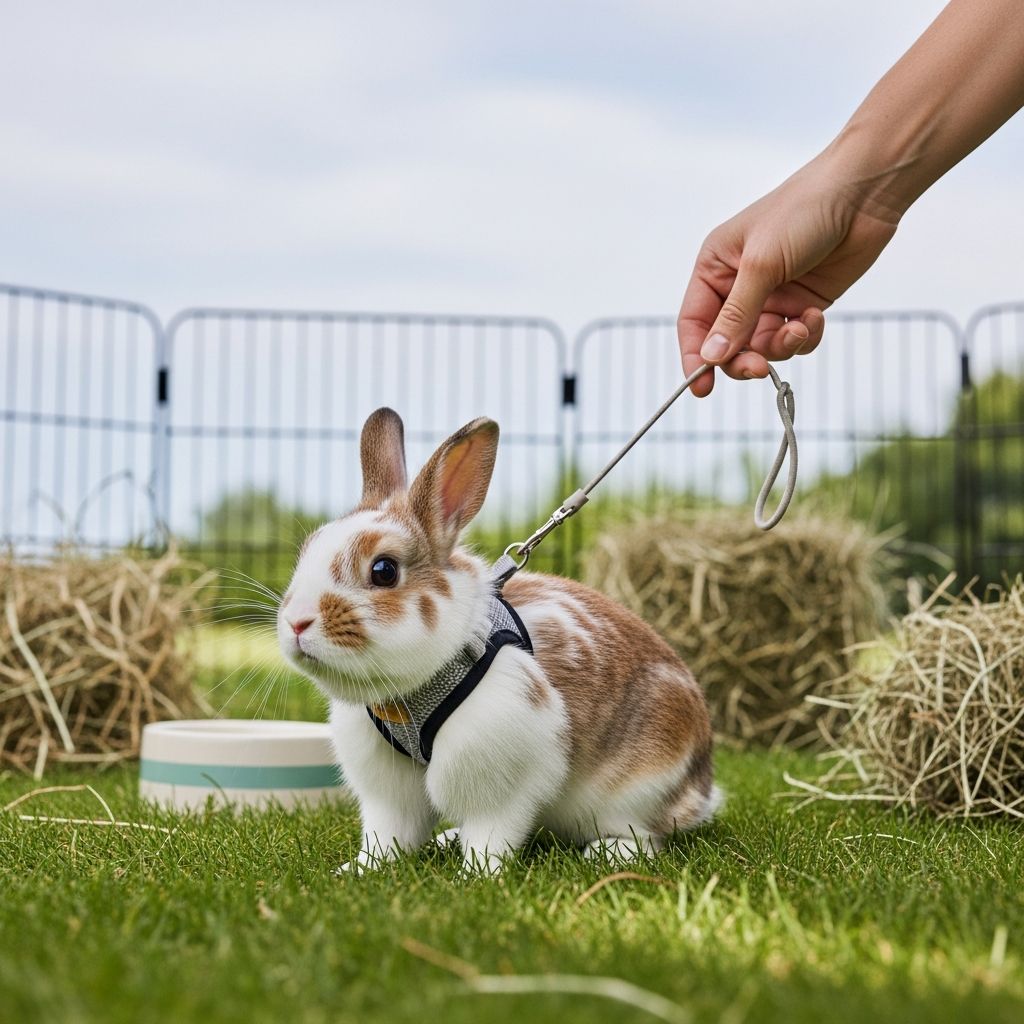
If your rabbit wears a harness and leash for outdoor walks, stay within familiar areas. Even confident rabbits may panic when confronted with open space, harness constraint, and unfamiliar animals.
Designing an Outdoor Space
Creating a safe and engaging outdoor space requires thoughtful design and planning.
Location Selection
Choose a location that is secure and away from known predator activity. Consider your local climate and seasonal weather patterns. Select an area with natural or easily created shade. Proximity to your home is beneficial for supervision and quick access during emergencies.
Space Requirements
Outdoor enclosures should provide ample space for exercise. A minimum of 4 feet tall and 6 feet long allows adequate movement, though larger spaces are preferable.
Shelter and Rest Areas
Provide sheltered areas where your rabbit can rest and hide from elements. These refuges give rabbits a sense of security and protection from both weather and perceived threats.
Health Monitoring and Care
Regular observation of your outdoor rabbit is essential for early detection of health problems. Outdoor-only rabbits can experience neglect-related health issues due to infrequent handling and observation. Even if fed and watered properly, health problems may go unnoticed until too late.
Establish a routine for daily health checks, including examining your rabbit’s fur and skin condition, checking for injuries, and observing behavior and appetite. Any signs of illness, injury, or behavioral changes warrant immediate veterinary attention.
Frequently Asked Questions
Q: Can I leave my rabbit outside unsupervised?
A: No, rabbits should never be left unattended outdoors. Constant supervision allows you to monitor for predators, weather changes, and health issues. Outdoor rabbits should be brought indoors each evening when predator activity is highest.
Q: What is the best outdoor housing for rabbits?
A: Sturdy wooden hutches with reinforced wire mesh offer superior predator protection compared to wire cages. The hutch should be raised 2-3 feet off the ground and securely attached to a stable structure.
Q: How can I protect my rabbit from heat stress?
A: Position your rabbit’s hutch in a shaded area, provide access to cool water, and limit outdoor time during the hottest parts of the day. Monitor your rabbit for signs of heat stress like excessive panting or lethargy.
Q: Which plants are safe for rabbits to eat outdoors?
A: Safe plants include dandelion greens, clover, and various herbs. Avoid toxic plants like azaleas, foxglove, and lilies. Use designated grazing areas or portable pens to control plant access.
Q: How often should I check my outdoor rabbit’s health?
A: Conduct daily health checks, including examining fur and skin, checking for injuries, and observing behavior and appetite. More frequent checks are recommended for rabbits at higher risk for conditions like fly strike.
Q: What predators pose the biggest threat to outdoor rabbits?
A: Primary predators include raccoons, weasels, coyotes, foxes, and dogs. Aerial predators like hawks and owls also present risks. Most predators are most active during dawn, dusk, and nighttime hours.
References
- How to Create a Safe and Fun Outdoor Space for Your Rabbit — Smart Scoops. Accessed November 28, 2025. https://smartscoops.com/how-to-create-a-safe-and-fun-outdoor-space-for-your-rabbit/
- Protecting Pet Rabbits — Hobby Farms. Accessed November 28, 2025. https://www.hobbyfarms.com/protecting-pet-rabbits/
- Outdoor and Indoor Hazards — House Rabbit Society (Rabbit.org). Accessed November 28, 2025. https://rabbit.org/care/habitat/outdoor-and-indoor-hazards/
- Spring Grazing: Safe Outdoor Time for Rabbits in Blooming Weather — New Age Pet. Accessed November 28, 2025. https://newagepet.com/blogs/learning-center/safe-outdoor-time-for-rabbit-in-spring
Similar Articles








Read full bio of medha deb