

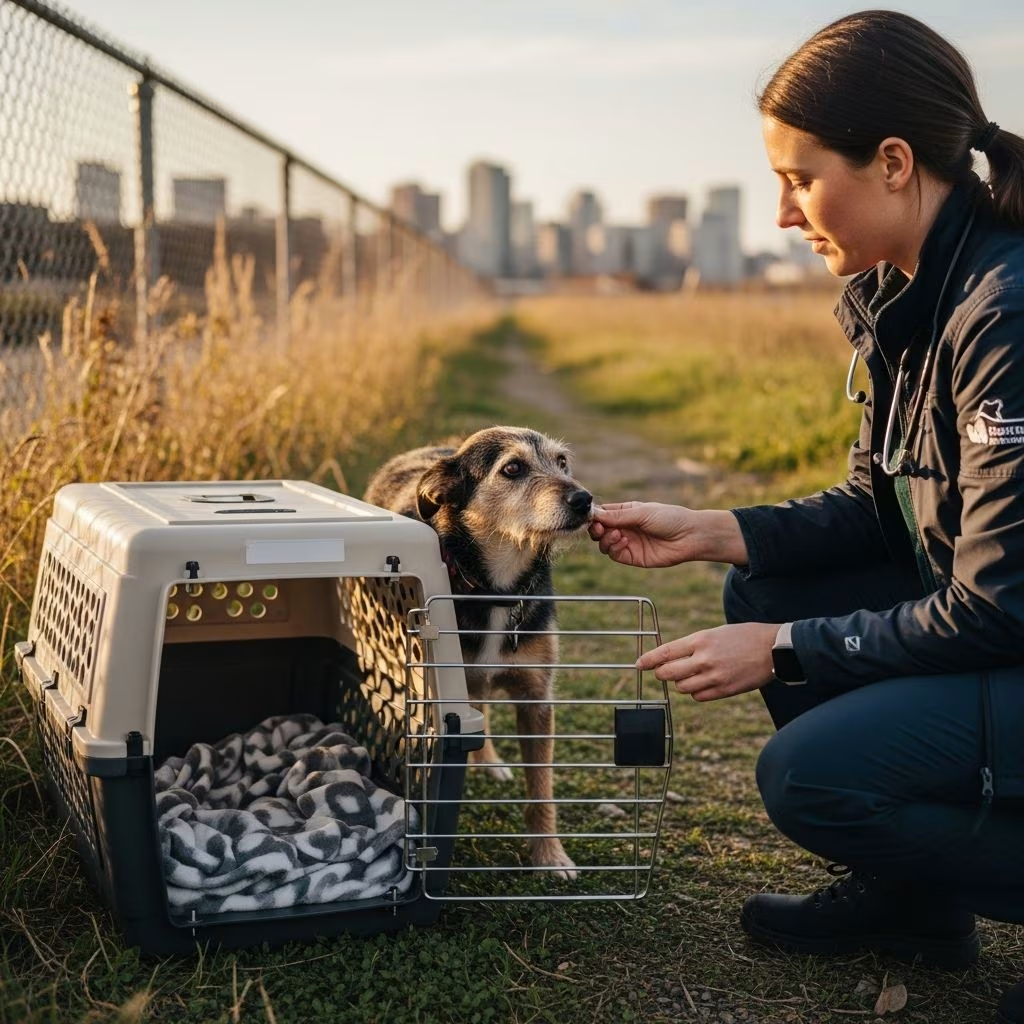
Encountering a stray dog wandering the streets presents an opportunity to make a positive impact by guiding it to safety at a local shelter. However, this task requires careful planning, patience, and a strong focus on personal safety to avoid risks like bites or escapes. By following structured steps—from initial observation to secure transport—you can help these animals find care without endangering yourself or others.
Understanding the Risks Involved in Stray Dog Encounters
Stray dogs may appear friendly but can react unpredictably due to fear, injury, or past experiences. Their body language provides critical clues: tucked tails, raised hackles, or growling signal potential aggression, while wagging tails and relaxed posture suggest approachability. Always prioritize your safety by assessing these signals from a distance.
Environmental factors compound the dangers. Busy roads increase the chance of the dog darting into traffic during pursuit, and unknown health issues like rabies or parasites pose transmission risks. Statistics from animal control agencies highlight that improper handling leads to thousands of human injuries annually, underscoring the need for measured responses.
Initial Assessment: Observing Before Acting
Before any interaction, spend time watching the dog unobtrusively. Note its behavior, location, and physical condition. Is it limping, emaciated, or showing signs of illness such as lethargy or discharge? These observations help determine if professional intervention is necessary.
- Body Language Indicators: Ears pinned back or excessive panting often mean stress; playful bouncing might indicate friendliness.
- Environmental Scan: Check for nearby hazards like traffic, other animals, or hiding spots where the dog could flee.
- Documentation: Snap photos or videos for social media posts to check if the dog is microchipped or reported missing, potentially reuniting it with an owner faster.
This phase prevents rash actions. If the dog displays aggression—snapping, stiffening, or charging—retreat slowly without turning your back and contact authorities immediately.
Preparing Resources and Contacts
Success hinges on readiness. Identify nearby shelters or rescues in advance via online directories or apps, confirming their intake capacity and hours. Prepare essentials like a sturdy leash, slip lead, treats, water, blankets, and a pet carrier sized appropriately.
| Item | Purpose | Tips |
|---|---|---|
| Leash/Slip Lead | Secure control | Choose adjustable, non-choking material |
| Treats (high-value like cheese) | Build trust | Use small pieces to avoid overfeeding |
| Pet Carrier/Crate | Transport safety | Line with towel for comfort |
| Blanket/Towel | Calming cover | Dark colors reduce visibility stress |
| Phone/Charger | Call for backup | Save local animal control numbers |
Coordinate transport if you lack a vehicle; many rescues offer pickup services. For feral or highly fearful dogs, inquire about loaner traps or poles from professionals.
Non-Threatening Approach Techniques
Approach with intent to de-escalate tension. Move sideways rather than head-on, crouch low to appear smaller, and avert direct gaze—dogs perceive staring as confrontation. Use soft vocalizations like cooing or smacking lips to signal non-threat.
- Stand at a distance, toss treats gently toward the dog to associate you with positivity.
- Wait for voluntary approach; never lunge or corner.
- Extend a flat palm downward for sniffing, allowing investigation on their terms.
If trust builds, gently stroke the chest or flanks, avoiding head pats initially. Patience is key—some dogs need repeated sessions over days.
Securing the Dog: Tools and Methods
Once rapport forms, apply restraint carefully. Slip a leash over the head smoothly while distracting with food. For evasive dogs, employ humane traps baited with enticing scents, placed in enclosed areas like yards.
Professional tools include catch poles (rabies poles) with adjustable loops to encircle the neck without lifting—always support the body to prevent injury. Slide the pole low along the ground for minimal threat, then guide the loop over head and forelimb. Ropes with nylon cores offer control for smaller dogs; throw underhand loops short distances.
For small breeds, lure into carriers with food trails. Nets or snappy snares suit close-range captures but require training to avoid panic.
Common Mistakes to Avoid During Capture
Many well-meaning rescuers err by chasing, which activates flight instincts and leads to dangerous sprints into hazards. Grabbing collars risks bites from startled dogs, and running away mimics prey behavior, inciting pursuit.
- Avoid Chasing: It erodes trust and heightens escape risks.
- No Cornering: Blocks flight paths, provoking defense.
- Skip Overhead Throws: Startles more than sidearm motions.
- Don’t Overlook Health: Diseased dogs need vets, not handling.
If knocked down, curl protectively, covering vitals until the dog disengages.
Transporting Safely to a Shelter
With the dog secured, transfer to a vehicle promptly. Crate in the backseat or trunk prevents distractions; use towels to muffle visibility if anxious. Drive calmly, avoiding stops where escapes could occur.
At the shelter, inform staff of observations like injuries or behavior. Many scan for chips immediately, aiding reunions. Post-rescue, wash thoroughly and monitor for scratches, as strays carry zoonotics.
Legal and Ethical Considerations
Rescuing strays aligns with animal welfare laws, but jurisdiction matters—some areas require reporting to control within 24 hours. Avoid keeping found dogs long-term without checks; shelters provide medical evaluations and adoption paths. Ethically, prioritize no-kill facilities for better outcomes.
When to Call Professionals
Doubt any step? Defer to experts. Animal control handles aggressive cases with gear like tranquilizer darts (rarely used). Hotlines operate 24/7; describe the situation accurately for tailored response.
Frequently Asked Questions (FAQs)
What if the stray dog is aggressive?
Back away slowly, avoid eye contact, and call animal control. Do not engage.
Can I keep a stray dog I catch?
Check for ID first; hold briefly (per local laws) then surrender to shelter for owner notification.
How long does building trust take?
Minutes for friendlies, days/weeks for ferals—persistence with positive reinforcement works.
What treats work best?
Meaty smells like hot dogs or liver draw most effectively.
Is pepper spray safe to use?
No—it may worsen aggression; use food distractions instead.
Long-Term Community Impact
Regular stray rescues contribute to safer neighborhoods by reducing packs and disease spread. Volunteer with rescues for training, amplifying your impact. Track local spay/neuter drives to curb overpopulation at sources.
By mastering these techniques, you transform sightings into lifesaving actions, giving strays a shot at loving homes.
References
- Animal Capture and Handling (Basic) — Texas Department of State Health Services. 2014. https://www.dshs.texas.gov/sites/default/files/LIDS-Zoonosis/ACO/BASCAPT14.pdf
- How to Catch Stray Dogs and Take Them to a Shelter — PetPlace.com. Accessed 2026. https://www.petplace.com/article/dogs/pet-care/dog-care/how-to-catch-stray-dogs-so-you-can-take-them-to-a-shelter
- Staying Safe Around Street Dogs — FOUR PAWS USA. Accessed 2026. https://www.fourpawsusa.org/our-stories/publications-guides/staying-safe-around-street-dogs
- Avoiding Incidents with Stray Dogs — Bark Busters. Accessed 2026. https://www.barkbusters.com/news/avoiding-incidents-with-stray-dogs



