

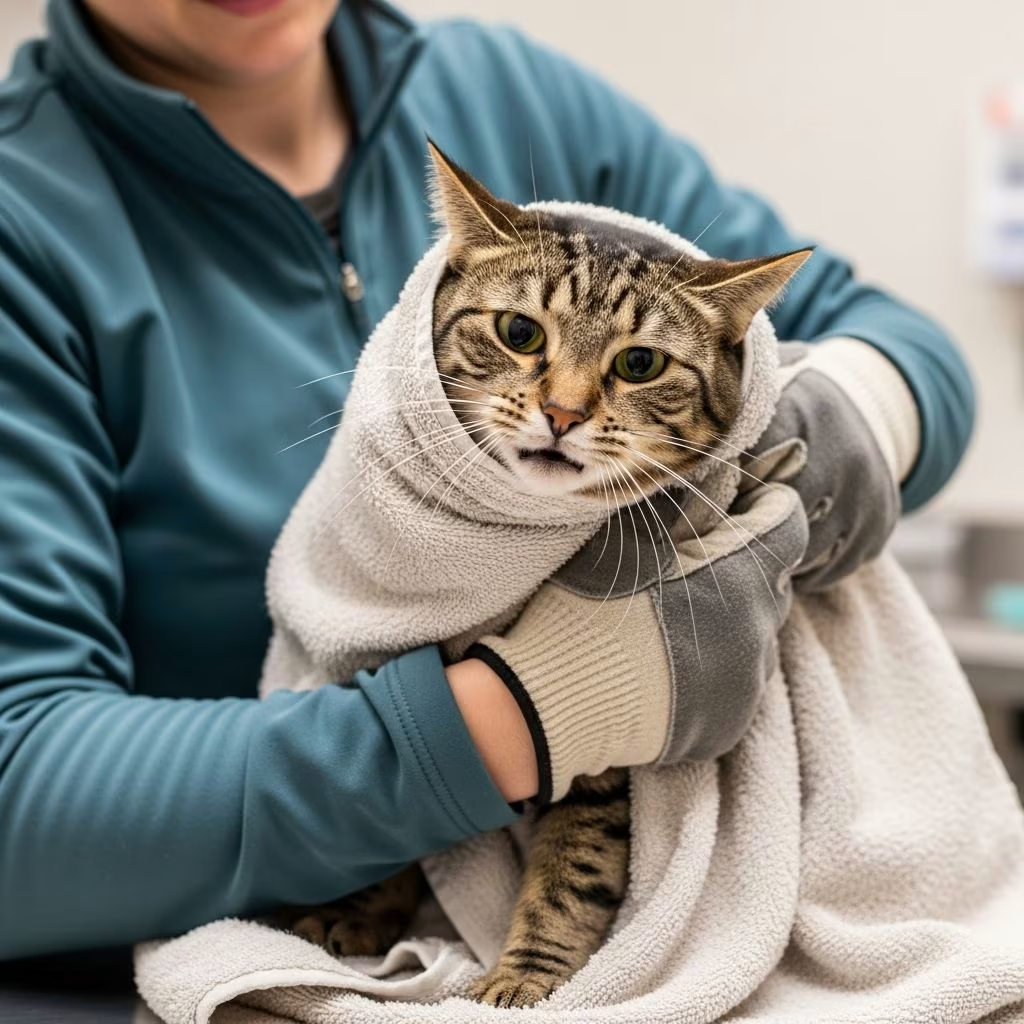
Handling an aggressive cat requires a combination of caution, understanding, and structured strategies to ensure safety for both you and your pet. Aggression in cats often stems from fear, pain, or overstimulation, and physical intervention must prioritize prevention of injury while promoting calmer interactions.
Understanding the Roots of Feline Aggression
Cat aggression manifests through hissing, swatting, biting, or lunging, typically triggered by perceived threats like unfamiliar people, loud noises, or excessive handling. Recognizing these signs early—such as dilated pupils, flattened ears, or a twitching tail—allows for timely intervention.Triggers commonly include doorbells, strangers’ scents, or prolonged petting, which can escalate fear responses.
Fear-based aggression is prevalent, where cats react defensively to stimuli they cannot escape. Redirected aggression occurs when a cat, upset by an external factor, targets a nearby person or animal. Petting-induced aggression happens when stroking exceeds a cat’s tolerance, leading to sudden attacks. Inter-cat aggression in multi-pet homes often arises from territorial disputes or resource competition.
Essential Safety Measures Before Physical Contact
Before attempting to handle an aggressive cat, equip your environment with protective tools. Keep thick towels, laundry baskets, or cardboard boxes nearby to create barriers. In emergencies, a spray of seltzer water or citronella can interrupt aggression without physical contact, as these startle rather than harm.
- Use a compressed air canister or shaken jar of pennies for remote startling within the first seconds of aggression onset.
- Avoid physical punishment like tapping the nose, which heightens fear and worsens behavior.
- Install motion-activated deterrents, such as sprinklers, near conflict zones.
Always prioritize avoidance: Limit exposure to known triggers by securing doors or using baby gates to create safe zones.
Step-by-Step Techniques for Physical Restraint
When restraint is unavoidable, such as for medication or vet visits, follow precise methods to minimize stress. Start in a quiet room with no escape routes.
- Approach calmly: Speak softly and avoid direct stares. Use a towel to gently scoop the cat from behind, covering its body while supporting the chest and hindquarters.
- C-Grip hold: Place your index and middle fingers behind the jaw on both sides, forming a ‘C’ shape to secure the head without squeezing the throat. Support the body with your other arm.
- Blanket wrap: Enfold the cat burrito-style in a thick blanket, exposing only the head or necessary areas for treatment.
- Harness or carrier transfer: Guide into a hard-sided carrier lined with a familiar blanket, using treats to lure if possible.
For severe cases, a leash and harness allow controlled movement without full body contact. Practice these during calm periods to build tolerance.
Environmental Modifications for Reduced Aggression
Aggression thrives in stressful environments; enrich your home to meet natural needs. Provide vertical spaces like cat trees and shelves for territorial security. Multiple litter boxes, food stations, and water bowls—one per cat plus one extra—prevent resource guarding.
| Resource | Recommendation | Benefit |
|---|---|---|
| Litter Boxes | One per cat +1, in quiet locations | Reduces territorial disputes |
| Scratching Posts | Sisal or cardboard, varied heights | Redirects clawing urges |
| Perches | Window seats, shelves | Allows observation without conflict |
| Hideouts | Boxes, tunnels | Escape spaces for stress relief |
Use synthetic pheromones like Feliway diffusers in shared areas to promote calm. Wipe towels between cats’ scent glands (cheeks, flanks) to familiarize odors gradually.
Desensitization and Counterconditioning Protocols
Gradually expose your cat to triggers at sub-threshold levels, pairing with rewards. For stranger fear, have a person stand at a safe distance, offering treats for calm behavior, then slowly decrease distance over sessions.
Petting tolerance training: Lure to lap with treats, stroke briefly, then reward and release before tension builds. Increase duration incrementally. For inter-cat issues, feed on opposite sides of a door, progressing to carriers side-by-side.
- Monitor body language: Stop at ear flicking or tail lashing.
- Session length: 5-10 minutes, 2-3 times daily.
- Progress only if no aggression for several days.
Interactive Play to Channel Energy
Daily play mimics hunting, reducing pent-up aggression. Aim for 15-30 minutes split into sessions using wand toys, laser pointers, or battery-operated mice—keeping hands distant to avoid bites.
Puzzle feeders dispense kibble when manipulated, encouraging foraging. Rotate toys to maintain interest. Play before meals to simulate hunt-success cycle.
Handling Multi-Cat Household Conflicts
Separate aggressor and target immediately, using scent swapping via towels. Reintroduce via sight barriers: Feed through cracked doors or crates. Reward parallel play with shared toys at a distance.
Electronic microchip doors allow safe access to personal retreats. Supervise all interactions; never force proximity.
Medical Interventions and When to Seek Help
Rule out pain from dental issues, arthritis, or hyperthyroidism via vet exam. Medications like anti-anxiety drugs pair with behavior plans but require professional oversight.
Last-resort surgeries, such as nail caps or declawing alternatives, are controversial; discuss pros/cons thoroughly. Consult a veterinary behaviorist for persistent cases.
Common Mistakes to Avoid
- Punishing aggression: Increases fear threshold.
- Over-pet ting: Respect limits; watch for swat cues.
- Ignoring enrichment: Boredom fuels frustration.
- Forced interactions: Escalates multi-cat fights.
FAQs
What if my cat suddenly attacks during petting?
Stop immediately, release, and give space. Shorten future sessions and use treats to rebuild positive associations.
Is water spraying safe for stopping aggression?
Seltzer or water can startle effectively if used sparingly and from distance; avoid soaking to prevent increased fear.
How long does desensitization take?
Weeks to months; consistency is key, with professional guidance for complex cases.
Can toys prevent bites during play?
Yes, wand toys keep hands safe; 20+ minutes daily reduces overall aggression.
Should I declaw an aggressive cat?
Consider non-surgical options first like nail caps; surgery is a last resort after behavior plans fail.
Building a Lasting Bond Through Patience
Managing aggression transforms fearful cats into confident companions. Track progress in a journal, celebrating small wins like tolerated petting. Professional input ensures tailored success.
References
- Managing Feline Aggression Toward Strangers — DVM360. 2023. https://www.dvm360.com/view/managing-feline-aggression-toward-strangers
- Feline Behavior Problems: Aggression — Kauai Humane Society. 2020-04. https://kauaihumane.org/wp-content/uploads/2020/04/Aggressive-Cat.pdf
- Treating Aggression Towards Other Household Cats — VCA Animal Hospitals. 2024. https://vcahospitals.com/know-your-pet/treating-aggression-towards-other-household-cats
- Aggression Between Cats in Your Household — ASPCA. 2024. https://www.aspca.org/pet-care/cat-care/common-cat-behavior-issues/aggression-between-cats-your-household



