Safely Inducing Vomiting In Cats: 3 Proven Emetic Agents
Learn veterinary-approved methods to induce emesis in cats after toxin ingestion, prioritizing safety and efficacy with alpha-2 agonists.
Safely Inducing Vomiting in Cats
Inducing vomiting, or emesis, in cats serves as a critical initial step in managing accidental ingestion of toxins or foreign objects, but it requires precise veterinary oversight due to varying success rates and potential complications. Unlike dogs, where emetics often exceed 90% efficacy, cats present unique challenges with success rates typically ranging from 43% to 75%.
Why Consider Emesis for Feline Toxin Exposure?
Cats frequently encounter household hazards like lilies, antifreeze, or small objects that can cause severe harm if absorbed. Prompt removal via vomiting prevents toxin progression into the bloodstream, potentially averting organ damage or fatality. However, emesis is only suitable within 2 hours post-ingestion, before substances reach the intestines.
- Ideal Scenarios: Recent ingestion of non-corrosive toxins, linear foreign bodies, or string-like materials.
- Contraindications: Corrosives (acids/bases), petroleum distillates, seizures, or depressed consciousness, where aspiration risk heightens.
Veterinarians assess ingestion details—substance, quantity, timing—before proceeding, often combining emesis with activated charcoal or further decontamination.
Leading Emetic Agents for Cats
Alpha-2 adrenergic agonists dominate feline emetic protocols due to high chemoreceptor trigger zone (CRTZ) receptor density in cats’ central nervous systems. Hydrogen peroxide, effective in dogs, fails consistently in cats (0% success in studied cases).
| Agent | Dosage & Route | Success Rate | Onset Time | Key Notes |
|---|---|---|---|---|
| Dexmedetomidine | 3.5 mcg/kg IV; 7 mcg/kg IM; 20 mcg/kg oral | 81% (IM/IV); ~83% oral (small series) | 5-20 min | Preferred; reversible with atipamezole; sedation common. |
| Xylazine | 0.44 mg/kg IM; 1.1 mg/kg IM/SC | 44-60% | 10 min | Less reliable; reversible with yohimbine; more hypotensive risk. |
| Hydromorphone | 0.1 mg/kg SC | ~75% | Varies | Opioid alternative; reversible with naloxone; hyperthermia possible. |
Dexmedetomidine outperforms xylazine, with faster onset and higher reliability, making it the go-to choice in emergency settings.
Dexmedetomidine: The Gold Standard Emetic
This alpha-2 agonist targets the CRTZ, triggering vomiting reliably in cats. Injectable forms (IM/IV) yield 81% success, with IM slightly superior in some data. A groundbreaking approach involves oral administration at 20 mcg/kg, achieving emesis in 5/6 cats within 12-20 minutes, easing stressed felines without needles.
Administration Tips:
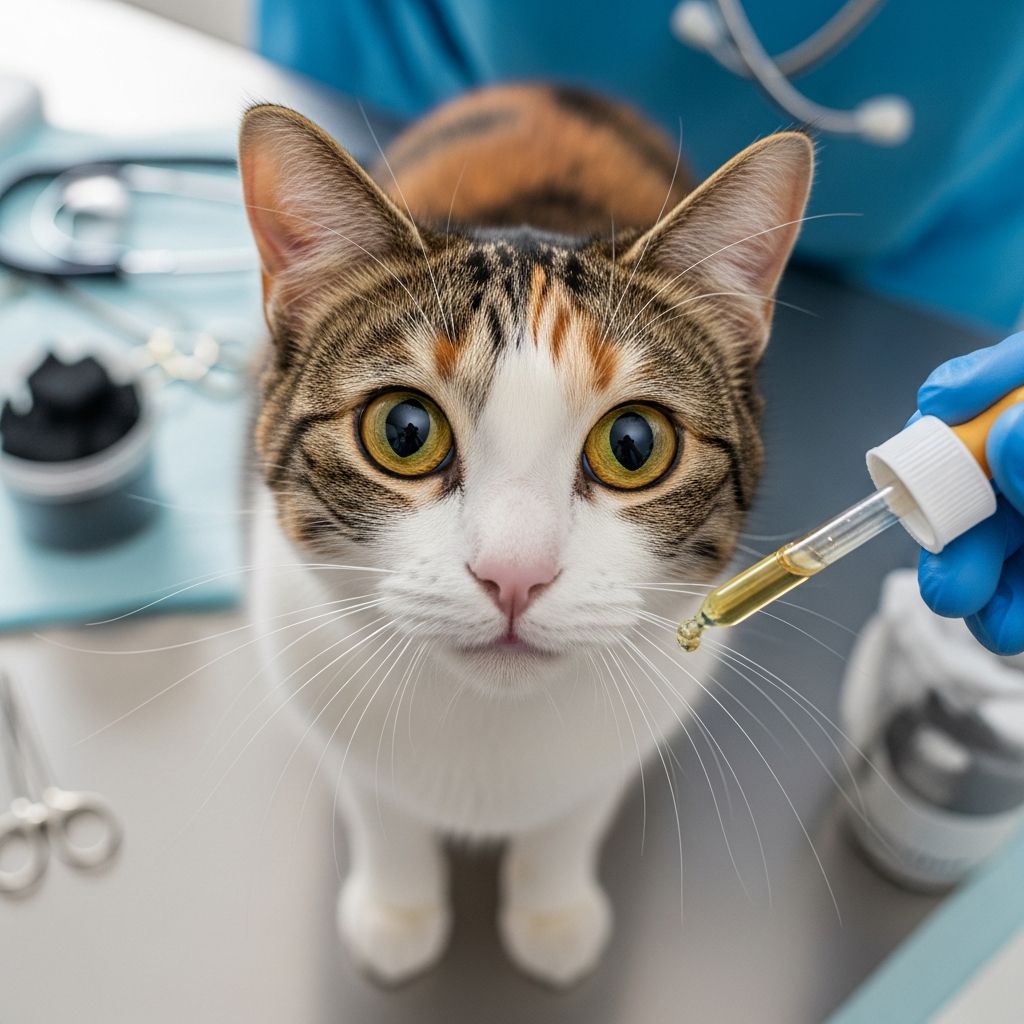
- Place liquid over the tongue base with minimal restraint.
- Monitor for 20-30 minutes; expect sedation aiding further care like IV access.
- Reverse with atipamezole (IM) if no vomiting or post-procedure.
Safety profile is strong absent cardiovascular issues; small studies confirm minimal adverse effects beyond transient sedation.
Xylazine as a Traditional Backup
Historically favored, xylazine induces emesis in about half of cases but carries higher sedation and blood pressure fluctuation risks. Median dosing of 0.44 mg/kg IM succeeds in 44% of cats, slower than dexmedetomidine. Reserve for dexmedetomidine unavailability, reversing promptly if needed.
Opioid Options: Hydromorphone and Beyond
For non-responders, subcutaneous hydromorphone at 0.1 mg/kg offers ~75% efficacy, though less potent sedation may limit utility. Butorphanol co-administration can blunt effects, so avoid combinations. Emerging transmucosal detomidine gel shows 100% success in healthy cats, warranting further research for clinical use.
Step-by-Step Veterinary Protocol
- History & Exam: Confirm ingestion details, vital signs, toxin type.
- Stabilize: Address dehydration, seizures, or hypothermia first.
- Select & Administer: Dexmedetomidine preferred; oral if feasible.
- Observe: Position sternally; collect vomitus for analysis.
- Follow-Up: Charcoal, gastroprotectants, monitoring.
Pet owners should never attempt home induction—ineffective methods like salt or peroxide risk salt toxicity or aspiration.
Risks and Side Effects to Anticipate
All emetics cause sedation; alpha-2 agents may provoke bradycardia, hypertension then hypotension, or respiratory depression. Cardiovascular-compromised cats require caution—ECG monitoring advised. Aspiration pneumonia looms if vomiting occurs recumbent.
- Mitigation: Upright positioning, reversal agents ready, post-emesis chest auscultation.
Failure rates necessitate alternatives like endoscopy or surgery for persistent foreign bodies.
When NOT to Induce Vomiting
Absolute no-gos include:
- Ingestion >2 hours prior.
- Caustic substances (e.g., bleach).
- Volatile hydrocarbons.
- Clinical signs like coma or convulsions.
- Pregnant or very young/kitten patients.
Instead, prioritize supportive care: fluids, antidotes, diagnostics.
Home vs. Clinic: What Owners Must Know
Urgent transport to a vet trumps DIY attempts. If distance delays care, call a poison hotline (e.g., ASPCA) for guidance—but no home emetics. Clinic induction saves time, ensures safety, and integrates comprehensive toxicology management.
Recent Advances and Research Insights
Oral dexmedetomidine represents a 2024 breakthrough, simplifying protocols for fractious cats and boosting welfare. Ongoing trials seek optimal dosing and comparisons; current data from case series (n=6) and retrospectives (43-16 cats) affirm its promise, though larger RCTs needed.
IM dexmedetomidine edges IV for efficacy, with 5-minute onsets revolutionizing ER workflows.
Frequently Asked Questions (FAQs)
Can I make my cat vomit at home?
No—unsafe and ineffective. Seek veterinary care immediately.
How quickly does dexmedetomidine work?
Typically 5-20 minutes, depending on route.
Is hydrogen peroxide safe for cats?
No, it fails to induce vomiting and risks irritation.
What if emesis fails?
Proceed to activated charcoal, enemas, or imaging/surgery.
Are there breed-specific considerations?
No broad differences, but individual health status guides choice.
Preventing the Need for Emesis
Proactive steps avert crises:
- Secure toxins, plants, medications.
- Use pet-safe cleaners.
- Supervise play; avoid strings/yarn.
- Microchip for escape artists.
Annual toxinology awareness keeps guardians prepared.
References
- Orally administered dexmedetomidine induces emesis in cats — BSAVA. 2024-06-25. https://www.bsava.com/article/orally-administered-dexmedetomidine-induces-emesis-in-cats/
- Dexmedetomidine versus xylazine as an emetic in cats — VETgirl. Accessed 2026. https://vetgirlontherun.com/podcasts/dexmedetomidine-versus-xylazine-emetic-cats-vetgirl-veterinary-continuing-education-podcasts/
- Use of orally administered dexmedetomidine to induce emesis in cats — PMC (NCBI). 2024. https://pmc.ncbi.nlm.nih.gov/articles/PMC11156238/
- Emetics in Small Animals — Today’s Veterinary Practice. Accessed 2026. https://todaysveterinarypractice.com/pharmacology/emetics-in-small-animals/
- Drugs Used for Emesis Induction in Cats — Clinician’s Brief. Accessed 2026. https://www.cliniciansbrief.com/article/drugs-used-emesis-induction-cats
- Can you reliably induce vomiting in cats? — IndeVets. Accessed 2026. https://indevets.com/blog/induce-vomiting-in-cats-dexmedetomidine/
Similar Articles




Read full bio of Sneha Tete