

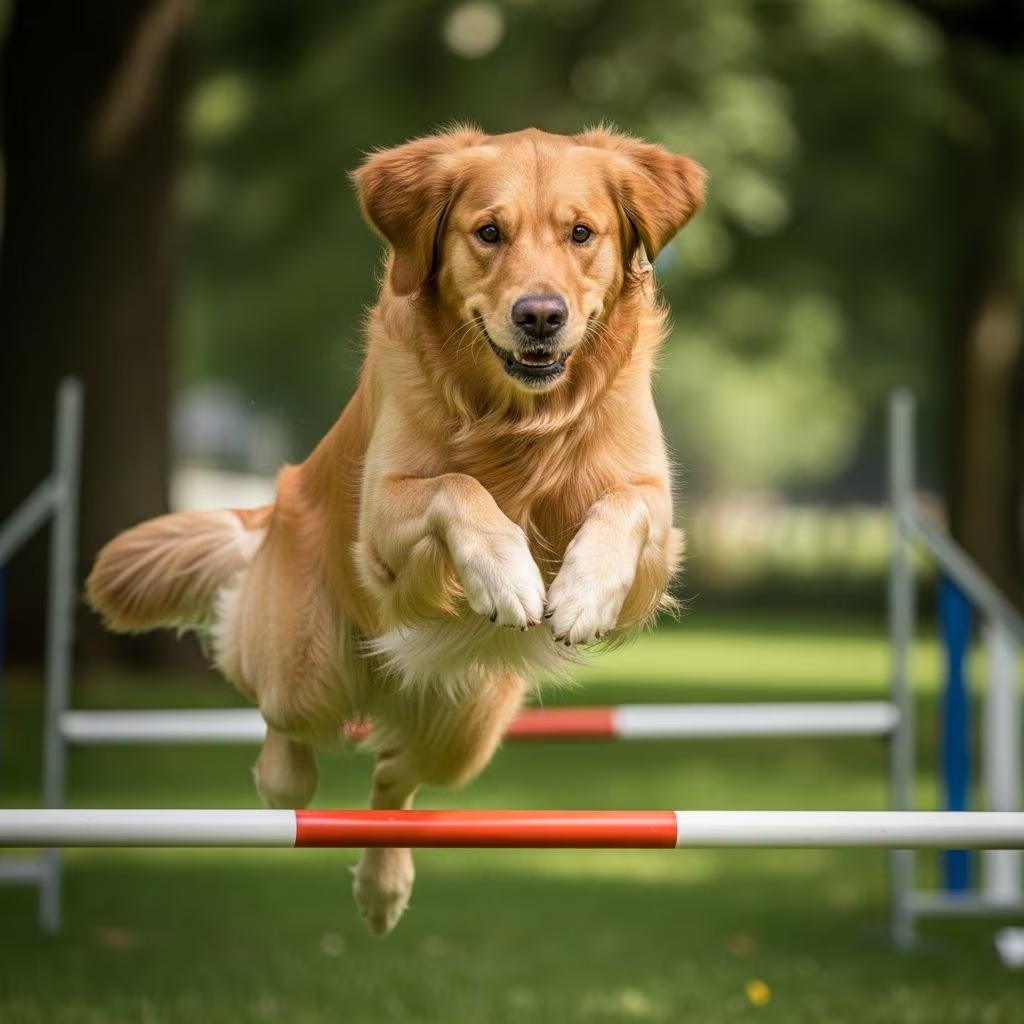
High-energy dogs thrive on activity, but their enthusiasm can lead to strains, sprains, and more serious harm if not managed properly. Preventing injuries requires a proactive approach combining preparation, supervision, and consistent care to support their musculoskeletal health.
Understanding Risks in Playful Pups
Energetic dogs often engage in sudden sprints, sharp turns, and roughhousing, which stress ligaments like the ACL, abrade paw pads on rough terrain, and cause muscle pulls from overexertion. These issues arise commonly in dog parks, backyard romps, or agility training where mismatched play partners or poor surfaces amplify dangers.
Recognizing vulnerability factors helps owners intervene early. Puppies, seniors, overweight dogs, or those with prior injuries face heightened risks due to developing bodies, reduced flexibility, or weakened structures. Weekend warriors—dogs inactive most days but pushed hard occasionally—suffer disproportionately from unconditioned tissues.
Essential Warm-Up Protocols
A structured warm-up is the first line of defense, mimicking human athletic prep by boosting blood flow, enhancing tissue elasticity, and priming joints for impact. Skip this, and cold muscles risk tears during abrupt activity.
- Start with 5-10 minutes of moderate leash walking to gradually elevate heart rate.
- Progress to light trotting or controlled sniffing games for 2-3 minutes.
- Incorporate gentle range-of-motion movements, like slow circles with the head or paws.
For performance dogs, extend to 10-15 minutes including jogging away from high-stimulation areas to avoid premature excitement. Cool-downs post-play with similar walks prevent stiffness by aiding muscle recovery.
Building a Solid Conditioning Foundation
Consistent conditioning transforms energetic dogs into resilient athletes by strengthening core muscles, improving endurance, and enhancing proprioception—the body’s spatial awareness.
Weekly Routine Recommendations:
| Day | Focus | Activities | Duration |
|---|---|---|---|
| Monday/Wednesday/Friday | Strength | Sit-to-stand reps (10x), cavaletti poles, balance on wobble board | 20-30 min |
| Tuesday/Thursday | Endurance & Flexibility | Swimming, figure-8 weaves through legs, slow spins | 25-35 min |
| Weekend | Cross-Training | Hiking varied terrain, tug games, nosework | 30-45 min |
| Rest Days | Recovery | Light walks, therapeutic bedding | 15 min |
Begin slowly, increasing intensity by 10% weekly to avoid overload. Swimming offers low-impact cardio, while balance exercises fortify stabilizers against slips.
Optimizing Play Environments
Safe spaces minimize hazards. Inspect dog parks or yards for sharp rocks, holes, icy patches, or abrasive surfaces that tear pads or cause slips.
- Choose venues with soft, even footing like grass or mulched areas.
- Avoid extreme temperatures: hot asphalt burns paws; frozen ground jars joints.
- Opt for supervised parks enforcing size matching and rough play rules.
At home, clear obstacles and use ramps for furniture access to spare jumping stress on hips and spines, especially for larger breeds.
Supervision and Intervention Tactics
Active monitoring prevents escalation. Watch for fatigue signals: heavy panting, lagging pace, or disinterest in play, prompting immediate breaks.
Interrupt risky interactions:
- High-speed collisions or pinning.
- Size/energy mismatches leading to bites or strains.
- Repetitive chasing causing overuse.
Enforce 15-20 minute play cycles with 2-3 minute water rests. Recall commands ensure quick disengagement.
Nutrition and Recovery Essentials
Fuel supports repair and resilience. Diets rich in omega-3s, glucosamine, and proteins aid joint lubrication and muscle rebuilding.
- Hydrate constantly during sessions to maintain cooling and synovial fluid.
- Post-exercise, offer nutrient-dense meals within 30 minutes.
- Invest in orthopedic beds for passive recovery.
Regular vet exams detect subclinical issues like early arthritis, guiding tailored supplements or therapies.
Strengthening Exercises for Resilience
Targeted drills build durability:
- Core Power: Tuck sits to kick-back stands (doggy squats), fold-back downs (pushups)—10 reps x 2 sets.
- Flexibility: Bows held 10-15 seconds, front paws on elbow-height platforms.
- Proprioception: Cone weaves, distant circling obstacles.
These enhance rear-end awareness, curbing slips that injure many active dogs.
Common Injuries and Red Flags
Know adversaries:
| Injury Type | Causes | Signs | Prevention Priority |
|---|---|---|---|
| ACL Tears | Sudden pivots | Limping, toe-touching | Warm-up, conditioning |
| Paw Abrasions | Rough surfaces | Bleeding, limping | Surface checks |
| Muscle Strains | Overexertion | Stiffness, reluctance | Rest breaks |
| Bite Wounds | Rough play | Punctures, swelling | Supervision |
Seek vet care for persistent limps or swelling to avert chronic problems.
Age-Specific Safeguards
Tailor to life stage:
- Puppies: Limit jumps, focus on controlled play for growth plate protection.
- Adults: Balance intensity with recovery.
- Seniors: Low-impact like swimming, joint supplements.
Breeds like Labs or herders need breed-specific tweaks for proneness to hips or elbows.
FAQs
How long should I warm up my energetic dog before play?
5-15 minutes of progressive walking and light movement suffices for most, extending for sports.
What if my dog refuses conditioning exercises?
Use high-value treats and short sessions, building fun association gradually.
Can overweight dogs join active play safely?
Yes, after gradual weight loss and vet clearance to avoid joint overload.
How do I know play is too rough?
Look for yelps, stiffening, or one-sided pursuit—interrupt promptly.
Are supplements necessary for injury prevention?
Not always, but vet-recommended glucosamine helps high-risk dogs.
Long-Term Wellness Plan
Integrate these habits into daily life for sustained vitality. Track progress with a journal noting play duration, energy levels, and any twinges. Annual conditioning assessments with pros like canine fitness trainers refine programs.
Ultimately, prevention empowers joyful longevity, letting energetic dogs chase balls without consequence.
References
- Dog Park Injury Prevention: Most Common Injuries and How to Avoid Them — Wagbar. 2023. https://www.wagbar.com/dog-park-injury-prevention-most-common-injuries-and-how-to-avoid-them
- Canine Injury Prevention: Safeguarding Your Furry Athlete — JJ Dog. 2024. https://www.jjdog.com/blog/canine-injury-prevention-safeguarding-your-furry-athlete/
- 4 Ways to Help Prevent Injuries in Companion Dogs — Canine Arthritis Management. 2023. https://caninearthritis.org/four-ways-prevent-injuries-in-companion-dogs/
- Preventing Injury in Sporting Dogs — DVM360. 2022-10-01. https://www.dvm360.com/view/preventing-injury-sporting-dogs
- Preventing Injuries — Clean Run. 2023. https://www.cleanrun.com/feature/preventing_injuries/index.cfm
- 6 Tips for Performance Dog Injury Prevention — Florence Animal Hospital. 2024. https://florenceah.com/6-tips-for-performance-dog-injury-prevention/



