

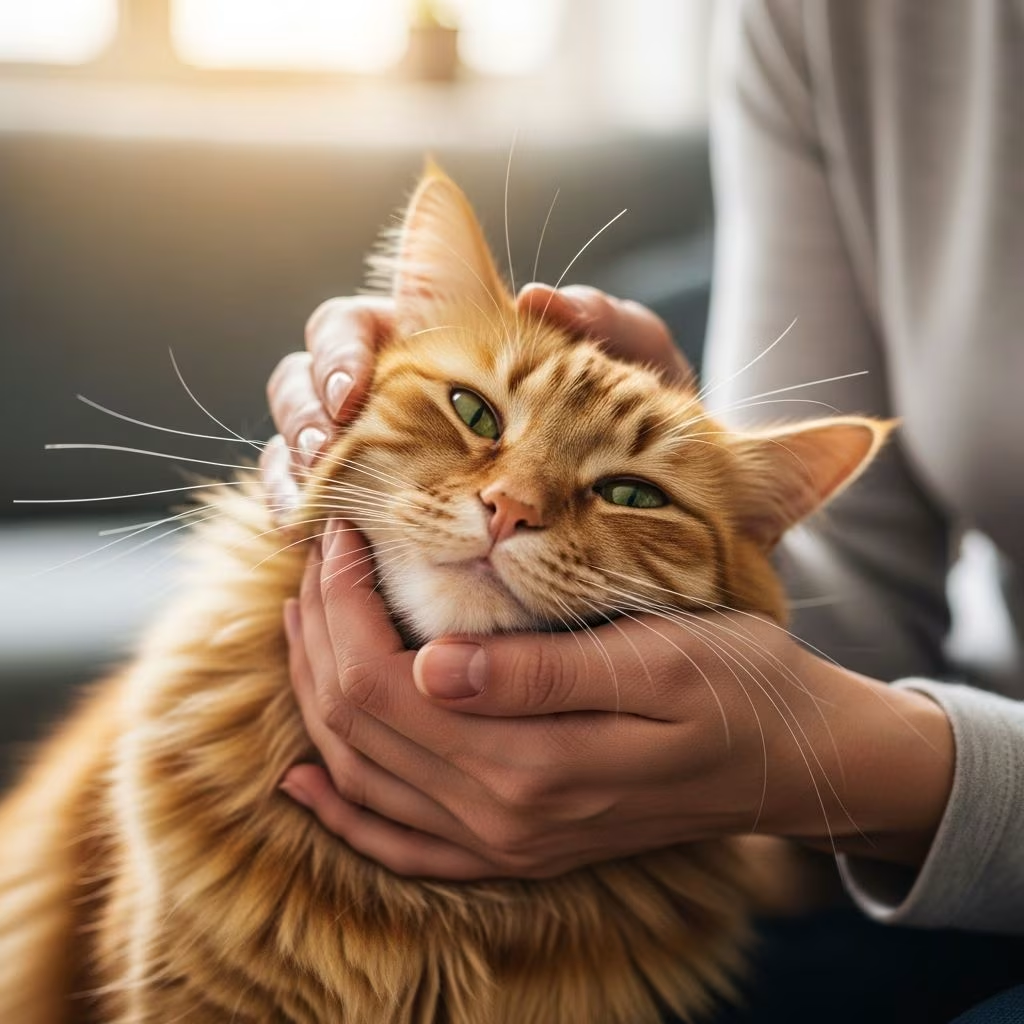
Expressing love to your cat through physical gestures like kissing can feel natural, but cats perceive touch differently than humans, making some interactions potentially stressful or unhealthy. Understanding their unique communication styles allows for deeper bonds without compromising safety.
Decoding Feline Communication: How Cats Say ‘I Love You’
Cats rely on subtle nonverbal signals rather than overt displays like human kisses to convey emotions. These behaviors stem from their evolutionary roots as solitary hunters who value personal space, yet they form strong attachments within trusted groups.
- Head-butting and rubbing: Cats deposit pheromones from facial glands onto you, marking you as family and signaling trust.
- Grooming or licking: Reserved for close companions, this mirrors maternal care and indicates social acceptance.
- Slow blinking: Often called ‘cat kisses,’ this eye gesture communicates safety and affection from afar, reducing perceived threat.
- Tail wrapping or kneading: A raised tail or rhythmic paw pressing shows contentment and early-life comfort recall.
- Purring and proximity sleeping: Low-stress environments prompt these, affirming emotional security.
Recognizing these prevents misinterpretation of your advances, fostering mutual respect in your relationship.
Do Cats Appreciate Human Kisses? Reading Their Responses
Not every cat welcomes kisses; responses vary by personality, upbringing, and past experiences. Kittens socialized with humans from birth often tolerate closeness more readily.
Positive indicators include relaxed postures: slow blinks, forward-leaning heads, upright ears, purring, or reciprocal rubbing. These suggest your cat associates the gesture with positivity, possibly linking it to care like feeding or play.
Conversely, discomfort shows through tension: swishing tails, flattened ears, growling, hissing, body stiffening, or evasion. Ignoring these risks stress, eroding trust over time.
| Positive Body Language | Negative Body Language |
|---|---|
| Slow blinking, purring, head lift | Tail thumping, ear flattening, stiffening |
| Rubbing against you, tail wrapping | Growling, hissing, avoidance |
| Relaxed ears forward, leaning in | Wide eyes, swatting attempts |
Use this table to assess reactions instantly, adjusting your approach for harmony.
Health Concerns: Why Skip the Lips
Beyond comfort, kissing—especially on the mouth—poses zoonotic risks. Cats harbor bacteria like Pasteurella multocida in saliva, transmissible via scratches or bites but also mucous membranes. Parasites such as toxoplasmosis or Bartonella (cat scratch disease) add concerns, particularly for immunocompromised individuals.
Veterinary bodies like the CDC advise minimizing saliva contact. Opt for forehead or crown kisses in low-risk cats, but avoid unfamiliar or ill animals entirely.
Healthier Alternatives for Building Bonds
Align affection with cat instincts for enthusiastic reciprocity. These methods reinforce security without invasion.
- Gentle petting: Stroke cheeks, chin, or base of tail—scent gland zones that elicit pleasure responses.
- Play sessions: Interactive toys mimic hunting, releasing endorphins and strengthening partnership.
- Parallel lounging: Sit nearby without forcing contact; many cats initiate closeness on their terms.
- Soft vocalizations: Mimic purrs or use their name soothingly to draw positive associations.
- Treat reinforcement: Pair touch with rewards, conditioning enjoyment of proximity.
Incorporate these daily for a thriving relationship, observing preferences to personalize.
Risks of Overstepping Boundaries
Forced intimacy can trigger defensive reactions, from scratches to chronic anxiety. Repeated stress elevates cortisol, potentially causing urinary issues or appetite loss in sensitive cats.
New cats or ferals need weeks of gradual exposure. Start with distance, progressing as trust builds—rushing invites rejection.
Individual Differences: Breed and Personality Factors
Affection tolerance varies. Breeds like Ragdolls or Siamese crave closeness, while Bengals or Savannahs retain wilder independence. Age matters too: seniors may prefer minimal handling, kittens experiment boldly.
Observe yours: track responses in a journal to identify patterns, tailoring interactions accordingly.
Expert Strategies for Kiss-Like Bonding
Simulate ‘kisses’ safely: hover your face near theirs for slow blinks, or lightly touch noses if invited. Hand-kissing their forehead mimics grooming without saliva exchange.
Build tolerance gradually: begin with tolerated pets, add brief forehead touches paired with praise, extending as comfort grows.
Common Myths About Cat Affection
- Myth: Cats don’t love owners. They bond deeply, shown via pheromones and proximity.
- Myth: Purring always means happiness. It can signal pain; context is key.
- Myth: All cats hate water/hugs. Individuals differ widely.
Frequently Asked Questions (FAQs)
Is it ever okay to kiss my cat on the lips?
Avoid it due to bacteria and parasites in saliva; forehead kisses are safer if tolerated.
How do I know if my cat dislikes kisses?
Watch for tail swishing, ear pinning, or withdrawal—these signal discomfort.
Why does my cat lick me after I pet them?
It’s grooming, a sign of affection and group inclusion.
Can kittens learn to like kisses?
Yes, early socialization helps them associate human touch positively.
What if my cat seems stressed by all touch?
Consult a vet to rule out health issues; use pheromone diffusers for calming.
Long-Term Bonding Tips
Sustain affection through routine: consistent feeding, clean litter, and enrichment like scratching posts. Annual vet checks catch issues early, preserving playful interactions.
Multi-cat homes require individual attention to prevent jealousy-fueled tensions.
References
- Do Cats Like and Understand Kisses? — Cats.com. 2023. https://cats.com/do-cats-like-kisses
- Why Does My Cat Lick Me So Much? | Cat Behavior Explained — Blue Buffalo. 2024. https://www.bluebuffalo.com/articles/cat/why-does-my-cat-lick-me/
- Have You Ever Kissed Your Cat? Understand How Cats Perceive Kisses — YouTube (Video Transcript). 2023. https://www.youtube.com/watch?v=IlapLIoXITs



