

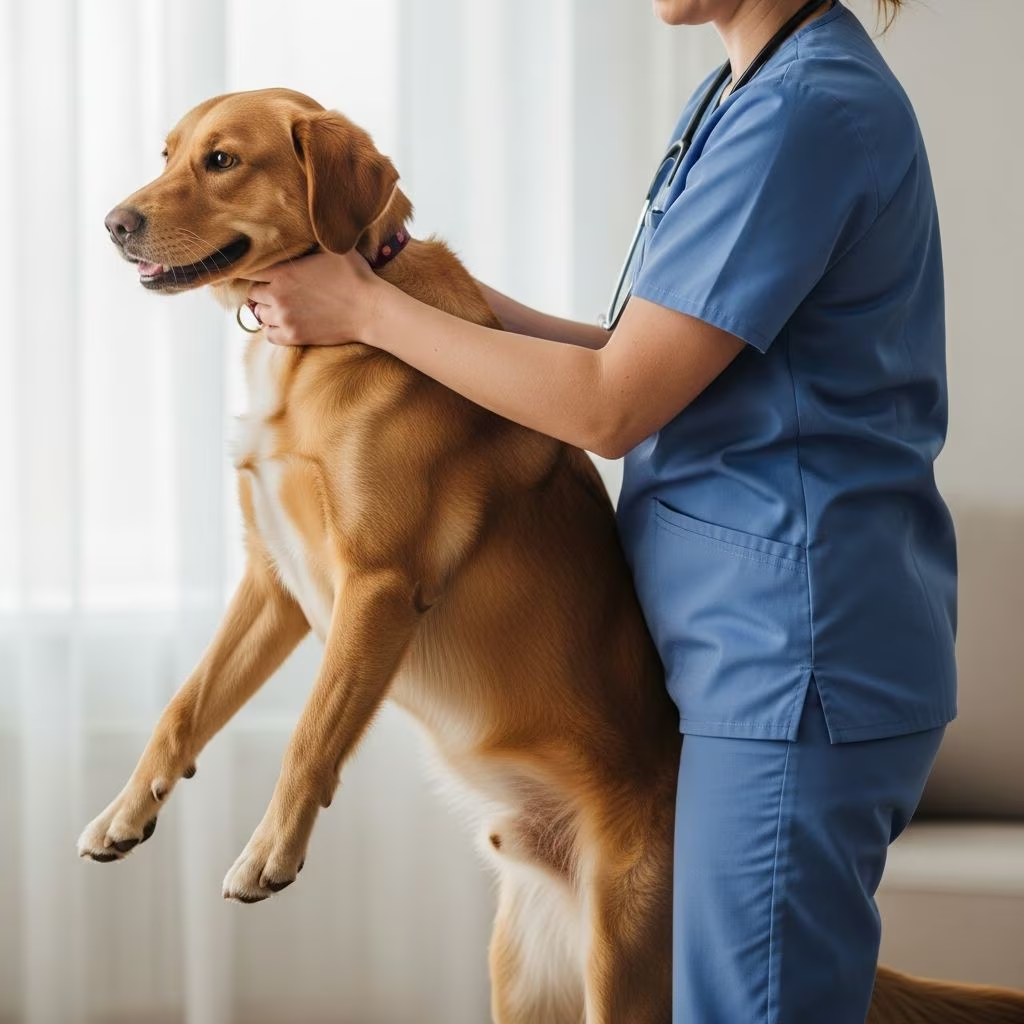
Lifting a dog properly protects both you and your pet from injury, using techniques that distribute weight evenly and support the animal’s body structure. Veterinary experts emphasize bending at the knees, engaging core muscles, and keeping the dog close to your body during lifts.
Why Proper Lifting Matters for You and Your Dog
Incorrect lifting can strain your back or cause joint issues in dogs, especially larger breeds prone to hip dysplasia or arthritis. For owners, poor form leads to overexertion injuries, while dogs may experience pain from abdominal pressure or spinal twisting. Assessing the need to lift first—opting for walks or ramps when possible—reduces risks.
Heavy dogs over 50 pounds require team lifts or aids to avoid forceful exertion, a common veterinary practice hazard. Training dogs to accept handling builds trust and minimizes resistance.
Evaluating When to Lift Your Dog
Before any lift, gauge necessity: reserve carrying for injuries, post-surgery recovery, or mobility loss. Encourage walking with leashes or slings for non-emergencies. For fractious dogs, use tables or elevated surfaces to avoid floor-level bends.
- Check for pain signs like limping or whining—consult a vet if present.
- Weigh your dog; over 40-50 pounds often needs assistance or tools.
- Observe behavior: calm dogs lift easier than anxious ones.
Core Principles of Safe Dog Lifting
Always prioritize body mechanics: position feet shoulder-width, bend knees (not waist), grip securely, and rise using leg power while keeping the back straight. Hold dogs against your torso for stability, avoiding arm extension.
| Principle | Benefit | Source Example |
|---|---|---|
| Bend knees, straight back | Prevents back strain | Vet tech demo |
| Core engagement | Enhances balance | Whole Dog Journal |
| Dog close to body | Reduces twisting | Ergovet guidelines |
| Leg-powered lift | Uses strongest muscles | CVMA safety |
Techniques by Dog Size
Small Dogs and Puppies
For dogs under 20 pounds, crouch with bent knees on a non-slip surface. Slide one arm under the chest between front legs, tucking the rear against your body. Rise slowly, holding close to your chest for security.
- Crouch beside dog with treats ready.
- Support chest firmly, scoop hindquarters.
- Lift with legs, praise upon lowering.
Practice daily to desensitize puppies, using cues like “up” for positive association.
Medium Dogs (20-50 Pounds)
Use a two-arm hold: one forearm under chest at front leg base, the other behind hind legs (avoiding abdomen). For stability, position the second arm in front of hindquarters if joint issues exist. Lift calmly to prevent startling.
On non-slip mats, this method evenly distributes weight, ideal for car entry or vet visits.
Large and Giant Breeds (Over 50 Pounds)
Solo lifts risk injury; prefer two-person coordination or tools. One technique: arm under chest behind front legs, other under abdomen ahead of hind legs. Keep dog vertical, core tight.
Two-person lifts: one supports chest, the other hindquarters, communicating lift timing and direction. Standing dogs lift easier as their center of mass is higher.
Handling Difficult or Anxious Dogs
For fractious pets, secure a slip leash for head control, then sling a towel under the abdomen for hoist to tables. Work on elevated surfaces to minimize bending threats. Calm movements and treats build cooperation over time.
Essential Tools and Aids for Lifting
Mobility aids transform handling for heavy or impaired dogs, reducing physical demand.
- Mobility Harnesses: Handle-equipped for front/rear support; great for arthritis or surgery recovery. Enables two-person lifts.
- Slings and Towels: Quick abdominal support for fractious dogs or short carries.
- Stretchers/Gurneys: For very large breeds; hydraulic options in vets minimize manual effort.
- Ramps/Steps: Prevent jumps, preserving joints long-term.
Adjust tables or use these for ergonomic transfers, especially over 100 pounds.
Step-by-Step Two-Person Lift Guide
Team lifts ensure safety for dogs over 50 pounds.
- Positioning: Person A at chest (behind front legs), Person B at hindquarters (under abdomen or rear).
- Communication: Agree on count (e.g., “1-2-lift”), dog orientation.
- Execution: Bend knees together, lift with legs, keep straight backs, hold dog close.
- Carry: Move feet first, no twisting; lower coordinated.
Training Your Dog for Comfortable Handling
Desensitize gradually: pair lifts with treats, start on floors, progress to motion. Use cues, reward calm behavior. This fosters trust, easing vet visits or emergencies.
For seniors or injured dogs, short sessions with harnesses reinforce positivity without overwhelm.
Preventing Injuries in Common Scenarios
- Vet Visits: Use towels/leashes for table hoists.
- Car Loading: Ramps for joints; lift techniques for urgency.
- Home Mobility: Harnesses daily; avoid jumps.
Set personal weight limits, seek help above them.
Frequently Asked Questions
How often should I practice lifting my dog?
Weekly for puppies/small dogs to build comfort; as needed for larger ones with mobility aids.
Can I lift a 70-pound dog alone?
Not recommended; use two-person or harnesses to avoid strain.
What if my dog resists lifting?
Use leashes/towels, train positively, or elevate surfaces.
Are there lifts for dogs with back issues?
Yes, slings/harnesses support without spinal pressure; vet-recommended.
How to lift a lying-down large dog?
Roll to side first if possible, then standard grip; prefer standing for ease.
References
- How to Safely Lift and Carry a Dog — Whole Dog Journal. 2023. https://www.whole-dog-journal.com/care/how-to-safely-lift-and-carry-a-dog/
- How to safely lift fractious dogs — DVM360. 2022-10-12. https://www.dvm360.com/view/how-safely-lift-fractious-dogs
- How to Safely Lift Large Dogs: Tips, Techniques & Tools — Southeast Veterinary Neurology (YouTube). 2025-10-13. https://www.youtube.com/watch?v=Lk00PsF0jAM
- Jumping, lifting, and dog joints – how to support your dog — Vetnique Labs. 2024. https://vetnique.com/blogs/vets-corner/jumping-lifting-and-dog-joints-how-to-support-your-dog
- How to properly pick up your dog — Dogs Trust. 2023. https://www.dogstrust.org.uk/dog-advice/health-wellbeing/vet-visit/lifting-your-dog
- Safe Lifting and Back Protection — CVMA Watchdog (PDF). 2016-06. https://cvma-watchdog.net/wp-content/uploads/2016/06/Safe_Lifting_Back_Protection.pdf
- Lifting and Carrying a Large Dog — Ergovet. 2023. https://ergovet.com/lifting-and-carrying-a-large-dog/



