

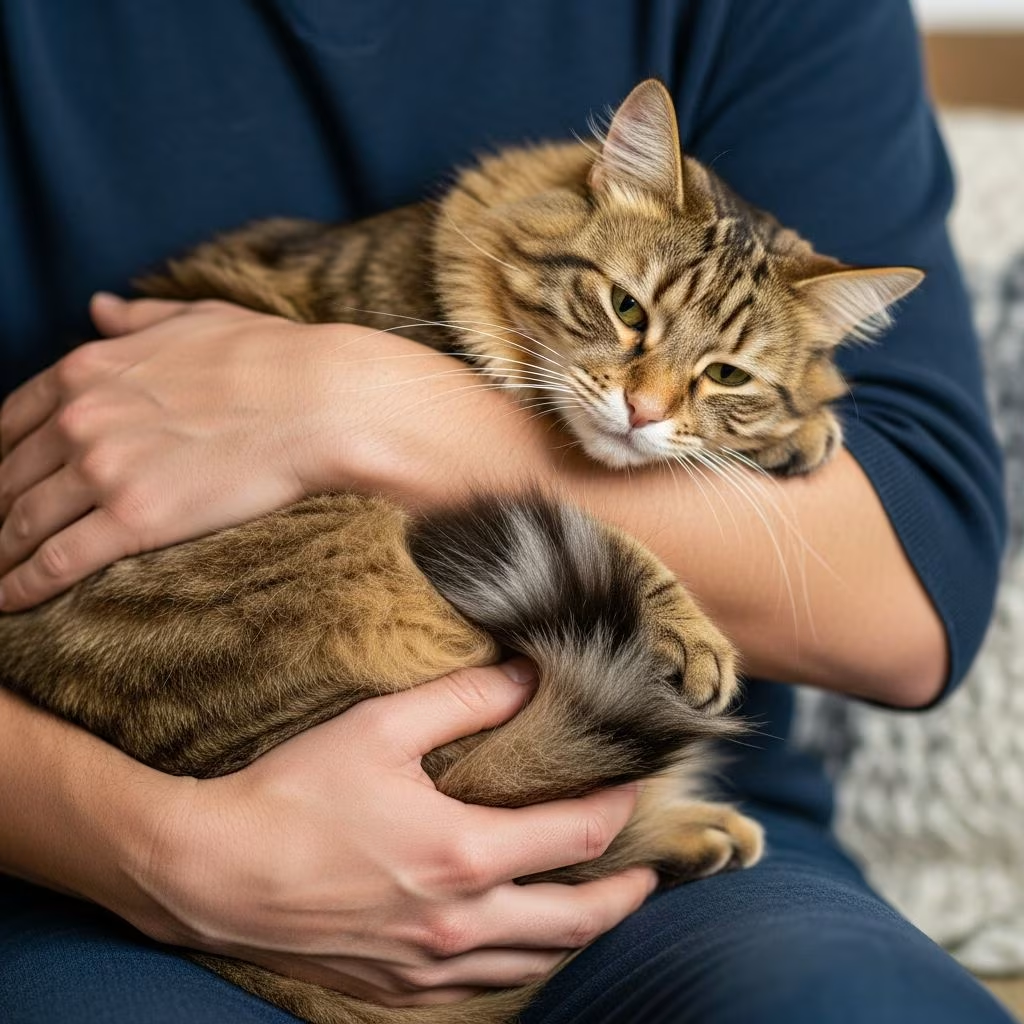
Handling cats properly fosters trust and prevents stress-related behaviors like aggression. Traditional scruffing, once thought harmless, actually induces fear in adult cats, leading to better alternatives for lifting and interacting with felines.
Understanding Feline Anatomy and Natural Responses
Cats possess loose skin at the back of their necks, known as the scruff, which mothers use to carry very young kittens. This triggers a flexor reflex, causing kittens to go limp for safe transport during their first few weeks. As kittens mature, this reflex fades, and by adulthood, grabbing the scruff no longer relaxes them but instead provokes a freeze response rooted in learned helplessness and fear.
Adult cats associate scruffing with negative experiences like mating, fights, or predator encounters in the wild, amplifying stress hormones. Their body weight strains the loose skin, potentially causing bruising or soft tissue damage. Recognizing these instincts helps owners avoid outdated methods and opt for supportive techniques.
Why Scruffing Triggers Aggression and Fear
Scruffing adult cats often leads to defensive reactions, including hissing, scratching, or biting. This stems from pain-induced aggression, where touch exacerbates discomfort, especially in areas like joints affected by osteoarthritis. Petting-induced aggression occurs when overstimulation builds; signs include dilated pupils, tail lashing, and flattened ears before escalation.
Redirected aggression happens when external stimuli, like outdoor cats or loud noises, heighten arousal that owners unwittingly trigger by handling. Feline hyperesthesia syndrome (FHS) mimics these issues, with heightened skin sensitivity causing twitching, tail chasing, or sudden attacks during petting, often linked to neurological, dermatological, or psychological factors.
| Stress Response | Signs in Cats | Common Triggers |
|---|---|---|
| Fight | Dilated pupils, hissing, biting | Pain, overstimulation |
| Flight | Escaping, hiding | Fear from handling |
| Freeze | Limpness, rigidity | Scruffing, helplessness |
| Fidget | Lip licking, grooming shakes | Mild anxiety |
This table outlines the ‘four F’s of stress,’ helping identify when a cat feels threatened during handling.
Signs Your Cat Dislikes Being Picked Up
Observe body language to gauge comfort. A relaxed cat approaches willingly, with upright tail and slow blinks. Discomfort shows as ear pinning, whisker forward thrusting, or skin rippling along the back. In FHS cases, light touches provoke intense reactions like frantic running or self-directed aggression.
- Rigid posture or sudden stillness: Indicates freeze response, not contentment.
- Vocalizations: Growls or yowls signal irritation.
- Tail signals: Thrashing means stop immediately.
- Post-handling behavior: Excessive grooming or hiding suggests lingering stress.
Breeds like Abyssinian, Burmese, Siamese, and Persians may show heightened sensitivity due to genetic predispositions to FHS or tactile issues.
Gentle Techniques for Lifting and Holding Cats
Support the entire body to distribute weight evenly. Slide one hand under the chest, fingers between front legs, while the other cups the hindquarters. Keep the cat close to your body for security, allowing hind legs to dangle naturally without squeezing.
- Approach calmly: Let the cat initiate contact.
- Scooping motion: Lift from below, never from above.
- Secure hold: One arm under chest, other supporting rear.
- Short sessions: Release promptly to reinforce positive associations.
For reluctant cats, use a towel wrap for security during vet visits, mimicking a ‘purrito’ to limit movement without scruffing. Training with treats rewards tolerance, gradually building handling duration.
Addressing Pain and Medical Causes of Aggression
Aggression often masks underlying health issues. Hyperthyroidism, dental pain, or arthritis prompts defensive responses to touch. FHS requires ruling out allergies, nerve pain, or compulsive behaviors via veterinary exams, including skin scrapes and neurology checks.
Consult a vet if aggression persists post-handling; bloodwork and imaging pinpoint issues. Treatments vary: anti-inflammatories for pain, behavioral therapy for psychological triggers, or dermatological care for skin conditions.
Building Trust Through Positive Interactions
Daily routines enhance bonding. Interactive play with toys mimics hunting, reducing pent-up energy that fuels aggression. Vertical spaces like cat trees provide escape routes, minimizing territorial stress.
Petting preferences differ; many cats enjoy chin scratches or cheek rubs over back stroking. Watch for the ‘elevator butt’ posture signaling enough, and cease to avoid escalation. pheromone diffusers calm environments, while consistent routines predict safe handling.
Special Considerations for Kittens vs. Adults
Kittens tolerate maternal scruffing up to 3-4 weeks, but transition to supportive lifts early to prevent learned fear. Adults, especially rescues with trauma histories, may freeze from prior abuse, eroding trust over time.
Seniors with mobility issues need extra gentleness; ramps and low perches accommodate joint pain, reducing handling needs.
FAQs on Cat Handling and Aggression
Is scruffing ever okay for adult cats?
Only in emergencies like vet restraint, and briefly; prefer alternatives to avoid fear conditioning.
What if my cat goes limp when lifted?
This signals stress-induced freeze, not relaxation. Switch to supportive methods immediately.
How do I stop petting aggression?
Pet short sessions, heed early warnings, and vet-check for pain or FHS.
Can training reduce handling resistance?
Yes, use treats and gradual exposure to desensitize positively.
Breeds prone to touch sensitivity?
Siamese, Burmese, Abyssinians show higher FHS rates; monitor closely.
Long-Term Benefits of Respectful Handling
Adopting humane techniques yields calmer cats with stronger owner bonds. Reduced aggression lowers injury risks, while health vigilance catches issues early. Environments enriched with choices empower cats, curbing unwanted behaviors naturally.
Owners report fewer scratches and more voluntary cuddles after ditching scruffing. Patience pays off, transforming wary felines into confident companions.
References
- Feline Behavior Problems: Aggression — Cornell University College of Veterinary Medicine. 2023. https://www.vet.cornell.edu/departments-centers-and-institutes/cornell-feline-health-center/health-information/feline-health-topics/feline-behavior-problems-aggression
- Why Does An Adult Cat Go Limp When You Grab Their Scruff? — Catster (Veterinarian reviewed). 2024-10-15. https://www.catster.com/cat-behavior/why-does-an-adult-cat-go-limp-when-you-grab-their-scruff/
- Feline Hyperesthesia Syndrome (Twitchy Cat Syndrome) — PetMD (DVM authored). 2025-01-10. https://www.petmd.com/cat/conditions/skin/feline-hyperesthesia-syndrome
- Scruffing Cats: The Surprising Truth About This Common Handling Myth — Humane Society of Huron Valley. 2024. https://www.hshv.org/scruffing-cats-the-surprising-truth-about-this-common-handling-myth/
- Stop Cat Scruffing Now — Ultimates Indulge (Feline welfare org). 2023-05-20. https://www.ultimatesindulge.com.au/stop-cat-scruffing-now
- Is Scruffing the Best Way to Handle an Upset Cat? — Tufts University Now. 2019-08-14. https://now.tufts.edu/2019/08/14/scruffing-best-way-handle-upset-cat



