

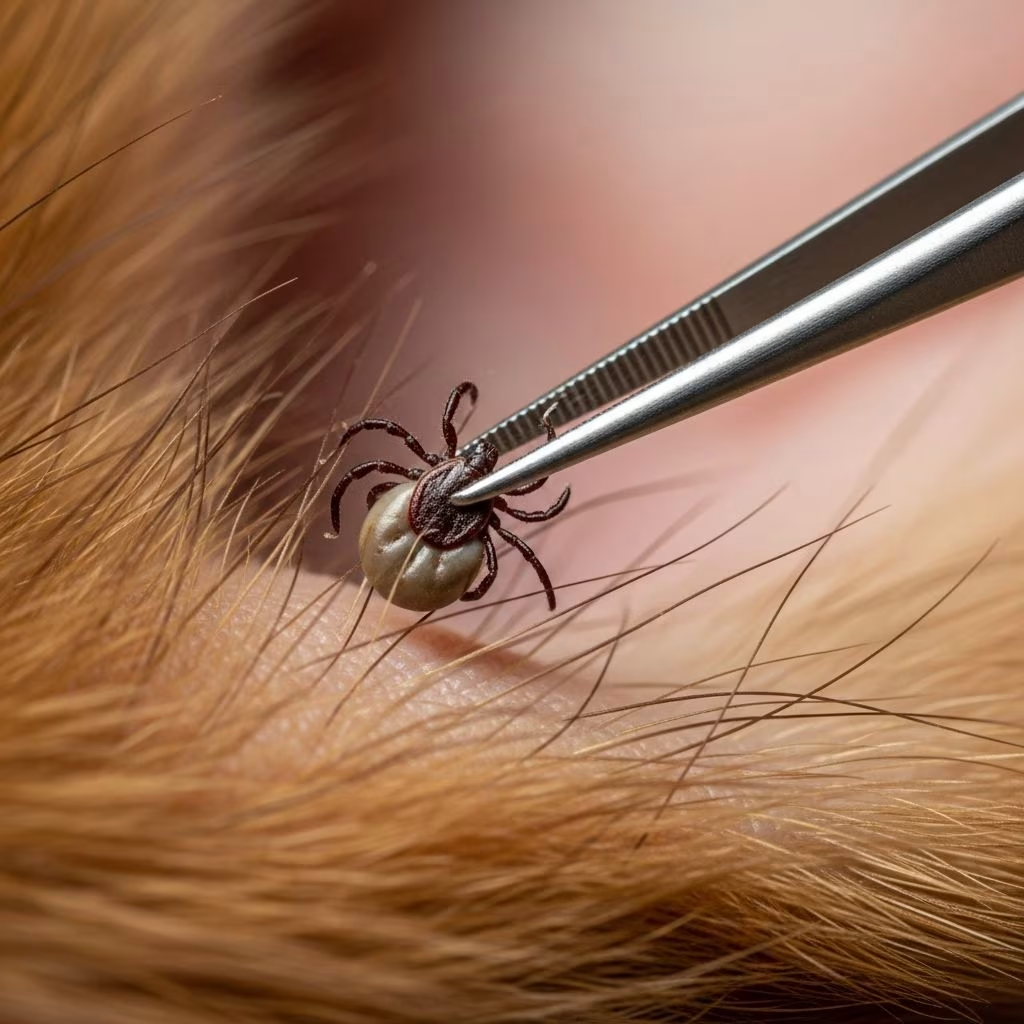
Ticks pose a significant health threat to both animals and people, capable of transmitting various pathogens through their saliva during feeding. The moment a tick attaches to skin, it begins injecting potentially disease-carrying fluid into the host. This biological reality makes immediate and careful removal one of the most critical steps in tick management. Understanding the correct extraction methodology can mean the difference between a minor inconvenience and serious health consequences.
Understanding the Urgency of Rapid Tick Removal
The pathophysiology of tick feeding involves continuous transmission of saliva containing bacteria, viruses, and other microorganisms. Every minute an attached tick remains on the skin increases the volume of potentially infectious material entering the bloodstream. Research indicates that the longer a tick feeds, the greater the likelihood of successful pathogen transmission. This time-sensitive nature of tick removal cannot be overstated—prompt action significantly reduces disease transmission risk compared to delayed removal efforts.
The biological imperative for speed, however, must be balanced against the need for technique. Hasty, careless removal can result in complications that increase infection risk rather than decrease it. The goal is therefore not merely to remove a tick quickly, but to remove it correctly and efficiently.
Selecting Appropriate Removal Instruments
The choice of instrument significantly impacts removal success and safety. Multiple tools are available for tick extraction, each with distinct advantages and limitations.
Fine-Tipped Tweezers as the Gold Standard
Fine-tipped tweezers represent the most accessible and effective tool for tick removal. The CDC and veterinary professionals consistently recommend plain tweezers with pointed tips, as they allow precise grasping of the tick’s mouthparts. The fine tips enable users to target the tick’s head with accuracy, minimizing the risk of crushing the body or leaving mouthparts behind. Most household tweezers feature blunt tips and are insufficient for proper tick removal; investment in quality fine-point tweezers is therefore recommended for households in tick-endemic areas.
Specialized Tick Removal Devices
Commercial tick removal tools have gained popularity in recent years, offering an alternative to traditional tweezers. These devices, such as tick hooks or twister-style removers, feature specialized designs that allow lateral or rotational extraction. Some practitioners report that these tools are easier to master than tweezers, particularly for individuals with limited manual dexterity. Tick removal devices typically cost only a few dollars and represent a worthwhile investment for pet owners in high-risk areas.
What to Avoid
Certain removal methods remain widespread despite evidence of their ineffectiveness and danger. Bare hands should never be used for tick removal, as this creates potential for disease transmission through skin contact. Blunt-edged instruments and makeshift tools risk crushing the tick’s body. Using fingernail polish, petroleum jelly, heat sources, or alcohol on an attached tick increases the likelihood of pathogen regurgitation, accelerating disease transmission rather than preventing it. These folk remedies should be abandoned in favor of evidence-based techniques.
The Proper Extraction Technique
Correct tick removal involves a systematic approach that prioritizes precision and control.
Step-by-Step Extraction Protocol
Begin by locating the tick on the skin or fur of the affected individual or animal. If working with a pet, gently part the fur or hair to ensure clear visibility and access to the tick. Using fine-tipped tweezers or a specialized removal tool, grasp the tick as close to the skin surface as possible, ideally at the base of the tick’s head where mouthparts insert into the skin. This positioning is crucial because it allows removal of the entire tick, including the head and mouthparts, which would otherwise remain embedded.
Once a firm grasp is established, apply steady, even upward pressure. The removal should occur in one smooth, continuous motion without hesitation. The pressure must be maintained consistently—sudden jerking or rapid tugging can cause the mouthparts to separate from the body and remain in the skin. Similarly, twisting or rotating the tick during removal causes the mouthparts to break and fragment, leading to the same problematic outcome.
Continue applying steady traction until the tick detaches from the skin. There should be a distinct moment of release when resistance decreases, indicating successful removal. Do not discontinue traction prematurely or the tick may re-attach.
Special Considerations for Multiple Ticks
When an animal presents with numerous attached ticks, chemical removal using acaricidal products often proves more practical than manual extraction. Attempting to manually remove dozens or hundreds of ticks becomes time-consuming, potentially traumatic for the animal, and may result in stress-related complications. In such cases, veterinarians typically recommend applying acaricidal treatments that kill ticks systemically, allowing them to detach naturally as the treatment takes effect.
Managing Incomplete Removal Scenarios
Despite careful technique, tick mouthparts occasionally separate from the body and remain embedded in the skin. This situation generates anxiety but typically poses minimal health risk. If the remaining mouthparts cannot be easily removed with clean tweezers after a gentle attempt, leaving them in place and allowing natural skin healing is the preferred approach. The risk of local infection from remaining mouthparts is substantially lower than the risk of pathogen transmission from an attached, feeding tick. The skin will naturally shed the embedded fragments over time.
Never aggressively dig or cut into the skin attempting to retrieve fragments. Such aggressive intervention causes tissue damage and infection risk that exceeds the minimal threat posed by the tick fragments themselves.
Post-Removal Sanitation and Tick Disposal
After successful tick removal, thorough cleaning of the bite site and hands is essential. Use rubbing alcohol, iodine-based antiseptic scrubs, or soap and water to cleanse both the affected skin area and your hands. This removes any tick-contaminated material that may have contacted skin or escaped during removal.
The removed tick itself requires proper disposal. Crushing the tick, whether with fingers or objects, should be avoided as this ruptures the tick’s body and releases potentially infectious contents. Instead, place the intact tick in a container with rubbing alcohol, which rapidly kills the organism. Alternatively, the tick can be sealed in plastic wrap or placed in a closed container and frozen. Some individuals flush ticks down toilets, though this method is less preferable as it may allow ticks to survive in water environments.
Importantly, remove one tick and preserve it in alcohol or frozen state if you are removing multiple ticks from a person or animal. This specimen can be crucial for identification and diagnosis if tick-borne illness develops in subsequent weeks. Identifying the specific tick species can guide medical or veterinary diagnostic testing and treatment decisions.
Prevention: The Superior Alternative to Removal
While proper removal technique is crucial, preventing tick attachment in the first place represents the optimal strategy. Acaricidal products applied to pets before tick season begins kill or repel ticks, preventing attachment and disease transmission. These include topical solutions lasting approximately 30 days and collar formulations providing protection for several months. Pyrethroid-based products offer dual benefit by both killing ticks and repelling them from approaching the animal.
For humans, protective clothing and insect repellents applied to exposed skin reduce tick encounter risk. Avoiding heavily tick-infested areas during peak season provides additional protection. Environmental modifications that reduce tick habitat suitability around homes and yards further decrease exposure risk.
Recognizing When Professional Help Is Needed
Pet owners uncertain about their ability to safely remove ticks should consult veterinary professionals rather than risk improper technique. Veterinarians possess training and experience in tick removal and can perform the procedure efficiently while monitoring for complications. Additionally, veterinary consultation provides opportunity for assessment of tick-borne disease risk and preventive medication recommendations.
Following a potential tick exposure, contacting veterinary or medical professionals allows discussion of observed symptoms and appropriate diagnostic testing if illness develops. Early identification of tick-borne diseases substantially improves treatment outcomes.
Frequently Asked Questions
How quickly must ticks be removed?
Ticks should be removed immediately upon discovery. However, the exact timeframe for pathogen transmission varies by organism and tick species. Prompt removal within hours significantly reduces disease transmission risk compared to removal after days of feeding.
Can ticks be removed with alcohol or other household products?
No. Applying alcohol, petroleum jelly, nail polish, or heat to an attached tick may cause regurgitation, actually increasing pathogen transmission. These substances should not be applied to feeding ticks.
What if the tick’s head remains in the skin?
Embedded tick mouthparts pose minimal infection risk. If they cannot be easily removed with clean tweezers, allow the skin to heal naturally. The fragments will shed as skin regenerates.
Are there diseases that ticks transmit particularly quickly?
Transmission rates vary by pathogen and tick species. Some pathogens require several hours of feeding before effective transmission, while others may transmit more rapidly. Regardless, prompt removal remains the safest strategy.
Can tweezers from the bathroom be used?
Standard bathroom tweezers typically have blunt tips and are inadequate for proper tick removal. Fine-tipped tweezers designed for precise work are preferable and inexpensive to obtain.
References
- Tick Removal — Centers for Disease Control and Prevention / Michael L. Levin, PhD, Division of Vector-Borne Diseases. 2024. https://www.cdc.gov/ticks/removing_ticks.html
- Practical Tips for Preventing Tick-Borne Disease in Pets — Today’s Veterinary Practice. 2024. https://todaysveterinarypractice.com/parasitology/practical-tips-for-preventing-tick-borne-disease-in-pets/
- How to Remove a Tick — Cornell College of Veterinary Medicine. 2019. https://www.vet.cornell.edu/news/how-remove-tick
- Ticks on Dogs: How to Remove a Tick from a Dog — Blue Cross UK. 2024. https://www.bluecross.org.uk/advice/dog/health-and-injuries/ticks-on-dogs
- A Step-By-Step Guide to Removing a Tick from Your Pet — Lebanon Animal Hospital. 2024. https://lebanonanimalhospital.com/a-step-by-step-guide-to-removing-a-tick-from-your-pet/



